States Wildlife

Oklahoma Turtles: Identification Guide With Pictures

Last checked November 3, 2026 against official sources.

On this page
  1. Which turtles can hurt you
  2. All 17 turtles
  3. Lookalikes
  4. When they are active
  5. If you are bitten or stung
  6. How to report
  7. About this list
  8. Sources

Sam Noble Oklahoma Museum of Natural History (SNOMNH) Herpetology, hosted by the Oklahoma Biological Survey, University of Oklahoma: 82 species of reptiles

This page lists 17 turtles: all from Sam Noble Oklahoma Museum of Natural History (SNOMNH) Herpetology, hosted by the Oklahoma Biological Survey, University of Oklahoma's Checklist of Oklahoma Amphibians and Reptiles — Turtles.

Which turtles can hurt you

Official sources single out these turtles in Oklahoma, in their own words:

All 17 turtles

From A to Z. Do not handle them.

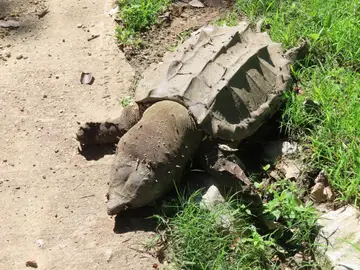
Alligator snapping turtle
Photo: Eric Schmidt · CC BY 4.0 · iNaturalist

Alligator snapping turtle

Macrochelys temminckii

Size
Usually 15 to 26 inches of shell and 35 to 150 pounds; males can reach 29 inches and 249 pounds, females about 22 inches and 62 pounds. Missouri records over 250 pounds.
How to recognize it
  • Three prominent ridges on the upper shell
  • Very large head with a sharp, strongly hooked beak
  • Extra row of scutes on each side of the shell
Where in Oklahoma
In Oklahoma, it is now thought to be restricted to east central and southeastern lakes, rivers, and sloughs. Oklahoma Department of Wildlife Conservation
Conservation
ODWC field guide status: Species of Greatest Conservation Need
What the sources say

Habitat: These turtles are found in river systems that flow into the Gulf of Mexico. (Oklahoma Department of Wildlife Conservation)

Full Alligator snapping turtle guide

No confirmed photo of Chicken turtle

Chicken turtle

Deirochelys reticularia

Conservation
ODWC field guide status: Species of Greatest Conservation Need
What the sources say

Habitat: The western chicken turtle is one of three chicken turtle subspecies and is the only subspecies found east of the Mississippi River. (Oklahoma Department of Wildlife Conservation)

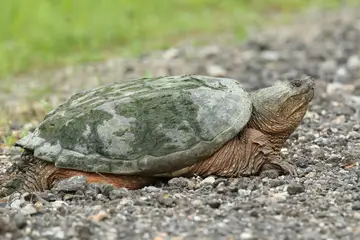
Common snapping turtle
Photo: Cephas · CC BY-SA 4.0 · Wikimedia Commons · resized

Common snapping turtle

Chelydra serpentina

Danger to people
“When disturbed, snapping turtles usually attempt to escape, but if cornered will attempt to bite by explosively extending the head with mouth open.” Oklahoma Department of Wildlife Conservation
Size
Upper shell usually 8 to 14 inches, occasionally to nearly 20; usually 10 to 35 lb, occasionally to 75 lb in the wild.
How to recognize it
  • Large head, long tail
  • Saw-toothed scales on the long tail
  • Small, cross-shaped lower shell
Where in Oklahoma
The common snapping turtle can easily be distinguished from all but one other turtle species in eastern Oklahoma by a combination of saw-toothed keels along the dorsal … Oklahoma Department of Wildlife Conservation
55 records by month.
What the sources say

Range: The common snapping turtle can easily be distinguished from all but one other turtle species in eastern Oklahoma by a combination of saw-toothed keels along the dorsal surface of the tail, tail at least as long as the carapace, large head, webbed feet, small plastron, a carapace with three distinct keels, and a body that cannot be hidden within the shell.

Habitat: The distribution of the common snapping turtle extends from the Yellowstone River Valley in Montana east across the entire United States and north from southern Canada through southern Texas and to the tip of Florida (a different subspecies occurs in peninsular Florida.) (Oklahoma Department of Wildlife Conservation)

Full Common snapping turtle guide

No confirmed photo of Map turtle

Map turtle

Graptemys geographica

No confirmed photo of Mississippi map turtle

Mississippi map turtle

Graptemys kohnii

Where in Oklahoma
Mississippi map turtles occur in rivers, large streams, and lakes across eastern Oklahoma. Oklahoma Department of Wildlife Conservation
Conservation
ODWC field guide status: Species of Greatest Conservation Need
What the sources say

Habitat: Mississippi map turtles occur in rivers, large streams, and lakes across eastern Oklahoma. (Oklahoma Department of Wildlife Conservation)

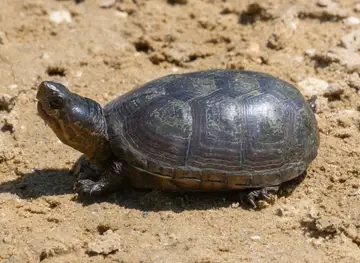
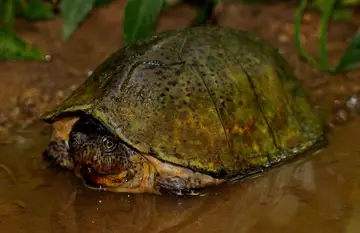
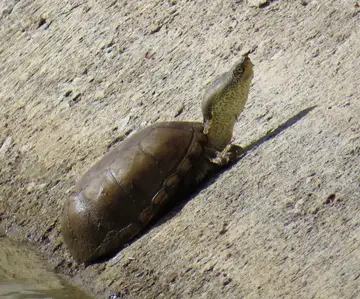
Mississippi mud turtle
Photo: Jim Moore (Maryland) · CC BY 4.0 · iNaturalist

Mississippi mud turtle

Kinosternon subrubrum

Where in Oklahoma
Mississippi mud turtles occur across eastern Oklahoma. Oklahoma Department of Wildlife Conservation
What the sources say

Habitat: Mississippi mud turtles occur across eastern Oklahoma. (Oklahoma Department of Wildlife Conservation)

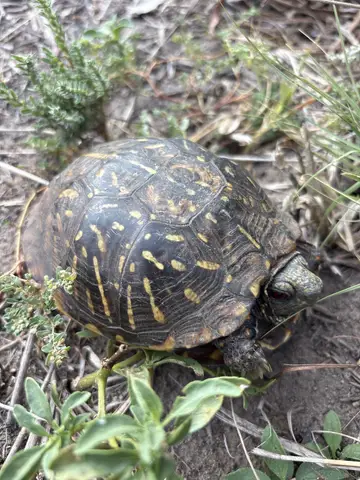
Ornate box turtle
Photo: Archer Silverman · CC BY 4.0 · iNaturalist

Ornate box turtle

Terrapene ornata

Where in Oklahoma
Ornate box turtles occur throughout Oklahoma, but are most common in the relatively open western counties. Oklahoma Department of Wildlife Conservation
Conservation
ODWC field guide status: Species of Greatest Conservation Need
What the sources say

Habitat: Ornate box turtles occur throughout Oklahoma, but are most common in the relatively open western counties. (Oklahoma Department of Wildlife Conservation)

No confirmed photo of Ouachita map turtle

Ouachita map turtle

Graptemys ouachitensis

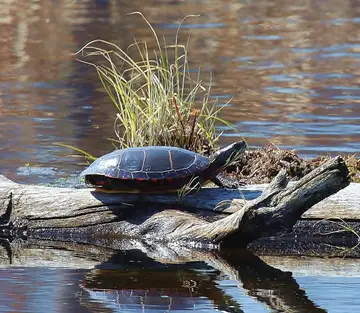
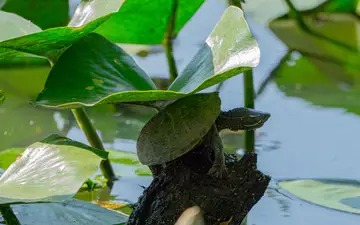
Painted turtle
Photo: U. S. Fish and Wildlife Service - Northeast Region · Public domain · Wikimedia Commons

Painted turtle

Chrysemys picta

Size
Small: adult shell usually 4 to 7 inches, up to about 10 inches; females are larger than males.
How to recognize it
  • Smooth, fairly flat shell with no keel and a smooth (not saw-toothed) rear edge
  • Red markings on the marginal shell plates
  • Yellow spot behind each eye and yellow stripes on the chin

Full Painted turtle guide

Razor-backed musk turtle
Photo: Peter Paplanus from St. Louis, Missouri · CC BY 2.0 · Wikimedia Commons

Razor-backed musk turtle

Sternotherus carinatus

Where in Oklahoma
The razor-backed turtle is one of several aquatic turtles native to southeastern Oklahoma. Oklahoma Department of Wildlife Conservation
Conservation
ODWC field guide status: Species of Greatest Conservation Need
What the sources say

Habitat: The turtles make their homes in aquatic habitats, such as medium to large flowing streams with sand or gravel bottoms. (Oklahoma Department of Wildlife Conservation)

No confirmed photo of Red-eared slider

Red-eared slider

Trachemys scripta

Where in Oklahoma
Red-eared sliders occur throughout all of Oklahoma except the far western panhandle. Oklahoma Department of Wildlife Conservation
409 records by month.
What the sources say

Habitat: Red-eared sliders occur throughout all of Oklahoma except the far western panhandle. (Oklahoma Department of Wildlife Conservation)

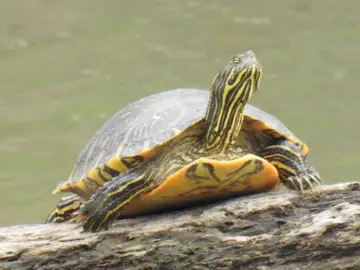
River cooter
Photo: Sam Kieschnick · CC BY 4.0 · iNaturalist

River cooter

Pseudemys concinna

Where in Oklahoma
Eastern river cooters occur in rivers, large streams, lakes, and occasionally ponds across eastern Oklahoma, but extend into central Oklahoma along major river systems … Oklahoma Department of Wildlife Conservation
Conservation
ODWC field guide status: Species of Greatest Conservation Need
33 records by month.
What the sources say

Range: Eastern river cooters occur in rivers, large streams, lakes, and occasionally ponds across eastern Oklahoma, but extend into central Oklahoma along major river systems in the northern and southern parts of the state.

Habitat: Eastern river cooters occur in rivers, large streams, lakes, and occasionally ponds across eastern Oklahoma, but extend into central Oklahoma along major river systems in the northern and southern parts of the state. (Oklahoma Department of Wildlife Conservation)

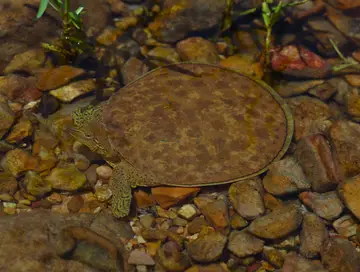
Smooth softshell
Photo: Chrissy McClarren and Andy Reago · CC0 1.0 · iNaturalist

Smooth softshell

Apalone mutica

Where in Oklahoma
The two species of softshell turtles (spiny and smooth) can easily be distinguished from all other turtles in Oklahoma by the total lack of scutes on the shell. Oklahoma Department of Wildlife Conservation
Conservation
ODWC field guide status: Species of Greatest Conservation Need
What the sources say

Habitat: The North American distribution of smooth softshells is confined for the most part to tributaries of the Mississippi, Missouri, and Ohio rivers. (Oklahoma Department of Wildlife Conservation)

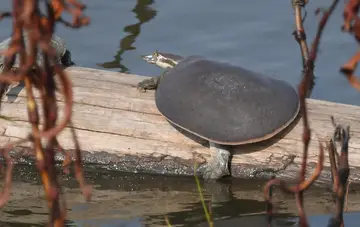
Spiny softshell
Photo: Peter Paplanus · CC BY 2.0 · Wikimedia Commons

Spiny softshell

Apalone spinifera

Where in Oklahoma
The two species of softshell turtles (spiny and smooth) can easily be distinguished from all other turtles in Oklahoma by the total lack of scutes on the shell. Oklahoma Department of Wildlife Conservation
Conservation
ODWC field guide status: Species of Greatest Conservation Need
40 records by month.
What the sources say

Habitat: Spiny softshells have a wide distribution in North America, extending nearly continuously west to east from Oklahoma through western New York with additional populations in the Colorado and Rio Grand River systems in the west. (Oklahoma Department of Wildlife Conservation)

Stinkpot
Photo: Curtis Meyers · CC BY-SA 4.0 · iNaturalist · resized

Stinkpot

Sternotherus odoratus

Where in Oklahoma
Stinkpots occur in across southeastern and northeastern Oklahoma. Oklahoma Department of Wildlife Conservation
What the sources say

Habitat: Stinkpots occur in across southeastern and northeastern Oklahoma. (Oklahoma Department of Wildlife Conservation)

Three-toed box turtle
Photo: Joshua Liverman · CC BY 4.0 · iNaturalist

Three-toed box turtle

Terrapene carolina

Size
Small: adult shell usually 4.5 to 6 inches; up to about 7 to 8 inches (Alabama, Virginia).
How to recognize it
  • High, domed upper shell
  • Hinged lower shell that closes the turtle in completely
  • Ridge (keel) down the center of the shell, more obvious in young
Where in Oklahoma
Three-toed box turtles occur in most of the eastern half of Oklahoma. Oklahoma Department of Wildlife Conservation
Conservation
ODWC field guide status: Species of Greatest Conservation Need
What the sources say

Habitat: Three-toed box turtles occur in most of the eastern half of Oklahoma. (Oklahoma Department of Wildlife Conservation)

Full Three-toed box turtle guide

Turtles people confuse

Snapping Turtle or Alligator Snapping Turtle?

Snapping Turtle
Photo: Cephas · CC BY-SA 4.0 · Wikimedia Commons · resized

Snapping Turtle Not stated

Alligator Snapping Turtle
Photo: Eric Schmidt · CC BY 4.0 · iNaturalist

Alligator Snapping Turtle Not stated

Tennessee (TWRA): the alligator snapping turtle has a longer snout with a hooked beak, extra marginal scutes (shell-edge plates) and more conspicuous ridges on the shell. Missouri (MDC): its upper shell has 3 prominent ridges, one along the center line and one on either side, and its large head ends in a sharp, strongly hooked beak. Texas (TPWD): the common snapping turtle has an oval-shaped head and a comparatively smooth, rounded shell; the alligator snapper has three distinct ridges, a triangular head and a fleshy lure in its mouth. Caution: young common snapping turtles also have three keels on the shell (MDC, NCWRC, CT DEEP), so ridges alone do not separate small turtles.

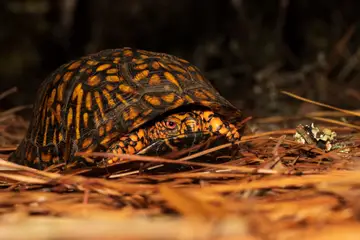
Eastern box turtle or Ornate box turtle?

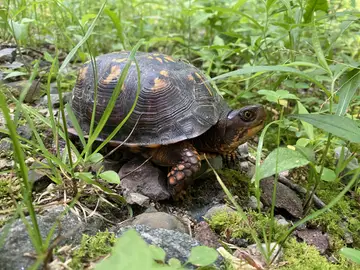
Eastern box turtle
Photo: Summit Metro Parks · CC BY-SA 4.0 · iNaturalist · resized

Eastern box turtle Not stated

Ornate box turtle
Photo: Archer Silverman · CC BY 4.0 · iNaturalist

Ornate box turtle Not stated

The ornate box turtle usually has no ridge down the shell and has many yellow lines radiating from the center of each shell plate; it is more of a grassland species.

Photos show typical adults; individuals vary. Never get close to compare.

When turtles are active in Oklahoma

Records of turtles in Oklahoma peak in April to June. They show when people record turtles, not how many there are (about month bars).

771 records of turtles in Oklahoma by month (GBIF, CC0 and CC BY records).

If you are bitten or stung

Call 911 or Poison Help at 1-800-222-1222 right away. Poison Help connects you to your local poison center, any time of day.

How to report

Report wildlife sightings (including mountain lions and bears) to ODWC online at wildlifedepartment.com/wildlife/report-wildlife; report suspected invasive aquatic species to ODWC at (918) 200-4815 or online. Oklahoma Department of Wildlife Conservation

About this list

The species list comes from Checklist of Oklahoma Amphibians and Reptiles (SNOMNH Herpetology / Oklahoma Biological Survey) — Turtles (Testudines) (Sam Noble Oklahoma Museum of Natural History (SNOMNH) Herpetology, hosted by the Oklahoma Biological Survey, University of Oklahoma, PDF created 2014-09-09, modified 2016-06-06).

Venom labels come only from official sources and link to them; "Not stated" never means harmless. How labels work.

Sources

  1. About Us. Oklahoma Department of Wildlife Conservation. undated page; checked November 3, 2026.
  2. Checklist of Oklahoma Amphibians and Reptiles. Sam Noble Oklahoma Museum of Natural History (SNOMNH) Herpetology, hosted by the Oklahoma Biological Survey, University of Oklahoma. PDF created 2014-09-09, modified 2016-06-06; checked November 3, 2026.
    Quoted passages (1)
    “82 species of reptiles”
  3. Common Snapping Turtle (ODWC Field Guide). Oklahoma Department of Wildlife Conservation. undated page; checked November 3, 2026.
    Quoted passages (1)
    “When disturbed, snapping turtles usually attempt to escape, but if cornered will attempt to bite by explosively extending the head with mouth open.”
  4. Alligator Snapping Turtle (ODWC Field Guide). Oklahoma Department of Wildlife Conservation. undated page; checked November 3, 2026.
  5. Western Chicken Turtle (ODWC Field Guide). Oklahoma Department of Wildlife Conservation. undated page; checked November 3, 2026.
  6. Mississippi Map Turtle (ODWC Field Guide). Oklahoma Department of Wildlife Conservation. undated page; checked November 3, 2026.
  7. Eastern River Cooter (ODWC Field Guide). Oklahoma Department of Wildlife Conservation. undated page; checked November 3, 2026.
  8. Three-toed Box Turtle (ODWC Field Guide). Oklahoma Department of Wildlife Conservation. undated page; checked November 3, 2026.
  9. Ornate Box Turtle (ODWC Field Guide). Oklahoma Department of Wildlife Conservation. undated page; checked November 3, 2026.
  10. Red-eared Slider (ODWC Field Guide). Oklahoma Department of Wildlife Conservation. undated page; checked November 3, 2026.
  11. Mississippi Mud Turtle (ODWC Field Guide). Oklahoma Department of Wildlife Conservation. undated page; checked November 3, 2026.
  12. Razor-backed Musk Turtle (ODWC Field Guide). Oklahoma Department of Wildlife Conservation. undated page; checked November 3, 2026.
  13. Stinkpot (ODWC Field Guide). Oklahoma Department of Wildlife Conservation. undated page; checked November 3, 2026.
  14. Smooth Softshell (ODWC Field Guide). Oklahoma Department of Wildlife Conservation. undated page; checked November 3, 2026.
  15. Spiny Softshell (ODWC Field Guide). Oklahoma Department of Wildlife Conservation. undated page; checked November 3, 2026.
  16. Aquatic Nuisance Species. Oklahoma Department of Wildlife Conservation. undated page; checked November 3, 2026.
    Quoted passages (1)
    “If you think you have discovered any invasive species contact us at (918) 200-4815 or report online.”
  17. GBIF.org occurrence records, human observations licensed CC0 1.0 or CC BY 4.0 only, accessed November 3, 2026. The datasets behind these counts are listed on our Sources page.