Oklahoma Mammals: Species List With Pictures
Last checked November 3, 2026 against official sources.
On this page
Proceedings of the Oklahoma Academy of Science; authors at University of Central Oklahoma and Sam Noble Oklahoma Museum of Natural History: The checklist below updates the earlier lists and contains 117 species of mammals, including 4 extirpated species and 5 introduced/exotic species.
This page lists 117 mammals: all from Proceedings of the Oklahoma Academy of Science; authors at University of Central Oklahoma and Sam Noble Oklahoma Museum of Natural History's Updated and Revised Checklist of the Mammals of Oklahoma, 2019. 5 are nonnative.
Which mammals can hurt you
Official sources single out these mammals in Oklahoma, in their own words:
-
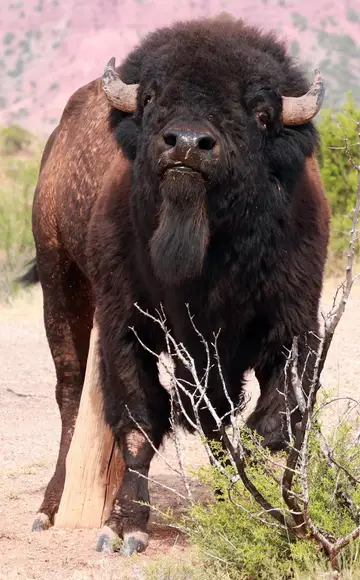
Photo: Catherine C. Galley · CC BY 4.0 · iNaturalist American Bison
Large and quick. “American Indians and early European settlers learned that bison are very difficult to domesticate, and their large bodies and quickness made them dangerous to be near.” Oklahoma Department of Wildlife Conservation
-
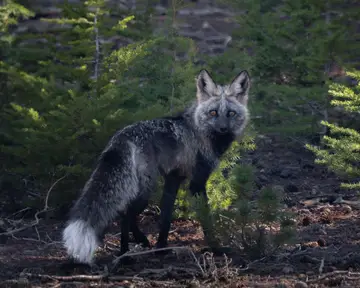
Photo: David Willingham · CC BY 4.0 · iNaturalist Red Fox
Disease. “These foxes are among the most common spreaders of rabies and carry other diseases such as canine parvovirus and canine distemper.” Oklahoma Department of Wildlife Conservation
-
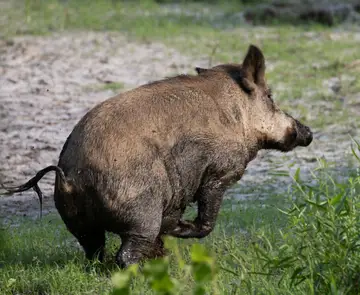
Photo: Cullen Hanks · CC BY 4.0 · iNaturalist Feral Pig
Disease transmissible to people (brucellosis, leptospirosis). “Feral swine can be infected with brucellosis and leptospirosis, which can be passed to people.” Oklahoma Department of Wildlife Conservation
-
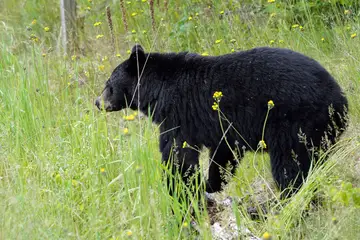
Photo: U.S. Fish and Wildlife Service - Midwest Region · Public domain · Wikimedia Commons American Black Bear
Human-bear conflicts. “To minimize the chances of attracting bears, always make sure that garbage is kept in sealed containers and that pet food is not left outside. Never feed wild bears.” Oklahoma Department of Wildlife Conservation

All 117 mammals on the list
- American Badger Taxidea taxus
- American Beaver Castor canadensis
- American Bison Bison bison
- American Black Bear Ursus americanus
- American Hog-nosed Skunk Conepatus leuconotus
- American Mink Vison vison
- American Parastrelle Parastrellus hesperus
- American Perimyotis Perimyotis subflavus
- Baird’s Pocket Gopher Geomys breviceps
- Big Brown Bat Eptesicus fuscus
- Big Free-tailed Bat Nyctinomops macrotis
- Bighorn Sheep Ovis canadensis
- Black Rat Rattus rattusNonnative
- Black-footed Ferret Mustela nigripes
- Black-tailed Jackrabbit Lepus californicus
- Black-tailed Prairie Dog Cynomys ludovicianus
- Bobcat Lynx rufus
- Brazilian Free-tailed Bat Tadarida brasiliensis
- Brush Deermouse Peromyscus boylii
- Cave Myotis Myotis velifer
- Collared Peccary Pecari tajacu
- Colorado Chipmunk Tamias quadrivittatus
- Common Gray Fox Urocyon cinereoargenteus
- Common Muskrat Ondatra zibethicus
- Cotton Deermouse Peromyscus gossypinus
- Coyote Canis latrans
- Crawford’s Desert Shrew Notiosorex crawfordi
- Desert Cottontail Sylvilagus audubonii
- Eastern Chipmunk Tamias striatus
- Eastern Cottontail Sylvilagus floridanus
- Eastern Fox Squirrel Sciurus niger
- Eastern Gray Squirrel Sciurus carolinensis
- Eastern Harvest Mouse Reithrodontomys humulis
- Eastern Mole Scalopus aquaticus
- Eastern Red Bat Lasiurus borealis
- Eastern Small-footed Myotis Myotis leibii
- Eastern Spotted Skunk Spilogale putorius
- Eastern Woodrat Neotoma floridana
- Elk Cervus canadensis
- Elliot’s Short-tailed Shrew Blarina hylophaga
- Evening Bat Nycticeius humeralis
- Feral Pig Sus scrofaNonnative
- Fulvous Harvest Mouse Reithrodontomys fulvescens
- Golden Mouse Ochrotomys nuttalli
- Gray Myotis Myotis grisescens
- Gray Wolf Canis lupus
- Grizzly (Brown) Bear Ursus arctos
- Hall’s Pocket Gopher Geomys jugossicularis
- Hispid Cotton Rat Sigmodon hispidus
- Hispid Pocket Mouse Chaetodipus hispidus
- Hoary Bat Lasiurus cinereus
- House Mouse Mus musculusNonnative
- Indiana Myotis Myotis sodalis
- Lacey’s White-ankled Deermouse Peromyscus laceianus
- Least Shrew Cryptotis parva
- Least Weasel Mustela nivalis
- Little Brown Myotis Myotis lucifugus
- Long-tailed Weasel Mustela frenata
- Meadow Jumping Mouse Zapus hudsonius
- Merriam’s Pocket Mouse Perognathus merriami
- Mexican Woodrat Neotoma mexicana
- Mountain Lion Puma concolor
- Mule Deer Odocoileus hemionus
- Nine-banded Armadillo Dasypus novemcinctus
- North American Deermouse Peromyscus maniculatus
- North American Porcupine Erethizon dorsatum
- Northern Grasshopper Mouse Onychomys leucogaster
- Northern Long-eared Myotis Myotis septentrionalis
- Northern Pygmy Mouse Baiomys taylori
- Northern Raccoon Procyon lotor
- Northern River Otter Lontra canadensis
- Northern Rock Deermouse Peromyscus nasutus
- Northern Short-tailed Shrew Blarina brevicauda
- Norway (Brown) Rat Rattus norvegicusNonnative
- Nutria Myocastor coypusNonnative
- Ord’s Kangaroo Rat Dipodomys ordii
- Pallid Bat Antrozous pallidus
- Piñon Deermouse Peromyscus truei
- Plains Harvest Mouse Reithrodontomys montanus
- Plains Pocket Gopher Geomys bursarius
- Plains Pocket Mouse Perognathus flavescens
- Prairie Vole Microtus ochrogaster
- Pronghorn Antilocapra americana
- Rafinesque’s Big-eared Bat Corynorhinus rafinesquii
- Red Fox Vulpes vulpes
- Red Wolf Canis rufus
- Ringtail Bassariscus astutus
- Rock Squirrel Otospermophilus variegatus
- Seminole Bat Lasiurus seminolus
- Silky Pocket Mouse Perognathus flavus
- Silver-haired Bat Lasionycteris noctivagans
- Southeastern Myotis Myotis austroriparius
- Southeastern Shrew Sorex longirostris
- Southern Flying Squirrel Glaucomys volans
- Southern Plains Woodrat Neotoma micropus
- Southern Short-tailed Shrew Blarina carolinensis
- Spotted Ground Squirrel Xerospermophilus spilosoma
- Striped Skunk Mephitis mephitis
- Swamp Rabbit Sylvilagus aquaticus
- Swift Fox Vulpes velox
- Texas Deermouse Peromyscus attwateri
- Texas Kangaroo Rat Dipodomys elator
- Texas Marsh Rice Rat Oryzomys texensis
- Thirteen-lined Ground Squirrel Ictidomys tridecemlineatus
- Townsend’s Big-eared Bat Corynorhinus townsendii
- Virginia Opossum Didelphis virginiana
- Western Bonneted Bat Eumops perotis
- Western Harvest Mouse Reithrodontomys megalotis
- Western Small-footed Myotis Myotis ciliolabrum
- Western Spotted Skunk Spilogale gracilis
- White-footed Deermouse Peromyscus leucopus
- White-tailed Deer Odocoileus virginianus
- White-toothed Woodrat Neotoma leucodon
- Woodchuck Marmota monax
- Woodland Vole Microtus pinetorum
- Yellow-faced Pocket Gopher Cratogeomys castanops
- Yuma Myotis Myotis yumanensis
Mammals people confuse
Coyote or Gray wolf?
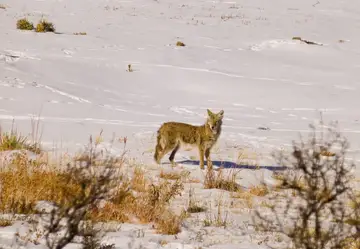

Coyote Not stated
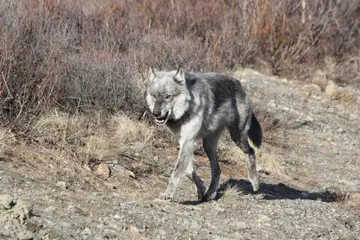
Gray wolf Not stated
NY DEC: gray wolves are much larger (females typically 50-100 lb, males 70-145 lb, 5-6 ft nose to tail, 27-33 in at the shoulder); eastern coyotes rarely exceed 50 lb and generally stand under 2 ft at the shoulder. Wolves have small rounded ears and a short blocky snout; coyotes have larger, more pointed ears (can look rounded in winter coat) and a long, narrow, pointed snout. Coyote tracks are typically 3 x 2 in, wolf tracks about 5 x 4 in. NY DEC says most wolf reports in New York were coyotes, dogs or wolf-dog hybrids.
Bobcat or Mountain lion (cougar)?
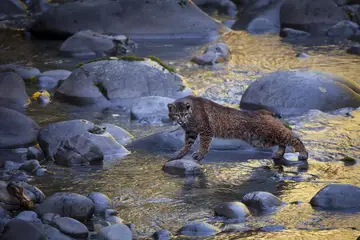

Bobcat Not stated
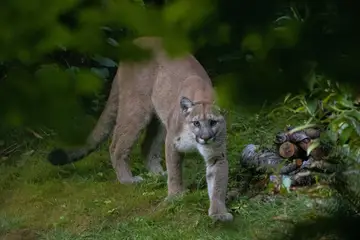
Mountain lion (cougar) Not stated
Cougars are one color (yellow-brown to light cinnamon) with a long tail. The bobcat's tail is short and its coat is spotted. TWRA says cougars are many times larger and longer, with a very long tail.
American Black Bear or Grizzly (Brown) Bear?
American Black Bear Not stated
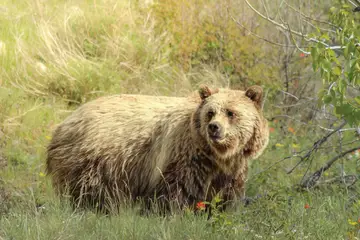
Grizzly (Brown) Bear Not stated
Grizzlies have longer front claws, humped shoulders and a more concave face. Color does not settle it: brown bears can be black to blonde.
Feral hog (feral swine, wild pig) or Javelina (collared peccary)?
Feral hog (feral swine, wild pig) Not stated
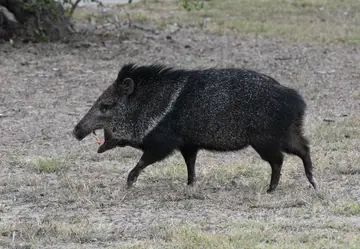
Javelina (collared peccary) Not stated
APHIS: the javelina is a native, pig-like mammal of the American Southwest. It is generally much smaller than feral swine, silver-grey to black with a lighter collar, and has no tail. Texas A&M AgriLife adds that javelinas have small, round ears, while feral hogs have longer, pointed ears and a distinct, easily visible tail. The two sources give different javelina weights: APHIS says 15 to 25 lbs, Texas A&M says an adult typically weighs 55 pounds.
Nutria or American beaver?
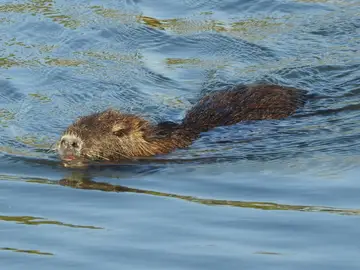
Nutria Not stated
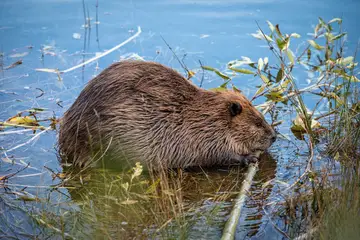

American beaver Not stated
Beavers have a wide, flat tail and dark whiskers and reach up to 60 pounds; nutria have a round, sparsely haired tail and white whiskers.
Nutria or Muskrat?
Nutria Not stated
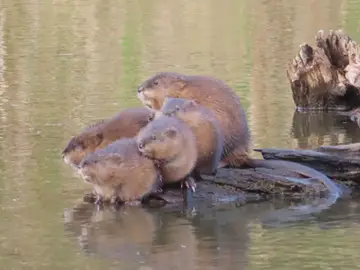
Muskrat Not stated
Muskrats have dark whiskers, a nearly triangular (side-flattened) tail and weigh at most 5 pounds. CDFW says most nutria reports it receives are actually muskrats.
Photos show typical adults; individuals vary. Never get close to compare.
When mammals are active in Oklahoma
Records of mammals in Oklahoma peak in March to June, August to September and December. They show when people record mammals, not how many there are (about month bars).
- Bear reports typically begin in May; August is typically a high month. Oklahoma Department of Wildlife Conservation
If you are bitten or stung
Call 911 or Poison Help at 1-800-222-1222 right away. Poison Help connects you to your local poison center, any time of day.
Official advice from Oklahoma Department of Wildlife Conservation:
- Bears: keep garbage sealed, do not leave pet food outside, never feed wild bears. Oklahoma Department of Wildlife Conservation
How to report
Report wildlife sightings (including mountain lions and bears) to ODWC online at wildlifedepartment.com/wildlife/report-wildlife; report suspected invasive aquatic species to ODWC at (918) 200-4815 or online. Oklahoma Department of Wildlife Conservation
What official sources say
Are there black bears in Oklahoma?
Yes. ODWC: black bear sightings are possible anywhere in the eastern half of the state and the western tip of the Panhandle. Oklahoma Department of Wildlife Conservation
“Sightings are possible anywhere in the eastern half of the state and the western tip of the Panhandle.”
Are there mountain lions in Oklahoma?
Rarely. ODWC: Oklahoma has far fewer mountain lions than rumors suggest; most confirmed reports are thought to be transient animals, but two females with kittens were confirmed in 2024. ODWC lists 97 confirmations since 2002. Oklahoma Department of Wildlife Conservation
“Oklahoma has far fewer mountain lions than rumors would lead you to believe. Though most confirmed reports are thought to be of transient individuals, the Wildlife Department confirmed two separate mountain lions observed with kittens in different regions of the state in 2024.”
Are there armadillos in Oklahoma?
Yes. The 2019 mammal checklist lists the nine-banded armadillo as a native species; the 2012 OU table: "Common Southern & Eastern parts of state." Proceedings of the Oklahoma Academy of Science; authors at University of Central Oklahoma and Sam Noble Oklahoma Museum of Natural History
“Dasypus novemcinctus Nine-banded Armadillo”
About this list
The species list comes from Updated and Revised Checklist of the Mammals of Oklahoma, 2019 (Caire, Loucks, Haynie, Coyner & Braun; Proc. Okla. Acad. Sci. 99:1-6; authors at the University of Central Oklahoma and the Sam Noble Oklahoma Museum of Natural History) (Proceedings of the Oklahoma Academy of Science; authors at University of Central Oklahoma and Sam Noble Oklahoma Museum of Natural History (Department of Mammalogy), 2019 (accepted October 14, 2019)).
Venom labels come only from official sources and link to them; "Not stated" never means harmless. How labels work.
"Nonnative" and "Invasive" follow the wording of the source list. See invasive species in Oklahoma.
Sources
- About Us. Oklahoma Department of Wildlife Conservation. undated page; checked November 3, 2026.
- Updated and Revised Checklist of the Mammals of Oklahoma, 2019 (Caire, Loucks, Haynie, Coyner & Braun; Proc. Okla. Acad. Sci. 99:1-6). Proceedings of the Oklahoma Academy of Science; authors at University of Central Oklahoma and Sam Noble Oklahoma Museum of Natural History (Department of Mammalogy). 2019; checked November 3, 2026.
Quoted passages (2)
“The checklist below updates the earlier lists and contains 117 species of mammals, including 4 extirpated species and 5 introduced/exotic species.”
“Dasypus novemcinctus Nine-banded Armadillo”
- Nine-banded Armadillo (ODWC Field Guide). Oklahoma Department of Wildlife Conservation. undated page; checked November 3, 2026.
- Black-tailed Jackrabbit (ODWC Field Guide). Oklahoma Department of Wildlife Conservation. undated page; checked November 3, 2026.
- Eastern Cottontail Rabbit (ODWC Field Guide). Oklahoma Department of Wildlife Conservation. undated page; checked November 3, 2026.
- Eastern Mole (ODWC Field Guide). Oklahoma Department of Wildlife Conservation. undated page; checked November 3, 2026.
- Mexican Free-tailed Bat (ODWC Field Guide). Oklahoma Department of Wildlife Conservation. undated page; checked November 3, 2026.
- Big Brown Bat (ODWC Field Guide). Oklahoma Department of Wildlife Conservation. undated page; checked November 3, 2026.
- Eastern Red Bat (ODWC Field Guide). Oklahoma Department of Wildlife Conservation. undated page; checked November 3, 2026.
- Northern Hoary Bat (ODWC Field Guide). Oklahoma Department of Wildlife Conservation. undated page; checked November 3, 2026.
- Gray Bat (ODWC Field Guide). Oklahoma Department of Wildlife Conservation. undated page; checked November 3, 2026.
- Northern Long-eared Bat (ODWC Field Guide). Oklahoma Department of Wildlife Conservation. undated page; checked November 3, 2026.
- Indiana Bat (ODWC Field Guide). Oklahoma Department of Wildlife Conservation. undated page; checked November 3, 2026.
- Tricolored Bat (ODWC Field Guide). Oklahoma Department of Wildlife Conservation. undated page; checked November 3, 2026.
- Gray Fox (ODWC Field Guide). Oklahoma Department of Wildlife Conservation. undated page; checked November 3, 2026.
- Swift Fox (ODWC Field Guide). Oklahoma Department of Wildlife Conservation. undated page; checked November 3, 2026.
- Red Fox (ODWC Field Guide). Oklahoma Department of Wildlife Conservation. undated page; checked November 3, 2026.
Quoted passages (1)
“These foxes are among the most common spreaders of rabies and carry other diseases such as canine parvovirus and canine distemper.”
- Bobcat (ODWC Field Guide). Oklahoma Department of Wildlife Conservation. undated page; checked November 3, 2026.
- Mountain Lion (ODWC Field Guide). Oklahoma Department of Wildlife Conservation. undated page; checked November 3, 2026.
Quoted passages (1)
“Oklahoma has far fewer mountain lions than rumors would lead you to believe. Though most confirmed reports are thought to be of transient individuals, the Wildlife Department confirmed two separate mountain lions observed with kittens in different regions of the state in 2024.”
- Striped Skunk (ODWC Field Guide). Oklahoma Department of Wildlife Conservation. undated page; checked November 3, 2026.
- Plains Spotted Skunk (ODWC Field Guide). Oklahoma Department of Wildlife Conservation. undated page; checked November 3, 2026.
- River Otter (ODWC Field Guide). Oklahoma Department of Wildlife Conservation. undated page; checked November 3, 2026.
- Long-tailed Weasel (ODWC Field Guide). Oklahoma Department of Wildlife Conservation. undated page; checked November 3, 2026.
- Mink (ODWC Field Guide). Oklahoma Department of Wildlife Conservation. undated page; checked November 3, 2026.
- Badger (ODWC Field Guide). Oklahoma Department of Wildlife Conservation. undated page; checked November 3, 2026.
- Raccoon (ODWC Field Guide). Oklahoma Department of Wildlife Conservation. undated page; checked November 3, 2026.
- Bear Basics. Oklahoma Department of Wildlife Conservation. undated page; checked November 3, 2026.
Quoted passages (3)
“To minimize the chances of attracting bears, always make sure that garbage is kept in sealed containers and that pet food is not left outside. Never feed wild bears.”
“May is typically when bear reports begin coming in. … August is typically a high month for reports as soft mast sources diminish and grasses and other vegetation dry out or become unpalatable.”
“Sightings are possible anywhere in the eastern half of the state and the western tip of the Panhandle.”
- Black Bear (ODWC Field Guide). Oklahoma Department of Wildlife Conservation. undated page; checked November 3, 2026.
- Pronghorn (ODWC Field Guide). Oklahoma Department of Wildlife Conservation. undated page; checked November 3, 2026.
- American Bison (ODWC Field Guide). Oklahoma Department of Wildlife Conservation. undated page; checked November 3, 2026.
Quoted passages (1)
“American Indians and early European settlers learned that bison are very difficult to domesticate, and their large bodies and quickness made them dangerous to be near.”
- Mule Deer (ODWC Field Guide). Oklahoma Department of Wildlife Conservation. undated page; checked November 3, 2026.
- White-tailed Deer (ODWC Field Guide). Oklahoma Department of Wildlife Conservation. undated page; checked November 3, 2026.
- Elk (ODWC Field Guide). Oklahoma Department of Wildlife Conservation. undated page; checked November 3, 2026.
- Feral Hogs. Oklahoma Department of Wildlife Conservation. undated page; checked November 3, 2026.
Quoted passages (1)
“Feral swine can be infected with brucellosis and leptospirosis, which can be passed to people.”
- American Beaver (ODWC Field Guide). Oklahoma Department of Wildlife Conservation. undated page; checked November 3, 2026.
- Eastern Woodrat (ODWC Field Guide). Oklahoma Department of Wildlife Conservation. undated page; checked November 3, 2026.
- Fulvous Harvest Mouse (ODWC Field Guide). Oklahoma Department of Wildlife Conservation. undated page; checked November 3, 2026.
- North American Porcupine (ODWC Field Guide). Oklahoma Department of Wildlife Conservation. undated page; checked November 3, 2026.
- Black-Tailed Prairie Dog (ODWC Field Guide). Oklahoma Department of Wildlife Conservation. undated page; checked November 3, 2026.
- Southern Flying Squirrel (ODWC Field Guide). Oklahoma Department of Wildlife Conservation. undated page; checked November 3, 2026.
- Woodchuck (ODWC Field Guide). Oklahoma Department of Wildlife Conservation. undated page; checked November 3, 2026.
- Eastern Gray Squirrel (ODWC Field Guide). Oklahoma Department of Wildlife Conservation. undated page; checked November 3, 2026.
- Eastern Chipmunk (ODWC Field Guide). Oklahoma Department of Wildlife Conservation. undated page; checked November 3, 2026.
- Aquatic Nuisance Species. Oklahoma Department of Wildlife Conservation. undated page; checked November 3, 2026.
Quoted passages (1)
“If you think you have discovered any invasive species contact us at (918) 200-4815 or report online.”
- GBIF.org occurrence records, human observations licensed CC0 1.0 or CC BY 4.0 only, accessed November 3, 2026. The datasets behind these counts are listed on our Sources page.