NYSDEC Division of Fish and Wildlife: The following list of amphibians (34 species), reptiles (38), birds (474) and mammals (93)
This page lists 90 mammals: all from NYSDEC Division of Fish and Wildlife's Checklist of Amphibians, Reptiles, Birds and Mammals of New York State, Including Their Legal Status.
3 are nonnative. NYSDEC Division of Fish and Wildlife gives a total of 93; the 90 here are the mammals official sources name one by one.
Which mammals can hurt you
Official sources single out these mammals in New York, in their own words:
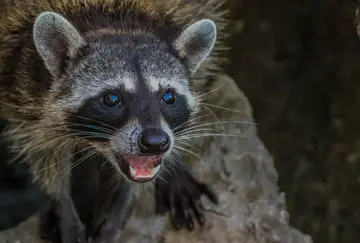
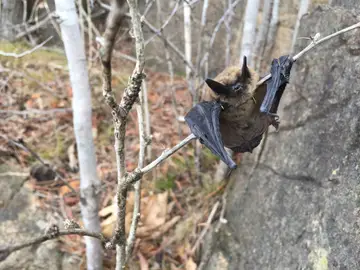
Rabies. “Rabies is most often seen among wild animals such as raccoons, bats, skunks, and foxes, but any mammal can be infected with rabies.” New York State Department of Health
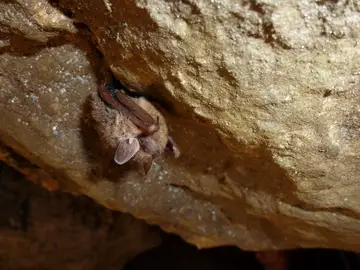
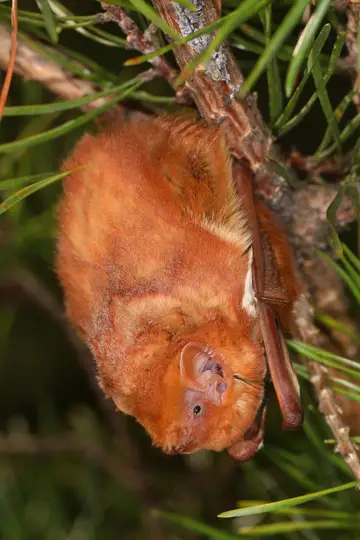
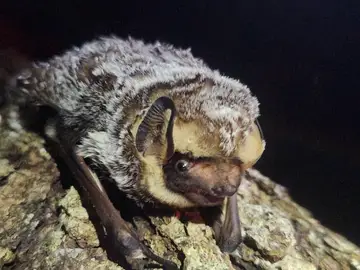
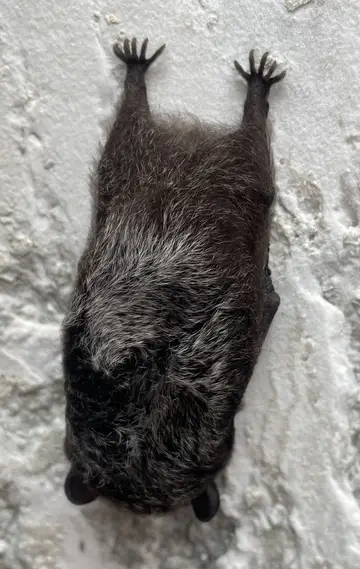
Bats
Rabies. “Rabies is most often seen among wild animals such as raccoons, bats, skunks, and foxes, but any mammal can be infected with rabies.” New York State Department of Health
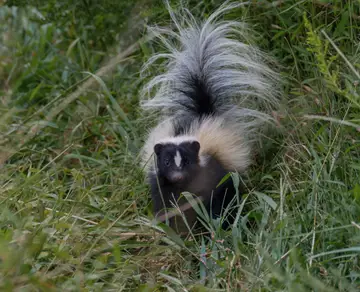
Skunks
Rabies. “Rabies is most often seen among wild animals such as raccoons, bats, skunks, and foxes, but any mammal can be infected with rabies.” New York State Department of Health
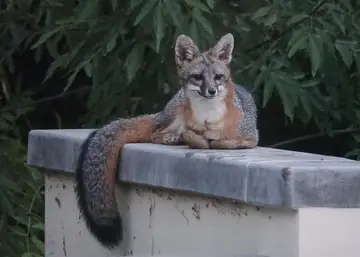
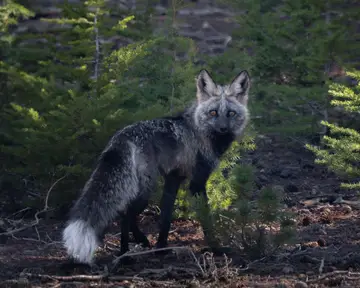
Foxes
Rabies. “Rabies is most often seen among wild animals such as raccoons, bats, skunks, and foxes, but any mammal can be infected with rabies.” New York State Department of Health
Photo: U.S. Fish and Wildlife Service - Midwest Region · Public domain · Wikimedia Commons
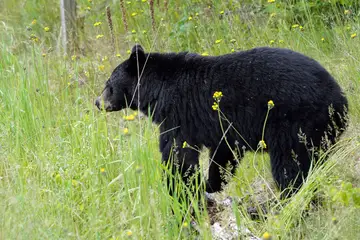
Can become defensive if surprised, approached or emboldened by human food. “Although black bears have a natural fear of humans, they can act or become defensive if surprised, approached, or become emboldened by human food sources.” NYSDEC
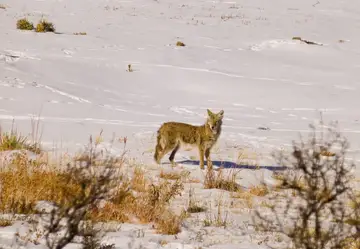
Eastern Coyote
DEC says a coyote that does not flee from people should be considered dangerous. “A coyote that does not flee from people should be considered dangerous.” NYSDEC
“Although black bears have a natural fear of humans, they can act or become defensive if surprised, approached, or become emboldened by human food sources.” NYSDEC
Size
Smokies: males average about 6 ft long, 3 ft at the shoulder and 250 lb in summer; females usually just over 100 lb. Missouri: 46 to 78 inches long, 86 to 600 lb.
How to recognize it
Straight facial profile, rounded erect ears, very short tail
Total length 18 to 50 inches, tail 3 to 8 inches, weight 8 to 49 pounds (Missouri). About twice the size of a house cat.
How to recognize it
Short 'bobbed' tail, 4 to 8 inches, with a black tip and white underneath (Arizona). New Mexico instead describes black bars on top, white underneath and a white tip.
Pointed ears with tufts at the tips, often with cheek tufts
Backs of the ears are black with a light central spot
About 3.5 to 4 feet long including the tail and roughly 2 feet tall at the shoulder; weight varies by region: Arizona 20 to 30 lb, Florida average about 28 lb, Georgia 25 to 45 lb
How to recognize it
Large pointed ears, long narrow nose, bushy black-tipped tail
Like a slender medium-sized dog, much smaller than a wolf
“Rabies is most often seen among wild animals such as raccoons, bats, skunks, and foxes, but any mammal can be infected with rabies.” New York State Department of Health
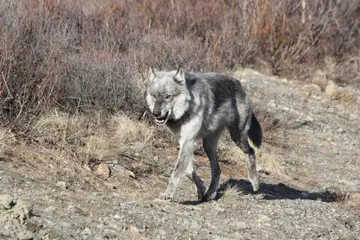
Adults about 40 to 175 pounds depending on sex and region; on average about five to six feet long (Isle Royale), up to 6 feet including the tail (Washington), and 26 to 34 inches at the shoulder. Twice the size of a coyote.
How to recognize it
Longer legs, larger feet, wider head and snout, shorter ears, narrow body and straight tail compared with most coyotes and dogs.
Tracks about 5 inches long by 4 inches wide, with claws showing.
NY DEC: gray wolves are much larger (females typically 50-100 lb, males 70-145 lb, 5-6 ft nose to tail, 27-33 in at the shoulder); eastern coyotes rarely exceed 50 lb and generally stand under 2 ft at the shoulder. Wolves have small rounded ears and a short blocky snout; coyotes have larger, more pointed ears (can look rounded in winter coat) and a long, narrow, pointed snout. Coyote tracks are typically 3 x 2 in, wolf tracks about 5 x 4 in. NY DEC says most wolf reports in New York were coyotes, dogs or wolf-dog hybrids. NYSDEC
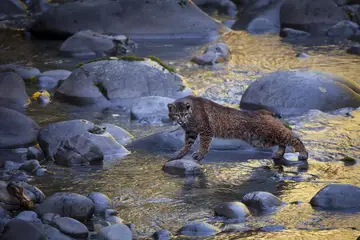
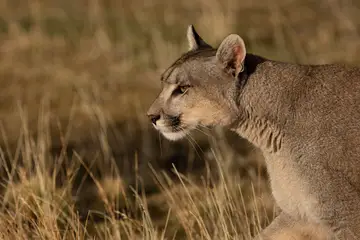
Bobcat or Mountain lion (cougar)?
Photo: National Marine Sanctuaries · Public domain · Wikimedia Commons
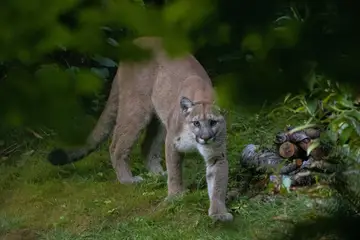
Cougars are one color (yellow-brown to light cinnamon) with a long tail. The bobcat's tail is short and its coat is spotted. TWRA says cougars are many times larger and longer, with a very long tail.
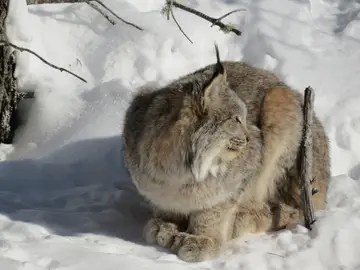
Bobcat or Canada lynx?
Photo: National Marine Sanctuaries · Public domain · Wikimedia Commons
A lynx has longer ear tufts and large, fur-covered feet (3.5 to 4.5 inches wide). A bobcat's feet are small and hairless (up to 2.5 inches). A lynx's tail has a black tip and no white underneath; a bobcat's tail is white underneath. Do not use the tail tip alone, because agencies describe the bobcat's tip differently (New Mexico white, Arizona black).
Photos show typical adults; individuals vary. Never get close to compare.
When mammals are active in New York
Records of mammals in New York peak in February to July and October. They show when people record mammals, not how many there are (about month bars).
JanFebMarAprMayJunJulAugSepOctNovDec
25,019 records of mammals in New York by month (GBIF, CC0 and CC BY records).
If you are bitten or stung
Call 911 or Poison Help at 1-800-222-1222 right away. Poison Help connects you to your local poison center, any time of day.
“The following list of amphibians (34 species), reptiles (38), birds (474) and mammals (93)”
Be BearWise. NYSDEC. archived copy, captured September 24, 2026; checked November 3, 2026.Quoted passages (2)
“Although black bears have a natural fear of humans, they can act or become defensive if surprised, approached, or become emboldened by human food sources.”
“Never feed or approach bears”
Rabies: What to Know. New York State Department of Health. undated page; checked November 3, 2026.Quoted passages (1)
“Rabies is most often seen among wild animals such as raccoons, bats, skunks, and foxes, but any mammal can be infected with rabies.”
Moose. NYSDEC. archived copy, captured June 16, 2026; checked November 3, 2026.Quoted passages (2)
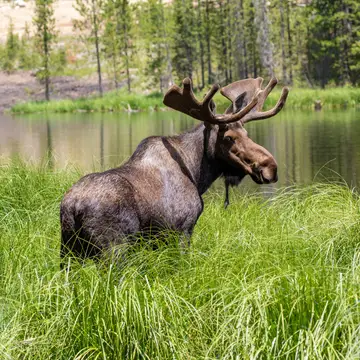
“Moose are most active from dusk to dawn, when their coloration makes them difficult to see in the roadway”
“DEC biologists estimated that there are roughly 600-700 moose in the Adirondack Region as of 2018”
Coyote Conflicts. NYSDEC. archived copy, captured August 31, 2026; checked November 3, 2026.Quoted passages (2)
“A coyote that does not flee from people should be considered dangerous.”
“Do not approach a coyote or let children or pets approach a coyote.”
Black Bear. NYSDEC. archived copy, captured July 11, 2026; checked November 3, 2026.Quoted passages (1)
“Currently estimated at a minimum of 6,000-8,000 bears in areas open to hunting”
Gray Wolf. NYSDEC. archived copy, captured April 20, 2026; checked November 3, 2026.Quoted passages (1)
“Males are larger than females, with females typically weighing 50-100 pounds and males weighing 70-145 pounds, depending on geographic locations. Wolves generally measure 5-6 feet from nose to tip of tail and stand 27-33 inches at the shoulder.”