On this page All 4 lizards When they are active How to report About this list Sources NYSDEC: 4 species of lizard, and 17 species of snakes (3 of which are venomous).
This page lists 4 lizards : all from NYSDEC Division of Fish and Wildlife's Checklist of Amphibians, Reptiles, Birds and Mammals of New York State, Including Their Legal Status.
1 is nonnative.
All 4 lizards From A to Z.
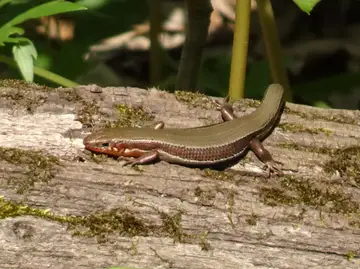
No confirmed photo of Common Five-lined Skink Plestiodon fasciatus
Not stated
Venom No official source we use states whether this animal is venomous. That does not mean it is harmless: do not handle it. Size 5 to 8.5 inches How to recognize it Smooth, shiny scales Enlarged middle row of scales under the tail (separates it from the southeastern five-lined skink) Tail breaks off easily and twitches to distract predators; it grows back shorter
J F M A M J J A S O N D
190 records by month. Full Common Five-lined Skink guide
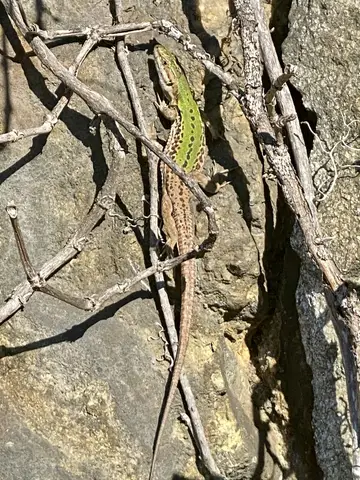
Photo: Sandy Wolkenberg · CC BY 4.0 · iNaturalist Italian Wall Lizard Podarcis sicula
Not stated Nonnative
Venom No official source we use states whether this animal is venomous. That does not mean it is harmless: do not handle it. Photo: Thomas Koffel · CC BY 4.0 · iNaturalist Northern Coal Skink Plestiodon anthracinus
Not stated
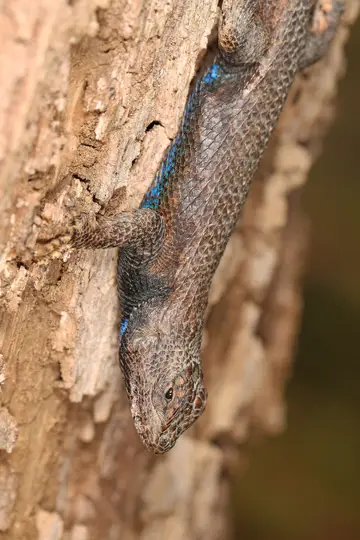
Venom No official source we use states whether this animal is venomous. That does not mean it is harmless: do not handle it. Where in New York Coal skinks are known from only ten locations in the state, as well as two historical locations. New York Natural Heritage Program Photo: Judy Gallagher · CC BY 2.0 · Wikimedia Commons Sceloporus undulatus
Not stated
Venom No official source we use states whether this animal is venomous. That does not mean it is harmless: do not handle it. Size About 4 to 7.25 inches total length (SREL, Ohio DNR); Illinois gives up to about 19 cm (7.5 in). How to recognize it Rough, spiny, keeled scales: the only native lizard in North Carolina (and in Georgia and South Carolina) that looks rough or spiny Often on fences, trees, logs, stumps, rocks and buildings; dashes up a tree and keeps to the far side when approached Conservation New York Threatened Full Northern Fence Lizard guide
When lizards are active in New York Records of lizards in New York peak in May to July. They show when people record lizards, not how many there are (about month bars ).
Jan Feb Mar Apr May Jun Jul Aug Sep Oct Nov Dec
271 records of lizards in New York by month (GBIF, CC0 and CC BY records). How to report Rattlesnake sightings or questions: your DEC Regional Wildlife Office. NYSDEC
Sources Amphibians and Reptiles . NYSDEC. archived copy, captured May 22, 2026; checked November 3, 2026. Checklist of Amphibians, Reptiles, Birds and Mammals of New York State, Including Their Legal Status (Tenth revision, February 2019) . NYSDEC Division of Fish and Wildlife. February 2019; checked November 3, 2026. Conservationist for Kids: amphibians and reptiles . NYSDEC. file 0220c4kherps.pdf; checked November 3, 2026. Quoted passages (1) “4 species of lizard, and 17 species of snakes (3 of which are venomous).” Coal Skink Guide . New York Natural Heritage Program. guide last updated November 30, 2018; checked November 3, 2026. Timber Rattlesnake . NYSDEC. archived copy, captured October 15, 2026; checked November 3, 2026. Quoted passages (1) “To report sighting, or ask questions, contact your Regional Wildlife Office” GBIF.org occurrence records, human observations licensed CC0 1.0 or CC BY 4.0 only, accessed November 3, 2026. The datasets behind these counts are listed on our Sources page.