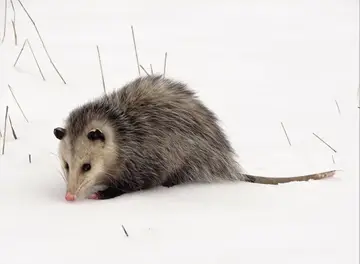
New York has 3 venomous snakes named by official sources: Northern Copperhead, Eastern Massasauga and Timber Rattlesnake, as labelled by NYSDEC, reprinted from New York State Conservationist and NYSDEC. This guide covers 9 animal groups from New York State Department of Environmental Conservation (NYSDEC) lists and other official sources, with photos, venomous status and when each group is active.
Identification help has limits: a photo cannot confirm that an animal is safe. Watch from a distance and never handle a wild animal.
These are the animals official sources describe as venomous or as a risk to people in New York, across 7 groups. The reason is given in the source's own terms.
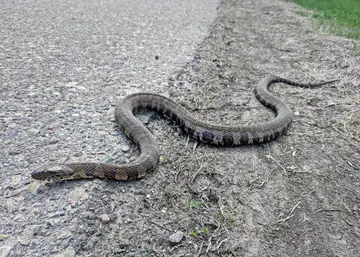
Venomous: “The massasauga rattlesnake is the smallest of the three venomous snakes found in New York State, the other two being the timber rattlesnake (Crotalus horridus) and the copperhead (Agkistrodon …”
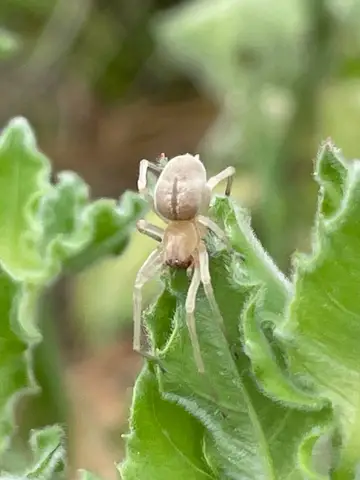
Venomous: “Two species of small, pale, yellow spiders, called yellow sac spiders Cheiracanthium mildei (pictured here) and C. inclusum, are the only spiders in New York that are moderately poisonous to humans …”
Venomous: “Two species of small, pale, yellow spiders, called yellow sac spiders Cheiracanthium mildei (pictured here) and C. inclusum, are the only spiders in New York that are moderately poisonous to humans …”
Venomous: “The venomous black widow spider with its shiny, black abdomen and red hour-glass design is a cobweb spider, but is extremely rare in New York.”
DEC's brochure says they have necrotic venom causing slow-to-heal sores: “They have necrotic venom that causes itchy or painful ulcerating sores that are slow to heal.”
Stinging insects that nest on or near structures: “Yellowjackets, bald-faced hornets and paper wasps are stinging insects that nest on or near structures.”
Can become defensive if surprised, approached or emboldened by human food: “Although black bears have a natural fear of humans, they can act or become defensive if surprised, approached, or become emboldened by human food sources.”
DEC says a coyote that does not flee from people should be considered dangerous: “A coyote that does not flee from people should be considered dangerous.”
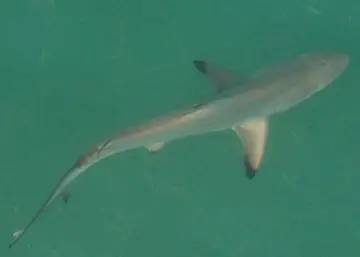
Bites on bathers: “Negative interactions between sharks and bathers in New York have been primarily attributed to exploratory bites from sharks to bathers who were swimming near large concentrations of forage fish, and …”
Venomous spines. NOAA says the spines deliver a venomous sting, and that juvenile lionfish have been collected in waters off Long Island, New York. DEC says juveniles are seen only sporadically in summer: “The spines of this species deliver a venomous sting that can last for days and cause extreme pain, sweating, respiratory distress, and even paralysis.”
Official sources name the brown recluse in connection with New York, but none we use says it lives there. It is not counted among the dangerous animals above; each entry quotes the source.
18 nonnative animals are named on New York's official lists (NYSDEC). The USGS Nonindigenous Aquatic Species database records 1 nonnative animal in our groups with an established population in New York.
Darker cells are the months with more open-licence observation records of each group in New York (GBIF). They show when people see and record these animals, not how many there are. The current month, this month, is highlighted.
Not on the official list. DEC's checklist has no crocodilian. USGS NAS lists 25 American alligator records in New York as a native transplant: 22 marked failed and 3 with no status (Queens 2021, Kings 2023, Nassau 2025). USGS warns its records may not reflect established populations. USGS
How many venomous snakes are in New York?
DEC says there are 17 snake species in New York and only 3 are venomous, with limited distribution. NYSDEC
Yes. Two species: Timber Rattlesnake and Eastern Massasauga. Massasaugas have only two known populations. NYSDEC · More
Are there copperheads in New York?
Yes. DEC lists the copperhead as one of three venomous snakes. ESF says it is mainly along the lower Hudson Valley south of Kingston and scattered through the Catskills. SUNY College of Environmental Science and Forestry
Are there cottonmouths or water moccasins in New York?
No. ESF says the cottonmouth does not occur within state borders. DEC's guide gives its northern limit as southern Virginia. Northern water snakes are often mistaken for it. SUNY College of Environmental Science and Forestry
Are there coral snakes in New York?
Not on the official list. DEC's checklist has no coral snake and DEC names only three venomous species. NYSDEC
Yes. DEC says many shark species migrate seasonally to New York's marine waters. NYSDEC
Are there great white sharks in New York?
Yes. DEC lists the white shark and says juveniles use Long Island's coastal ocean as nursery habitat. NYSDEC
Are there bears in New York?
Yes. DEC estimates a minimum of 6,000-8,000 black bears in areas open to hunting, with 50-60% in the Adirondack region. NYSDEC
Are there mountain lions in New York?
No. DEC lists the eastern cougar's New York status as extirpated. The checklist puts cougar under rarely encountered species. NYSDEC · More
Are there wolves in New York?
Rarely. DEC says there is no evidence of a breeding population, with occasional verified reports of wild wolves over the past twenty years. NYSDEC
Are there moose in New York?
Yes. DEC biologists estimated roughly 600-700 moose in the Adirondack Region as of 2018. NYSDEC
Are there wild boar in New York?
DEC calls Eurasian boar a destructive invasive species, says its eradication efforts have been very successful to date and that it is working to prevent reintroduction, and asks people to report sightings. NYSDEC
Are there coyotes in New York?
Yes. DEC says the eastern coyote is firmly established. NYSDEC · More
Sources
Amphibians and Reptiles. NYSDEC. archived copy, captured May 22, 2026; checked November 3, 2026.Quoted passages (5)
“There are 2600 species worldwide and 17 species in New York, but only 3 of these are venomous (with limited distribution).”
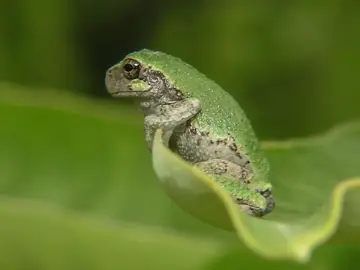
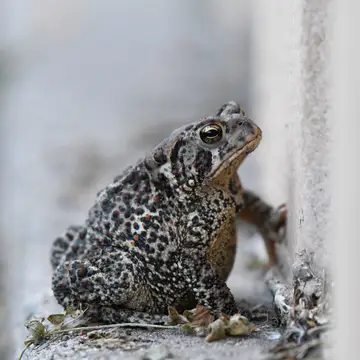
“11 species of frogs, and 3 species of toads”
“Use extreme caution when approaching snapping turtles.”
“It is important to remember never to handle a venomous species; simply waiting for them to cross is an option.”
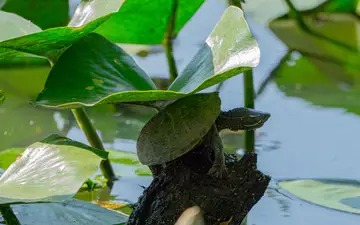
“Our native turtles are on the move in May and June seeking sandy areas or loose soil to lay their eggs.”
“…copperhead is an attractively-patterned, venomous snake”
“If you’re in doubt, leave the snake alone.”
Eastern Massasauga. NYSDEC. archived copy, captured July 15, 2026; checked November 3, 2026.Quoted passages (3)
“The massasauga rattlesnake is the smallest of the three venomous snakes found in New York State, the other two being the timber rattlesnake (Crotalus horridus) and the copperhead (Agkistrodon contortrix).”
“…there are only two known populations remaining in New York”
“In New York, massasaugas hibernate from late October through late April”
Timber Rattlesnake. NYSDEC. archived copy, captured October 15, 2026; checked November 3, 2026.Quoted passages (5)
“…the timber rattlesnake is the largest venomous snake in New York.”
“To report sighting, or ask questions, contact your Regional Wildlife Office”
“Do not panic! Keep a safe distance of 6ft or more away. Let them move along on their own. Do not kill or collect the individual.”
“If an accidental bite occurs, seek medical attention immediately or call 911.”
“Timber rattlesnake have an active season that runs from late April until mid-October. In Northern New York, emergence is often delayed until mid-May.”
“The following list of amphibians (34 species), reptiles (38), birds (474) and mammals (93)”
Common spiders brochure (11 species and groups). NYSDEC, text by Cornell University Department of Entomology, reprinted from New York State Conservationist. June 2007; checked November 3, 2026.Quoted passages (6)
“Two species of small, pale, yellow spiders, called yellow sac spiders Cheiracanthium mildei (pictured here) and C. inclusum, are the only spiders in New York that are moderately poisonous to humans. They have necrotic venom”
“The venomous black widow spider with its shiny, black abdomen and red hour-glass design is a cobweb spider, but is extremely rare in New York.”
“They have necrotic venom that causes itchy or painful ulcerating sores that are slow to heal.”
“In New York, bites attributed to brown recluse spiders are almost certainly from yellow sac spiders.”
“…spiders are in the class Arachnida, which also contains scorpions, harvestmen, pseudoscorpions and ticks.”
“In New York’s northern climate, spiders typically live only one year.”
“Yellowjackets, bald-faced hornets and paper wasps are stinging insects that nest on or near structures.”
West Nile Virus (WNV). New York State Department of Health. undated page; checked November 3, 2026.Quoted passages (1)
“WNV is usually spread through the bite of an infected mosquito.”
Rabies: What to Know. New York State Department of Health. undated page; checked November 3, 2026.Quoted passages (1)
“Rabies is most often seen among wild animals such as raccoons, bats, skunks, and foxes, but any mammal can be infected with rabies.”
Be BearWise. NYSDEC. archived copy, captured September 24, 2026; checked November 3, 2026.Quoted passages (1)
“Although black bears have a natural fear of humans, they can act or become defensive if surprised, approached, or become emboldened by human food sources.”
Coyote Conflicts. NYSDEC. archived copy, captured August 31, 2026; checked November 3, 2026.Quoted passages (2)
“A coyote that does not flee from people should be considered dangerous.”
“The Eastern coyote is firmly established in New York.”
Moose. NYSDEC. archived copy, captured June 16, 2026; checked November 3, 2026.Quoted passages (2)
“Moose are most active from dusk to dawn, when their coloration makes them difficult to see in the roadway”
“DEC biologists estimated that there are roughly 600-700 moose in the Adirondack Region as of 2018”
Shark Public Safety. NYSDEC. archived copy, captured May 15, 2026; checked November 3, 2026.Quoted passages (1)
“Negative interactions between sharks and bathers in New York have been primarily attributed to exploratory bites from sharks to bathers who were swimming near large concentrations of forage fish, and where there was poor water clarity in the surf zone. There is no evidence which suggests that sharks in New York are intentionally pursuing or "attacking" humans.”
What is a lionfish? NOAA National Ocean Service. updated September 23, 2026; checked November 3, 2026.Quoted passages (1)
“The spines of this species deliver a venomous sting that can last for days and cause extreme pain, sweating, respiratory distress, and even paralysis.”
Spotted Lanternfly. NYSDEC. archived copy, captured August 15, 2026; checked November 3, 2026.Quoted passages (1)
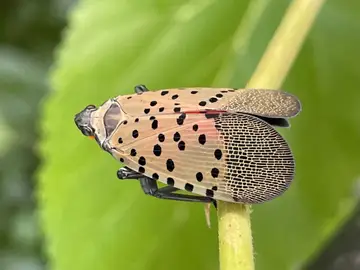
“Spotted lanternfly (Lycorma delicatula) or SLF, is an invasive insect pest from Asia”
Terrestrial Invasive Species. NYSDEC. archived copy, captured October 14, 2026; checked November 3, 2026.Quoted passages (3)
“The Asian longhorned beetle, or ALB, is an invasive wood-boring insect”
“The emerald ash borer (EAB) is a wood-boring beetle from Asia”
“Native to Asia, the hemlock woolly adelgid, or HWA, is an invasive, aphid-like insect”
Aquatic Invasive Species. NYSDEC. archived copy, captured July 16, 2026; checked November 3, 2026.Quoted passages (1)
“Round goby is a highly invasive bottom-dwelling fish”
Northern Snakehead. NYSDEC. archived copy, captured October 24, 2026; checked November 3, 2026.Quoted passages (1)
“It is crucial that we stop the spread of this invasive predator to protect the health of our waters, wildlife and fishing industry.”
Green Crab. NYSDEC. archived copy, captured April 11, 2026; checked November 3, 2026.Quoted passages (1)
“…populations in New York are well established.”
Eurasian Boar. NYSDEC. archived copy, captured June 8, 2026; checked November 3, 2026.Quoted passages (2)
“…invasive Eurasian boar represent a great threat to New York.”
“Although DEC's eradication efforts have been very successful to date, we must remain vigilant. If you see Eurasian boars, please report them using the link above.”
“The copperhead is mainly found along the lower Hudson Valley south of Kingston and scattered through the Catskills.”
“…this latter species is a large venomous snake that does not occur within our state borders.”
Sharks. NYSDEC. archived copy, captured August 18, 2026; checked November 3, 2026.Quoted passages (2)
“Many species of sharks make seasonal migrations to New York's marine waters every year.”
“Juveniles utilize Long Island's coastal ocean as nursery habitat”
Black Bear. NYSDEC. archived copy, captured July 11, 2026; checked November 3, 2026.Quoted passages (1)
“Currently estimated at a minimum of 6,000-8,000 bears in areas open to hunting”
Eastern Cougar. NYSDEC. archived copy, captured June 11, 2026; checked November 3, 2026.
Gray Wolf. NYSDEC. archived copy, captured April 20, 2026; checked November 3, 2026.Quoted passages (1)
“Although there is currently no evidence of a breeding wolf population in New York, there have been occasional verified reports of wild wolves in the state over the past twenty years.”
Upstate New York Poison Center. SUNY Upstate Medical University. undated page; checked November 3, 2026.Quoted passages (1)
“For Poisoning Questions or Emergencies, Call the Upstate New York Poison Center at 1-800-222-1222”
Be Shark Smart! flyer. NYSDEC. undated page; checked November 3, 2026.Quoted passages (1)
“Shark activity is likely to increase in the nearshore ocean during the peak summer months.”
Marine Mammals Of New York. NYSDEC. archived copy, captured August 21, 2026; checked November 3, 2026.Quoted passages (1)
“Seals are found in New York from late fall until late spring, with the highest concentration generally occurring around April.”