States Wildlife

New York Spiders: Identification, Pictures & Which Bite

Last checked November 3, 2026 against official sources.

On this page
  1. Which spiders can hurt you
  2. Ticks (arachnids, not spiders)
  3. Not confirmed here
  4. All 14 spiders
  5. When they are active
  6. If you are bitten or stung
  7. Common questions
  8. What official sources say
  9. About this list
  10. Sources

This page lists 14 spiders: all from NYSDEC, text by Cornell University Department of Entomology, reprinted from New York State Conservationist's DEC common spiders brochure, reprinted from New York State Conservationist, June 2007. 3 are venomous by official accounts.

Not every species: no complete official list of New York spiders exists, so this page covers the ones state and Extension sources name. How lists are built.

Which spiders can hurt you

Official sources single out these spiders in New York, in their own words:

Ticks (arachnids, not spiders)

Official sources single out these ticks in New York, in their own words:

Not confirmed here

Official sources name the brown recluse in connection with New York, but none we use says it lives there. It is not counted on this page; each entry quotes the source.

All 14 spiders

Venomous species first, then A to Z. Do not handle them.

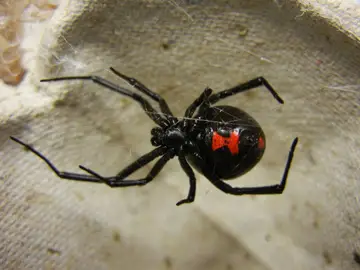
Black widow
Photo: Shenrich91 · CC BY-SA 3.0 · Wikimedia Commons · resized

Black widow

Venomous per NYSDEC, text by Cornell University Department of Entomology, reprinted from New York State Conservationist

Danger to people
“Only one species that could make us really sick lives in the Northeast: the black widow spider, and it’s rare in New York.” New York State Integrated Pest Management, Cornell University
Where in New York
Extremely rare in New York NYSDEC, text by Cornell University Department of Entomology, reprinted from New York State Conservationist
What the sources say

Venom: “The venomous black widow spider with its shiny, black abdomen and red hour-glass design is a cobweb spider, but is extremely rare in New York.” (NYSDEC, text by Cornell University Department of Entomology, reprinted from New York State Conservationist)

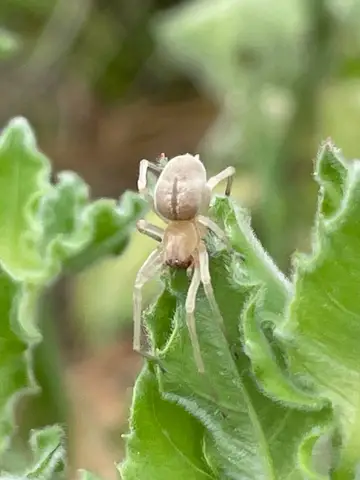
Yellow sac spider
Photo: Syrio · CC BY-SA 4.0 · Wikimedia Commons · resized

Yellow sac spider

Cheiracanthium mildei

Venomous per NYSDEC, text by Cornell University Department of Entomology, reprinted from New York State Conservationist

What the sources say

Venom: “Two species of small, pale, yellow spiders, called yellow sac spiders Cheiracanthium mildei (pictured here) and C. inclusum, are the only spiders in New York that are moderately poisonous to humans. They have necrotic venom” (NYSDEC, text by Cornell University Department of Entomology, reprinted from New York State Conservationist)

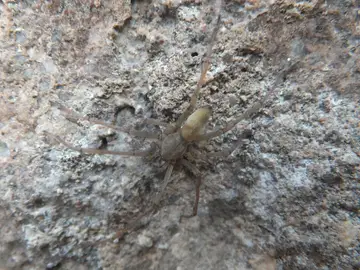
Yellow sac spider
Photo: Evelyn Lazzaretti 🏳️‍⚧️ · CC0 1.0 · iNaturalist

Yellow sac spider

Cheiracanthium inclusum

Venomous per NYSDEC, text by Cornell University Department of Entomology, reprinted from New York State Conservationist

What the sources say

Venom: “Two species of small, pale, yellow spiders, called yellow sac spiders Cheiracanthium mildei (pictured here) and C. inclusum, are the only spiders in New York that are moderately poisonous to humans. They have necrotic venom” (NYSDEC, text by Cornell University Department of Entomology, reprinted from New York State Conservationist)

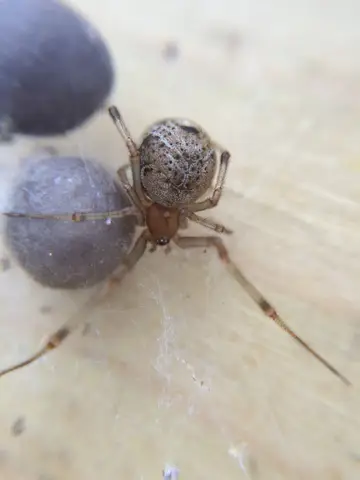
American house spider
Photo: Erin Lalime · CC BY 4.0 · iNaturalist

American house spider

Achaearanea tepidariorum

Not stated

Venom
No official source we use states whether this animal is venomous. That does not mean it is harmless: do not handle it.
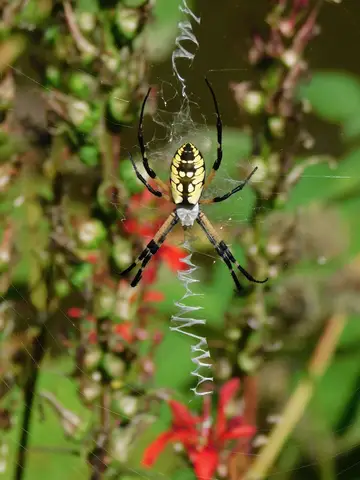
Black and yellow garden spider
Photo: Michael J. Papay · CC BY 4.0 · iNaturalist

Black and yellow garden spider

Argiope aurantia

Not stated

Venom
No official source we use states whether this animal is venomous. That does not mean it is harmless: do not handle it.
Size
Females 3/4 to 1 inch long, not counting legs (Missouri); 19 to 28 mm (Penn State); Texas A&M says the female body is more than 1 inch. Males about 1/4 inch (Missouri); 5 to 8 mm (Penn State).
How to recognize it
  • Round web about 2 feet across, built only by females; the spider rests head-down at the center, where a zigzag silk band (stabilimentum) runs vertically.
  • Abdomen an elongated oval, pointed at the rear, with two humps (shoulders) at the front.
  • Males are much smaller than females and rarely noticed.
118 records by month.

Full Black and yellow garden spider guide

No confirmed photo of Cellar spiders (family Pholcidae)

Cellar spiders (family Pholcidae)

Not stated

Venom
No official source we use states whether this animal is venomous. That does not mean it is harmless: do not handle it.
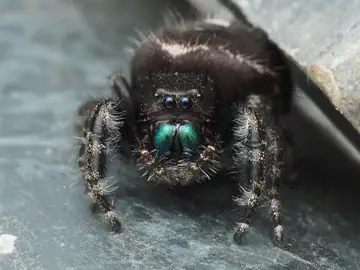
Common jumping spider
Photo: Zygy · CC0 1.0 · iNaturalist

Common jumping spider

Phidippus audax

Not stated

Venom
No official source we use states whether this animal is venomous. That does not mean it is harmless: do not handle it.
382 records by month.
No confirmed photo of Crab spiders (family Thomisidae)

Crab spiders (family Thomisidae)

Not stated

Venom
No official source we use states whether this animal is venomous. That does not mean it is harmless: do not handle it.
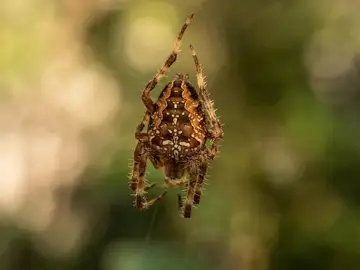
Cross spider
Photo: Esin Üstün from Istanbul, Turkey · CC BY 2.0 · Wikimedia Commons

Cross spider

Araneus diadematus

Not stated

Venom
No official source we use states whether this animal is venomous. That does not mean it is harmless: do not handle it.
120 records by month.
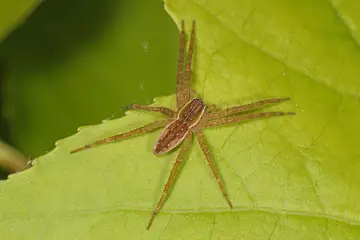
Fishing or nursery web spider
Photo: Judy Gallagher · CC BY 2.0 · Wikimedia Commons

Fishing or nursery web spider

Dolomedes triton

Not stated

Venom
No official source we use states whether this animal is venomous. That does not mean it is harmless: do not handle it.
No confirmed photo of Grass spider or funnel weaver

Grass spider or funnel weaver

Agelenopsis sp.

Not stated

Venom
No official source we use states whether this animal is venomous. That does not mean it is harmless: do not handle it.
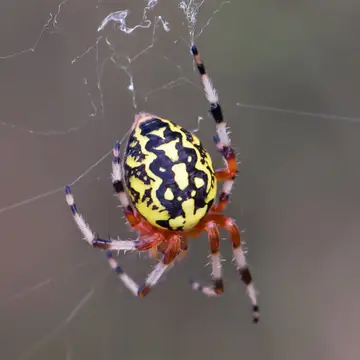
Marbled spider
Photo: Bill Keim · CC BY 4.0 · iNaturalist

Marbled spider

Araneus marmoreus

Not stated

Venom
No official source we use states whether this animal is venomous. That does not mean it is harmless: do not handle it.
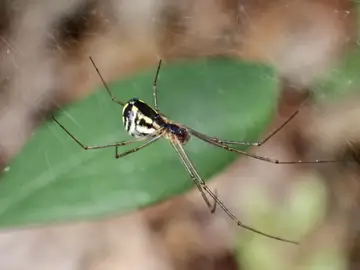
Sheet web weaver
Photo: Julia Beach · CC BY 4.0 · iNaturalist

Sheet web weaver

Linyphia marginata

Not stated

Venom
No official source we use states whether this animal is venomous. That does not mean it is harmless: do not handle it.
No confirmed photo of Wolf spiders (family Lycosidae)

Wolf spiders (family Lycosidae)

Not stated

Venom
No official source we use states whether this animal is venomous. That does not mean it is harmless: do not handle it.

When spiders are active in New York

Records of spiders in New York peak in May to August. They show when people record spiders, not how many there are (about month bars).

5,861 records of spiders in New York by month (GBIF, CC0 and CC BY records).

If you are bitten or stung

Call 911 or Poison Help at 1-800-222-1222 right away. Poison Help connects you to your local poison center, any time of day.

Common questions

What official sources say

Are there brown recluse spiders in New York?

DEC's brochure says bites attributed to them in New York are almost certainly from yellow sac spiders. NYSDEC, text by Cornell University Department of Entomology, reprinted from New York State Conservationist

“In New York, bites attributed to brown recluse spiders are almost certainly from yellow sac spiders.”

About this list

The species list comes from DEC common spiders brochure (commonspiders.pdf), reprinted from New York State Conservationist, June 2007 (NYSDEC, text by Cornell University Department of Entomology, reprinted from New York State Conservationist, June 2007).

Venom labels come only from official sources and link to them; "Not stated" never means harmless. How labels work.

Sources

  1. Amphibians and Reptiles. NYSDEC. archived copy, captured May 22, 2026; checked November 3, 2026.
  2. Common spiders brochure (11 species and groups). NYSDEC, text by Cornell University Department of Entomology, reprinted from New York State Conservationist. June 2007; checked November 3, 2026.
    Quoted passages (5)
    “Two species of small, pale, yellow spiders, called yellow sac spiders Cheiracanthium mildei (pictured here) and C. inclusum, are the only spiders in New York that are moderately poisonous to humans. They have necrotic venom”
    “The venomous black widow spider with its shiny, black abdomen and red hour-glass design is a cobweb spider, but is extremely rare in New York.”
    “They have necrotic venom that causes itchy or painful ulcerating sores that are slow to heal.”
    “In New York, bites attributed to brown recluse spiders are almost certainly from yellow sac spiders.”
    “In New York’s northern climate, spiders typically live only one year.”
  3. Spider FAQs One Two Three. New York State Integrated Pest Management, Cornell University. March 10, 2016; checked November 3, 2026.
    Quoted passages (1)
    “Only one species that could make us really sick lives in the Northeast: the black widow spider, and it’s rare in New York.”
  4. Be Tick Free - A Guide for Preventing Lyme Disease. New York State Department of Health. undated page; checked November 3, 2026.
    Quoted passages (1)
    “Lyme disease is caused by bacteria transmitted by the deer tick (Ixodes scapularis).”
  5. Venomous Spiders at Work. CDC / NIOSH. archived copy, captured October 13, 2026; checked November 3, 2026.
    Quoted passages (1)
    “Black widows and brown recluses are two types of venomous spiders in the United States.”
  6. GBIF.org occurrence records, human observations licensed CC0 1.0 or CC BY 4.0 only, accessed November 3, 2026. The datasets behind these counts are listed on our Sources page.