This page lists 66 mammals: 61 from MDC's MDC Field Guide > Mammals plus A Guide to Missouri's Common Mammals and 5 named in other official sources.
3 are venomous by official accounts. 2 are nonnative. MDC gives a total of 70; the 66 here are the mammals official sources name one by one.
Which mammals can hurt you
Official sources single out these mammals in Missouri, in their own words:
Photo: U.S. Fish and Wildlife Service - Midwest Region · Public domain · Wikimedia Commons
MDC. “Because a bear can become a danger when it learns to associate humans with food, it is important to keep them wild.” MDC
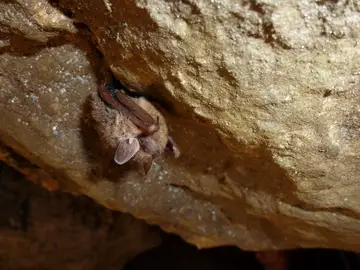
Bats
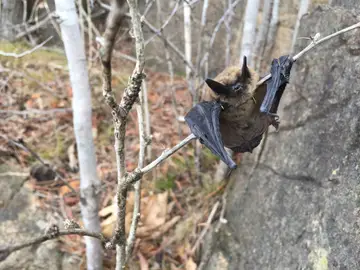
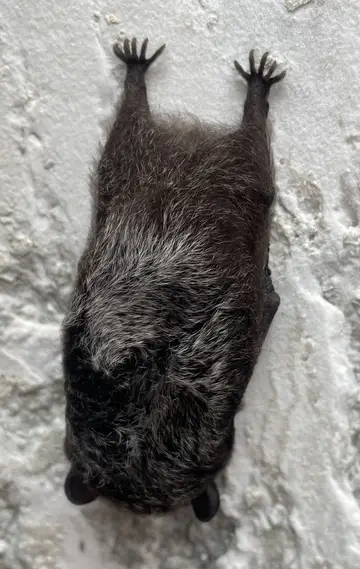
Can transmit rabies. “Like other mammals, bats can potentially transmit rabies. … Bats are not aggressive toward people but will bite in self-defense if handled.” MDC
Hantavirus. “Although not yet identified in Missouri, hantaviruses that cause hemorrhagic fever with renal syndrome and hantavirus pulmonary syndrome have been identified in the deer mouse, white-footed mouse, hispid cotton rat, and marsh rice rat within the United …” MDC
Invasive. “Feral hogs damage property and can spread disease to humans, pets, and livestock.” MDC
No longer living here
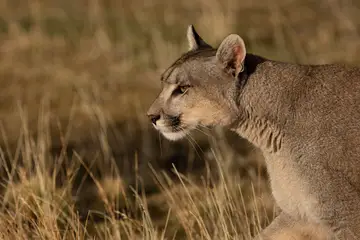
Official sources list the mountain lion as extirpated from Missouri; it stays on the list below with that status. It is not counted among the mammals that can hurt you here; each entry quotes the source.
Extirpated. “Officially extirpated, since there is no evidence of a breeding population, but there have been confirmed sightings scattered statewide, as far east as Lewis, Madison, Warren, Wayne, and St. Louis counties.” MDC
All 66 mammals
Venomous species first, then A to Z. Do not handle them.
No confirmed photo of Elliot’s Short-Tailed Shrew
Elliot’s Short-Tailed Shrew
Blarina hylophaga
Where in Missouri
Statewide. The different species have their own distributional patterns. MDC
What the sources say
Venom: “Our three species of short-tailed shrews have a powerful venom in their saliva that immobilizes insect prey and extends the time fresh food is available, so it facilitates food hoarding.” (MDC)
Habitat: The preferred habitats for each species are mentioned in the descriptions above, since they can be helpful for identification. (MDC)
No confirmed photo of Northern Short-Tailed Shrew
Northern Short-Tailed Shrew
Blarina brevicauda
Where in Missouri
Statewide. The different species have their own distributional patterns. MDC
What the sources say
Venom: “Our three species of short-tailed shrews have a powerful venom in their saliva that immobilizes insect prey and extends the time fresh food is available, so it facilitates food hoarding.” (MDC)
Habitat: The preferred habitats for each species are mentioned in the descriptions above, since they can be helpful for identification. (MDC)
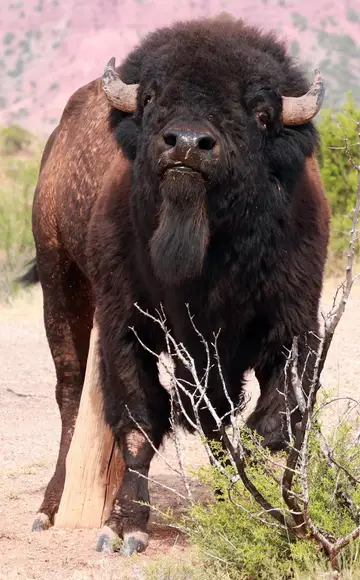
Small herds of bison can be seen, for example, at Prairie State Park (Barton County) and at The Nature Conservancy's Dunn Ranch Prairie (Harrison County) … MDC
Conservation
MDC field guide: Species of Conservation Concern
What the sources say
Range: Small herds of bison can be seen, for example, at Prairie State Park (Barton County) and at The Nature Conservancy's Dunn Ranch Prairie (Harrison County). Others live on private ranches.
Habitat: Before European settlement, the American bison was a spectacular species of the open Great Plains, moving in vast herds north in the spring and south in the fall. (MDC)
Photo: U.S. Fish and Wildlife Service - Midwest Region · Public domain · Wikimedia Commons
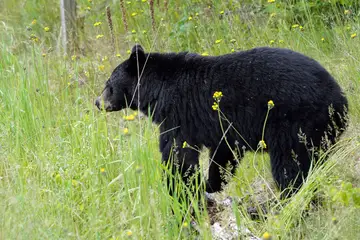
“Because a bear can become a danger when it learns to associate humans with food, it is important to keep them wild.” MDC
Size
Smokies: males average about 6 ft long, 3 ft at the shoulder and 250 lb in summer; females usually just over 100 lb. Missouri: 46 to 78 inches long, 86 to 600 lb.
How to recognize it
Straight facial profile, rounded erect ears, very short tail
Short curved claws for climbing
Where in Missouri
Most black bears in Missouri live south of the Missouri River, but individuals have been seen as far north as the Iowa border … MDC
What the sources say
Range: Most black bears in Missouri live south of the Missouri River, but individuals have been seen as far north as the Iowa border. Black bears are the only bear species found in Missouri.
Habitat: Black bears typically live in heavily wooded areas. (MDC)
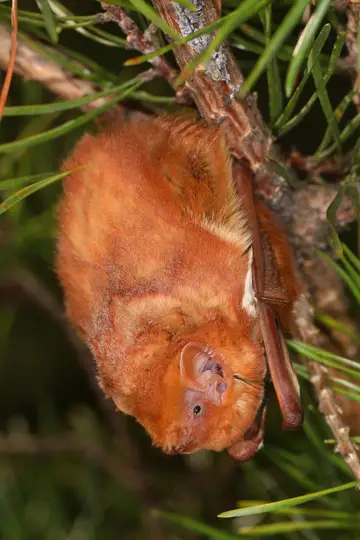
Habitat: Because big brown bats are widespread in Missouri and North America — and because they are relatively large and frequently roost in people’s attics and walls, in urban, suburban, and rural areas — they are one of the most commonly encountered bats in the state. (MDC)
No confirmed photo of Big Free-Tailed Bat
Big Free-Tailed Bat
Nyctinomops macrotis
Photo: National Marine Sanctuaries · Public domain · Wikimedia Commons
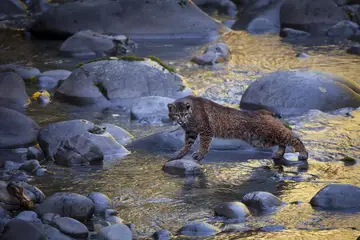
Total length 18 to 50 inches, tail 3 to 8 inches, weight 8 to 49 pounds (Missouri). About twice the size of a house cat.
How to recognize it
Short 'bobbed' tail, 4 to 8 inches, with a black tip and white underneath (Arizona). New Mexico instead describes black bars on top, white underneath and a white tip.
Pointed ears with tufts at the tips, often with cheek tufts
Backs of the ears are black with a light central spot
Where in Missouri
Statewide. Bobcats used to live primarily in the Ozarks and Bootheel, but in recent decades they have expanded westward and northward. MDC
What the sources say
Habitat: Bobcats live in heavy forest cover, preferably second-growth timber with much underbrush, broken with clearings such as glades and rocky outcrops. (MDC)
About 3.5 to 4 feet long including the tail and roughly 2 feet tall at the shoulder; weight varies by region: Arizona 20 to 30 lb, Florida average about 28 lb, Georgia 25 to 45 lb
How to recognize it
Large pointed ears, long narrow nose, bushy black-tipped tail
Like a slender medium-sized dog, much smaller than a wolf
Paw track about 2 inches long (Florida)
Where in Missouri
Increasing throughout the state; most abundant in grassland habitat in northern and western Missouri. MDC
JFMAMJJASOND
97 records by month.What the sources say
Habitat: Coyotes live in semi-open, brushy country, along timber edges, and in open farmlands, occupying territories ranging from about 9 to nearly 30 square miles. (MDC)
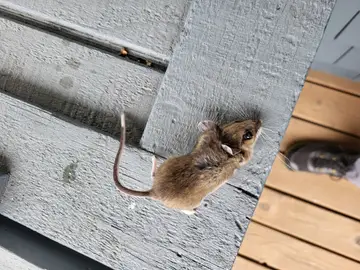
“Although not yet identified in Missouri, hantaviruses that cause hemorrhagic fever with renal syndrome and hantavirus pulmonary syndrome have been identified in the deer mouse, white-footed mouse …” MDC
Where in Missouri
The deer mouse lives throughout Missouri and is one of the most abundant mammals on open lands … MDC
What the sources say
Range: The deer mouse lives throughout Missouri and is one of the most abundant mammals on open lands. The species is widespread across North America, ranging throughout central and southern Canada, the United States, and into southern Mexico.
Habitat: In Missouri, the deer mouse is usually found in open habitats such as pastures, meadows, prairie, cultivated fields, and along field borders and fencerows. (MDC)
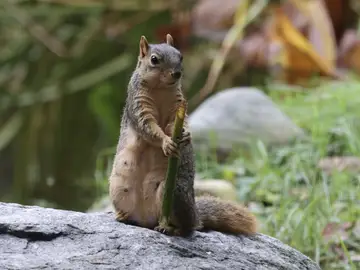
Both of these squirrels occur throughout Missouri, but the gray squirrel is more abundant in the Ozark and Mississippi Lowland region, while the fox squirrel is more … MDC
What the sources say
Range: Both of these squirrels occur throughout Missouri, but the gray squirrel is more abundant in the Ozark and Mississippi Lowland region, while the fox squirrel is more common in the northern and western plains.
Habitat: Gray squirrels are more common in bottomlands and rivers with a bushy understory, and fox squirrels are more common along higher ridges. (MDC)
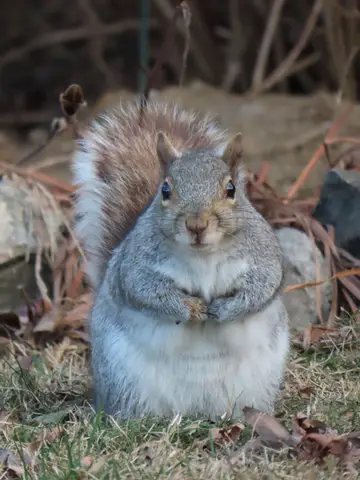
Both of these squirrels occur throughout Missouri, but the gray squirrel is more abundant in the Ozark and Mississippi Lowland region, while the fox squirrel is more … MDC
JFMAMJJASOND
181 records by month.What the sources say
Range: Both of these squirrels occur throughout Missouri, but the gray squirrel is more abundant in the Ozark and Mississippi Lowland region, while the fox squirrel is more common in the northern and western plains.
Habitat: Gray squirrels are more common in bottomlands and rivers with a bushy understory, and fox squirrels are more common along higher ridges. (MDC)
Habitat: Moles live in a series of tunnels underground and may be found wherever the soil is sufficiently thick, pliable, and adhesive enough to support a tunnel system and is adequately populated with grubs, earthworms, and other prey items. (MDC)
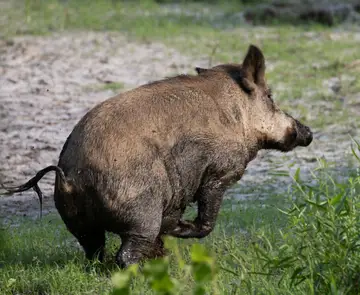
“Feral hogs damage property and can spread disease to humans, pets, and livestock.” MDC
Size
Adults average 75 to 250 pounds, but some get twice as large. They can stand up to 3 feet tall and reach 5 feet long, and males (boars) are larger than females (sows). FWC says Florida wild hogs can weigh more than 150 pounds and be 5 to 6 feet long. Ohio State Extension says Ohio adults typically weigh 125 to 200 pounds.
How to recognize it
Look much like domestic hogs but are generally thinner, with thicker hides of coarse, bristly hair and longer tusks
Four continuously growing tusks, 2 on top and 2 below
Restricted to about the northern quarter of Missouri. Globally, the range is small, extending from central Canada into the north-central United States. MDC
Conservation
MDC field guide: Species of Conservation Concern
What the sources say
Habitat: Occurs primarily in the borderland between woods and prairies; seldom uses either forests or strictly open prairies. (MDC)
Statewide, but most common in the Ozarks of southern Missouri. MDC
What the sources say
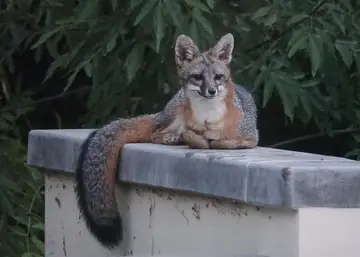
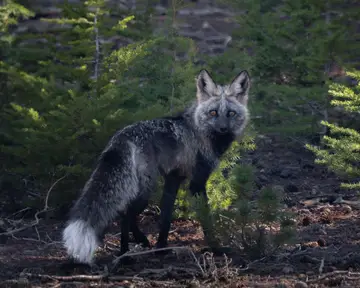
Habitat: Gray foxes live in wooded areas and fairly open brushland, preferring mature forest at night and young dense forest stands in the day. (MDC)
No confirmed photo of Gray Myotis (Gray Bat)
Gray Myotis (Gray Bat)
Myotis grisescens
Where in Missouri
Missouri contains about 20 percent of the total population of gray myotises … MDC
Conservation
MDC field guide: Endangered, Species of Conservation Concern
What the sources say
Range: Missouri contains about 20 percent of the total population of gray myotises. Most of the known gray myotis caves are south of the Missouri River, particularly in the Ozarks, although a few exist north of the river.
Habitat: This species once flourished in limestone caves, especially caves within two miles of rivers, streams, or lakes. (MDC)
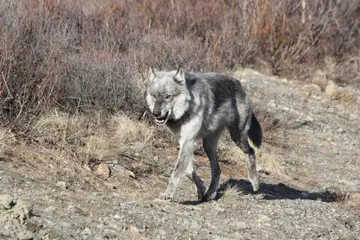
Adults about 40 to 175 pounds depending on sex and region; on average about five to six feet long (Isle Royale), up to 6 feet including the tail (Washington), and 26 to 34 inches at the shoulder. Twice the size of a coyote.
How to recognize it
Longer legs, larger feet, wider head and snout, shorter ears, narrow body and straight tail compared with most coyotes and dogs.
Tracks about 5 inches long by 4 inches wide, with claws showing.
Long, drawn-out howls, audible up to five miles.
Where in Missouri
Considered extirpated from Missouri. Individuals occasionally wander into Missouri from other states, particularly Minnesota, Wisconsin, or Michigan. MDC
Conservation
MDC field guide: Endangered, Species of Conservation Concern
What the sources say
Habitat: Fear of attacks on humans and livestock, and its feeding on game animals, led to unremitting efforts to exterminate the gray wolf. (MDC)
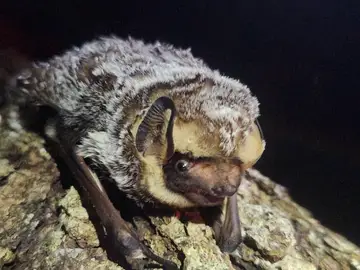
Habitat: Hoary bats inhabit trees, usually roosting 9–17 feet above the ground in the foliage. (MDC)
No confirmed photo of Indiana Myotis (Indiana Bat)
Indiana Myotis (Indiana Bat)
Myotis sodalis
Where in Missouri
More than 85 percent of Missouri's total population of Indiana myotises hibernate in only eight specific locations, three of which are located in Shannon, Washington … MDC
Conservation
MDC field guide: Endangered, Species of Conservation Concern
What the sources say
Range: More than 85 percent of Missouri's total population of Indiana myotises hibernate in only eight specific locations, three of which are located in Shannon, Washington, and Iron counties of Missouri. Summer roosting Indiana myotises have been recorded in northern Missouri.
Habitat: In summer, Indiana myotises live in wooded habitats, often roosting under loose bark of trees such as shagbark hickory. (MDC)
No confirmed photo of Least Weasel
Least Weasel
Mustela nivalis
Where in Missouri
Probably present in all northern counties of Missouri. Our state is at the southern extent of its overall North American range. MDC
Conservation
MDC field guide: Species of Conservation Concern
What the sources say
Habitat: The least weasel lives in low, sparse ground cover such as pastures, stubble fields, and marshy areas, sometimes even mouse-infested barns. (MDC)
No confirmed photo of Little Brown Myotis (Little Brown Bat)
Little Brown Myotis (Little Brown Bat)
Myotis lucifugus
Where in Missouri
Widely distributed throughout the state but no longer common in any one place. MDC
Conservation
MDC field guide: Species of Conservation Concern
What the sources say
Habitat: When feeding, little brown myotises prefer borders between open areas and denser cover where flying insects are plentiful, and they also frequently forage over water. (MDC)
Range: Prairie and woodland voles occur statewide. The meadow vole probably occurs throughout much of northern Missouri, in its preferred habitat of low, damp areas of stream valleys and floodplains.
Habitat: Voles build runway systems above and below ground. (MDC)
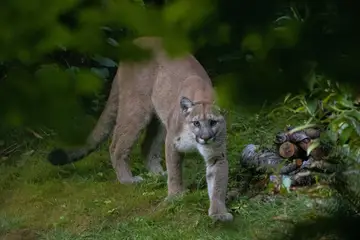
Total length 5 to 8.5 feet including a 21 to 37.5 inch tail; males 79 to 265 lb, females 64 to 141 lb (Missouri Department of Conservation).
How to recognize it
Very large, slender cat with a small head, small rounded ears without tufts and a long, heavy tail.
The tail may be one-third of the total length; much larger than a bobcat or lynx.
Tracks: 2.75 to 3.75 inches wide, three lobes at the bottom of the heel pad, claw marks usually absent.
Where in Missouri
Officially extirpated, since there is no evidence of a breeding population, but there have been confirmed sightings scattered statewide, as far east as Lewis, Madison … MDC
Conservation
MDC field guide: Species of Conservation Concern
What the sources say
Range: Officially extirpated, since there is no evidence of a breeding population, but there have been confirmed sightings scattered statewide, as far east as Lewis, Madison, Warren, Wayne, and St. Louis counties. View map of confirmed sightings.
Habitat: Mountain lions prefer vegetative cover or rocky, rugged terrain, generally in areas of low human habitation. (MDC)
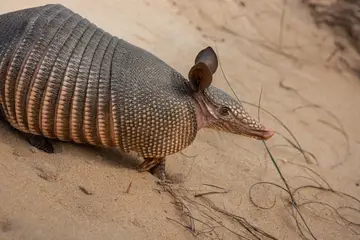
Cat-sized: 15-17 in long not counting the tail, 8-17 lb (FWC); 24-32 in including a 9.5-14.5 in tail (UGA).
How to recognize it
Bony skin plates that form a shell, which make it easy to identify
Long scaly tail, deer-like ears, long pig-like snout
Tail encased in 12 bony rings; no canine or incisor teeth
Where in Missouri
Primarily in the southern half of the state, but they occur as far north as the Missouri-Iowa state line. The armadillo’s northward range is limited by cold weather. MDC
What the sources say
Habitat: Nine-banded armadillos live in a variety of terrestrial habitats, but in Missouri they seem to prefer oak-hickory or shortleaf pine forests. (MDC)
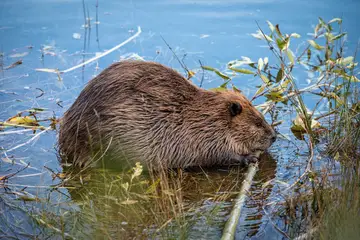
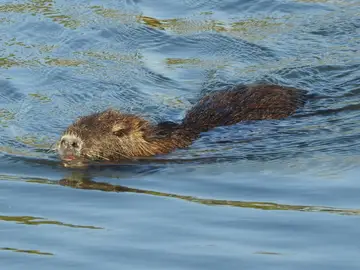
Body 47 to 61 cm (about 1.5 to 2 ft) plus a tail of about 37 to 41 cm (USGS). Males reach about 20 lb and females 18 lb (USGS). CDFW: up to 2.5 ft body length, 12 to 18 inch tail, 20+ lb.
How to recognize it
White whiskers and a large, round, sparsely haired tail.
Large dark-orange front teeth (incisors).
Hind feet webbed on four of five toes.
Where in Missouri
In Missouri, the nutria has been occasionally observed or trapped in scattered counties across the state … MDC
Conservation
MDC field guide: Invasive
What the sources say
Range: In Missouri, the nutria has been occasionally observed or trapped in scattered counties across the state. Recent observations are primarily from the southeastern part of the state: Stoddard, Pemiscot, Jasper, Cape Girardeau, and Bollinger counties.
Range: Prairie and woodland voles occur statewide. The meadow vole probably occurs throughout much of northern Missouri, in its preferred habitat of low, damp areas of stream valleys and floodplains.
Habitat: Voles build runway systems above and below ground. (MDC)
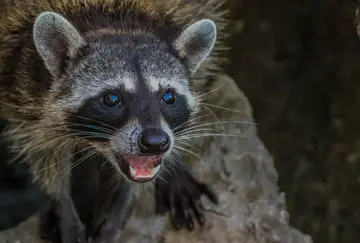
Habitat: Raccoons prefer timbered habitat near water. (MDC)
No confirmed photo of Rafinesque’s Big-eared Bat
Rafinesque’s Big-eared Bat
Corynorhinus rafinesquii
Where in Missouri
Rafinesque’s big-eared bat has been recorded from five counties in southeastern Missouri (Cape Girardeau, Scott, Stoddard, Mississippi, and New Madrid), and it probably … MDC
Conservation
MDC: "Rafinesque’s big-eared bat is a species of conservation concern in Missouri, ranked as critically imperiled."
What the sources say
Range: Rafinesque’s big-eared bat has been recorded from five counties in southeastern Missouri (Cape Girardeau, Scott, Stoddard, Mississippi, and New Madrid), and it probably also occurs in the rest of the Bootheel, too.
Habitat: Rafinesque’s big-eared bat is associated with forested areas, bottomland forests, and streamside habitats throughout its range. (MDC)
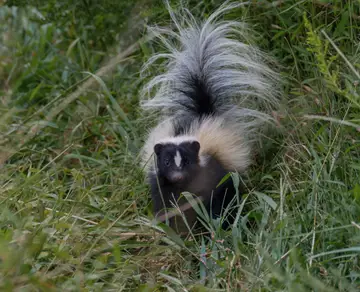
Habitat: Striped skunks use a variety of habitats but prefer forest borders, brushy field corners, fencerows, and open grassy fields broken by wooded ravines and rocky outcrops, where permanent water is nearby. (MDC)
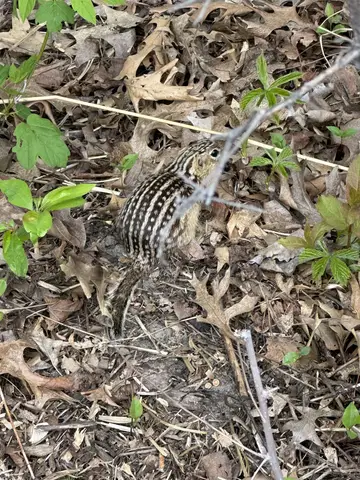
Formerly occurred in grassland habitats throughout much of northern and western Missouri, but now occurs only in localized populations mostly in northwest Missouri. MDC
Conservation
MDC field guide: Species of Conservation Concern
What the sources say
Habitat: The thirteen-lined ground squirrel prefers to live in open areas where the grass is short. (MDC)
Range: Prairie and woodland voles occur statewide. The meadow vole probably occurs throughout much of northern Missouri, in its preferred habitat of low, damp areas of stream valleys and floodplains.
Habitat: Voles build runway systems above and below ground. (MDC)
Mammals people confuse
Bobcat or Mountain lion (cougar)?
Photo: National Marine Sanctuaries · Public domain · Wikimedia Commons
Cougars are one color (yellow-brown to light cinnamon) with a long tail. The bobcat's tail is short and its coat is spotted. TWRA says cougars are many times larger and longer, with a very long tail.
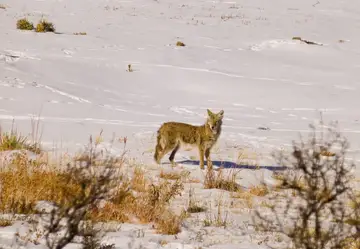
NY DEC: gray wolves are much larger (females typically 50-100 lb, males 70-145 lb, 5-6 ft nose to tail, 27-33 in at the shoulder); eastern coyotes rarely exceed 50 lb and generally stand under 2 ft at the shoulder. Wolves have small rounded ears and a short blocky snout; coyotes have larger, more pointed ears (can look rounded in winter coat) and a long, narrow, pointed snout. Coyote tracks are typically 3 x 2 in, wolf tracks about 5 x 4 in. NY DEC says most wolf reports in New York were coyotes, dogs or wolf-dog hybrids.
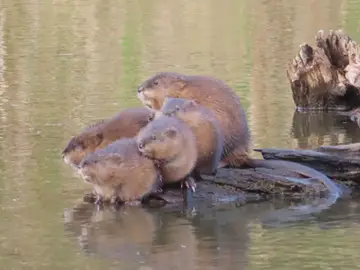
Muskrats have dark whiskers, a nearly triangular (side-flattened) tail and weigh at most 5 pounds. CDFW says most nutria reports it receives are actually muskrats.
Photos show typical adults; individuals vary. Never get close to compare.
When mammals are active in Missouri
Records of mammals in Missouri peak in February to July. They show when people record mammals, not how many there are (about month bars).
JanFebMarAprMayJunJulAugSepOctNovDec
1,533 records of mammals in Missouri by month (GBIF, CC0 and CC BY records).
If you are bitten or stung
Call 911 or Poison Help at 1-800-222-1222 right away. Poison Help connects you to your local poison center, any time of day.
Official advice from MDC:
Do not handle bats or other wild mammals (rabies). MDC
No. MDC: no mountain lions currently breed in Missouri, but some pass through each year. MDC
“Although no mountain lions currently breed in Missouri, some do pass through the state each year.”
Are there black bears in Missouri?
Yes. MDC: the bear population was nearly extirpated in the early 1900s but has been growing in recent decades. MDC
“Missouri’s bear population was nearly extirpated in the early 1900s but has been growing in recent decades, in part due to population recovery work in Arkansas in the 1960s.”
“Because a bear can become a danger when it learns to associate humans with food, it is important to keep them wild.”
“Although not yet identified in Missouri, hantaviruses that cause hemorrhagic fever with renal syndrome and hantavirus pulmonary syndrome have been identified in the deer mouse, white-footed mouse, hispid cotton rat, and marsh rice rat within the United States. … Since it is hard to tell if a mouse or a rat carries hantavirus, it is best to avoid all wild mice and rats and to safely clean up any rodent urine, droppings, or nesting materials with a disinfectant or a mixture of bleach and water.”
“Feral hogs damage property and can spread disease to humans, pets, and livestock.”
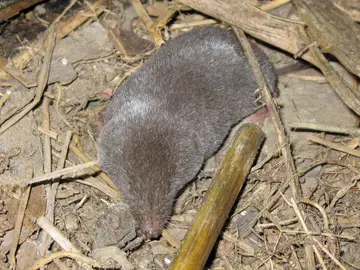
“Our three species of short-tailed shrews have a powerful venom in their saliva that immobilizes insect prey and extends the time fresh food is available, so it facilitates food hoarding.”
“Like other mammals, bats can potentially transmit rabies. … Bats are not aggressive toward people but will bite in self-defense if handled.”
“Officially extirpated, since there is no evidence of a breeding population, but there have been confirmed sightings scattered statewide, as far east as Lewis, Madison, Warren, Wayne, and St. Louis counties.”
“The potential for contracting rabies is slight, but handling bats (or any other wild mammal) is not recommended.”
“Although no mountain lions currently breed in Missouri, some do pass through the state each year.”
“Missouri’s bear population was nearly extirpated in the early 1900s but has been growing in recent decades, in part due to population recovery work in Arkansas in the 1960s.”