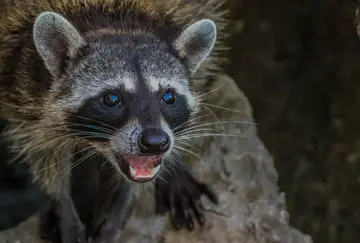
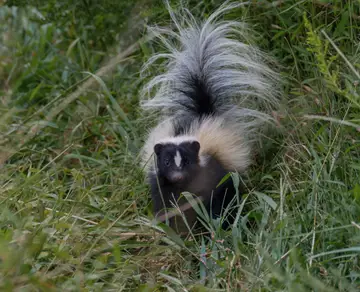
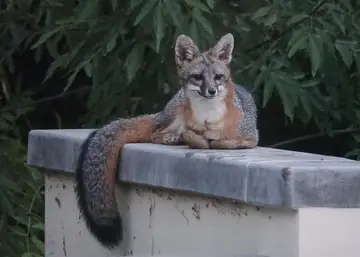
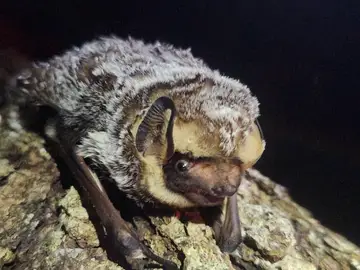
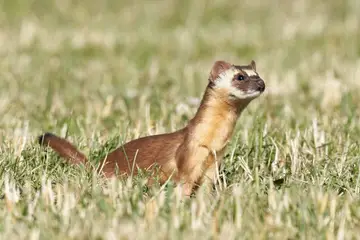
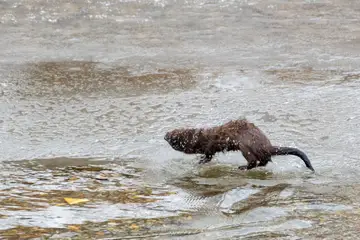
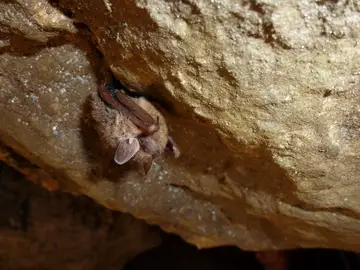
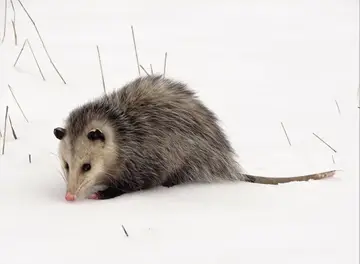
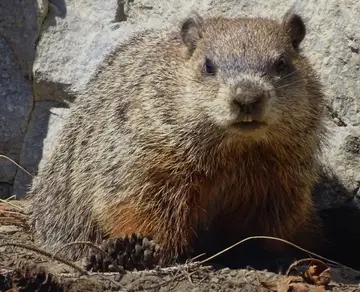
Rabies vector in Kentucky (KDFWR names skunks). “In Kentucky, raccoons, skunks and bats are the main vectors of the disease.” KDFWR
Bats (all Kentucky species)
Rabies vector in Kentucky (KDFWR). “In Kentucky, raccoons, skunks and bats are the main vectors of the disease. … You should never directly handle the bat.” KDFWR
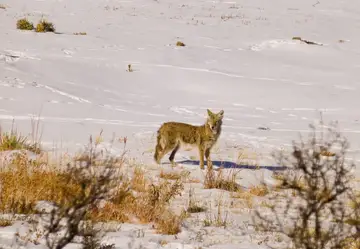
May defend dens. “People should stay away from den sites, as coyotes may feel the need to protect their pups.” KDFWR
All 71 mammals
From A to Z. Do not handle them.
No confirmed photo of Allegheny Woodrat
Allegheny Woodrat
Neotoma magister
Where in Kentucky
Physiographic Regions: Cumberland Mountains, Cumberland Plateau, Plateau Escarpment, Bluegrass, Knobs, Interior Plateau, Interior River Valley And Hills KDFWR
Conservation
KY SWAP 2023 Species of Greatest Conservation Need; priority group: High; state rank S3S4
What the sources say
Habitat: Uses rocky cliffs, caves, and fissures or tumbled boulders on the side of mountains, some utilize buildings. Nests in fissures, behind rocks, or on a rock shelf or on the floor level of a cave. Nests may be around trees and logs, or high in trees in the event of high water. (KDFWR)
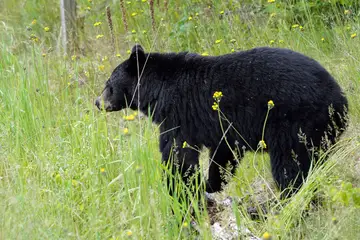
“It is important to remember that bears are powerful animals and their behavior can be unpredictable.” KDFWR
Size
Smokies: males average about 6 ft long, 3 ft at the shoulder and 250 lb in summer; females usually just over 100 lb. Missouri: 46 to 78 inches long, 86 to 600 lb.
How to recognize it
Straight facial profile, rounded erect ears, very short tail
KY SWAP 2023 Species of Greatest Conservation Need; priority group: Moderate; state rank S4?
What the sources say
Habitat: Associated with dense cover of heaths, particularly Vaccinium and Kalmia, and with conifers in higher elevations. Inhabits brushy and shrubby areas, and wooded areas, preferring thick wooded cover. (KDFWR)
No confirmed photo of Big Brown Bat
Big Brown Bat
Eptesicus fuscus
Photo: National Marine Sanctuaries · Public domain · Wikimedia Commons
Total length 18 to 50 inches, tail 3 to 8 inches, weight 8 to 49 pounds (Missouri). About twice the size of a house cat.
How to recognize it
Short 'bobbed' tail, 4 to 8 inches, with a black tip and white underneath (Arizona). New Mexico instead describes black bars on top, white underneath and a white tip.
Pointed ears with tufts at the tips, often with cheek tufts
Backs of the ears are black with a light central spot
Physiographic Regions: Cumberland Mountains, Cumberland Plateau, Interior Plateau, Interior River Valley And Hills KDFWR
Conservation
KY SWAP 2023 Species of Greatest Conservation Need; priority group: Moderate; state rank S3
What the sources say
Habitat: Uses a variety of habitats including high mountain slopes, moist grass fields, marshes, moss-carpeted spruce forests, hardwood forests, swamps, and bogs. Often particularly abundant in habitats with moss carpets. (KDFWR)
Physiographic Regions: Interior Plateau, Interior River Valley And Hills, Mississippi Alluvial Plain, Mississippi Valley Loess Plain KDFWR
Conservation
KY SWAP 2023 Species of Greatest Conservation Need; priority group: Moderate; state rank S2
What the sources say
Habitat: Prime habitat is bottomland hardwood forest and swamps, but occupies a variety of habitats. Occurs in the dense underbrush in the lowest and wettest parts of overflowed lands. Nests are often located off the ground, as well as in or under logs, stumps, or brush piles. (KDFWR)
“People should stay away from den sites, as coyotes may feel the need to protect their pups.” KDFWR
Size
About 3.5 to 4 feet long including the tail and roughly 2 feet tall at the shoulder; weight varies by region: Arizona 20 to 30 lb, Florida average about 28 lb, Georgia 25 to 45 lb
How to recognize it
Large pointed ears, long narrow nose, bushy black-tipped tail
Like a slender medium-sized dog, much smaller than a wolf
Physiographic Regions: Cumberland Mountains, Cumberland Plateau, Plateau Escarpment, Bluegrass, Knobs, Interior Plateau, Interior River Valley And Hills KDFWR
Conservation
KY SWAP 2023 Species of Greatest Conservation Need; priority group: High; state rank S2
What the sources say
Habitat: Usually occurs in mountainous regions. Most commonly found in caves and mines, some bats may roost on the ground under rocks and boulders. Uses caves or mines for hibernation in winter. (KDFWR)
KY SWAP 2023 Species of Greatest Conservation Need; priority group: High; state rank S2S3
What the sources say
Habitat: Inhabits rock piles, rock slides, cervices in cliffs, weedy cultivated fields and woodlots. Common in the vicinity of farms, and avoids heavy woods and wetlands. Dens can be in crevices, buildings, hollow logs, and often burrows of other animals. (KDFWR)
Physiographic Regions: Cumberland Mountains, Cumberland Plateau, Plateau Escarpment, Bluegrass, Knobs, Interior Plateau, Interior River Valley And Hills, Mississippi … KDFWR
Conservation
KY SWAP 2023 Species of Greatest Conservation Need; priority group: High; state rank S2; federal status: Endangered
What the sources say
Range: Physiographic Regions: Cumberland Mountains, Cumberland Plateau, Plateau Escarpment, Bluegrass, Knobs, Interior Plateau, Interior River Valley And Hills, Mississippi Valley Loess Plain
Habitat: Hibernacula and maternity sites are both in caves, and bats are strongly tied to specific caves in summer and winter. Maternity colonies typically form in warm caves near large bodies of water. Will also use bridges as roosts. (KDFWR)
Physiographic Regions: Cumberland Mountains, Cumberland Plateau, Plateau Escarpment, Bluegrass, Knobs, Interior Plateau, Interior River Valley And Hills, Mississippi … KDFWR
Conservation
KY SWAP 2023 Species of Greatest Conservation Need (data deficient); priority group: Data Deficient; state rank S4
What the sources say
Range: Physiographic Regions: Cumberland Mountains, Cumberland Plateau, Plateau Escarpment, Bluegrass, Knobs, Interior Plateau, Interior River Valley And Hills, Mississippi Alluvial Plain, Mississippi Valley Loess Plain
Habitat: Typically associated with deciduous forests in eastern North America, also found in in swamps and pine woods. Avoids farmlands. Dens may be in hollow trees/logs, burrows in the grounds on brushy hillsides instead of open fields. (KDFWR)
KY SWAP 2023 Species of Greatest Conservation Need (data deficient); priority group: Data Deficient; state rank S4
What the sources say
Habitat: Constrained to the Appalachians, it can be found from shrubby pasture land to wooded forests. It prefers well-drained soil and avoids wet or hard clay soils. (KDFWR)
Physiographic Regions: Cumberland Mountains, Cumberland Plateau, Plateau Escarpment, Bluegrass, Knobs, Interior Plateau, Interior River Valley And Hills, Mississippi … KDFWR
Conservation
KY SWAP 2023 Species of Greatest Conservation Need; priority group: High; state rank S1S2; federal status: Endangered
What the sources say
Range: Physiographic Regions: Cumberland Mountains, Cumberland Plateau, Plateau Escarpment, Bluegrass, Knobs, Interior Plateau, Interior River Valley And Hills, Mississippi Alluvial Plain, Mississippi Valley Loess Plain
Habitat: Gathers in small colonies in the summer, usually under loose tree bark in semi-wooded areas, in upland and bottomland forests, or even completely in the open. Winter hibernacula is restricted to a few caves with very specific conditions. (KDFWR)
KY SWAP 2023 Species of Greatest Conservation Need; priority group: Highest; state rank S3
What the sources say
Habitat: Uses cool, damp areas in coniferous, deciduous, and mixed forests. Moss-covered logs and rocks are ideal habitat. Can be found in boulder crevices, sphagnum marshes, and rock-strewn streams. Nests are made with grasses and dead leaves and are found bewteen boulders or beneath stumps and logs. (KDFWR)
KY SWAP 2023 Species of Greatest Conservation Need (data deficient); priority group: Data Deficient; state rank S2S3
What the sources say
Habitat: Primary habitat is mixed grasslands, hedgerows, and pond edges of agricultural lands. Nests are constructed in sheltered places, including in nests and burrows of prey species. (KDFWR)
No confirmed photo of Little Brown Bat
Little Brown Bat
Myotis lucifugus
Where in Kentucky
Physiographic Regions: Cumberland Mountains, Cumberland Plateau, Plateau Escarpment, Bluegrass, Knobs, Interior Plateau, Interior River Valley And Hills, Mississippi … KDFWR
Conservation
KY SWAP 2023 Species of Greatest Conservation Need; priority group: Moderate; state rank S2; federal status: Not Listed
What the sources say
Range: Physiographic Regions: Cumberland Mountains, Cumberland Plateau, Plateau Escarpment, Bluegrass, Knobs, Interior Plateau, Interior River Valley And Hills, Mississippi Valley Loess Plain
Habitat: Occurs in most habitats; commonly found around farms, towns, and villages. Summer maternity colonies may form in buildings and other structures, and occasionally hollow trees. Day roosts consist of nursery colonies formed by females and nursing young and individual sites of males. Night roosts are occupied by a greater number of bats in confined spaces. Winter hibernacula are typically caves or mines. (KDFWR)
Physiographic Regions: Cumberland Mountains, Cumberland Plateau, Plateau Escarpment, Bluegrass, Knobs, Interior Plateau, Interior River Valley And Hills KDFWR
Conservation
KY SWAP 2023 Species of Greatest Conservation Need (data deficient); priority group: Data Deficient; state rank S4
What the sources say
Habitat: With a widespread range, it may occupy a variety of habitats within the state. (KDFWR)
No confirmed photo of Marsh Rice Rat
Marsh Rice Rat
Oryzomys palustris
Where in Kentucky
Physiographic Regions: Interior Plateau, Interior River Valley And Hills, Mississippi Alluvial Plain, Mississippi Valley Loess Plain KDFWR
Conservation
KY SWAP 2023 Species of Greatest Conservation Need (data deficient); priority group: Data Deficient; state rank S4
What the sources say
Habitat: This species can be found where there is sufficient grass and sedge cover, and amphibious behavior allows a preference for wet meadows and marshes. (KDFWR)
Physiographic Regions: Cumberland Mountains, Cumberland Plateau, Plateau Escarpment, Bluegrass, Knobs, Interior Plateau, Interior River Valley And Hills, Mississippi … KDFWR
Conservation
KY SWAP 2023 Species of Greatest Conservation Need (data deficient); priority group: Data Deficient; state rank S5
What the sources say
Range: Physiographic Regions: Cumberland Mountains, Cumberland Plateau, Plateau Escarpment, Bluegrass, Knobs, Interior Plateau, Interior River Valley And Hills, Mississippi Alluvial Plain, Mississippi Valley Loess Plain
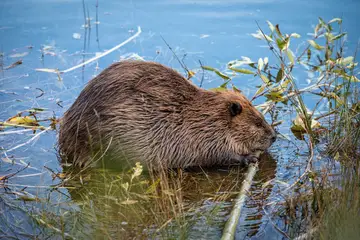
Habitat: Uses marshes with abundant emergent vegetation, streams, and wooded swamps. Lodges and feeding shelters are built in water with cattails or other dominant water plants. Without plants, dens are dug into stream banks below water level. (KDFWR)
Physiographic Regions: Cumberland Mountains, Cumberland Plateau, Plateau Escarpment, Bluegrass, Knobs, Interior Plateau, Interior River Valley And Hills, Mississippi … KDFWR
Conservation
KY SWAP 2023 Species of Greatest Conservation Need; priority group: High; state rank S1; federal status: Endangered
What the sources say
Range: Physiographic Regions: Cumberland Mountains, Cumberland Plateau, Plateau Escarpment, Bluegrass, Knobs, Interior Plateau, Interior River Valley And Hills, Mississippi Alluvial Plain, Mississippi Valley Loess Plain
Habitat: Usually solitary or gathered in small groups under loose bark or in tree hollows. Maternity colonies form in small numbers, many found in artificial roosts in the shade. Hibernacula is often in caves or mines and shared with other bat species. (KDFWR)
Physiographic Regions: Cumberland Mountains, Cumberland Plateau, Plateau Escarpment, Bluegrass, Knobs, Interior Plateau, Interior River Valley And Hills, Mississippi … KDFWR
Conservation
KY SWAP 2023 Species of Greatest Conservation Need (data deficient); priority group: Data Deficient; state rank S4
What the sources say
Range: Physiographic Regions: Cumberland Mountains, Cumberland Plateau, Plateau Escarpment, Bluegrass, Knobs, Interior Plateau, Interior River Valley And Hills, Mississippi Valley Loess Plain
Habitat: Found in numerous habitat types in the southern Appalachians, it may have a preference for denser canopies and substrates composed of woody debris. (KDFWR)
“In Kentucky, raccoons, skunks and bats are the main vectors of the disease.” KDFWR
JFMAMJJASOND
128 records by month.
No confirmed photo of Rafinesque's Big-eared Bat
Rafinesque's Big-eared Bat
Corynorhinus rafinesquii
Where in Kentucky
Physiographic Regions: Cumberland Mountains, Cumberland Plateau, Plateau Escarpment, Bluegrass, Knobs, Interior Plateau, Interior River Valley And Hills, Mississippi … KDFWR
Conservation
KY SWAP 2023 Species of Greatest Conservation Need; priority group: High; state rank S3
What the sources say
Range: Physiographic Regions: Cumberland Mountains, Cumberland Plateau, Plateau Escarpment, Bluegrass, Knobs, Interior Plateau, Interior River Valley And Hills, Mississippi Alluvial Plain, Mississippi Valley Loess Plain
Habitat: Summer colonies establish most often in hollow trees or buildings in wooded areas, but many utilize caves year-round in Kentucky. Winter hibernacula are typically caves or rockshelters. (KDFWR)
Physiographic Regions: Cumberland Mountains, Cumberland Plateau, Plateau Escarpment, Bluegrass, Knobs, Interior Plateau, Interior River Valley And Hills, Mississippi … KDFWR
Conservation
KY SWAP 2023 Species of Greatest Conservation Need (data deficient); priority group: Data Deficient; state rank S4S5M
What the sources say
Range: Physiographic Regions: Cumberland Mountains, Cumberland Plateau, Plateau Escarpment, Bluegrass, Knobs, Interior Plateau, Interior River Valley And Hills, Mississippi Valley Loess Plain
Habitat: Inhabits wooded or semi-wooded areas and occupies tree holes in the summer. Hibernacula have been observed in cliff crevices, hollow trees, caves, and mines. (KDFWR)
KY SWAP 2023 Species of Greatest Conservation Need (data deficient); priority group: Data Deficient; state rank S5
What the sources say
Habitat: Although it has been collected in a variety of habitats, this species' habitat of choice is shady, damp woods with an abundance of woody debris for cover. It seldom occupies dry woods. (KDFWR)
No confirmed photo of Southeastern Myotis
Southeastern Myotis
Myotis austroriparius
Where in Kentucky
Physiographic Regions: Plateau Escarpment, Bluegrass, Knobs, Interior Plateau, Interior River Valley And Hills, Mississippi Alluvial Plain, Mississippi Valley Loess Plain KDFWR
Conservation
KY SWAP 2023 Species of Greatest Conservation Need; priority group: High; state rank S3
What the sources say
Habitat: Clusters in caves, buildings, or other protected sites like hollow trees. Nursery sites may be in buildings where caves are lacking. Larger winter clusters form to hibernate in caves. (KDFWR)
No confirmed photo of Southeastern Shrew
Southeastern Shrew
Sorex longirostris
Where in Kentucky
Physiographic Regions: Cumberland Mountains, Cumberland Plateau, Plateau Escarpment, Bluegrass, Knobs, Interior Plateau, Interior River Valley And Hills, Mississippi … KDFWR
Conservation
KY SWAP 2023 Species of Greatest Conservation Need (data deficient); priority group: Data Deficient; state rank S4
What the sources say
Range: Physiographic Regions: Cumberland Mountains, Cumberland Plateau, Plateau Escarpment, Bluegrass, Knobs, Interior Plateau, Interior River Valley And Hills, Mississippi Valley Loess Plain
Habitat: Species has a preference for wet habitats like swamps, marshes, and proximity to streams and rivers. (KDFWR)
No confirmed photo of Southern Bog Lemming
Southern Bog Lemming
Synaptomys cooperi
Where in Kentucky
Physiographic Regions: Cumberland Mountains, Cumberland Plateau, Plateau Escarpment, Bluegrass, Knobs, Interior Plateau, Interior River Valley And Hills KDFWR
Conservation
KY SWAP 2023 Species of Greatest Conservation Need (data deficient); priority group: Data Deficient; state rank S4
What the sources say
Habitat: Found in a great variety of habitats, a chief requirement of the species may be presence of succulent sedges and grasses. (KDFWR)
“In Kentucky, raccoons, skunks and bats are the main vectors of the disease.” KDFWR
JFMAMJJASOND
36 records by month.
No confirmed photo of Swamp Rabbit
Swamp Rabbit
Sylvilagus aquaticus
Where in Kentucky
Physiographic Regions: Interior Plateau, Interior River Valley And Hills, Mississippi Alluvial Plain, Mississippi Valley Loess Plain KDFWR
Conservation
KY SWAP 2023 Species of Greatest Conservation Need; priority group: Moderate; state rank S3S4
What the sources say
Habitat: Uses wet bottomlands, river swamps, and canebrakes. Higher ground is utilized during flood periods. Hollow trees and logs, holes in the ground, and thickets are used as cover. (KDFWR)
Physiographic Regions: Cumberland Mountains, Cumberland Plateau, Plateau Escarpment, Bluegrass, Knobs, Interior Plateau, Interior River Valley And Hills, Mississippi … KDFWR
Conservation
KY SWAP 2023 Species of Greatest Conservation Need; priority group: Moderate; state rank S2; federal status: Not Listed
What the sources say
Range: Physiographic Regions: Cumberland Mountains, Cumberland Plateau, Plateau Escarpment, Bluegrass, Knobs, Interior Plateau, Interior River Valley And Hills, Mississippi Alluvial Plain, Mississippi Valley Loess Plain
Habitat: Maternity colonies are small, forming in hollow trees and some in buildings and caves during the summer. Males are likely solitary, roosting in crevices, caves, mines, and other sheltered places. Hibernation typically occurs in caves or mines near the summer roosts. Prefers to roost in dead leaf clusters of live trees rather than hollows, utilizing hollows only after their spring emergence until trees leaf out. (KDFWR)
Records of mammals in Kentucky peak in March to August and October. They show when people record mammals, not how many there are (about month bars).
JanFebMarAprMayJunJulAugSepOctNovDec
1,877 records of mammals in Kentucky by month (GBIF, CC0 and CC BY records).
Coyote sightings rise in the winter breeding season, spring and early summer pup rearing, and again in late summer and fall when young disperse. KDFWR
Bat maternity colonies in buildings: bats may be seen from April; colonies form in May; juveniles learn to fly in June and July. KDFWR
If you are bitten or stung
Call 911 or Poison Help at 1-800-222-1222 right away. Poison Help connects you to your local poison center, any time of day.
Official advice from KDFWR:
Black bears: if approached, stand your ground, raise your arms and yell; never run; back away slowly if a bear huffs or pops its jaws. Feeding bears is illegal in Kentucky. KDFWR
Coyotes: do not run; shout, wave your arms and throw objects; do not feed coyotes. KDFWR
Bats: never handle a bat directly; report sick or injured bats to KDFWR. KDFWR
Snakes (Snakes of Kentucky). Kentucky Department of Fish and Wildlife Resources (KDFWR). archived copy, captured August 27, 2025; checked November 3, 2026.
Mammals of Kentucky. Kentucky Department of Fish and Wildlife Resources (KDFWR). archived copy, captured October 11, 2026; checked November 3, 2026.Quoted passages (2)
“Roughly 80 species of mammals are associated with Kentucky, depending on whether historical records are considered.”
“…species such as the gray wolf, red wolf, fisher, mountain lion, and American bison no longer occur in Kentucky”
Bats of Kentucky. Kentucky Department of Fish and Wildlife Resources (KDFWR). archived copy, captured September 28, 2026; checked November 3, 2026.Quoted passages (4)
“In Kentucky, raccoons, skunks and bats are the main vectors of the disease.”
“In Kentucky, raccoons, skunks and bats are the main vectors of the disease. … You should never directly handle the bat.”
“You should never directly handle the bat.”
“Bats may be observed as early as April when they come out of hibernation, though they usually are not noticed until May when the maternity colonies begin forming.”
Coyotes. Kentucky Department of Fish and Wildlife Resources (KDFWR). archived copy, captured July 29, 2026; checked November 3, 2026.Quoted passages (4)
“People should stay away from den sites, as coyotes may feel the need to protect their pups.”
“Use negative reinforcement to scare coyotes away; shout, wave arms, and throw objects. Do not run from a coyote.”
“Coyote sightings increase during the winter breeding season and pup rearing in spring and early summer.”
“In Kentucky, they are now commonly seen in all 120 counties but usually stay hidden from people.”
Black Bears. Kentucky Department of Fish and Wildlife Resources (KDFWR). archived copy, captured September 14, 2026; checked November 3, 2026.Quoted passages (3)
“It is important to remember that bears are powerful animals and their behavior can be unpredictable.”
“If approached by a bear, stand your ground, raise your arms to appear larger, and yell until it leaves the area. … Never run from a bear.”
“In Kentucky, black bears are found primarily in the eastern part of the state.”
Elk History in Kentucky. Kentucky Department of Fish and Wildlife Resources (KDFWR). archived copy, captured April 29, 2025; checked November 3, 2026.
Small Mammals of Kentucky. Kentucky Department of Fish and Wildlife Resources (KDFWR). archived copy, captured May 10, 2026; checked November 3, 2026.