States Wildlife

Kentucky Lizards: Identification Guide With Pictures

Last checked November 3, 2026 against official sources.

On this page
  1. All 10 lizards
  2. Lookalikes
  3. When they are active
  4. How to report
  5. What official sources say
  6. About this list
  7. Sources

KDFWR: At present, 56 species of reptiles are known to occur in Kentucky (10 lizards, 32 snakes, and 14 turtles).

This page lists 10 lizards: all from KDFWR's Reptiles of Kentucky: Species List, LIZARDS. 2 are nonnative.

All 10 lizards

From A to Z.

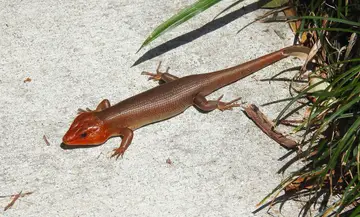
Broadhead Skink
Photo: Laura Gaudette · CC BY 4.0 · iNaturalist

Broadhead Skink

Eumeces laticeps

Not stated

Venom
No official source we use states whether this animal is venomous. That does not mean it is harmless: do not handle it.
Size
About 6.5 to 12.75 inches in total length. Oklahoma gives about 12 inches for large adults and SREL up to 13 inches. Males are larger than females.
How to recognize it
  • Large, wide head; breeding males have swollen orange-red jowls.
  • Smooth, glass-like scales, short legs and a stocky body.
  • Upper-lip scales separate it from five-lined skinks: Maryland, Tennessee and North Carolina count five labial scales between the nostril and the eye rather than four. Oklahoma and Missouri count differently, around 8 or 9 in the full lip row.

Full Broadhead Skink guide

Coal Skink
Photo: Thomas Koffel · CC BY 4.0 · iNaturalist

Coal Skink

Plestiodon anthracinus

Not stated

Venom
No official source we use states whether this animal is venomous. That does not mean it is harmless: do not handle it.
Where in Kentucky
Physiographic Regions: Cumberland Mountains, Cumberland Plateau, Plateau Escarpment, Knobs, Interior Plateau, Interior River Valley And Hills, Mississippi Valley Loess … KDFWR
Conservation
KY SWAP 2023 Species of Greatest Conservation Need (data deficient); priority group: Data Deficient; state rank S1
What the sources say

Range: Physiographic Regions: Cumberland Mountains, Cumberland Plateau, Plateau Escarpment, Knobs, Interior Plateau, Interior River Valley And Hills, Mississippi Valley Loess Plain

Habitat: Generally an open woodland and forest edge species; most often found in dry upland forest under rocks, woody debris, and loose pieces of roofing tin, old boards, or trash; occasionally found in mesic woodlands as well. Most Kentucky individuals were associated with woods roads, small woodland clearings including log landings, powerline rights-of-way, and rock-strewn wooded hillsides, or (in west Kentucky) abandoned gravel pits. (KDFWR)

No confirmed photo of Common Wall-lizard

Common Wall-lizard

Not stated Nonnative

Venom
No official source we use states whether this animal is venomous. That does not mean it is harmless: do not handle it.
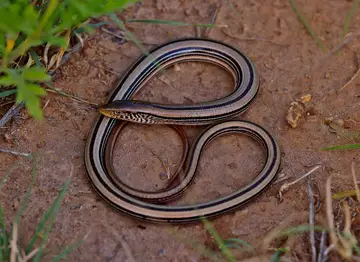
Eastern Slender Glass Lizard
Photo: Peter Paplanus from St. Louis, Missouri · CC BY 4.0 · Wikimedia Commons

Eastern Slender Glass Lizard

Ophisaurus attenuatus longicaudus

Not stated

Venom
No official source we use states whether this animal is venomous. That does not mean it is harmless: do not handle it.
Where in Kentucky
Physiographic Regions: Cumberland Plateau, Plateau Escarpment, Interior Plateau KDFWR
Conservation
KY SWAP 2023 Species of Greatest Conservation Need (data deficient); priority group: Data Deficient; state rank S2
What the sources say

Habitat: Habitat includes pastures and old fields with patches of bare ground, powerline and railroad right-of-ways, and open upland forest. (KDFWR)

No confirmed photo of Five-lined Skink

Five-lined Skink

Eumeces fasciatus

Not stated

Venom
No official source we use states whether this animal is venomous. That does not mean it is harmless: do not handle it.
Size
5 to 8.5 inches
How to recognize it
  • Smooth, shiny scales
  • Enlarged middle row of scales under the tail (separates it from the southeastern five-lined skink)
  • Tail breaks off easily and twitches to distract predators; it grows back shorter
90 records by month.

Full Five-lined Skink guide

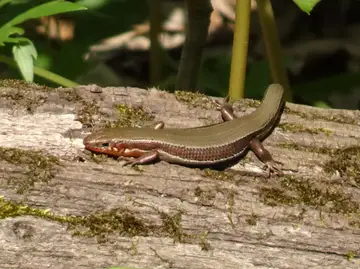
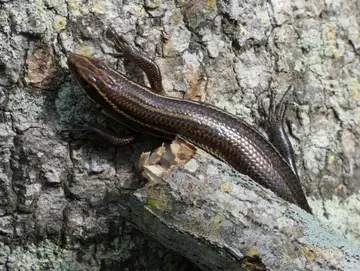
Ground Skink
Photo: Rstanton13 · CC BY-SA 4.0 · Wikimedia Commons · resized

Ground Skink

Scincella lateralis

Not stated

Venom
No official source we use states whether this animal is venomous. That does not mean it is harmless: do not handle it.
No confirmed photo of Mediterranean House Gecko

Mediterranean House Gecko

Not stated Nonnative

Venom
No official source we use states whether this animal is venomous. That does not mean it is harmless: do not handle it.
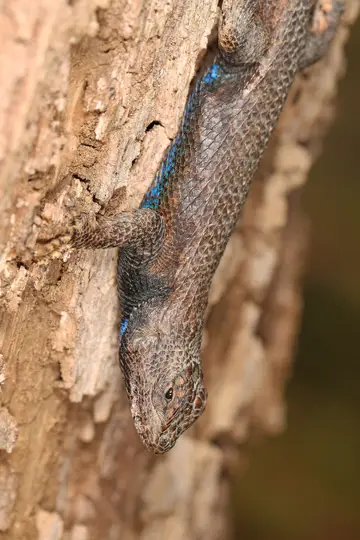
Northern Fence Lizard
Photo: Judy Gallagher · CC BY 2.0 · Wikimedia Commons

Northern Fence Lizard

Sceloporus undulatus

Not stated

Venom
No official source we use states whether this animal is venomous. That does not mean it is harmless: do not handle it.
Size
About 4 to 7.25 inches total length (SREL, Ohio DNR); Illinois gives up to about 19 cm (7.5 in).
How to recognize it
  • Rough, spiny, keeled scales: the only native lizard in North Carolina (and in Georgia and South Carolina) that looks rough or spiny
  • Often on fences, trees, logs, stumps, rocks and buildings; dashes up a tree and keeps to the far side when approached
106 records by month.

Full Northern Fence Lizard guide

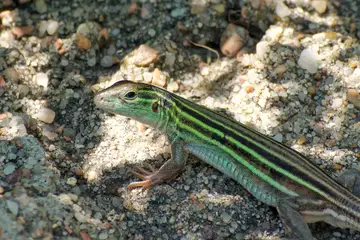
Six-lined Racerunner
Photo: Joe Brewer · CC BY 4.0 · iNaturalist

Six-lined Racerunner

Aspidoscelis sexlineata

Not stated

Venom
No official source we use states whether this animal is venomous. That does not mean it is harmless: do not handle it.
Where in Kentucky
Physiographic Regions: Interior Plateau, Interior River Valley And Hills, Mississippi Valley Loess Plain KDFWR
Conservation
KY SWAP 2023 Species of Greatest Conservation Need (data deficient); priority group: Data Deficient; state rank S3
What the sources say

Habitat: Uses glades, barrens, abandoned quarries and gravel pits, open roadsides, eroded areas, margins of ag fields and other open, sunny habitats. (KDFWR)

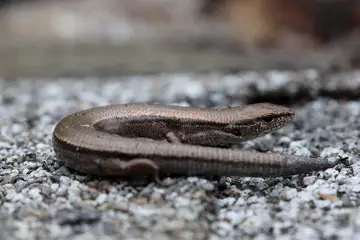
Southeastern Five-lined Skink
Photo: Kai Squires · CC BY 4.0 · iNaturalist

Southeastern Five-lined Skink

Plestiodon inexpectatus

Not stated

Venom
No official source we use states whether this animal is venomous. That does not mean it is harmless: do not handle it.
Where in Kentucky
Physiographic Regions: Cumberland Mountains, Plateau Escarpment, Interior Plateau KDFWR
Conservation
KY SWAP 2023 Species of Greatest Conservation Need (data deficient); priority group: Data Deficient; state rank S2S3
What the sources say

Habitat: Occupies dry open woodlands and edges, powerline right-of-ways, roadsides, abandoned home sites, overgrazed fields, sunny trash dumps and other degraded habitats. (KDFWR)

Lizards people confuse

Common Five-lined Skink or Broad-headed Skink?

No confirmed photo of Common Five-lined Skink

Common Five-lined Skink Not stated

Broad-headed Skink
Photo: Laura Gaudette · CC BY 4.0 · iNaturalist

Broad-headed Skink Not stated

NCWRC: broadhead skinks reach a much larger size. ODWC: juveniles can be told apart by counting the upper lip scales (five-lined: seven, with two post-labials; broad-headed: nine, with no post-labials).

Common Five-lined Skink or Southeastern Five-lined Skink?

No confirmed photo of Common Five-lined Skink

Common Five-lined Skink Not stated

Southeastern Five-lined Skink
Photo: Kai Squires · CC BY 4.0 · iNaturalist

Southeastern Five-lined Skink Not stated

The middle row of scales under the tail is about the same size as the other rows (distinctly wider in the common five-lined skink).

Broad-headed skink or Southeastern five-lined skink?

Broad-headed skink
Photo: Laura Gaudette · CC BY 4.0 · iNaturalist

Broad-headed skink Not stated

Southeastern five-lined skink
Photo: Kai Squires · CC BY 4.0 · iNaturalist

Southeastern five-lined skink Not stated

Tennessee: the southeastern five-lined skink does not have an enlarged middle row of scales under the tail; positive identification requires examining the scales.

Photos show typical adults; individuals vary. Never get close to compare.

When lizards are active in Kentucky

Records of lizards in Kentucky peak in April to June and August. They show when people record lizards, not how many there are (about month bars).

273 records of lizards in Kentucky by month (GBIF, CC0 and CC BY records).

How to report

Report people feeding bears or aggressive bears to Kentucky Fish and Wildlife at 1-800-25ALERT (1-800-252-5378); report sick or injured bats via the KDFWR online Report a Bat form; report suspected fire ant mounds or stings to UK Entomology at [email protected]. KDFWR

What official sources say

Are there venomous lizards in Kentucky?

No official Kentucky source read describes any of the 10 Kentucky lizards as venomous or dangerous. KDFWR

“At present, 56 species of reptiles are known to occur in Kentucky (10 lizards, 32 snakes, and 14 turtles).”

About this list

The species list comes from Reptiles of Kentucky: Species List, LIZARDS (KDFWR) (Kentucky Department of Fish and Wildlife Resources (KDFWR), undated web page; Internet Archive capture 2026-10-14).

Venom labels come only from official sources and link to them; "Not stated" never means harmless. How labels work.

"Nonnative" and "Invasive" follow the wording of the source list. See invasive species in Kentucky.

Sources

  1. Snakes (Snakes of Kentucky). Kentucky Department of Fish and Wildlife Resources (KDFWR). archived copy, captured August 27, 2025; checked November 3, 2026.
  2. Reptiles of Kentucky. Kentucky Department of Fish and Wildlife Resources (KDFWR). archived copy, captured October 14, 2026; checked November 3, 2026.
    Quoted passages (1)
    “At present, 56 species of reptiles are known to occur in Kentucky (10 lizards, 32 snakes, and 14 turtles).”
  3. Black Bears. Kentucky Department of Fish and Wildlife Resources (KDFWR). archived copy, captured September 14, 2026; checked November 3, 2026.
    Quoted passages (1)
    “Immediately report any instances of people feeding bears to Kentucky Fish and Wildlife by calling 1-800-25ALERT (1-800-252-5378). [UK Entfact 469: "You can report a suspicious ant mound or a stinging event to the University of Kentucky Entomology Department through email, [email protected]"]”
  4. GBIF.org occurrence records, human observations licensed CC0 1.0 or CC BY 4.0 only, accessed November 3, 2026. The datasets behind these counts are listed on our Sources page.