This page lists 17 insects and 6 ticks.
15 are venomous by official accounts. 2 are nonnative.
Not every species: no complete official list of Kentucky insects exists, so this page covers the ones state and Extension sources name. How lists are built.
Which insects can hurt you
Official sources single out these insects in Kentucky, in their own words:
Imported fire ants
Stings. “Fire ants are a significant health concern and can be agricultural pests. Worker ants will vigorously defend their nest, often resulting in dozens of stings on people and animals. The sting site will burn and become inflamed …” University of Kentucky Department of Entomology
Very painful sting if handled (UK Extension). “Velvet ants are not aggressive and will try to escape when encountered, but females have a very painful sting if handled.” University of Kentucky Department of Entomology
Blister beetles
Cantharidin causes blisters. “In sufficient quantity, the cantharidin in the bodies of living or dead blister beetles can be toxic, and in some cases lethal, to horses, sheep, and cattle.” University of Kentucky Department of Entomology
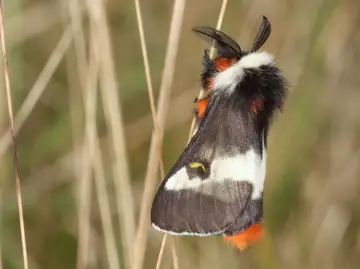
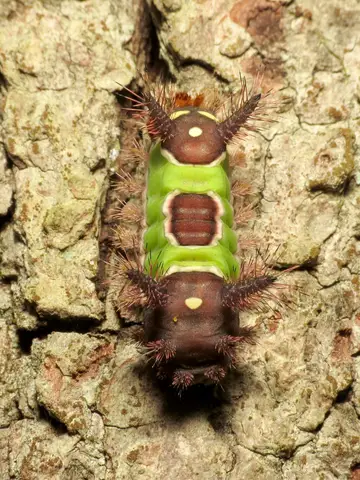
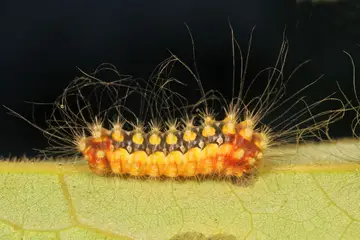
Stinging caterpillars (buck moth, io moth, puss, flannel moth, saddleback, hag moth, stinging rose, spiny oak slug)
Stinging (urticating) hairs with venom. “This factsheet describes some of the more commonly encountered stinging caterpillars in Kentucky which cause serious reactions. … Reactions can range from a mild itching to the more severe pain, swelling, blistering, dermatitis, and even intestinal …” University of Kentucky Department of Entomology
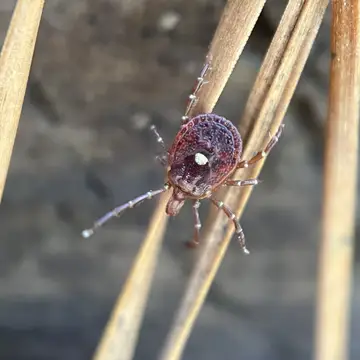
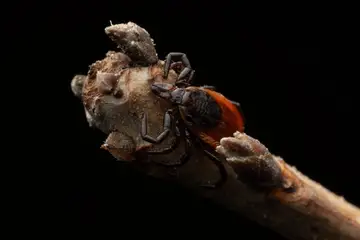
Ticks (arachnids, not insects)
Official sources single out these ticks in Kentucky, in their own words:
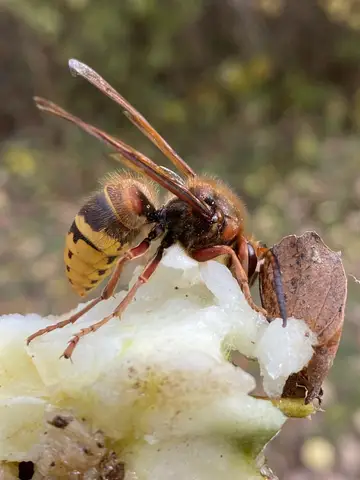
Missouri: workers 1/2 to 3/4 inch, queens 3/4 inch. University of Maryland: workers 5/8 to 3/4 inch, queens just over an inch. Penn State gives 13 to 20 mm for the queen and her offspring.
How to recognize it
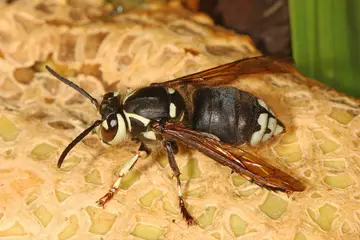
Not yellow, unlike typical yellowjackets; larger, black and ivory
Large, rounded, gray paper nest hanging in trees or shrubs, sometimes on buildings
Nest entrance is the lowest opening of the cone- or egg-shaped nest
JFMAMJJASOND
33 records by month.What the sources say
Venom: “Allergic reactions to these venomous insects account for about 225,000 emergency room visits and as many as 100 deaths per year in the U.S.” (University of Kentucky Department of Entomology)
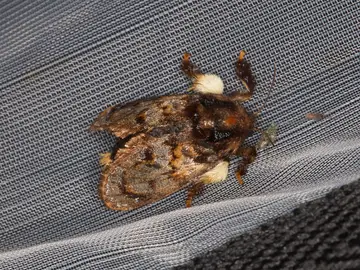
Venom: “Unlike other stinging caterpillars the venomous spines are hidden underneath longer silky hairs. … With younger black-wave flannel moth caterpillars, the long wispy hairs hide the venomous short, sharp spines.” (University of Kentucky Department of Entomology)
Venom: “We have many species of silkworm caterpillars in Kentucky, but only two members of this group possess poisonous spines. … Stinging caterpillars possess hollow quill-like hairs, connected to poison sacs, which are used as defensive weapons. When these hairs are touched they pierce the skin releasing poison.” (University of Kentucky Department of Entomology)
Habitat: These can be quite common on oak or willow trees from spring to mid-summer. (University of Kentucky Department of Entomology)
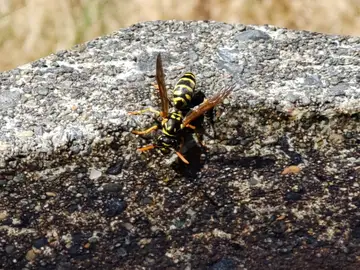
Venom: “Wasp, hornet and yellowjacket stings can be life-threatening to persons who are allergic to the venom.” (University of Kentucky Department of Entomology)
Venom: “Allergic reactions to these venomous insects account for about 225,000 emergency room visits and as many as 100 deaths per year in the U.S.” (University of Kentucky Department of Entomology)
Venom: “Stinging caterpillars possess hollow quill-like hairs, connected to poison sacs, which are used as defensive weapons. When these hairs are touched they pierce the skin releasing poison.” (University of Kentucky Department of Entomology)
No confirmed photo of Imported fire ants (red and black imported fire ants)
Imported fire ants (red and black imported fire ants)
Venom: “The sting is painful, often described as causing a burning sensation at the sting site. … Some people may be more sensitive to the venom than others. This can lead to anaphylaxis.” (University of Kentucky Department of Entomology)
Habitat: Fire ants prefer to nest in open, sunny areas often with large southern exposures. (University of Kentucky Department of Entomology)
Full-grown about 60 mm (about 2 1/3 in.) per UF/IFAS; up to 6.5 cm (SP107), about 2 1/2 in. (Maryland, Clemson), 3 in. (Illinois).
How to recognize it
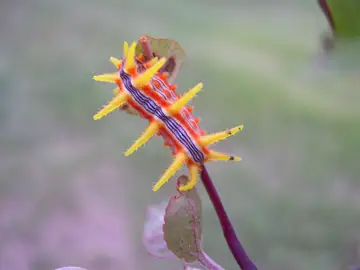
Clusters of branching spines, usually yellow or green with black tips, on fleshy protrusions
Spines are hollow, break easily and can embed deeply in skin
Young caterpillars travel in lines
JFMAMJJASOND
40 records by month.What the sources say
Venom: “We have many species of silkworm caterpillars in Kentucky, but only two members of this group possess poisonous spines. … Stinging caterpillars possess hollow quill-like hairs, connected to poison sacs, which are used as defensive weapons. When these hairs are touched they pierce the skin releasing poison.” (University of Kentucky Department of Entomology)
Venom: “Allergic reactions to these venomous insects account for about 225,000 emergency room visits and as many as 100 deaths per year in the U.S.” (University of Kentucky Department of Entomology)
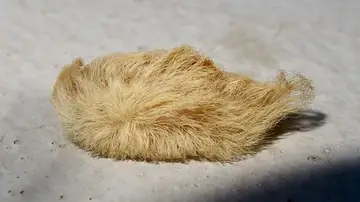
About 1 inch long per most extension sources; full-grown larvae reared by UF/IFAS reached about 1.4 inches (1.6 inches including the tail). MDC says about 1.5 inches.
How to recognize it
Teardrop shape with hairs tapering to a tail; looks like a tiny mouse or a cat
Resembles a tiny mouse; younger larvae have a thick tuft of hair like a tail. Older larvae can look unkempt, with sparser hair that hides the stinging spines less well (VCE).
Venomous hollow spines hidden under the soft hair
What the sources say
Venom: “Unlike other stinging caterpillars the venomous spines are hidden underneath longer silky hairs. … Puss caterpillar stings are often more severe than those of other caterpillars.” (University of Kentucky Department of Entomology)
About 3/4 inch (up to 0.8 inch, 20 mm) when full grown; UGA says about 1 inch.
How to recognize it
Short, slug-like body; legs hidden underneath; glides like a slug
Four large fleshy horns, a pair at each end, plus smaller knobs along the sides, all bearing stinging spines; LSU says it looks like it has two heads
JFMAMJJASOND
40 records by month.What the sources say
Venom: “It is less venomous than the saddleback caterpillar. … Stings by this insect can cause severe irritation.” (University of Kentucky Department of Entomology)
Venom: “Stinging caterpillars possess hollow quill-like hairs, connected to poison sacs, which are used as defensive weapons. When these hairs are touched they pierce the skin releasing poison.” (University of Kentucky Department of Entomology)
Venom: “Unlike other stinging caterpillars the venomous spines are hidden underneath longer silky hairs. … The dark long silky hairs do not sting, but shorter needle like hairs at the base of the tuffs are stinging.” (University of Kentucky Department of Entomology)
Venom: “Wasp, hornet and yellowjacket stings can be life-threatening to persons who are allergic to the venom.” (University of Kentucky Department of Entomology)
Habitat: Nests are often constructed belowground in old chipmunk/rodent burrows, or beneath rocks, gutter splash blocks, or landscape timbers. (University of Kentucky Department of Entomology)
No official source we use states whether this animal is venomous. That does not mean it is harmless: do not handle it.
Danger to people
“In sufficient quantity, the cantharidin in the bodies of living or dead blister beetles can be toxic, and in some cases lethal, to horses, sheep, and cattle.” University of Kentucky Department of Entomology
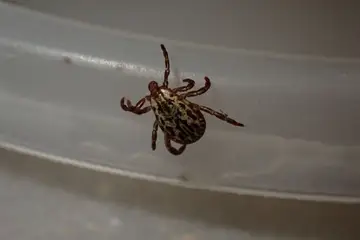
No confirmed photo of Brown Dog Tick
Brown Dog Tick
Rhipicephalus sanguineus
Not statedTick: an arachnid, not an insect
Venom
No official source we use states whether this animal is venomous. That does not mean it is harmless: do not handle it.
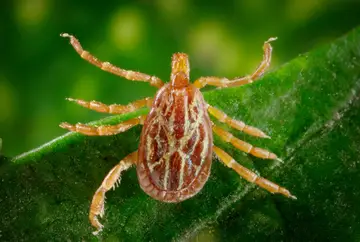
Photo: CDC/ Dr. Christopher Paddock/ James Gathany · Public domain · Wikimedia Commons
Gulf Coast Tick
Amblyomma maculatum
Not statedTick: an arachnid, not an insect
Venom
No official source we use states whether this animal is venomous. That does not mean it is harmless: do not handle it.
UGA: about 1 inch, with a brown slug-like body, a green middle and a brown, white-bordered saddle mark; venom-filled spines sit on fleshy knobs on all sides of the body. UGA describes puss caterpillars as densely covered with hairs.
UGA: the puss caterpillar is densely covered with hair (pale yellow, gray or reddish brown); the saddleback has a brown slug-like body with a green middle and a white-bordered brown saddle.
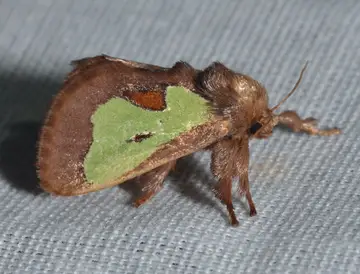
Saddleback caterpillar (saddleback caterpillar moth) or Spiny oak slug?
VCE: varies from yellow-green to brown to pink, usually with a darker central stripe down the back; smaller spine-bearing knobs run in two rows down the back and along the lower sides.
Photos show typical adults; individuals vary. Never get close to compare.
When insects are active in Kentucky
Records of insects in Kentucky peak in June to September. They show when people record insects, not how many there are (about month bars).
JanFebMarAprMayJunJulAugSepOctNovDec
27,275 records of insects in Kentucky by month (GBIF, CC0 and CC BY records).
Blacklegged (deer) tick bite risk is highest in spring, summer and fall; adults can be active whenever winter temperatures exceed freezing. KDFWR
Plains Leopard Frog calling season (KDFWR): Calling has been heard in March and April. KDFWR
If you are bitten or stung
Call 911 or Poison Help at 1-800-222-1222 right away. Poison Help connects you to your local poison center, any time of day.
Official advice from University of Kentucky Department of Entomology:
Stings: wasp, hornet and yellowjacket stings can be life-threatening for allergic people; seek medical attention immediately for hives or trouble breathing (call 911). University of Kentucky Department of Entomology
“Imported fire ants (IFA) are spreading into Kentucky. Since 2000, the Land Between the Lakes area has had isolated incidences of fire ants. In 2022, IFA were found in southern Kentucky, specifically McCreary, Whitley, and Knox counties.”
About this list
Venom labels come only from official sources and link to them; "Not stated" never means harmless. How labels work.
Snakes (Snakes of Kentucky). Kentucky Department of Fish and Wildlife Resources (KDFWR). archived copy, captured August 27, 2025; checked November 3, 2026.
“Allergic reactions to these venomous insects account for about 225,000 emergency room visits and as many as 100 deaths per year in the U.S.”
“Wasp and hornet stings are a serious threat to public health.”
Imported Fire Ants in Kentucky (Entfact 469). University of Kentucky Department of Entomology (Cooperative Extension). Revised: 3/26; checked November 3, 2026.Quoted passages (2)
“Fire ants are a significant health concern and can be agricultural pests. Worker ants will vigorously defend their nest, often resulting in dozens of stings on people and animals. The sting site will burn and become inflamed. Anaphylaxis is possible in sensitive people.”
“Imported fire ants (IFA) are spreading into Kentucky. Since 2000, the Land Between the Lakes area has had isolated incidences of fire ants. In 2022, IFA were found in southern Kentucky, specifically McCreary, Whitley, and Knox counties.”
“The sting is painful, often described as causing a burning sensation at the sting site. … Some people may be more sensitive to the venom than others. This can lead to anaphylaxis.”
Foraging Yellowjackets (Entfact 634). University of Kentucky Department of Entomology (Cooperative Extension). Revised: 3/26; checked November 3, 2026.Quoted passages (2)
“Wasp, hornet and yellowjacket stings can be life-threatening to persons who are allergic to the venom.”
“People who develop hives, difficulty breathing or swallowing, wheezing, or similar symptoms of allergic reaction should seek medical attention immediately.”
European Hornet in Kentucky (Entfact 600). University of Kentucky Department of Entomology (Cooperative Extension). Revised: 3/26; checked November 3, 2026.Quoted passages (1)
“Queen hornets first appear around late April or early May in Kentucky”
Velvet Ants (Entfact 442). University of Kentucky Department of Entomology (Cooperative Extension). Revised: 1/26; checked November 3, 2026.Quoted passages (1)
“Velvet ants are not aggressive and will try to escape when encountered, but females have a very painful sting if handled.”
Blister Beetles (Entfact 102). University of Kentucky Department of Entomology (Cooperative Extension). Revised: 3/26; checked November 3, 2026.Quoted passages (1)
“In sufficient quantity, the cantharidin in the bodies of living or dead blister beetles can be toxic, and in some cases lethal, to horses, sheep, and cattle.”
Ticks in Kentucky. Kentucky Department of Fish and Wildlife Resources (KDFWR). archived copy, captured March 8, 2025; checked November 3, 2026.Quoted passages (3)
“Also known as a deer tick, the greatest risk of being bitten by this tick exists in the spring, summer, and fall. However, adults may be searching for a host whenever winter temperatures exceed freezing.”
ENTFACT-003: Stinging Caterpillars. University of Kentucky Department of Entomology (Cooperative Extension). Revised: 3/26; checked November 3, 2026.Quoted passages (8)
“We have many species of silkworm caterpillars in Kentucky, but only two members of this group possess poisonous spines. … Stinging caterpillars possess hollow quill-like hairs, connected to poison sacs, which are used as defensive weapons. When these hairs are touched they pierce the skin releasing poison.”
“Unlike other stinging caterpillars the venomous spines are hidden underneath longer silky hairs. … Puss caterpillar stings are often more severe than those of other caterpillars.”
“Unlike other stinging caterpillars the venomous spines are hidden underneath longer silky hairs. … With younger black-wave flannel moth caterpillars, the long wispy hairs hide the venomous short, sharp spines.”
“Unlike other stinging caterpillars the venomous spines are hidden underneath longer silky hairs. … The dark long silky hairs do not sting, but shorter needle like hairs at the base of the tuffs are stinging.”
“It is less venomous than the saddleback caterpillar. … Stings by this insect can cause severe irritation.”
“Stinging caterpillars possess hollow quill-like hairs, connected to poison sacs, which are used as defensive weapons. When these hairs are touched they pierce the skin releasing poison.”
“It is less venomous than the saddleback caterpillar.”
“This factsheet describes some of the more commonly encountered stinging caterpillars in Kentucky which cause serious reactions. … Reactions can range from a mild itching to the more severe pain, swelling, blistering, dermatitis, and even intestinal disturbances.”