Washington Mammals: Species List With Pictures
Last checked November 3, 2026 against official sources.
On this page
Burke Museum: 141 species total (includes 9 introduced)
This page lists 140 mammals. 9 are nonnative. Burke Museum gives a total of 141; the 140 here are the mammals official sources name one by one.
Which mammals can hurt you
Official sources single out these mammals in Washington, in their own words:
-
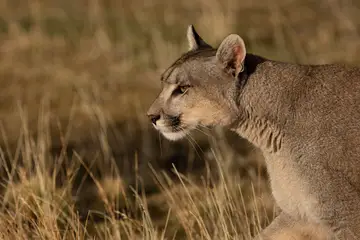
Photo: ArgentinaTurismo · CC BY 4.0 · Wikimedia Commons Cougar
Predatory wildlife under state law. “Cougar attacks on humans are rare. In Washington state, there have been two fatal cougar attacks and approximately 20 other recorded encounters that resulted in human injury in the last 100 years.” Washington Department of Fish and Wildlife
-
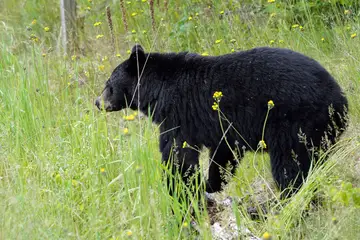
Photo: U.S. Fish and Wildlife Service - Midwest Region · Public domain · Wikimedia Commons Black Bear
Among the conflicts most often reported to WDFW. “The conflicts that occur with black bears, cougars, coyotes, and moose — in both residential and recreational areas — are the ones most often reported to WDFW with concerns for human safety, pets, livestock, or property damage.” Washington Department of Fish and Wildlife
-
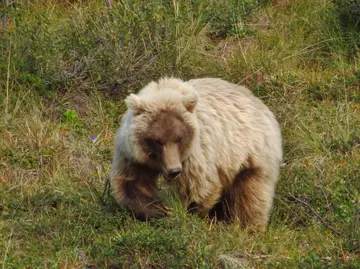
Photo: Annika Lindqvist · CC BY 4.0 · iNaturalist Grizzly Bear
Predatory wildlife under state law. “Cougars, wolves, and grizzly bears are categorized as predatory wildlife under state law.” Washington Department of Fish and Wildlife
-
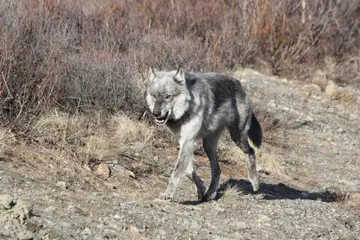
Photo: Robbie Hannawacker · CC0 1.0 · iNaturalist Gray Wolf
Predatory wildlife under state law. “Cougars, wolves, and grizzly bears are categorized as predatory wildlife under state law.” Washington Department of Fish and Wildlife
-
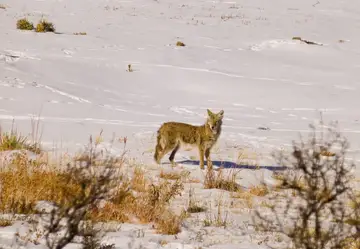
Photo: Gaurav Vaidya from Chapel Hill, USA · CC BY 2.0 · Wikimedia Commons Coyote
Among the conflicts most often reported to WDFW. “In the event of an immediate public safety issue or attack on a person, call 911.” Washington Department of Fish and Wildlife
-
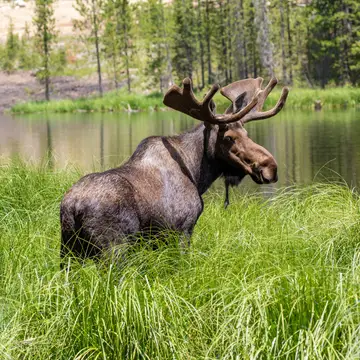
Photo: Dan Vickers · CC BY 4.0 · iNaturalist Moose
Can attack. “A moose with a history of unprovoked attacks on people may have to be killed to protect public safety.” Washington Department of Fish and Wildlife
-
Bats
Rabies risk, per DOH. “Don't touch or handle wild animals, especially bats.” Washington State Department of Health
-
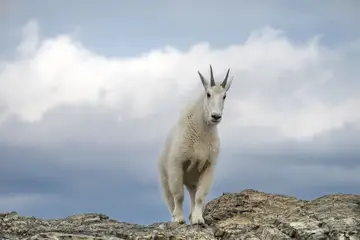
Photo: GlacierNPS · Public domain · Wikimedia Commons Mountain Goat
Can injure or kill people. “With their sharp horns and powerful bodies, mountain goats can inflict significant and lethal injuries.” National Park Service, Olympic National Park
-
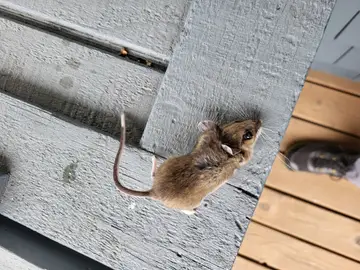
Photo: Charlie Pavlisich · CC BY 4.0 · iNaturalist Deer Mouse
Carries hantavirus, which causes Hantavirus Pulmonary Syndrome, per DOH. “Infected deer mice live throughout the state and people are at risk for HPS in any part of Washington.” Washington State Department of Health


All 140 mammals on the list
- Arvicolinae Sagebrush Vole Lemmiscus curtatus
- Badger Taxidea taxus
- Baird's Beaked Whale Berardius bairdii
- Beaver Castor canadensis
- Big Brown Bat Eptesicus fuscus
- Bighorn Sheep Ovis canadensis
- Black Bear Ursus americanus
- Black Rat Rattus rattusNonnative
- Black Right Whale Eubalaena japonica
- Black-tailed Jackrabbit Lepus californicus
- Blue Whale Balaenoptera musculus
- Bobcat Lynx rufus
- California Ground Squirrel Otospermophilus beecheyi
- California Myotis Myotis californicus
- California Sea Lion Zalophus californianus
- Canyon Bat Parastrellus hesperus
- Caribou Rangifer tarandus
- Cascade Golden-mantled Ground Squirrel Callospermophilus saturatus
- Columbian Ground Squirrel Urocitellus columbianus
- Common Opossum Didelphis virginianaNonnative
- Cougar Puma concolor
- Coyote Canis latrans
- Creeping Vole Microtus oregoni
- Cuvier's Beaked Whale Ziphius cavirostris
- Dall's Porpoise Phocoenoides dalli
- Deer Mouse Peromyscus maniculatus
- Douglas Squirrel Tamiasciurus douglasii
- Dusky Shrew Sorex monticolus
- Dwarf Sperm Whale Kogia sima
- Eastern Cottontail Sylvilagus floridanusNonnative
- Eastern Gray Squirrel Sciurus carolinensisNonnative
- Elk Cervus canadensis
- European Rabbit Oryctolagus cuniculusNonnative
- Fin Whale Balaenoptera physalus
- Fisher Pekania pennanti
- Fox Squirrel Sciurus nigerNonnative
- Fringed Myotis Myotis thysanodes
- Golden-mantled Ground Squirrel Callospermophilus lateralis
- Gray Whale Eschrichtius robustus
- Gray Wolf Canis lupus
- Gray-tailed Vole Microtus canicaudus
- Great Basin Pocket Mouse Perognathus parvus
- Grizzly Bear Ursus arctos
- Harbor Porpoise Phocoena phocoena
- Harbor Seal Phoca vitulina
- Hoary Bat Lasiurus cinereus
- Hoary Marmot Marmota caligata
- House Mouse Mus musculusNonnative
- Hubbs' Beaked Whale Mesoplodon carlhubbsi
- Humpback Whale Megaptera novaeangliae
- Keen's Mouse Peromyscus keeni
- Keen's Myotis Myotis keenii
- Killer Whale Orcinus orca
- Least Chipmunk Tamias minimus
- Little Brown Myotis Myotis lucifugus
- Long-eared Myotis Myotis evotis
- Long-legged Myotis Myotis volans
- Long-tailed Vole Microtus longicaudus
- Long-tailed Weasel Neogale frenata
- Lynx Lynx canadensis
- Marten Martes americana
- Masked Shrew Sorex cinereus
- Mazama Pocket Gopher Thomomys mazama
- Meadow Vole Microtus pennsylvanicus
- Merriam's Shrew Sorex merriami
- Mink Mustela vison
- Minke Whale Balaenoptera acutorostrata
- Montane Vole Microtus montanus
- Moose Alces alces
- Mountain Beaver Aplodontia rufa
- Mountain Goat Oreamnos americanus
- Mule Deer / Black-tailed Deer Odocoileus hemionus
- Muskrat Ondatra zibethicus
- Neotominae Bushy-tailed Woodrat Neotoma cinerea
- Northern Bog Lemming Synaptomys borealis
- Northern Elephant Seal Mirounga angustirostris
- Northern Flying Squirrel Glaucomys sabrinus
- Northern Fur Seal Callorhinus ursinus
- Northern Grasshopper Mouse Onychomys leucogaster
- Northern Pocket Gopher Thomomys talpoides
- Northern Right-Whale Dolphin Lissodelphis borealis
- Northern Water Shrew Sorex palustris
- Norway Rat Rattus norvegicusNonnative
- Nutria Myocastor coypusNonnative
- Nuttall's Cottontail Sylvilagus nuttallii
- Olympic Marmot Marmota olympus
- Olympic Shrew Sorex rohweri
- Ord's Kangaroo Rat Dipodomys ordii
- Pacific Jumping Mouse Zapus trinotatus
- Pacific Mole Scapanus orarius
- Pacific Water Shrew Sorex bendirii
- Pacific White-sided Dolphin Lagenorhynchus obliquidens
- Pallid Bat Antrozous pallidus
- Pika Ochotona princeps
- Piute Ground Squirrel Urocitellus mollis
- Porcupine Erethizon dorsatum
- Preble's Shrew Sorex preblei
- Pygmy Rabbit Brachylagus idahoensis
- Pygmy Shrew Sorex hoyi
- Pygmy Sperm Whale Kogia breviceps
- Raccoon Procyon lotor
- Red Fox Vulpes vulpes
- Red Squirrel Tamiasciurus hudsonicus
- Red-backed Vole Clethrionomys gapperi
- Red-tailed Chipmunk Tamias ruficaudus
- Risso's Dolphin Grampus griseus
- River otter Lontra canadensis
- Sea Otter Enhydra lutris
- Sei Whale Balaenoptera borealis
- Short-beaked Saddleback Dolphin Delphinus delphis
- Short-tailed Weasel (Ermine) Mustela erminea
- Shrew-mole Neurotrichus gibbsii
- Silver-haired Bat Lasionycteris noctivagans
- Snowshoe Hare Lepus americanus
- Sperm Whale Physeter macrocephalus
- Spotted Bat Euderma maculatum
- Stejneger's Beaked Whale Mesoplodon stejnegeri
- Steller Sea Lion Eumetopias jubatus
- Striped Skunk Mephitis mephitis
- Townsend's Big-eared Bat Corynorhinus townsendii
- Townsend's Chipmunk Tamias townsendii
- Townsend's Ground Squirrel Urocitellus townsendii
- Townsend's Mole Scapanus townsendii
- Townsend's Vole Microtus townsendii
- Trowbridge's Shrew Sorex trowbridgii
- Vagrant Shrew Sorex vagrans
- Washington Ground Squirrel Urocitellus washingtoni
- Water Vole Microtus richardsoni
- Western Gray Squirrel Sciurus griseus
- Western Harvest Mouse Reithrodontomys megalotis
- Western Heather Vole Phenacomys intermedius
- Western Jumping Mouse Zapus princeps
- Western Small-footed Myotis Myotis ciliolabrum
- Western Spotted Skunk Spilogale gracilis
- White-tailed Deer Odocoileus virginianus
- White-tailed Jackrabbit Lepus townsendii
- Wolverine Gulo gulo
- Yellow-bellied Marmot Marmota flaviventris
- Yellow-pine Chipmunk Tamias amoenus
- Yuma Myotis Myotis yumanensis
Mammals people confuse
Bobcat or Mountain lion (cougar)?
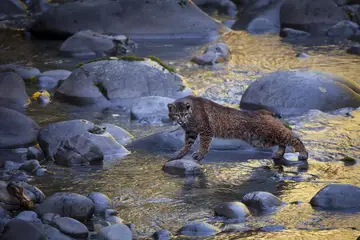

Bobcat Not stated
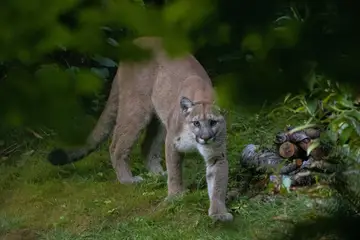
Mountain lion (cougar) Not stated
Cougars are one color (yellow-brown to light cinnamon) with a long tail. The bobcat's tail is short and its coat is spotted. TWRA says cougars are many times larger and longer, with a very long tail.
Bobcat or Canada lynx?
Bobcat Not stated
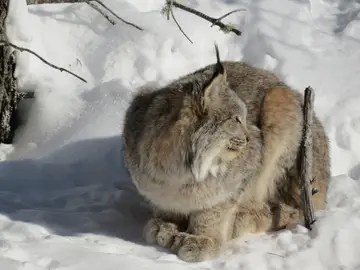
Canada lynx Not stated
A lynx has longer ear tufts and large, fur-covered feet (3.5 to 4.5 inches wide). A bobcat's feet are small and hairless (up to 2.5 inches). A lynx's tail has a black tip and no white underneath; a bobcat's tail is white underneath. Do not use the tail tip alone, because agencies describe the bobcat's tip differently (New Mexico white, Arizona black).
Coyote or Gray wolf?
Coyote Not stated
Gray wolf Not stated
NY DEC: gray wolves are much larger (females typically 50-100 lb, males 70-145 lb, 5-6 ft nose to tail, 27-33 in at the shoulder); eastern coyotes rarely exceed 50 lb and generally stand under 2 ft at the shoulder. Wolves have small rounded ears and a short blocky snout; coyotes have larger, more pointed ears (can look rounded in winter coat) and a long, narrow, pointed snout. Coyote tracks are typically 3 x 2 in, wolf tracks about 5 x 4 in. NY DEC says most wolf reports in New York were coyotes, dogs or wolf-dog hybrids.
American Black Bear or Grizzly (Brown) Bear?
American Black Bear Not stated
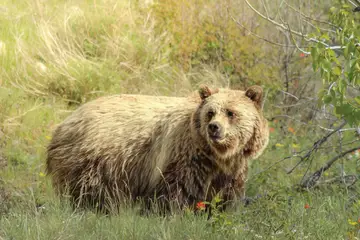
Grizzly (Brown) Bear Not stated
Grizzlies have longer front claws, humped shoulders and a more concave face. Color does not settle it: brown bears can be black to blonde.
Nutria or American beaver?
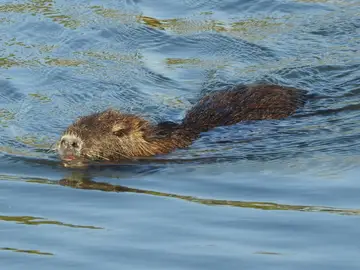
Nutria Not stated
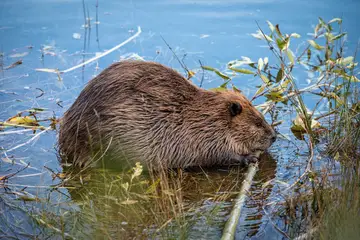

American beaver Not stated
Beavers have a wide, flat tail and dark whiskers and reach up to 60 pounds; nutria have a round, sparsely haired tail and white whiskers.
Nutria or Muskrat?
Nutria Not stated
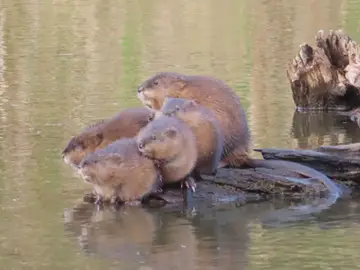
Muskrat Not stated
Muskrats have dark whiskers, a nearly triangular (side-flattened) tail and weigh at most 5 pounds. CDFW says most nutria reports it receives are actually muskrats.
Photos show typical adults; individuals vary. Never get close to compare.
When mammals are active in Washington
Records of mammals in Washington peak in May to September. They show when people record mammals, not how many there are (about month bars).
If you are bitten or stung
Call 911 or Poison Help at 1-800-222-1222 right away. Poison Help connects you to your local poison center, any time of day.
Official advice from Washington State Department of Health:
- Never handle bats. Washington State Department of Health
How to report
Dangerous wildlife: emergency 911; non-emergency 877-933-9847 or the WDFW online report. Invasive species: Washington Invasive Species Council web form or WA Invasives app; aquatic invasive species hotline 1-888-WDFW-AIS, [email protected]. Washington Department of Fish and Wildlife
What official sources say
Are there grizzly bears in Washington?
Yes, but rare. WDFW says grizzly bears are present in the Selkirk Mountains in northeast Washington. Washington Department of Fish and Wildlife
“Grizzly bears are currently present in northeast Washington’s Selkirk Mountains, and are infrequently documented in areas near the Canadian border in northern Stevens and Pend Oreille counties.”
About this list
The species list comes from Mammals of Washington (Burke Museum) (Burke Museum (Washington State Museum of Natural History and Culture, University of Washington), Last updated October 29, 2013). 140 more entries come from other official sources named on each card.
Venom labels come only from official sources and link to them; "Not stated" never means harmless. How labels work.
"Nonnative" and "Invasive" follow the wording of the source list. See invasive species in Washington.
Sources
- About WDFW. Washington Department of Fish and Wildlife. undated page; checked November 3, 2026.
- Mammals of Washington. Burke Museum (Washington State Museum of Natural History and Culture, University of Washington). updated October 29, 2013; checked November 3, 2026.
Quoted passages (1)
“141 species total (includes 9 introduced)”
- Mammals of Washington: Didelphimorphia. Burke Museum (Washington State Museum of Natural History and Culture, University of Washington). updated October 29, 2013; checked November 3, 2026.
- Mammals of Washington: Lagomorpha. Burke Museum (Washington State Museum of Natural History and Culture, University of Washington). updated October 29, 2013; checked November 3, 2026.
- Mammals of Washington: Carnivora. Burke Museum (Washington State Museum of Natural History and Culture, University of Washington). updated October 29, 2013; checked November 3, 2026.
- Cougar (Puma concolor). Washington Department of Fish and Wildlife. undated page; checked November 3, 2026.
Quoted passages (1)
“Cougar attacks on humans are rare. In Washington state, there have been two fatal cougar attacks and approximately 20 other recorded encounters that resulted in human injury in the last 100 years.”
- Coyote (Canis latrans). Washington Department of Fish and Wildlife. undated page; checked November 3, 2026.
Quoted passages (1)
“In the event of an immediate public safety issue or attack on a person, call 911.”
- Dangerous wildlife. Washington Department of Fish and Wildlife. undated page; checked November 3, 2026.
Quoted passages (3)
“Cougars, wolves, and grizzly bears are categorized as predatory wildlife under state law.”
“The conflicts that occur with black bears, cougars, coyotes, and moose — in both residential and recreational areas — are the ones most often reported to WDFW with concerns for human safety, pets, livestock, or property damage.”
“For non-emergency dangerous wildlife complaints, call 877-933-9847, or submit an online report.”
- Mammals of Washington: Soricomorpha. Burke Museum (Washington State Museum of Natural History and Culture, University of Washington). updated October 29, 2013; checked November 3, 2026.
- Mammals of Washington: Artiodactyla. Burke Museum (Washington State Museum of Natural History and Culture, University of Washington). updated October 29, 2013; checked November 3, 2026.
- Moose. Washington Department of Fish and Wildlife. undated page; checked November 3, 2026.
Quoted passages (1)
“A moose with a history of unprovoked attacks on people may have to be killed to protect public safety.”
- Woodland caribou. Washington Department of Fish and Wildlife. undated page; checked November 3, 2026.
- Visitors Advised to Keep Their Distance: Mountain Goats are Dangerous. National Park Service, Olympic National Park. undated page; checked November 3, 2026.
Quoted passages (1)
“With their sharp horns and powerful bodies, mountain goats can inflict significant and lethal injuries.”
- Mammals of Washington: Rodentia. Burke Museum (Washington State Museum of Natural History and Culture, University of Washington). updated October 29, 2013; checked November 3, 2026.
- Hantavirus. Washington State Department of Health. undated page; checked November 3, 2026.
Quoted passages (1)
“Infected deer mice live throughout the state and people are at risk for HPS in any part of Washington.”
- Mammals of Washington: Chiroptera. Burke Museum (Washington State Museum of Natural History and Culture, University of Washington). updated October 29, 2013; checked November 3, 2026.
- Mammals of Washington: Cetacea. Burke Museum (Washington State Museum of Natural History and Culture, University of Washington). updated October 29, 2013; checked November 3, 2026.
- Rabies. Washington State Department of Health. undated page; checked November 3, 2026.
Quoted passages (2)
“Don't touch or handle wild animals, especially bats.”
“Never handle a bat with bare hands.”
- Grizzly bear. Washington Department of Fish and Wildlife. undated page; checked November 3, 2026.
Quoted passages (1)
“Grizzly bears are currently present in northeast Washington’s Selkirk Mountains, and are infrequently documented in areas near the Canadian border in northern Stevens and Pend Oreille counties.”
- GBIF.org occurrence records, human observations licensed CC0 1.0 or CC BY 4.0 only, accessed November 3, 2026. The datasets behind these counts are listed on our Sources page.