Invasive and nonnative animals in Washington
Last checked November 3, 2026 against official sources.
On this page
11 nonnative animals are named on 11 official lists for Washington: “American bullfrog” (Washington Department of Fish and Wildlife), “African clawed frog” (Washington Department of Fish and Wildlife), “Nutria” (Washington Department of Fish and Wildlife), “Common snapping turtle” (Washington Department of Fish and Wildlife), “Spiny softshell turtle” (Washington Department of Fish and Wildlife), “European green crab” (Washington Department of Fish and Wildlife), “Northern pike” (Washington Department of Fish and Wildlife), “Zebra mussel” (Washington Department of Fish and Wildlife), “Northern Giant Hornet” (Washington Invasive Species Council), “European Fire Ants” (Washington State Department of Health) and “Report a Sighting” (Washington Invasive Species Council).
The USGS Nonindigenous Aquatic Species database records an established population in Washington for 2 nonnative animals in the groups this guide covers.
To report a sighting, see how to report.
Being on a list of nonnative species does not always mean an animal is harmful or established: each list below is described in its source's terms. A sighting of a listed animal is still worth reporting to the agency.
American bullfrog
Washington Department of Fish and Wildlife, undated page. 1 animal.
-
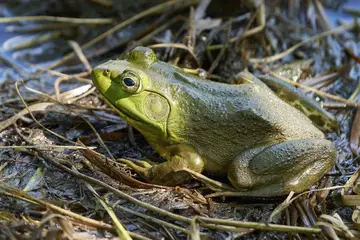
Photo: Paul Danese · CC BY-SA 4.0 · Wikimedia Commons · resized American Bullfrog Rana [Lithobates] catesbeiana
Commonly encountered in Washington, per the Herp Atlas Washington Department of Fish and Wildlife

African clawed frog
Washington Department of Fish and Wildlife, undated page. 1 animal.
-
African Clawed Frog Xenopus laevis
Bothell, Issaquah and Lacey Washington Department of Fish and Wildlife
Nutria
Washington Department of Fish and Wildlife, undated page. 1 animal.
-
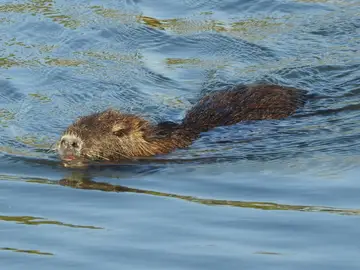
Photo: Sam Kieschnick · CC BY 4.0 · iNaturalist Nutria Myocastor coypus
Burke: introduced along rivers and Puget Sound Washington Department of Fish and Wildlife
Common snapping turtle
Washington Department of Fish and Wildlife, undated page. 1 animal.
-
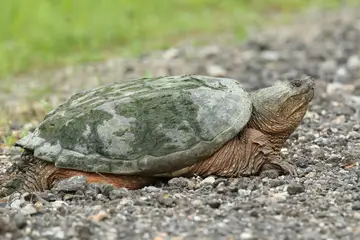
Photo: Cephas · CC BY-SA 4.0 · Wikimedia Commons · resized Common Snapping Turtle Chelydra serpentina

Spiny softshell turtle
Washington Department of Fish and Wildlife, undated page. 1 animal.
-
Spiny Softshell Turtle Apalone spinifer
European green crab
Washington Department of Fish and Wildlife, undated page. 1 animal.
-
European Green Crab Carcinus maenas
Washington coast (Willapa Bay, Grays Harbor, Makah Bay); WDFW also says Lummi Bay in Whatcom County has an infestation. Washington Department of Fish and Wildlife
Northern pike
Washington Department of Fish and Wildlife, undated page. 1 animal.
-
Northern Pike Esox lucius
Northeast Washington and Lake Washington Washington Department of Fish and Wildlife
Zebra mussel
Washington Department of Fish and Wildlife, undated page. 1 animal.
-
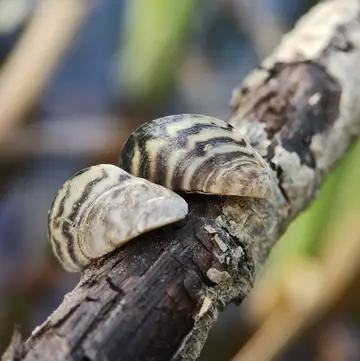
Photo: Harukano · CC0 1.0 · iNaturalist Zebra Mussel Dreissena polymorpha
Threat; WDFW describes preventing establishment Washington Department of Fish and Wildlife
Northern Giant Hornet
Washington Invasive Species Council (state agency council, Recreation and Conservation Office), undated page. 1 animal.
-
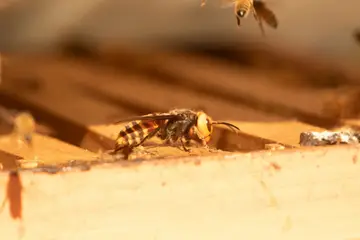
Photo: WATANABE Hitoshi 渡辺仁 · CC BY 4.0 · iNaturalist Northern Giant Hornet Vespa mandarinia
Formerly Blaine and Bellingham Washington Invasive Species Council
European Fire Ants
Washington State Department of Health, undated page. 1 animal.
-
European Fire Ant Myrmica rubra
Seattle area Washington State Department of Health
Report a Sighting
Washington Invasive Species Council (state agency council, Recreation and Conservation Office), undated page. 1 animal.
-
Feral Swine
Not established Washington Invasive Species Council
Established in Washington, per USGS records
The U.S. Geological Survey's Nonindigenous Aquatic Species (NAS) database tracks nonnative aquatic animals. These have at least one record with the status "established" in Washington, which USGS defines as a population showing evidence of reproduction and overwinter survival.
| Animal | Group | First record | Latest record | Counties |
|---|---|---|---|---|
| African Clawed Frog Xenopus laevis | Frogs and Toads | 2015 | 2022 | 3 |
| Nutria Myocastor coypus | Mammals | 1941 | 2026 | 17 |
Source: U.S. Geological Survey. [2026]. Nonindigenous Aquatic Species Database. Gainesville, Florida. Accessed [11/3/2026]. "Native Transplant" animals are native elsewhere in the US but not in Washington.
How to report a sighting in Washington
Dangerous wildlife: emergency 911; non-emergency 877-933-9847 or the WDFW online report. Invasive species: Washington Invasive Species Council web form or WA Invasives app; aquatic invasive species hotline 1-888-WDFW-AIS, [email protected]. Washington Department of Fish and Wildlife
Do not try to catch or handle the animal. A photo taken from a safe distance, the place and the date help the agency.
Sources
- American bullfrog. Washington Department of Fish and Wildlife. undated page; checked November 3, 2026.
Quoted passages (1)
“The bullfrog is now considered an invasive problematic species in Washington.”
- African clawed frog. Washington Department of Fish and Wildlife. undated page; checked November 3, 2026.
Quoted passages (1)
“African clawed frogs were first identified in Washington in 2015 in King County and have since been confirmed in three cities in Puget Sound (Bothell, Issaquah, and Lacey).”
- Nutria. Washington Department of Fish and Wildlife. undated page; checked November 3, 2026.
Quoted passages (1)
“Nutria (Myocastor coypus)”
- European green crab. Washington Department of Fish and Wildlife. undated page; checked November 3, 2026.
Quoted passages (1)
“European green crabs were discovered on the Washington coast in 1998 in Willapa Bay and Grays Harbor, and later in Makah Bay.”
- Northern pike. Washington Department of Fish and Wildlife. undated page; checked November 3, 2026.
Quoted passages (1)
“It has already spread to several water bodies within the state.”
- Zebra mussel. Washington Department of Fish and Wildlife. undated page; checked November 3, 2026.
Quoted passages (1)
“The best way to avoid the catastrophic threats posed by zebra mussels is to prevent them from establishing in Washington’s waters.”
- Northern Giant Hornet. Washington Invasive Species Council (state agency council, Recreation and Conservation Office). undated page; checked November 3, 2026.
Quoted passages (1)
“In late 2024, the Washington State Department of Agriculture and the U.S. Department of Agriculture jointly declared the northern giant hornet eradicated from the United States.”
- European Fire Ants. Washington State Department of Health. undated page; checked November 3, 2026.
Quoted passages (1)
“While these ants have been primarily detected around the Seattle area, it is possible that they could be found elsewhere in Washington.”
- Report a Sighting. Washington Invasive Species Council (state agency council, Recreation and Conservation Office). undated page; checked November 3, 2026.
Quoted passages (1)
“For example, feral swine are a huge problem in more than 30 states but have not yet become established in Washington.”
- Common snapping turtle. Washington Department of Fish and Wildlife. undated page; checked November 3, 2026.
Quoted passages (1)
“Common snapping turtle (Chelydra serpentina)”
- Spiny softshell turtle. Washington Department of Fish and Wildlife. undated page; checked November 3, 2026.
Quoted passages (1)
“Spiny Softshell turtle (Apalone spinifer)”
- Dangerous wildlife. Washington Department of Fish and Wildlife. undated page; checked November 3, 2026.
Quoted passages (1)
“For non-emergency dangerous wildlife complaints, call 877-933-9847, or submit an online report.”
- U.S. Geological Survey. [2026]. Nonindigenous Aquatic Species Database. Gainesville, Florida. Accessed [11/3/2026].