Washington has 1 venomous snake named by official sources: Western rattlesnake, as labelled by Washington Department of Fish and Wildlife. It also lists 1 snake as mildly venomous or not dangerous to people. This guide covers 10 animal groups from Washington Department of Fish and Wildlife lists and other official sources, with photos, venomous status and when each group is active.
Identification help has limits: a photo cannot confirm that an animal is safe. Watch from a distance and never handle a wild animal.
These are the animals official sources describe as venomous or as a risk to people in Washington, across 8 groups. The reason is given in the source's own terms.
Venomous: “Are there venomous spiders in Washington? … There are two spiders in Washington of medical significance: the black widow spider and the yellow sac spider”
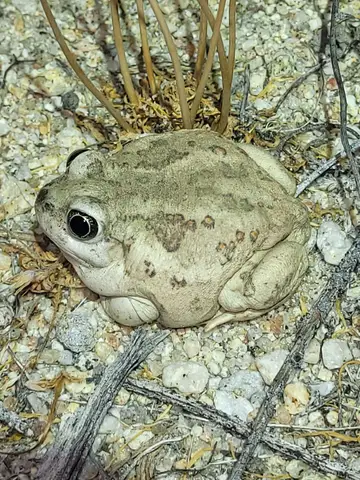
Toxic skin secretion, dangerous if eaten, per the Burke Museum: “Are poisonous! They secrete a white toxin that can cause nausea, irregular heart beats and sometimes may cause death if ingested”
Can transmit the bacteria that causes Lyme disease: “Western black-legged ticks can transmit Borrelia burgdorferi, the bacteria that causes Lyme disease.”
One of four tick species DOH says bite and transmit disease to people: “Learn about the four tick species commonly found in Washington that are known to bite and transmit diseases to people.”
One of four tick species DOH says bite and transmit disease to people: “Learn about the four tick species commonly found in Washington that are known to bite and transmit diseases to people.”
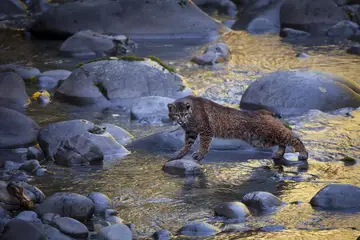
Predatory wildlife under state law: “Cougar attacks on humans are rare. In Washington state, there have been two fatal cougar attacks and approximately 20 other recorded encounters that resulted in human injury in the last 100 years.”
Among the conflicts most often reported to WDFW: “The conflicts that occur with black bears, cougars, coyotes, and moose — in both residential and recreational areas — are the ones most often reported to WDFW with concerns for human safety, pets …”
Carries hantavirus, which causes Hantavirus Pulmonary Syndrome, per DOH: “Infected deer mice live throughout the state and people are at risk for HPS in any part of Washington.”
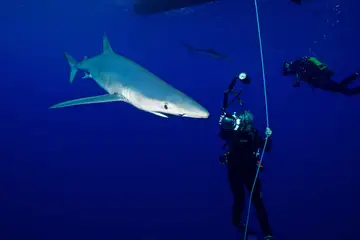
Mildly venomous dorsal fin spines: “Pacific Spiny Dogfish are a small coastal shark with a single, prominent, mildly venomous spine at the front of each of its two dorsal fins.”
11 nonnative animals are named on Washington's official lists (Washington Department of Fish and Wildlife). The USGS Nonindigenous Aquatic Species database records 2 nonnative animals in our groups with an established population in Washington.
Darker cells are the months with more open-licence observation records of each group in Washington (GBIF). They show when people see and record these animals, not how many there are. The current month, this month, is highlighted.
Report: Dangerous wildlife: emergency 911; non-emergency 877-933-9847 or the WDFW online report. Invasive species: Washington Invasive Species Council web form or WA Invasives app; aquatic invasive species hotline 1-888-WDFW-AIS, [email protected]. Washington Department of Fish and Wildlife
Yes. The western rattlesnake is common and widespread in eastern Washington. The farthest west record is in the Columbia Gorge in Skamania County. Washington Department of Fish and Wildlife · More
What venomous snakes are in Washington?
WDFW says only the western rattlesnake can inflict a venomous bite. WDFW also describes rear-fanged venom in the nightsnake, which Burke says is harmless to humans. Washington Department of Fish and Wildlife
Are there timber rattlers, diamondbacks or sidewinders in Washington?
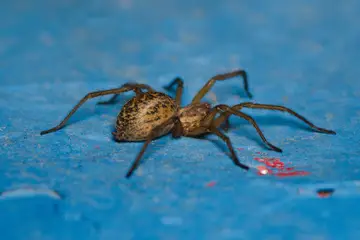
No. DOH says hobo spiders are not considered dangerous as previously thought, and there is no evidence their venom has caused necrotic wounds in people. Washington State Department of Health
Are there scorpions in Washington?
Yes. A WSU repository record describes a study of the northern scorpion at the Hanford Site in southcentral Washington. WSU Entomology says it is not known to sting humans. Washington State University
Are there sharks in Washington?
Yes. WDFW has pages for sharks caught off the coast and in Puget Sound, such as the spiny dogfish and bluntnose sixgill. Fishing for sixgill, sevengill and thresher sharks is closed. Washington Department of Fish and Wildlife
Are there murder hornets in Washington?
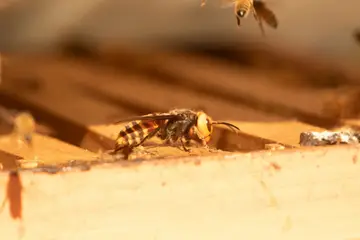
The northern giant hornet was verified in 2019 and 2020 and declared eradicated from the United States in late 2024. Sightings should still be reported. Washington Invasive Species Council
Yes. DOH says every state except Hawaii has bats with rabies, and fewer than 1% of bats in the wild are infected. Washington State Department of Health
“Caution: This is a venomous and potentially dangerous snake.”
“This snake is common and widespread in eastern Washington.”
“In most of the Columbia Basin, western rattlesnakes emerge from their overwintering sites (hibernacula or dens) in April.”
“Adults return to the overwintering sites starting in late September, although activity may continue until late October depending on location and temperatures.”
“Rattlesnakes are active during the day when temperatures are moderate but switch to nocturnal activity during the hottest months of the year.”
“The nightsnake’s fangs are in the back of the mouth (‘rear-fanged’) and the venom is ‘chewed’ into the wound of their prey.”
Mammals of Washington. Burke Museum (Washington State Museum of Natural History and Culture, University of Washington). updated October 29, 2013; checked November 3, 2026.Quoted passages (1)
“141 species total (includes 9 introduced)”
Spiders. Washington State Department of Health. undated page; checked November 3, 2026.Quoted passages (8)
“Adult female black widows have dangerous venom, but will often try to escape rather than bite, unless guarding their eggs.”
“Are there venomous spiders in Washington? … There are two spiders in Washington of medical significance: the black widow spider and the yellow sac spider”
“False black widow spider bites do happen, but their venom is much less toxic than a black widow's.”
“There is no evidence hobo spider venom has caused skin necrosis or necrotic wounds in people.”
“There are two spiders in Washington of medical significance: the black widow spider and the yellow sac spider.”
“Fortunately, brown recluse spiders (Loxosceles species) do not live in Washington.”
“Hobo spiders (Eratigena agrestis) are not considered dangerous as previously thought.”
“Seek medical attention immediately if you suspect the bite was from a black widow.”
Woodhouses Toad. Burke Museum (Washington State Museum of Natural History and Culture, University of Washington). undated page; checked November 3, 2026.Quoted passages (1)
“Are poisonous! They secrete a white toxin that can cause nausea, irregular heart beats and sometimes may cause death if ingested”
Rough Skinned Newt. Burke Museum (Washington State Museum of Natural History and Culture, University of Washington). undated page; checked November 3, 2026.Quoted passages (1)
“Toxins can cause mild skin irritation, but can cause severe symptoms if ingested, including paralysis and/or death”
Northern Scorpion. Washington State University, Department of Entomology. undated page; checked November 3, 2026.Quoted passages (1)
“The venom of this small (30 mm) species is mild, but allergic reactions are possible from any venom.”
Bees and Wasps. Washington State Department of Health. undated page; checked November 3, 2026.Quoted passages (3)
“The bee or wasp stinger injects venom into the skin.”
“Allergic reactions to bee or wasp stings can be deadly.”
“Bees and wasps are commonly encountered, especially during late summer when they are most abundant and more active.”
Northern Giant Hornet. Washington Invasive Species Council (state agency council, Recreation and Conservation Office). undated page; checked November 3, 2026.Quoted passages (2)
“It can sting multiple times and has powerful venom that can inflict serious injury, or in some cases, death.”
“In late 2024, the Washington State Department of Agriculture and the U.S. Department of Agriculture jointly declared the northern giant hornet eradicated from the United States.”
European Fire Ants. Washington State Department of Health. undated page; checked November 3, 2026.Quoted passages (1)
“While generally not severe, a sting can cause allergic reactions, including severe anaphylaxis.”
Mosquitoes. Washington State Department of Health. undated page; checked November 3, 2026.Quoted passages (1)
“Not only a nuisance, mosquitoes can pose a serious health threat to people.”
Tick Photo Gallery. Washington State Department of Health. undated page; checked November 3, 2026.Quoted passages (2)
“Western black-legged ticks can transmit Borrelia burgdorferi, the bacteria that causes Lyme disease.”
“Ornithodoros hermsi is the vector for tick-borne relapsing fever.”
Ticks. Washington State Department of Health. undated page; checked November 3, 2026.Quoted passages (2)
“Learn about the four tick species commonly found in Washington that are known to bite and transmit diseases to people.”
“Walk in the center of trails, particularly in spring and summer when ticks feed.”
Cougar (Puma concolor). Washington Department of Fish and Wildlife. undated page; checked November 3, 2026.Quoted passages (1)
“Cougar attacks on humans are rare. In Washington state, there have been two fatal cougar attacks and approximately 20 other recorded encounters that resulted in human injury in the last 100 years.”
Dangerous wildlife. Washington Department of Fish and Wildlife. undated page; checked November 3, 2026.Quoted passages (3)
“The conflicts that occur with black bears, cougars, coyotes, and moose — in both residential and recreational areas — are the ones most often reported to WDFW with concerns for human safety, pets, livestock, or property damage.”
“Cougars, wolves, and grizzly bears are categorized as predatory wildlife under state law.”
“For non-emergency dangerous wildlife complaints, call 877-933-9847, or submit an online report.”
Coyote (Canis latrans). Washington Department of Fish and Wildlife. undated page; checked November 3, 2026.Quoted passages (1)
“In the event of an immediate public safety issue or attack on a person, call 911.”
Moose. Washington Department of Fish and Wildlife. undated page; checked November 3, 2026.Quoted passages (1)
“A moose with a history of unprovoked attacks on people may have to be killed to protect public safety.”
Rabies. Washington State Department of Health. undated page; checked November 3, 2026.Quoted passages (3)
“Don't touch or handle wild animals, especially bats.”
“Less than 1% of bats in the wild are infected with rabies.”
“Pacific Spiny Dogfish are a small coastal shark with a single, prominent, mildly venomous spine at the front of each of its two dorsal fins.”
“Also caught by recreational harvesters off the outer Washington coast and in Puget Sound.”
American bullfrog. Washington Department of Fish and Wildlife. undated page; checked November 3, 2026.Quoted passages (1)
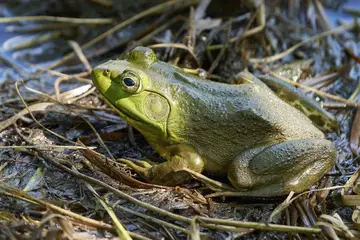
“The bullfrog is now considered an invasive problematic species in Washington.”
African clawed frog. Washington Department of Fish and Wildlife. undated page; checked November 3, 2026.Quoted passages (1)
“African clawed frogs were first identified in Washington in 2015 in King County and have since been confirmed in three cities in Puget Sound (Bothell, Issaquah, and Lacey).”
Nutria. Washington Department of Fish and Wildlife. undated page; checked November 3, 2026.Quoted passages (1)
“Nutria (Myocastor coypus)”
Common snapping turtle. Washington Department of Fish and Wildlife. undated page; checked November 3, 2026.Quoted passages (1)
“Common snapping turtle (Chelydra serpentina)”
Spiny softshell turtle. Washington Department of Fish and Wildlife. undated page; checked November 3, 2026.Quoted passages (1)
“Spiny Softshell turtle (Apalone spinifer)”
European green crab. Washington Department of Fish and Wildlife. undated page; checked November 3, 2026.Quoted passages (1)
“European green crabs were discovered on the Washington coast in 1998 in Willapa Bay and Grays Harbor, and later in Makah Bay.”
Northern pike. Washington Department of Fish and Wildlife. undated page; checked November 3, 2026.Quoted passages (1)
“It has already spread to several water bodies within the state.”
Zebra mussel. Washington Department of Fish and Wildlife. undated page; checked November 3, 2026.Quoted passages (1)
“The best way to avoid the catastrophic threats posed by zebra mussels is to prevent them from establishing in Washington’s waters.”
Living with wildlife: Snakes. Washington Department of Fish and Wildlife. undated page; checked November 3, 2026.Quoted passages (8)
“Of the dozen or so species of snakes found in Washington, only the Western rattlesnake is capable of inflicting a venomous bite, which it seldom does.”
“Although many people talk of seeing ‘timber rattlers,’ ‘diamondbacks,’ and ‘sidewinders,’ none of these occur in Washington.”
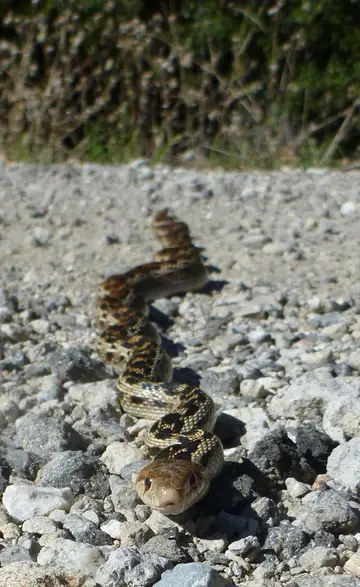
“The gopher snake is often mistaken for a rattlesnake, owing to its coloration and its impressive display of coiling, striking, and loud hissing.”
“All rattlesnake bites should be considered life threatening.”
“Make sure the doctor who treats the victim knows how to treat snakebites and, if not, call the Poison Center at (800) 222-1222.”
“If you encounter a rattlesnake, move away:”
“Snakes should be left alone, and except for a rattlesnake that poses an immediate danger to people or pets, no snake should ever be killed.”
“Emergence from hibernation can begin as early as March, depending on the species and location.”
“Habitat distribution and seasonality of the northern scorpion, Paruroctonus boreus (Girard) (Scorpiones: Vaejovidae), at the Hanford Site, southcentral Washington State”
Grizzly bear. Washington Department of Fish and Wildlife. undated page; checked November 3, 2026.Quoted passages (1)
“Grizzly bears are currently present in northeast Washington’s Selkirk Mountains, and are infrequently documented in areas near the Canadian border in northern Stevens and Pend Oreille counties.”