Washington Natural Heritage Program, Washington Department of Fish and Wildlife, BLM and U.S. Forest Service: The preceding checklist contains the 25 native amphibian species and 21 native reptile species known in Washington.
This page lists 14 species: 13 from Washington Natural Heritage Program, Washington Department of Fish and Wildlife, BLM and U.S. Forest Service's Checklist of Washington Amphibians and Reptiles and 1 named in other official sources.
3 are nonnative.
Which frogs and toads can hurt you
Official sources single out these frogs and toads in Washington, in their own words:
Woodhouse's Toad
Toxic skin secretion, dangerous if eaten, per the Burke Museum. “Are poisonous! They secrete a white toxin that can cause nausea, irregular heart beats and sometimes may cause death if ingested” Burke Museum
No official source we use states whether this animal is venomous. That does not mean it is harmless: do not handle it.
Size
Usually 6 to 8 inches long (NCWRC); can reach 8 inches or more and weigh over 2 pounds (CDFW). Missouri gives 3.5 to 6 inches snout to vent, occasionally to 8.75.
How to recognize it
No ridge (dorsolateral fold) down each side of the back
Large round eardrum: about twice the eye in males, about eye-sized in females
Fully webbed hind feet, longest toe extends past the webbing
Conservation
WDFW classification: prohibited aquatic invasive species
Habitat: Cascades frogs are found primarily at higher elevations (most above 2000 feet in Washington) with suitable breeding sites. (Washington Natural Heritage Program, Washington Department of Fish and Wildlife, BLM and U.S. Forest Service)
Range: In Washington, this species occurs in the Willapa Hills, the Black Hills, and the Cascade and Olympic Mountains. Populations in the Blue Mountains were split into a new species – Rocky Mountain tailed frog (Ascaphus montanus).
Habitat: Coastal tailed frogs are primarily found in or associated with relatively cold, clear, rocky steams in mature forests. (Washington Natural Heritage Program, Washington Department of Fish and Wildlife, BLM and U.S. Forest Service)
No confirmed photo of Columbia spotted frog
Columbia spotted frog
Rana luteiventris
Not stated
Venom
No official source we use states whether this animal is venomous. That does not mean it is harmless: do not handle it.
Range: In Washington, the Columbia spotted frog occurs east of the Cascade Mountain crest in the East Cascades, Okanogan, Canadian Rocky Mountains, Columbia Basin, and Blue Mountain Ecoregions, and spilling over the Cascade crest to the west slope in the north Cascades near Harts and Rainy Passes. Small, scattered populations occur in the shrubsteppe vegetation zones of the Columbia Basin.
Habitat: This species is relatively aquatic and is rarely found far from water. (Washington Natural Heritage Program, Washington Department of Fish and Wildlife, BLM and U.S. Forest Service)
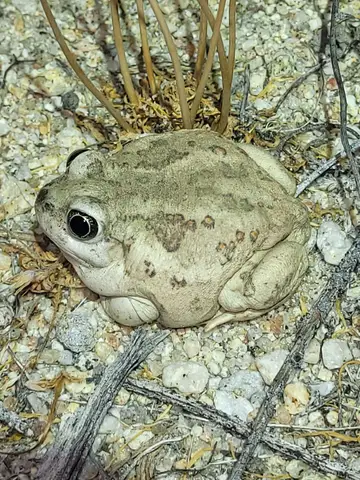
Range: The Great Basin spadefoot is primarily a species of the Columbia Plateau Ecoregion but the range also extends into the Okanogan Ecoregion. A single report exists of a tadpole found in the Canadian Rockies Ecoregion from Stevens County across the Columbia River from the town of Hudson.
Habitat: Great Basin spadefoots occur primarily in shrubsteppe. (Washington Natural Heritage Program, Washington Department of Fish and Wildlife, BLM and U.S. Forest Service)
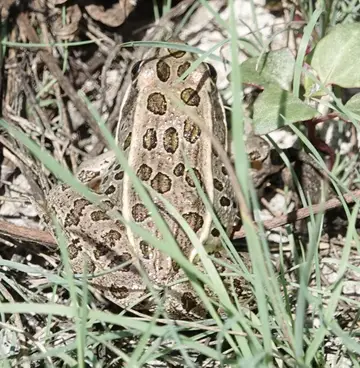
Range: Historical occurrences range from the Columbia Plateau, Okanogan and Canadian Rocky Mountain Ecoregions. Northern leopard frogs were found throughout eastern Washington, and 17 occupied sites were recognized throughout the Columbia, Crab Creek, Pend Oreille, Snake, Spokane, and Walla Walla river drainages.
Habitat: Northern leopard frogs are semi-aquatic, requiring both aquatic and terrestrial habitats. (Washington Natural Heritage Program, Washington Department of Fish and Wildlife, BLM and U.S. Forest Service)
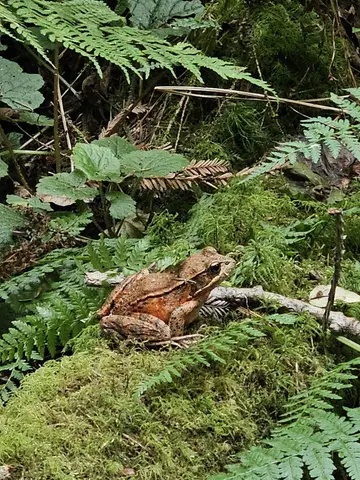
Range: In Washington, northern red-legged frogs occur in the Pacific Coast, Puget Trough, North Cascades, West Cascades and East Cascades ecoregions. East of the Cascade crest, the only records from Kittitas and Yakima Counties are old museum specimen records.
Habitat: Northern red-legged frogs are found in lowland (mostly below 3000 feet in Washington) moist forested habitats with access to suitable breeding sites. (Washington Natural Heritage Program, Washington Department of Fish and Wildlife, BLM and U.S. Forest Service)
No confirmed photo of Oregon spotted frog
Oregon spotted frog
Rana pretiosa
Not stated
Venom
No official source we use states whether this animal is venomous. That does not mean it is harmless: do not handle it.
Range: The historical range for Oregon spotted frogs in Washington is the Puget Trough Ecoregion, in Whatcom, Skagit, and Thurston counties, and the southern extent of the Eastern Cascades Ecoregion, in Skamania and Klickitat counties.
Habitat: This species is highly aquatic and rarely found away from water. (Washington Natural Heritage Program, Washington Department of Fish and Wildlife, BLM and U.S. Forest Service)
No confirmed photo of Pacific treefrog
Pacific treefrog
Pseudacris regilla
Not stated
Venom
No official source we use states whether this animal is venomous. That does not mean it is harmless: do not handle it.
Habitat: Pacific treefrogs are able to utilize a wide variety of habitats and persist even within urban and disturbed areas, where pockets of undeveloped habitat exist. (Washington Natural Heritage Program, Washington Department of Fish and Wildlife, BLM and U.S. Forest Service)
No confirmed photo of Rocky Mountain tailed frog
Rocky Mountain tailed frog
Ascaphus montanus
Not stated
Venom
No official source we use states whether this animal is venomous. That does not mean it is harmless: do not handle it.
Habitat: Rocky Mountain tailed frogs are present year-round in and near perennial streams associated with cold, clear, rocky streams in mature forests. (Washington Natural Heritage Program, Washington Department of Fish and Wildlife, BLM and U.S. Forest Service)
No confirmed photo of Western toad
Western toad
Anaxyrus boreas
Not stated
Venom
No official source we use states whether this animal is venomous. That does not mean it is harmless: do not handle it.
Range: Western toads occur in all nine Washington ecoregions: Northwest Coast, West Cascades, Puget Trough, North Cascades, Columbia Plateau, Okanogan, East Cascades, Canadian Rocky Mountains, and Blue Mountains. Within the Washington portion of the Columbia Plateau, the species’ distribution is limited to the edges of the ecoregion except in the southeast corner of the state.
Habitat: This species occurs in a variety of terrestrial habitats including prairies, forests, canyon grasslands and ponderosa pine-Oregon oak habitat. (Washington Natural Heritage Program, Washington Department of Fish and Wildlife, BLM and U.S. Forest Service)
No confirmed photo of Woodhouse's toad
Woodhouse's toad
Anaxyrus woodhousii
Not stated
Venom
No official source we use states whether this animal is venomous. That does not mean it is harmless: do not handle it.
Danger to people
“Are poisonous! They secrete a white toxin that can cause nausea, irregular heart beats and sometimes may cause death if ingested” Burke Museum
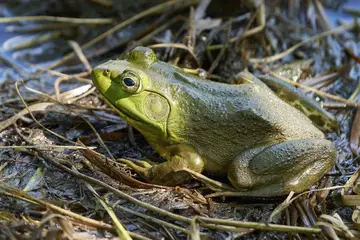
Bullfrogs lack the dorsolateral ridges that green frogs have.
Photos show typical adults; individuals vary. Never get close to compare.
When frogs and toads are active in Washington
Records of frogs and toads in Washington peak in June to September. They show when people record frogs and toads, not how many there are (about month bars).
JanFebMarAprMayJunJulAugSepOctNovDec
1,665 records of frogs and toads in Washington by month (GBIF, CC0 and CC BY records).
If you are bitten or stung
Call 911 or Poison Help at 1-800-222-1222 right away. Poison Help connects you to your local poison center, any time of day.
How to report
Dangerous wildlife: emergency 911; non-emergency 877-933-9847 or the WDFW online report. Invasive species: Washington Invasive Species Council web form or WA Invasives app; aquatic invasive species hotline 1-888-WDFW-AIS, [email protected]. Washington Department of Fish and Wildlife
About this list
The species list comes from Checklist of Washington Amphibians and Reptiles (Washington State Herp Atlas) (Washington Natural Heritage Program, Washington Department of Fish and Wildlife, BLM and U.S. Forest Service, 2009, revised 2017; PDF July 2019). 1 more entry comes from other official sources named on each card.
Venom labels come only from official sources and link to them; "Not stated" never means harmless. How labels work.
“The preceding checklist contains the 25 native amphibian species and 21 native reptile species known in Washington.”
Woodhouses Toad. Burke Museum (Washington State Museum of Natural History and Culture, University of Washington). undated page; checked November 3, 2026.Quoted passages (1)
“Are poisonous! They secrete a white toxin that can cause nausea, irregular heart beats and sometimes may cause death if ingested”
African clawed frog. Washington Department of Fish and Wildlife. undated page; checked November 3, 2026.
Rough Skinned Newt. Burke Museum (Washington State Museum of Natural History and Culture, University of Washington). undated page; checked November 3, 2026.Quoted passages (1)
“Toxins can cause mild skin irritation, but can cause severe symptoms if ingested, including paralysis and/or death”
Dangerous wildlife. Washington Department of Fish and Wildlife. undated page; checked November 3, 2026.Quoted passages (1)
“For non-emergency dangerous wildlife complaints, call 877-933-9847, or submit an online report.”