This page lists 4 spiders.
4 are venomous by official accounts.
Not every species: no complete official list of Washington spiders exists, so this page covers the ones state and Extension sources name. How lists are built.
Which spiders can hurt you
Official sources single out these spiders in Washington, in their own words:
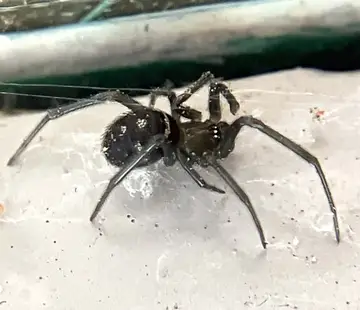
Black Widow Spider
Dangerous venom in adult females. “Black widow spider bites are a significant health risk for young people, the elderly, and those with high blood pressure or compromised immune system.” Washington State Department of Health
Yellow Sac Spider
Named by DOH as medically significant. “There are two spiders in Washington of medical significance: the black widow spider and the yellow sac spider.” Washington State Department of Health
All 4 spiders
Venomous species first, then A to Z. Do not handle them.
“Black widow spider bites are a significant health risk for young people, the elderly, and those with high blood pressure or compromised immune system.” Washington State Department of Health
Venom: “Adult female black widows have dangerous venom, but will often try to escape rather than bite, unless guarding their eggs.” (Washington State Department of Health)
Habitat: Dark undisturbed areas like woodpiles, hay bales, water meter boxes, fences and under eaves. (Washington State Department of Health)
Venom: “Are there venomous spiders in Washington? … There are two spiders in Washington of medical significance: the black widow spider and the yellow sac spider” (Washington State Department of Health)
When spiders are active in Washington
Records of spiders in Washington peak in May to September. They show when people record spiders, not how many there are (about month bars).
JanFebMarAprMayJunJulAugSepOctNovDec
4,088 records of spiders in Washington by month (GBIF, CC0 and CC BY records).
If you are bitten or stung
Call 911 or Poison Help at 1-800-222-1222 right away. Poison Help connects you to your local poison center, any time of day.
Official advice from Washington State Department of Health:
Dangerous wildlife: emergency 911; non-emergency 877-933-9847 or the WDFW online report. Invasive species: Washington Invasive Species Council web form or WA Invasives app; aquatic invasive species hotline 1-888-WDFW-AIS, [email protected]. Washington Department of Fish and Wildlife
Venom labels come only from official sources and link to them; "Not stated" never means harmless. How labels work.
Sources
About WDFW. Washington Department of Fish and Wildlife. undated page; checked November 3, 2026.
Spiders. Washington State Department of Health. undated page; checked November 3, 2026.Quoted passages (8)
“Adult female black widows have dangerous venom, but will often try to escape rather than bite, unless guarding their eggs.”
“Black widow spider bites are a significant health risk for young people, the elderly, and those with high blood pressure or compromised immune system.”
“Are there venomous spiders in Washington? … There are two spiders in Washington of medical significance: the black widow spider and the yellow sac spider”
“There are two spiders in Washington of medical significance: the black widow spider and the yellow sac spider.”
“False black widow spider bites do happen, but their venom is much less toxic than a black widow's.”
“There is no evidence hobo spider venom has caused skin necrosis or necrotic wounds in people.”
“Seek medical attention immediately if you suspect the bite was from a black widow.”
“Fortunately, brown recluse spiders (Loxosceles species) do not live in Washington.”
Dangerous wildlife. Washington Department of Fish and Wildlife. undated page; checked November 3, 2026.Quoted passages (1)
“For non-emergency dangerous wildlife complaints, call 877-933-9847, or submit an online report.”