Ohio Department of Natural Resources, Division of Wildlife: Ohio was home to 65 native mammal species. Unfortunately, 12 species no longer occur, leaving a current fauna of 53 native species.Two nonnative introductions, the brown rat and house mouse, occur widely, and commonly in some areas.
This page lists 56 mammals: all from Ohio Department of Natural Resources, Division of Wildlife's Mammals of Ohio Field Guide.
1 is venomous by official accounts. 2 are nonnative. Ohio Department of Natural Resources, Division of Wildlife gives a total of 53; the 56 here are the mammals official sources name one by one.
All 56 mammals
Venomous species first, then A to Z. Do not handle them.
No confirmed photo of Northern Short-tailed Shrew
Northern Short-tailed Shrew
Blarina brevicauda
What the sources say
Venom: “The salivary glands of the northern short-tailed shrew produce a venom which helps in subduing prey.” (Ohio Department of Natural Resources, Division of Wildlife)
Habitat: These shrews are not restricted to a particular habitat, but they are most likely found in forests, grasslands, marshes, and brushy areas. This may be the most common mammal in Ohio. (Ohio Department of Natural Resources, Division of Wildlife)
No confirmed photo of Allegheny Woodrat
Allegheny Woodrat
Neotoma magister
Conservation
Ohio endangered
What the sources say
Habitat: Allegheny woodrats can be found in rocky outcrops, such as cliffs and caves, in forested areas. Builds a large, cup-shaped nest under rocks or ledges. (Ohio Department of Natural Resources, Division of Wildlife)
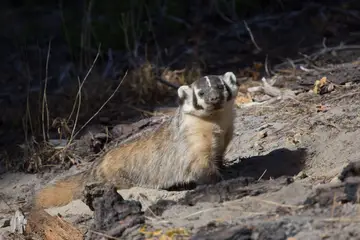
Habitat: Badgers prefer shortgrass habitats, such as fields and pastures, typically with dry sand or loamy soils. (Ohio Department of Natural Resources, Division of Wildlife)
Smokies: males average about 6 ft long, 3 ft at the shoulder and 250 lb in summer; females usually just over 100 lb. Missouri: 46 to 78 inches long, 86 to 600 lb.
How to recognize it
Straight facial profile, rounded erect ears, very short tail
Short curved claws for climbing
Conservation
Ohio endangered
What the sources say
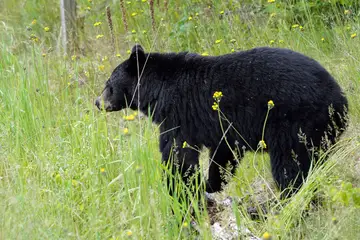
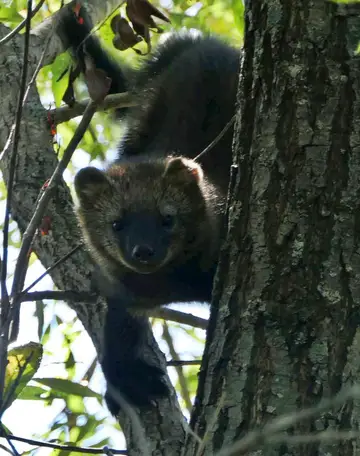
Habitat: Heavily wooded habitats, ranging from swamps and wetlands to dry upland hardwood and coniferous forests; prefers wooded cover with a dense understory. (Ohio Department of Natural Resources, Division of Wildlife)
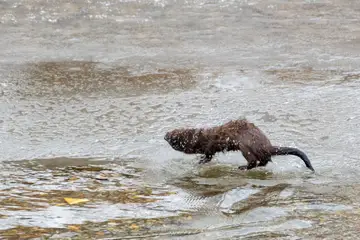
Habitat: Mink are found near running waters of streams and rivers and the standing waters of marshes and lakes, especially in wooded or brushy areas. (Ohio Department of Natural Resources, Division of Wildlife)
No confirmed photo of American Pygmy Shrew
American Pygmy Shrew
Sorex hoyi
Conservation
Ohio concern
What the sources say
Habitat: Pygmy shrews can live in a variety of habitats, including wooded and open areas, swamps, grassy clearings, and floodplains. (Ohio Department of Natural Resources, Division of Wildlife)
No confirmed photo of Big Brown Bat
Big Brown Bat
Eptesicus fuscus
Conservation
Ohio concern
JFMAMJJASOND
117 records by month.What the sources say
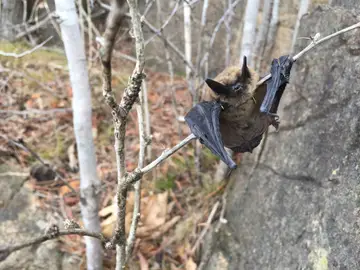
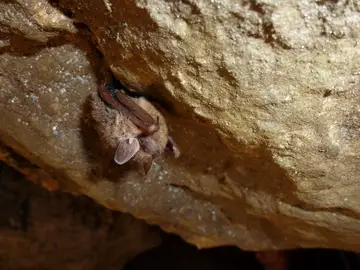
Habitat: In the summer, big brown bats are found in a variety of habitats, including fields, forest openings, urban and/or suburban areas, and around water. In the winter, big brown bats hibernate in caves, mines, and even in attics. (Ohio Department of Natural Resources, Division of Wildlife)
Photo: National Marine Sanctuaries · Public domain · Wikimedia Commons
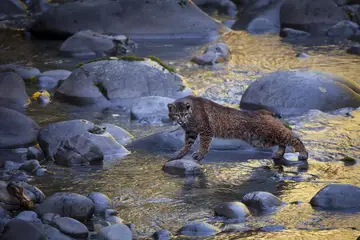
Total length 18 to 50 inches, tail 3 to 8 inches, weight 8 to 49 pounds (Missouri). About twice the size of a house cat.
How to recognize it
Short 'bobbed' tail, 4 to 8 inches, with a black tip and white underneath (Arizona). New Mexico instead describes black bars on top, white underneath and a white tip.
Pointed ears with tufts at the tips, often with cheek tufts
Backs of the ears are black with a light central spot
What the sources say
Habitat: A variety of habitats, including forests, old fields, and brushland. They often sleep in hidden dens, hollow trees, or rocky crevices. (Ohio Department of Natural Resources, Division of Wildlife)
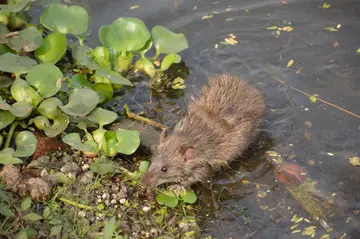
Habitat: Brown rats inhabit any place where food and shelter can be found, including woodlands, open fields, garbage dumps, sewers, and basements. (Ohio Department of Natural Resources, Division of Wildlife)
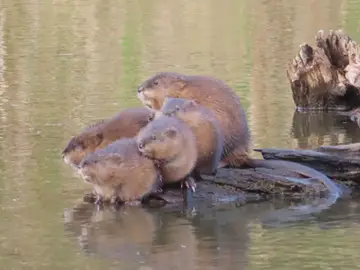
Habitat: Muskrats live in aquatic habitats, such as marshes, ponds, lakes, rivers, and canals. (Ohio Department of Natural Resources, Division of Wildlife)
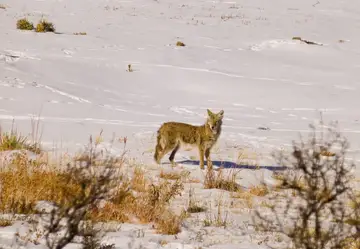
About 3.5 to 4 feet long including the tail and roughly 2 feet tall at the shoulder; weight varies by region: Arizona 20 to 30 lb, Florida average about 28 lb, Georgia 25 to 45 lb
How to recognize it
Large pointed ears, long narrow nose, bushy black-tipped tail
Like a slender medium-sized dog, much smaller than a wolf
Paw track about 2 inches long (Florida)
JFMAMJJASOND
231 records by month.What the sources say
Habitat: The coyote’s strength is that it can adapt and exploit most any habitat to its advantage, including forests, clearcuts, and woodlots in rural and urban areas. (Ohio Department of Natural Resources, Division of Wildlife)
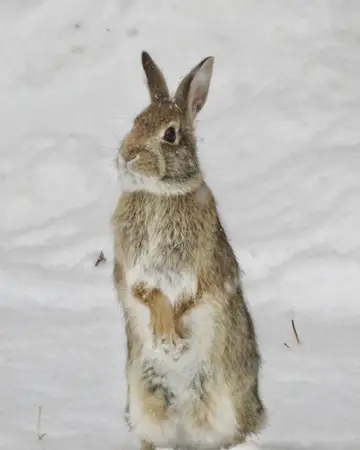
Habitat: Open areas bordered by thickets or brushy areas. Cottontails prefer old fields with bunch grasses and weeds but will also be found in suburban areas if brushy escape cover is near. (Ohio Department of Natural Resources, Division of Wildlife)
Habitat: Inhabits nearly every dry-land habitat within its range. They can be found in forests, grasslands, brushlands, agricultural fields, and deserts. They are semi-arboreal. (Ohio Department of Natural Resources, Division of Wildlife)
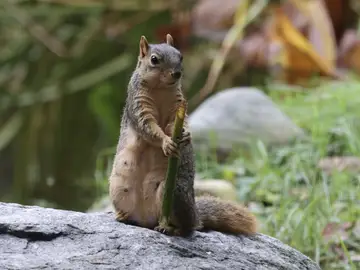
Habitat: Fox squirrels inhabit deciduous and mixed forests. Preferring more open habitats than gray squirrels. (Ohio Department of Natural Resources, Division of Wildlife)
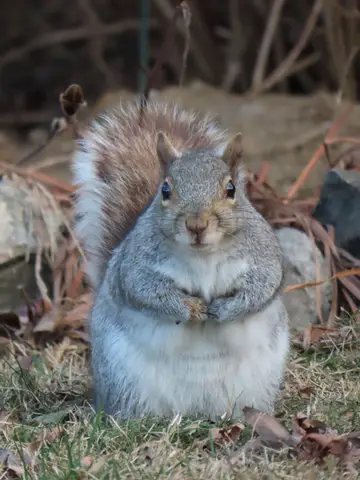
Habitat: Gray squirrels are found in large expanses of hardwood trees, and wooded urban and suburban sites. (Ohio Department of Natural Resources, Division of Wildlife)
No confirmed photo of Eastern Harvest Mouse
Eastern Harvest Mouse
Reithrodontomys humulis
Conservation
Ohio threatened
What the sources say
Habitat: The eastern harvest mouse inhabits old fields, marshes, and wet meadows. (Ohio Department of Natural Resources, Division of Wildlife)
No confirmed photo of Eastern Mole
Eastern Mole
Scalopus aquaticus
What the sources say
Habitat: Eastern moles burrow underground in areas with moist, sandy loam soil such as lawns, golf courses, gardens, and fields. (Ohio Department of Natural Resources, Division of Wildlife)
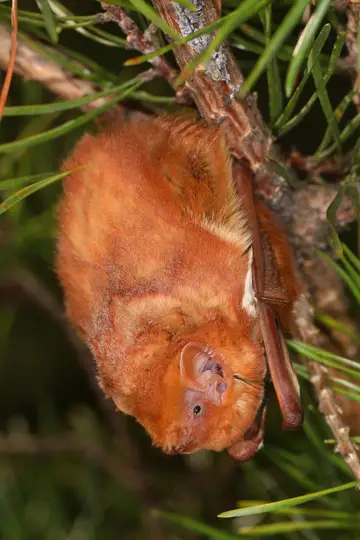
Habitat: Red bats roost among the foliage in forests, forest edges, hedgerows, or in tree bark. Often the species roosts near the ground and move its location every couple of days. In the winter, the species migrates in large groups south. Hibernation sites are not well documented for this species. (Ohio Department of Natural Resources, Division of Wildlife)
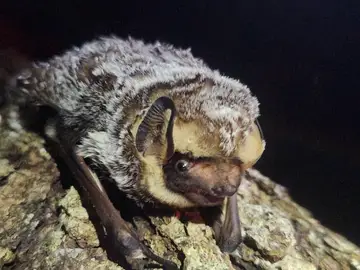
Habitat: In the summer, this species is thought to favor rocky, hilly, or even mountainous areas. In the winter, they hibernate in mines and caves, generally near the entrance where the temperatures are colder. (Ohio Department of Natural Resources, Division of Wildlife)
No confirmed photo of Ermine
Ermine
Mustela erminea
Conservation
Ohio concern
What the sources say
Habitat: Ermines have a wide range that includes open woodlands, brushy areas, grasslands, wetlands, and farmlands. (Ohio Department of Natural Resources, Division of Wildlife)
No confirmed photo of Evening Bat
Evening Bat
Nycticeius humeralis
Conservation
Ohio special interest
What the sources say
Habitat: Evening bats prefer forest roosting in large colonies to raise pups and forage in open habitats in the summer. In the winter, this species migrates to southern U.S. or even further south to hibernate. (Ohio Department of Natural Resources, Division of Wildlife)
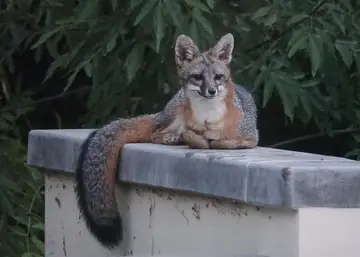
Habitat: Gray foxes live in mostly wooded areas and partially open brushland with little human presence. (Ohio Department of Natural Resources, Division of Wildlife)
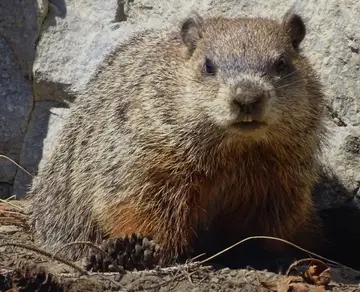
Habitat: Groundhogs prefer open grasslands, pastures, and woodlands. Their large burrow entrances are conspicuous. (Ohio Department of Natural Resources, Division of Wildlife)
No confirmed photo of Hairy-tailed Mole
Hairy-tailed Mole
Parascalops breweri
What the sources say
Habitat: Hairy-tailed moles are found in sandy loam soils with good vegetative cover; they avoid heavy, wet soils. (Ohio Department of Natural Resources, Division of Wildlife)
Habitat: In the summer, hoary bats roost in the foliage of deciduous and coniferous forests. It is thought that in the winter the species migrates large distances south to hibernate. (Ohio Department of Natural Resources, Division of Wildlife)
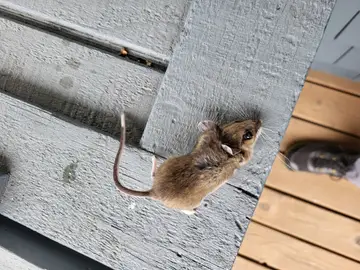
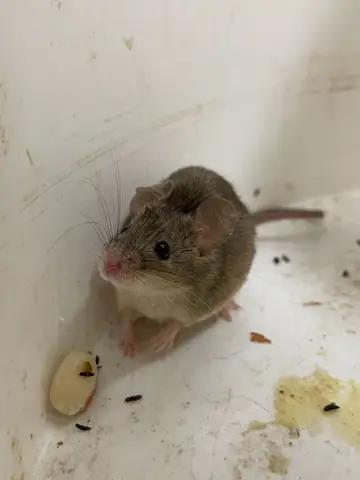
Habitat: Generally found in close association with humans. While house mice are occasionally found in fields, they usually live in buildings. (Ohio Department of Natural Resources, Division of Wildlife)
No confirmed photo of Indiana Bat
Indiana Bat
Myotis sodalis
Conservation
Ohio endangered
What the sources say
Habitat: As a colonial species, they form large summer maternity colonies roosting in larger trees in forests. In the winter, the species migrates relatively short distances to hibernaculum (e.g., caves or mines) that provide stable temperatures just above freezing. (Ohio Department of Natural Resources, Division of Wildlife)
No confirmed photo of Least Weasel
Least Weasel
Mustela nivalis
What the sources say
Habitat: Least weasels inhabit open areas such as meadows, marshes, brushy areas, and agricultural fields. Avoids wetlands. (Ohio Department of Natural Resources, Division of Wildlife)
No confirmed photo of Little Brown Bat
Little Brown Bat
Myotis lucifugus
Conservation
Ohio endangered
What the sources say
Habitat: As a colonial species, they form large, summer maternity colonies roosting in trees, bat boxes, barns, and buildings. In the winter, the species migrates relatively short distances to hibernaculum (e.g., caves or mines) that provide stable temperatures just above freezing. (Ohio Department of Natural Resources, Division of Wildlife)
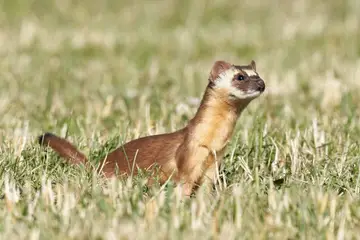
Habitat: Long-tailed weasels are found in most land habitats near water, but they avoid dense forests. (Ohio Department of Natural Resources, Division of Wildlife)
No confirmed photo of Masked Shrew
Masked Shrew
Sorex cinereus
What the sources say
Habitat: Masked shrews can be found in a variety of habitats, including forests, open country, and brushland. (Ohio Department of Natural Resources, Division of Wildlife)
No confirmed photo of Meadow Jumping Mouse
Meadow Jumping Mouse
Zapus hudsonius
What the sources say
Habitat: Meadow jumping mice are found in a variety of habitats with herbaceous cover, but most often found in low, moist grasslands. (Ohio Department of Natural Resources, Division of Wildlife)
No confirmed photo of Meadow Vole
Meadow Vole
Microtus pennsylvanicus
What the sources say
Habitat: The most widely distributed of the voles; can be found in meadows, fields, grassy marshes, and other places near streams, lakes, and swamps. (Ohio Department of Natural Resources, Division of Wildlife)
No confirmed photo of North American Least Shrew
North American Least Shrew
Cryptotis parva
What the sources say
Habitat: Least shrews prefer open, grass-covered or brushy areas. It can also be found in marshes. (Ohio Department of Natural Resources, Division of Wildlife)
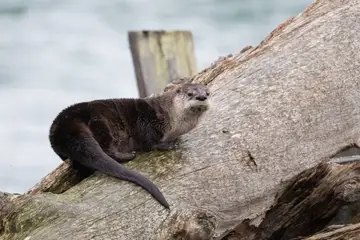
Habitat: Otters live in aquatic habitats, including rivers, lakes, and marshes. (Ohio Department of Natural Resources, Division of Wildlife)
No confirmed photo of Northern Long-eared Bat
Northern Long-eared Bat
Myotis septentrionalis
Conservation
Ohio endangered
What the sources say
Habitat: In the summer, northern long-eared bats inhabit forests and woodlands with smaller maternity roosts. Females will often move flightless pups every two to three days during the summer. In the winter, the species migrates relatively short distances to hibernaculum (e.g., caves or mines), which provide stable cool temperatures just above freezing. (Ohio Department of Natural Resources, Division of Wildlife)
No confirmed photo of Prairie Vole
Prairie Vole
Microtus ochrogaster
Conservation
Ohio concern
What the sources say
Habitat: Prairie voles occur in prairies, fencerows, old cemeteries, and other fairly dry grassy places. (Ohio Department of Natural Resources, Division of Wildlife)
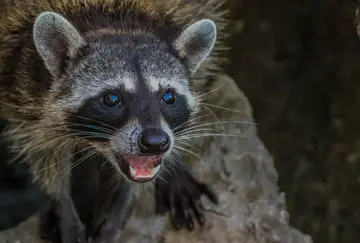
Habitat: Raccoons live in urban and suburban wooded areas with big trees and water close by. (Ohio Department of Natural Resources, Division of Wildlife)
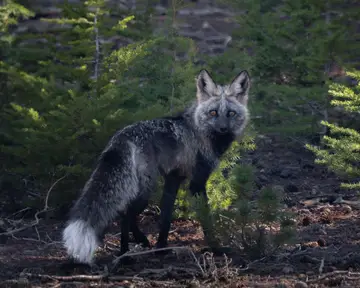
Habitat: Red foxes are found in a variety of habitats, including mixed, cultivated, and wooded areas, as well as brushlands. (Ohio Department of Natural Resources, Division of Wildlife)
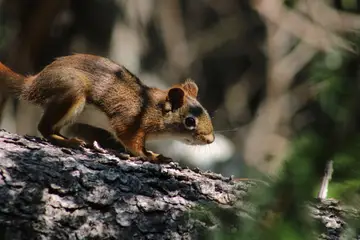
Habitat: Red squirrels are found in coniferous and mixed forests, but are most frequent around mature conifers. (Ohio Department of Natural Resources, Division of Wildlife)
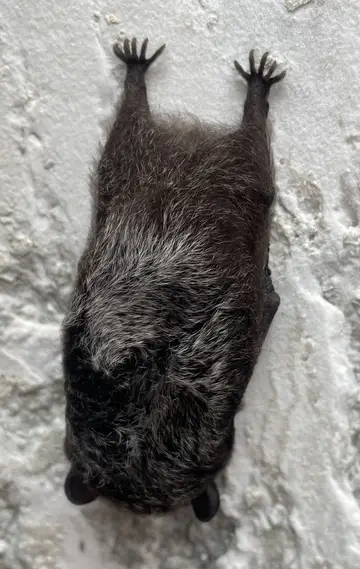
Habitat: In the summer, silver-haired bats are found in mature forests with a water source nearby. In the winter, the species migrates and is found to generally hibernate in trees and rock crevices. (Ohio Department of Natural Resources, Division of Wildlife)
No confirmed photo of Smoky Shrew
Smoky Shrew
Sorex fumeus
Conservation
Ohio concern
What the sources say
Habitat: Smoky shrews generally live in the leaf litter of birch and hemlock forests. (Ohio Department of Natural Resources, Division of Wildlife)
No confirmed photo of Southern Bog Lemming
Southern Bog Lemming
Synaptomys cooperi
Conservation
Ohio concern
What the sources say
Habitat: Southern bog lemmings live in low, damp bogs and meadows with heavy vegetative growth. (Ohio Department of Natural Resources, Division of Wildlife)
No confirmed photo of Southern Flying Squirrel
Southern Flying Squirrel
Glaucomys volans
What the sources say
Habitat: Southern flying squirrels inhabit woodlands or forests of deciduous or mixed deciduous-coniferous trees. (Ohio Department of Natural Resources, Division of Wildlife)
No confirmed photo of Star-nosed Mole
Star-nosed Mole
Condylura cristata
Conservation
Ohio concern
What the sources say
Habitat: Star-nosed moles inhabit low, wet soil near lakes or streams. (Ohio Department of Natural Resources, Division of Wildlife)
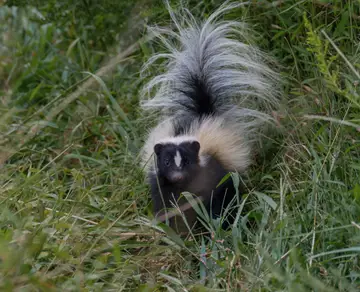
Habitat: Skunks are found in somewhat open areas with a mixture of habitats such as woods, grasslands, and agricultural clearings. (Ohio Department of Natural Resources, Division of Wildlife)
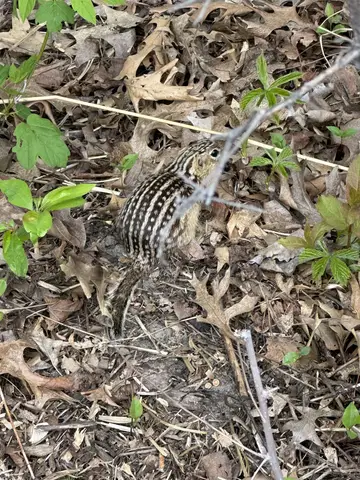
Habitat: These ground squirrels inhabit open short to mid-grass prairies, golf courses, cemeteries, airports, and other sites with expanses of mowed grass. (Ohio Department of Natural Resources, Division of Wildlife)
Habitat: Tri-colored bats prefer open forests near water in the summer. This species hibernates in mines, caves, and rock crevices. (Ohio Department of Natural Resources, Division of Wildlife)
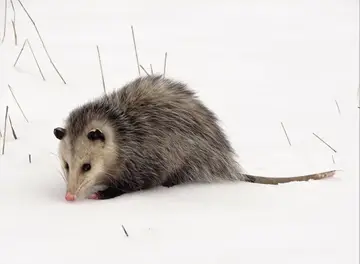
Weighs 4 to 7 lb and stands 6 to 8 inches high at the shoulder (South Carolina DNR); about the size of a house cat
How to recognize it
Long pointed nose, black hairless ears, dark eyes, nearly hairless grasping (prehensile) tail
Long scaly tail and a pointed snout ending in a pink nose
Opposable thumb-like big toe (hallux) on each hind foot
JFMAMJJASOND
293 records by month.What the sources say
Habitat: Quite adaptable and can be found in suburbia and the city. Ideal habitat, however, is an area with woods, wetlands, and farmland interspersed. (Ohio Department of Natural Resources, Division of Wildlife)
Habitat: Inhabits a variety of areas, but most often found in woody or brushy areas. They are also good swimmers. Often enters buildings. (Ohio Department of Natural Resources, Division of Wildlife)
No confirmed photo of White-tailed Deer
White-tailed Deer
Odocoileus virginianus
JFMAMJJASOND
2,115 records by month.What the sources say
Habitat: A variety of habitats, including woods, farmlands, brushy areas, dense thickets, and edges. (Ohio Department of Natural Resources, Division of Wildlife)
No confirmed photo of Woodland Jumping Mouse
Woodland Jumping Mouse
Napaeozapus insignis
Conservation
Ohio concern
What the sources say
Habitat: Woodland jumping mice live in brushy areas near water, including wet bogs and stream borders. (Ohio Department of Natural Resources, Division of Wildlife)
No confirmed photo of Woodland Vole
Woodland Vole
Microtus pinetorum
Conservation
Ohio concern
What the sources say
Habitat: Eastern deciduous forests. They live on the forest floor in the thick layers of leaves and loose soil. (Ohio Department of Natural Resources, Division of Wildlife)
When mammals are active in Ohio
Records of mammals in Ohio peak in March to August. They show when people record mammals, not how many there are (about month bars).
JanFebMarAprMayJunJulAugSepOctNovDec
11,219 records of mammals in Ohio by month (GBIF, CC0 and CC BY records).
If you are bitten or stung
Call 911 or Poison Help at 1-800-222-1222 right away. Poison Help connects you to your local poison center, any time of day.
“Ohio was home to 65 native mammal species. Unfortunately, 12 species no longer occur, leaving a current fauna of 53 native species.Two nonnative introductions, the brown rat and house mouse, occur widely, and commonly in some areas.”
“It has a long, scaly tail, ears without fur, and a long, pointed snout that ends in a pink nose.”
“The salivary glands of the northern short-tailed shrew produce a venom which helps in subduing prey.”
“A slender animal, very similar in appearance to a medium-sized dog and much smaller than a wolf”
“Cougars probably disappeared from Ohio by the mid-1850s.”