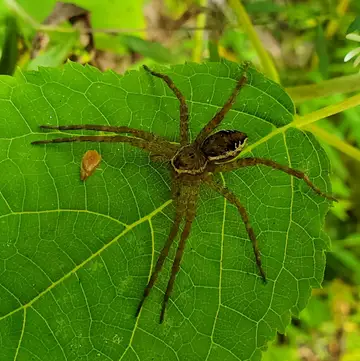
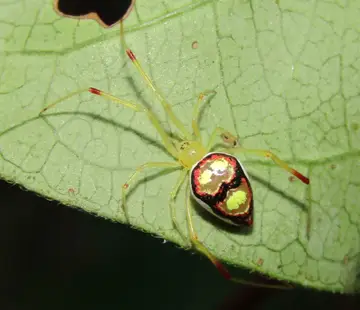
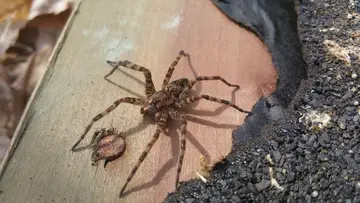
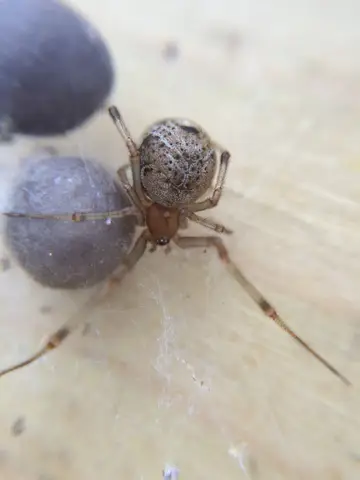
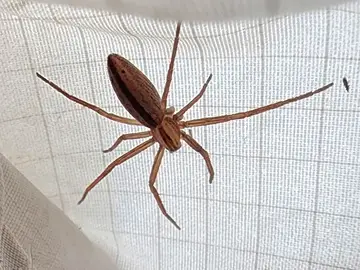
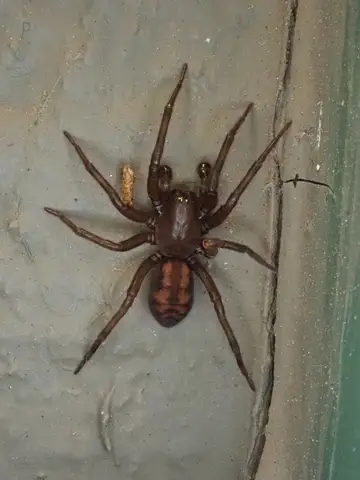
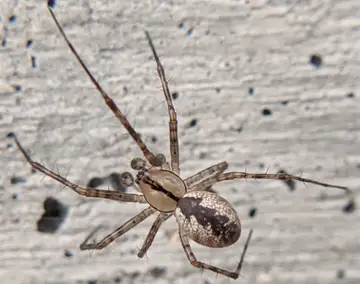
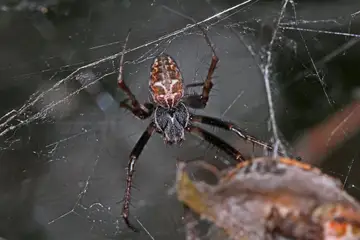
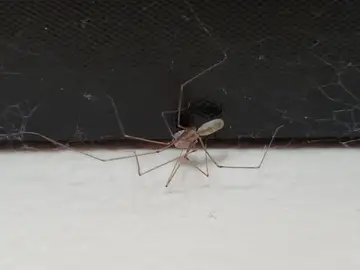
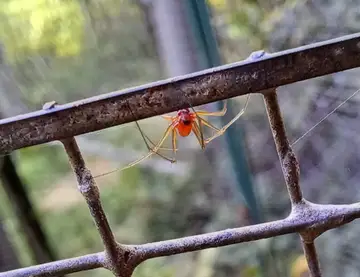
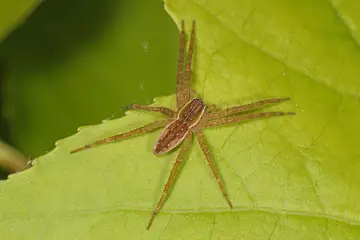
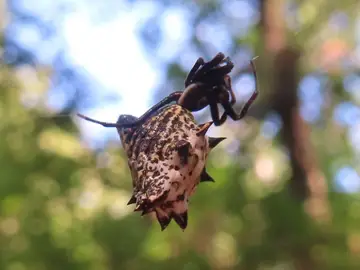
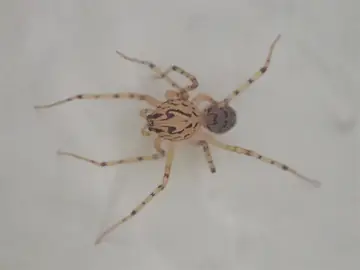
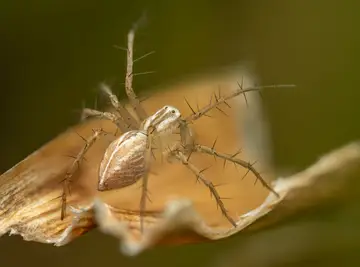
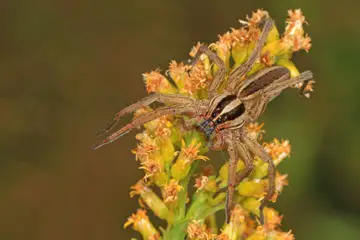
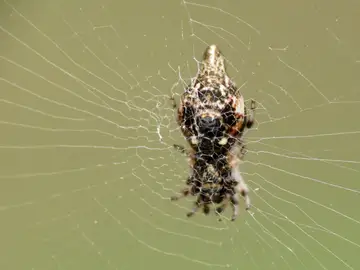
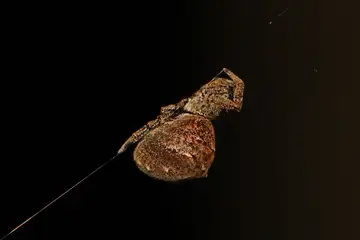
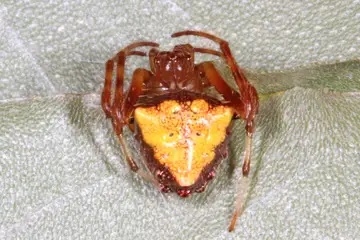
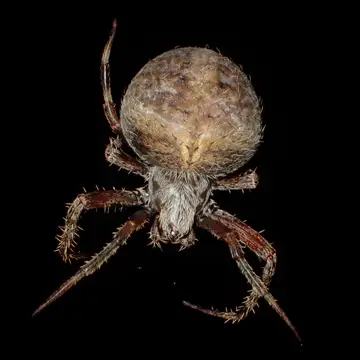
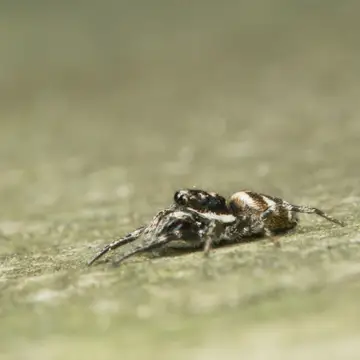
Ohio Department of Natural Resources, Division of Wildlife: Almost all of Ohio’s 624 spider species fall within the Araneomorphae.
This page lists 64 spiders: all from Ohio Department of Natural Resources, Division of Wildlife's Common Spiders of Ohio Field Guide — common species only, not a complete list.
4 are venomous by official accounts. Ohio Department of Natural Resources, Division of Wildlife gives a total of 624; the 64 here are the spiders official sources name one by one.
Not every species: no complete official list of Ohio spiders exists, so this page covers the ones state and Extension sources name. How lists are built.
Which spiders can hurt you
Official sources single out these spiders in Ohio, in their own words:
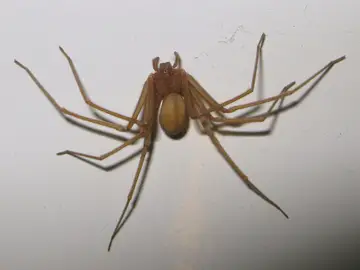
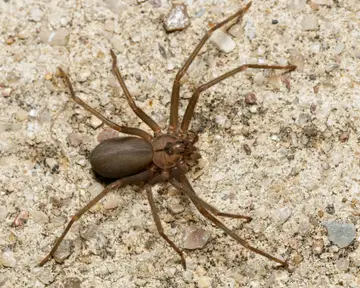
Body about 7 to 12 mm (about 3/8 inch); females average about 9 mm and males about 8 mm. UC IPM says a recluse body is not more than 3/8 inch long.
How to recognize it
Six equal-sized eyes in three pairs. UC IPM calls this the most definitive feature, since most spiders have eight eyes.
The violin mark alone is not a reliable way to identify it
UC IPM's five-point check: six eyes in pairs, evenly colored finely haired abdomen, no spines on the legs, evenly colored legs, body no more than 3/8 inch
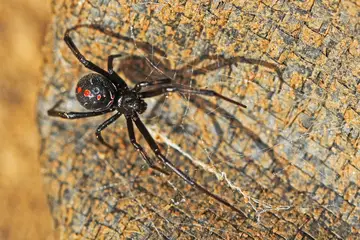
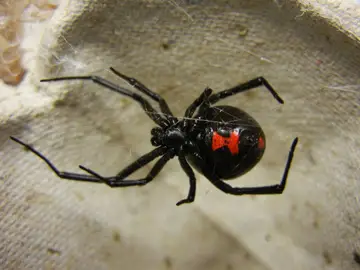
Venom: “Only two groups of Ohio spiders, the black widows and the recluse spiders are considered dangerous to humans.” (Ohio Department of Natural Resources, Division of Wildlife)
Venom: “Only two groups of Ohio spiders, the black widows and the recluse spiders are considered dangerous to humans.” (Ohio Department of Natural Resources, Division of Wildlife)
Venom: “Only the females pose a bite risk. Their bite can be serious, and anyone bitten should seek medical attention immediately.” (Ohio Department of Natural Resources, Division of Wildlife)
Venom: “Only the females pose a bite risk. Their bite can be serious, and anyone bitten should seek medical attention immediately.” (Ohio Department of Natural Resources, Division of Wildlife)
No official source we use states whether this animal is venomous. That does not mean it is harmless: do not handle it.
Size
Females 1/2 to 7/8 inch (13 to 22 mm); males 3/8 to 3/4 inch (10 to 20 mm). Ohio State Extension gives about 1/2 to 3/4 inch measured from the tips of the legs.
How to recognize it
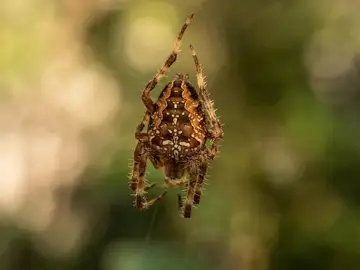
Large circular orb web, often between a rock wall or building and the ground; support lines may stretch 10 feet or more and the orb may be several feet across
Commonly builds webs on barns and homes, including across doorways overnight
No official source we use states whether this animal is venomous. That does not mean it is harmless: do not handle it.
Size
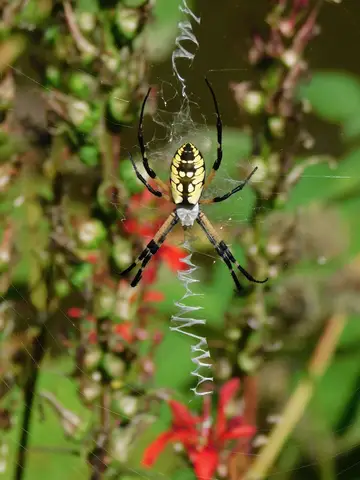
Females 3/4 to 1 inch long, not counting legs (Missouri); 19 to 28 mm (Penn State); Texas A&M says the female body is more than 1 inch. Males about 1/4 inch (Missouri); 5 to 8 mm (Penn State).
How to recognize it
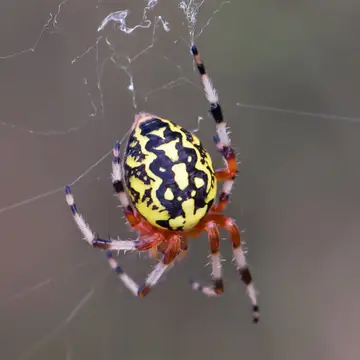
Round web about 2 feet across, built only by females; the spider rests head-down at the center, where a zigzag silk band (stabilimentum) runs vertically.
Abdomen an elongated oval, pointed at the rear, with two humps (shoulders) at the front.
Males are much smaller than females and rarely noticed.
Banded garden spider (banded orb weaver) Not stated
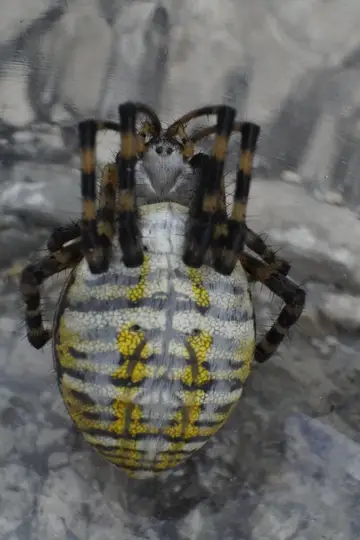
Missouri Department of Conservation: the banded garden spider is slightly smaller than the black-and-yellow garden spider, with a pointier hind end, and its abdomen has many thin silver and yellow crosswise lines and thicker black, spotty lines.
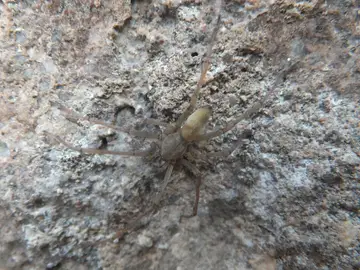
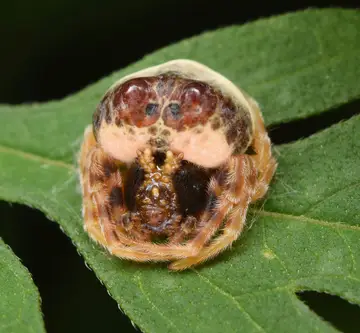
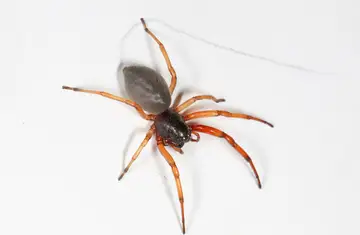
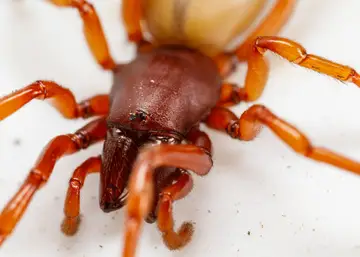
Ohio DNR says it is sometimes confused with the recluse, perhaps because it also has six eyes; recluses are much smaller, dull brown and have tiny fangs. UC IPM says the woodlouse spider's six eyes are in two groups of three (a recluse has three pairs) and it has no body markings.
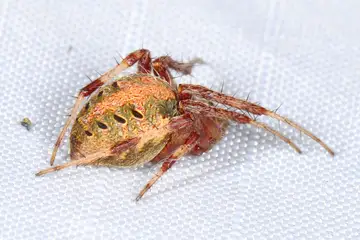
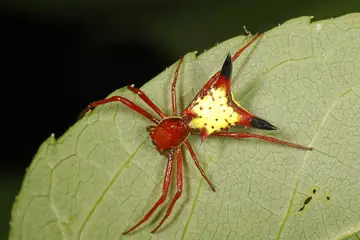
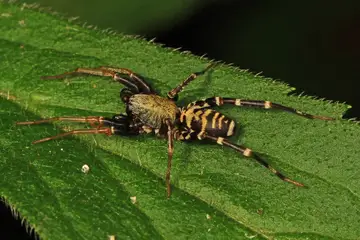
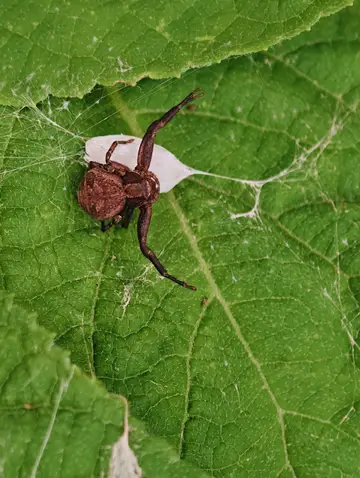
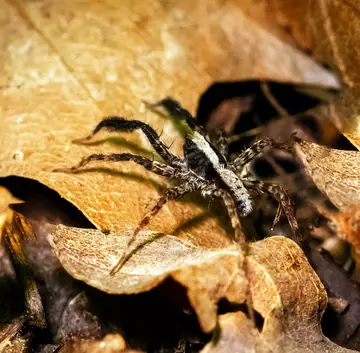
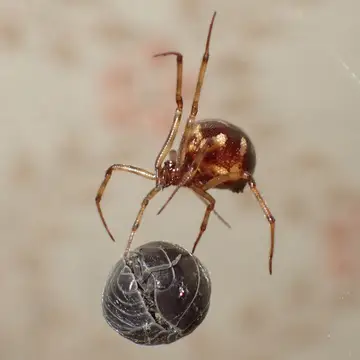
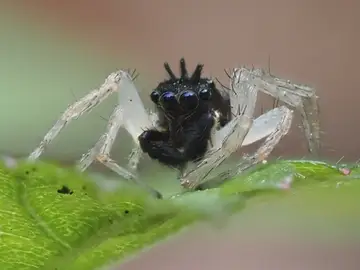
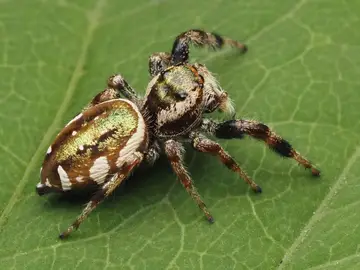
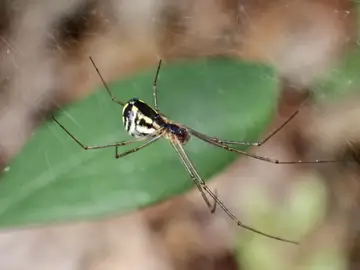
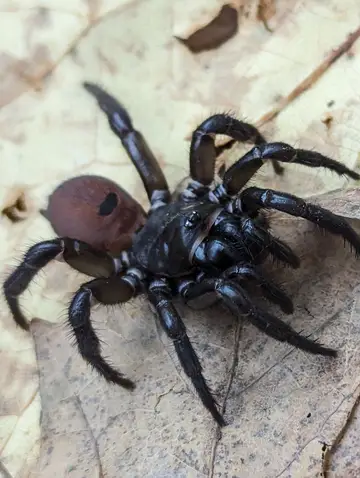
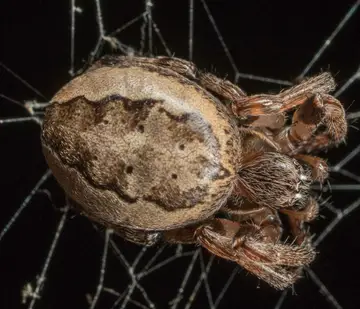
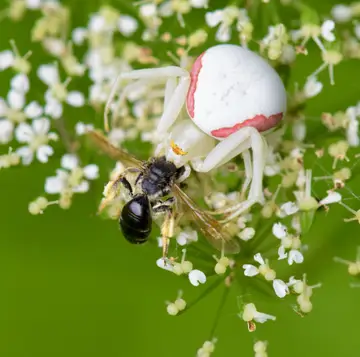
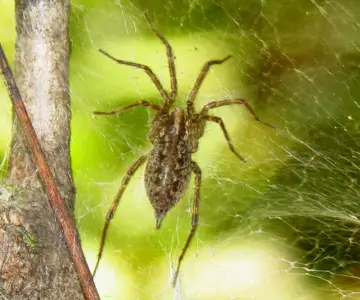
Photos show typical adults; individuals vary. Never get close to compare.
When spiders are active in Ohio
Records of spiders in Ohio peak in May to June and August to September. They show when people record spiders, not how many there are (about month bars).
JanFebMarAprMayJunJulAugSepOctNovDec
6,871 records of spiders in Ohio by month (GBIF, CC0 and CC BY records).
Rarely. ODNR: very rare. Only nine specimens from three localities out of more than 24,400 Ohio Spider Survey records, no verified outdoor records, and the few records come from inside buildings. Most spiders sent in as brown recluses are misidentified harmless spiders. Ohio Department of Natural Resources, Division of Wildlife
“Brown recluse is represented by only nine specimens from three localities out of over 24,400 records in the Ohio Spider Survey database.”
Common Spiders of Ohio Field Guide (Publication 5140). Ohio Department of Natural Resources, Division of Wildlife (text by Richard A. Bradley, Ph.D.). PUBLICATION 5140; checked November 3, 2026.Quoted passages (10)
“Almost all of Ohio’s 624 spider species fall within the Araneomorphae.”
“…often builds its beautiful circular web between a rock wall or building and the ground. The support for the web may stretch 10 feet or more. The orb may be several feet in diameter.”
“There are a few cases of bites that have caused some medical problems (slow healing wounds).”
“Only two groups of Ohio spiders, the black widows and the recluse spiders are considered dangerous to humans.”
“Only the females pose a bite risk. Their bite can be serious, and anyone bitten should seek medical attention immediately.”
“Triangle weavers are one of only three species of Ohio spiders that lack venom.”
“Their bite can be serious, and anyone bitten should seek medical attention immediately.”
“…usually the only way people encounter them is during the mating season when the males wander in search of females.”
“Brown recluse is represented by only nine specimens from three localities out of over 24,400 records in the Ohio Spider Survey database.”
Ticks and Tick-Borne Diseases (HYG-2073). Ohio State University Extension (Ohioline); co-authors from the Ohio Department of Health. June 6, 2013; checked November 3, 2026.Quoted passages (1)
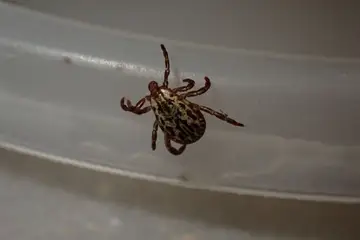
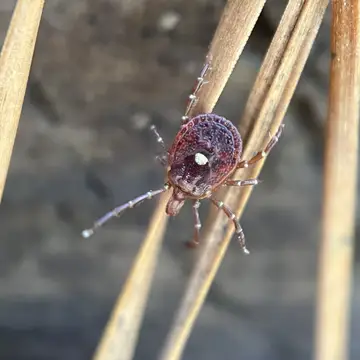
“Three tick species in Ohio are medically important because they are disease vectors: the American dog tick, the blacklegged tick (commonly called the deer tick), and the lone star tick.”