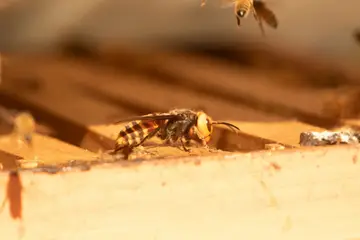
Asian giant hornet (now officially northern giant hornet)
Vespa mandarinia
Size: no native wasp or hornet in Washington grows this large
Choose what you saw. The list narrows to the bugs in our species guides that match, venomous ones first. It suggests possibilities only: a description cannot confirm what an animal is or that it is safe.
Vespa mandarinia
Size: no native wasp or hornet in Washington grows this large
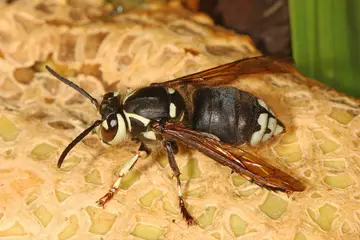
Dolichovespula maculata
Not yellow, unlike typical yellowjackets; larger, black and ivory
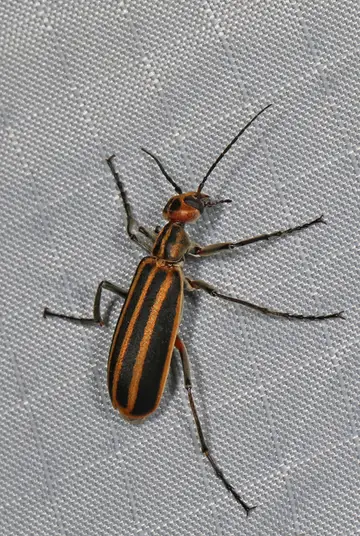
Meloidae
Narrow, elongate, soft body with a 'neck' where the thorax narrows behind the head
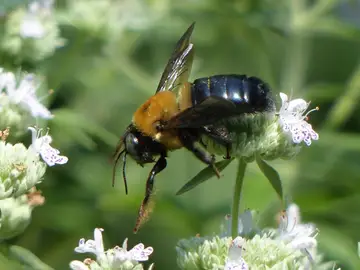
Xylocopa (genus); main species in the eastern US: Xylocopa virginica (eastern carpenter bee)
Abdomen shiny and mostly hairless (bumble bees have a hairy abdomen)
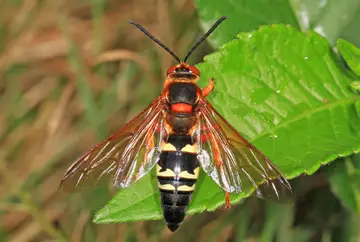
Sphecius speciosus
Nests in the ground: burrow about 1/2 inch wide with a U-shaped soil mound at the entrance
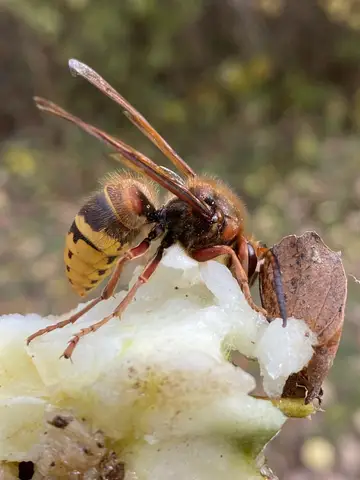
Vespa crabro
Large size plus reddish-brown color on the thorax and first abdominal segment
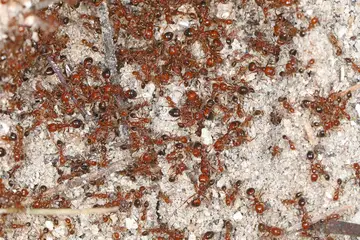
Solenopsis (fire ants); page focuses on the red imported fire ant, Solenopsis invicta
Soil mound, often dome-shaped; up to 18-24 inches high depending on soil (UGA; UC IPM: can be 1 ft high); in mowed turf the mound may look flattened
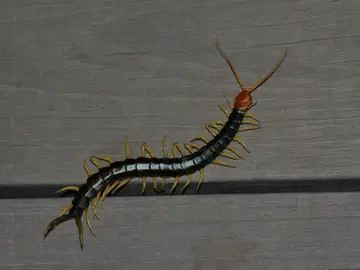
Scolopendra heros
21 pairs of legs, one pair per segment; last pair points backward like tails
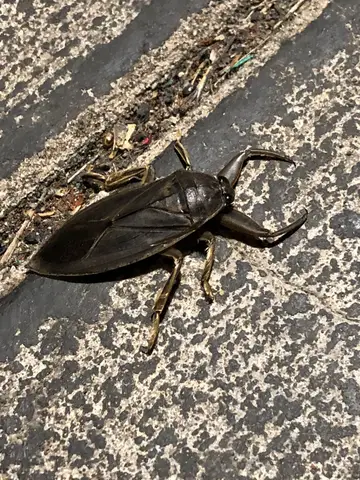
Belostomatidae (genera Abedus, Belostoma and Lethocerus in the US)
Oval, flattened, beetle-like body
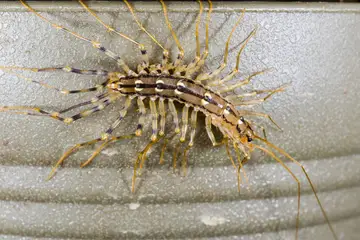
Scutigera coleoptrata
Up to 15 pairs of extremely long legs, one pair per leg-bearing segment
Automeris io
Clusters of branching spines, usually yellow or green with black tips, on fleshy protrusions
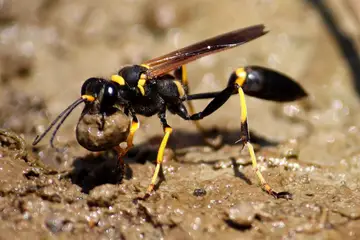
Sphecidae and Crabronidae (two wasp families); main US species: Sceliphron caementarium, Chalybion californicum, Trypoxylon politum
Narrow or threadlike waist.
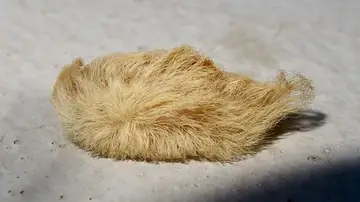
Megalopyge opercularis
Teardrop shape with hairs tapering to a tail; looks like a tiny mouse or a cat
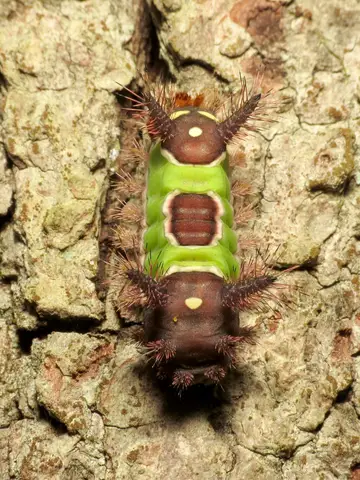
Acharia stimulea
Short, slug-like body; legs hidden underneath; glides like a slug
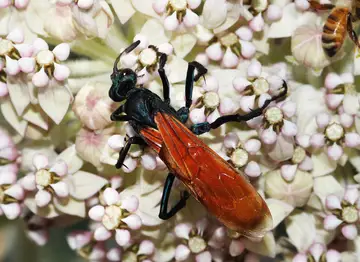
Pepsis and Hemipepsis (family Pompilidae, spider wasps)
Long legs
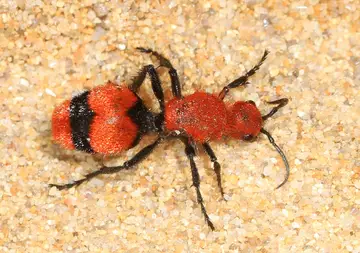
Mutillidae (velvet ants); best-known US species Dasymutilla occidentalis (eastern or red velvet ant, "cow killer")
Females wingless and ant-like, like large furry ants; males winged and look like ordinary wasps
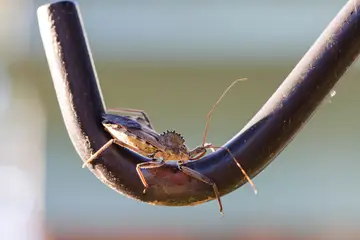
Arilus cristatus
The cogwheel crest: the only insect species in the United States with such a crest
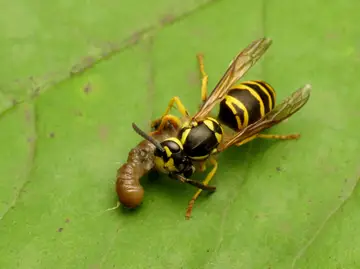
Vespula and Dolichovespula (yellowjackets; family Vespidae)
Less hairy and more brightly striped than honey bees
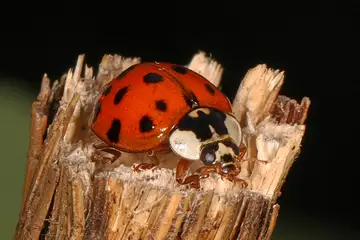
Harmonia axyridis
Black mark behind the head, the most reliable identifying feature per Minnesota Extension, which describes it as an M. Penn State and Iowa State describe it as a W, and it may look thick, thin, broken or filled in. It can be hard to see on dark beetles.
Haemaphysalis longicornis
Short mouthparts
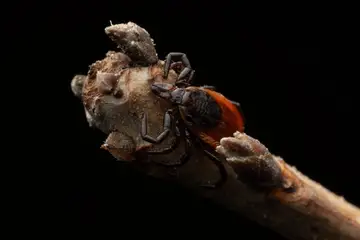
Ixodes scapularis
Black legs and upper body
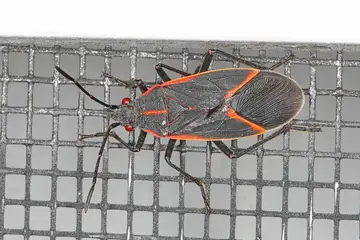
Boisea trivittata
Three red stripes behind the head.
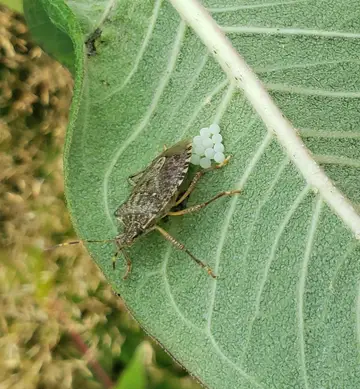
Halyomorpha halys
Two white bands on the antennae; blunt front edge of head; smooth shoulder margin; dark bands at the tip of the membranous forewings; banded abdominal edge visible beside the wings
Trombiculidae
Biting larvae have six legs; nymphs and adults have eight legs and do not bite people
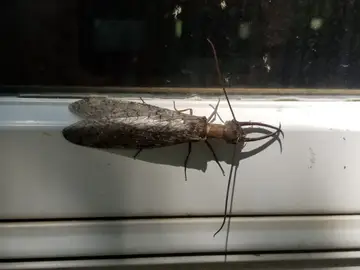
Corydalus cornutus
Males have very long, tusk-like jaws (up to about 1.6 inches) that cannot hurt people; females have short, stubby jaws but better leverage, and can pinch harder.
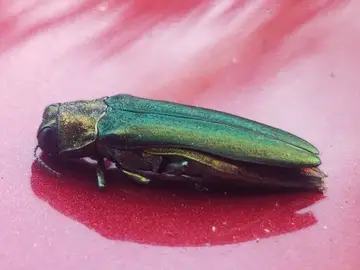
Agrilus planipennis
Slender, bullet-shaped body
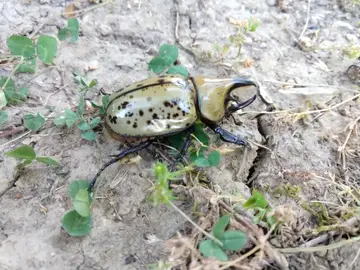
Dynastes
Males have two horns, one from the thorax and one from the head; females have none
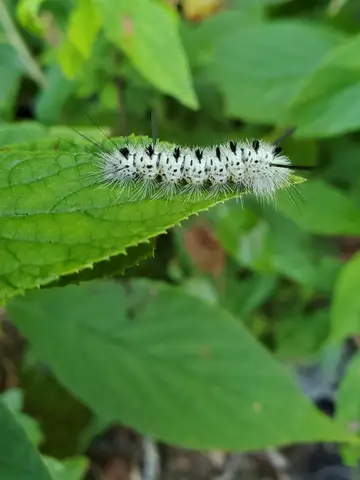
Lophocampa caryae
Black hairs arranged in tufts along the back, with a set of black 'pencils' often at the front and back
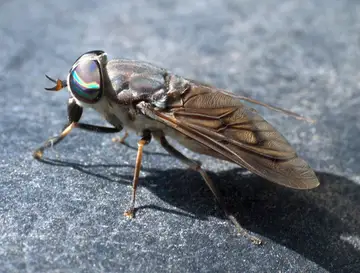
Tabanidae (family); the vast majority of horse flies are in genera Tabanus and Hybomitra
Stout body with a very large head and very large eyes
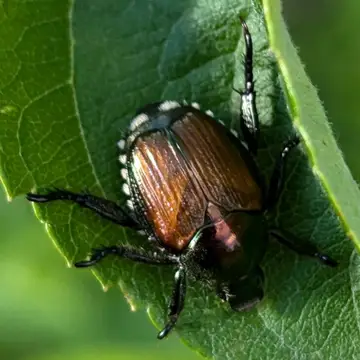
Popillia japonica
Row of five white hair tufts on each side of the abdomen
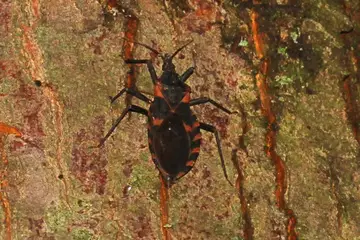
Triatoma (subfamily Triatominae, family Reduviidae); Paratriatoma also occurs in the US
Long, thin, cone-shaped head
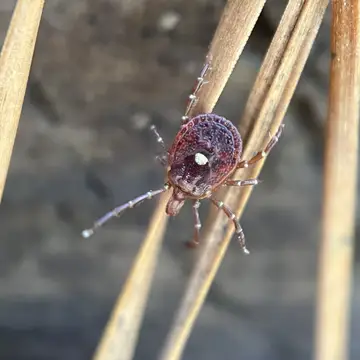
Amblyomma americanum
Hard tick: larva 6 legs, nymph and adult 8 legs
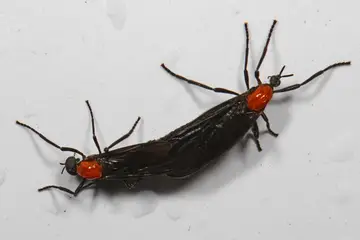
Plecia nearctica
Fly as joined male-female pairs
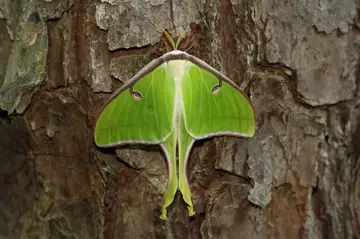
Actias luna
Lime-green color and long tails set it apart from all other North American moths
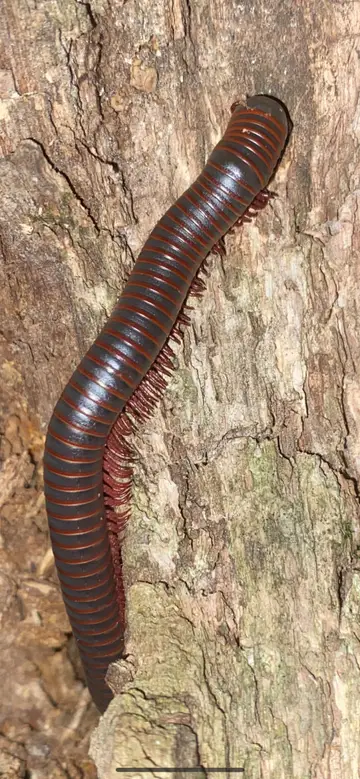
Diplopoda
Two pairs of legs on each body segment, except the first three segments, which have one pair each.
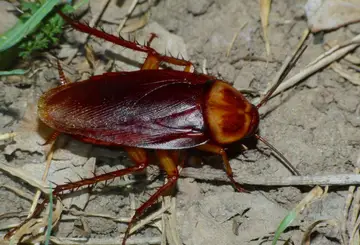
Blattidae (large cockroaches; mainly Eurycotis floridana and Periplaneta americana)
Florida woods cockroach: no working wings, only short leathery pads that do not cover the abdomen
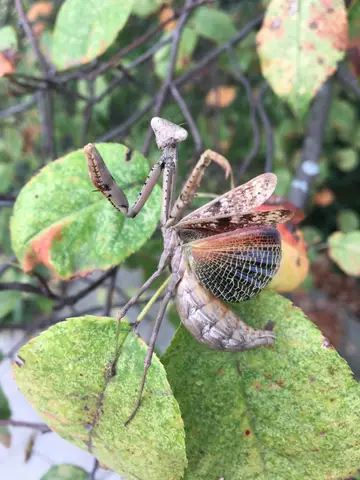
Mantidae
Front legs are raised in a "praying" position and have long sharp spines for holding prey.
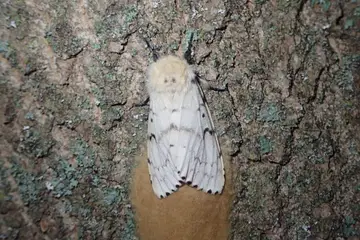
Lymantria dispar
Older caterpillars have a double row of five pairs of blue spots followed by six pairs of red spots down the back, and tufts of hair on each segment.
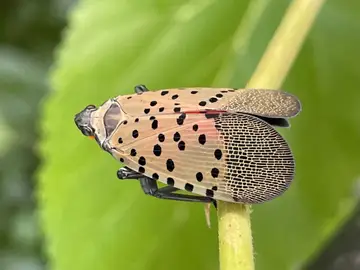
Lycorma delicatula
Forewings brown or gray with black spots, ending in a speckled band.
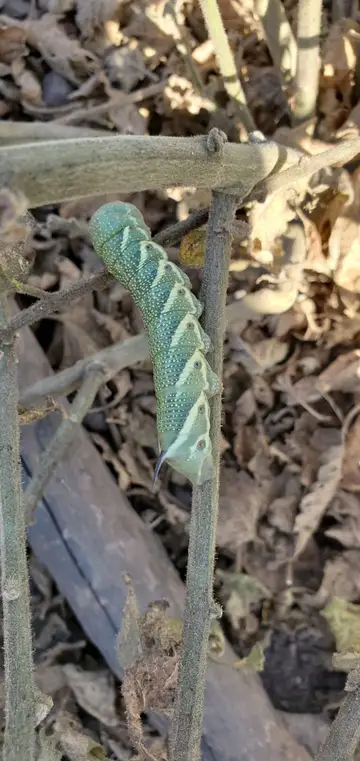
Manduca quinquemaculata
Horn on the last abdominal segment, usually black in this species
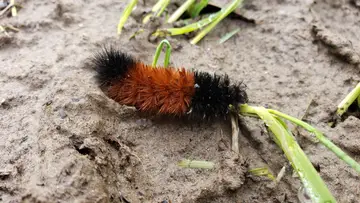
Pyrrharctia isabella
Fuzzy with dense, stiff hairs; rolls into a ball when disturbed
No bug in our guides matches all of these choices. Try fewer filters. If you are unsure what you saw, treat it as potentially dangerous and keep away.


