This page lists 11 insects.
1 is venomous by official accounts. 2 are nonnative.
Not every species: no complete official list of Virginia insects exists, so this page covers the ones state and Extension sources name. How lists are built.
Which insects can hurt you
Official sources single out these insects in Virginia, in their own words:
Painful stings. “As an urban pest, imported fire ants are a nuisance pest and can cause allergic reactions including rare instances of anaphylactic shock in humans.” VDACS
Bees, hornets and wasps
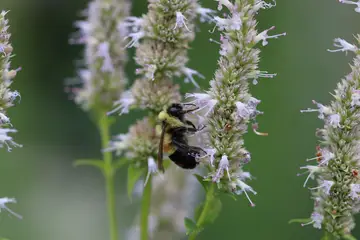
Stings. “All patients with known allergies to bee stings need to be evaluated by a health professional.” Virginia Poison Center, VCU Health
Stinging caterpillars
Stings from hairs. “Like bee stings, the sting of a caterpillar can cause a serious allergic reaction in sensitive persons.” Virginia Poison Center, VCU Health
Stinging caterpillar. “Both urticating hairs and poison spines can cause a stinging, burning reaction upon contact that can be as painful as a bee sting.” Virginia Tech
Stinging caterpillar. “Both urticating hairs and poison spines can cause a stinging, burning reaction upon contact that can be as painful as a bee sting.” Virginia Tech
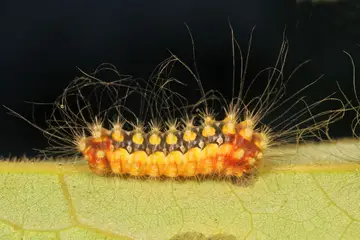
Stinging caterpillar. “There are three pairs of fleshy tubercules with poison spines at the head and two pairs towards the tip of the abdomen.” Virginia Tech
Stinging caterpillar. “Both urticating hairs and poison spines can cause a stinging, burning reaction upon contact that can be as painful as a bee sting.” Virginia Tech
Stinging caterpillar. “Both urticating hairs and poison spines can cause a stinging, burning reaction upon contact that can be as painful as a bee sting.” Virginia Tech
All 11 insects
Venomous species first, then A to Z. Do not handle them.
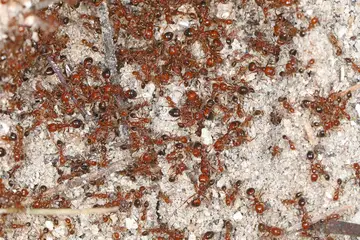
“As an urban pest, imported fire ants are a nuisance pest and can cause allergic reactions including rare instances of anaphylactic shock in humans.” VDACS
Venom: “A single fire ant can and will sting repeatedly, even after the venom sac is empty.” (Virginia Poison Center, VCU Health)
Habitat: Imported fire ant mounds are typically found in warm, sunny locations such as landscape beds, lawns, around trees and shrubs, along sidewalk cracks and against buildings. (Virginia Department of Agriculture and Consumer Services (VDACS), Office of Plant Industry Services)
No confirmed photo of Bees, hornets and wasps
Bees, hornets and wasps
Not stated
Venom
No official source we use states whether this animal is venomous. That does not mean it is harmless: do not handle it.
No official source we use states whether this animal is venomous. That does not mean it is harmless: do not handle it.
Danger to people
“Both urticating hairs and poison spines can cause a stinging, burning reaction upon contact that can be as painful as a bee sting.” Virginia Tech
Size
About 1 inch long per most extension sources; full-grown larvae reared by UF/IFAS reached about 1.4 inches (1.6 inches including the tail). MDC says about 1.5 inches.
How to recognize it
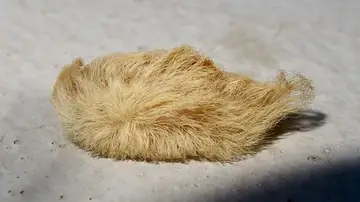
Teardrop shape with hairs tapering to a tail; looks like a tiny mouse or a cat
Resembles a tiny mouse; younger larvae have a thick tuft of hair like a tail. Older larvae can look unkempt, with sparser hair that hides the stinging spines less well (VCE).
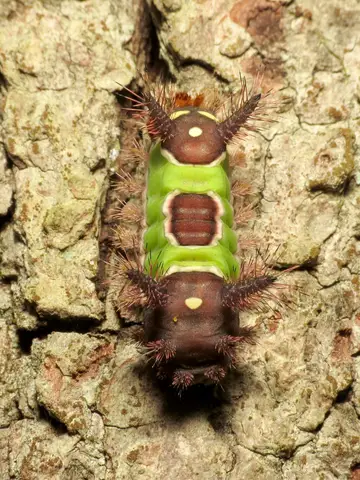
UGA: the puss caterpillar is densely covered with hair (pale yellow, gray or reddish brown); the saddleback has a brown slug-like body with a green middle and a white-bordered brown saddle.
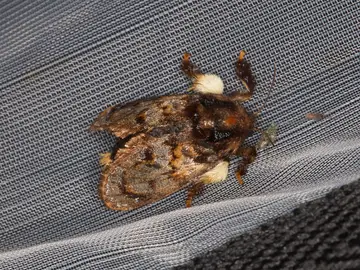
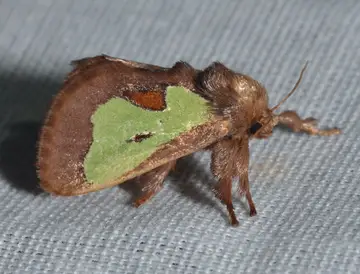
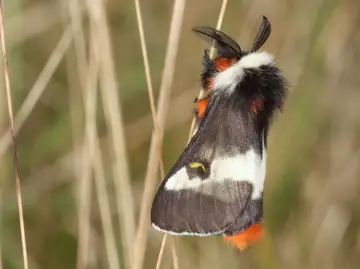
Saddleback caterpillar (saddleback caterpillar moth) or Spiny oak slug?
VCE: varies from yellow-green to brown to pink, usually with a darker central stripe down the back; smaller spine-bearing knobs run in two rows down the back and along the lower sides. Virginia Tech
Puss caterpillar (southern flannel moth) or Saddleback caterpillar?
UGA: about 1 inch, with a brown slug-like body, a green middle and a brown, white-bordered saddle mark; venom-filled spines sit on fleshy knobs on all sides of the body. UGA describes puss caterpillars as densely covered with hairs.
Photos show typical adults; individuals vary. Never get close to compare.
When insects are active in Virginia
Records of insects in Virginia peak in June to September. They show when people record insects, not how many there are (about month bars).
JanFebMarAprMayJunJulAugSepOctNovDec
143,939 records of insects in Virginia by month (GBIF, CC0 and CC BY records).
Imported Fire Ant. Virginia Department of Agriculture and Consumer Services (VDACS), Office of Plant Industry Services. current 2026-11-03; checked November 3, 2026.Quoted passages (1)
“The quarantine now covers 18 counties and 15 independent cities across the state.”
Guide to Prevention, Bites and Stings. Virginia Poison Center, VCU Health (state poison-control program). archived copy, captured July 9, 2024; checked November 3, 2026.Quoted passages (5)
“A single fire ant can and will sting repeatedly, even after the venom sac is empty.”
“All patients with known allergies to bee stings need to be evaluated by a health professional.”
“Like bee stings, the sting of a caterpillar can cause a serious allergic reaction in sensitive persons.”
“Call 911 for any breathing difficulty or chest tightness.”
“Bees typically establish new hives in the spring and fall. This is when they are most active.”
“There is a pair of large, fleshy tubercules at the anterior and posterior ends. … All of the tubercules possess formidable stinging spines.”
“All of the tubercules possess formidable stinging spines.”
“Younger larvae have a thick tuft of hairs extending beyond the tip of the abdomen like a tail. Overall the caterpillar resembles a tiny mouse (about 2.5 cm or 1 inch). Older larvae tend to lose their tidy appearance and the hairs are sparser, unkempt, and do not conceal the stinging spines as well.”
“Both urticating hairs and poison spines can cause a stinging, burning reaction upon contact that can be as painful as a bee sting.”
“There are three pairs of fleshy tubercules with poison spines at the head and two pairs towards the tip of the abdomen.”
“This caterpillar varies in color from yellow-green to brown to pink, usually with a darker central stripe down the back … Additional smaller tubercules, all bearing poison spines, run in two rows down the back and along the lower sides.”