Invasive and nonnative animals in Virginia
Last checked November 3, 2026 against official sources.
On this page
6 nonnative animals are named on 5 official lists for Virginia: “Problems with Feral Hogs” (Virginia DWR), “Invasive Species” (Virginia DWR), “Problems with Nutria” (Virginia DWR), “VDACS Announces Expansion of Virginia’s Imported Fire Ant Quarantine” (VDACS) and “Spotted Lanternfly” (VDACS).
The USGS Nonindigenous Aquatic Species database records an established population in Virginia for 3 nonnative animals in the groups this guide covers.
To report a sighting, see how to report.
Being on a list of nonnative species does not always mean an animal is harmful or established: each list below is described in its source's terms. A sighting of a listed animal is still worth reporting to the agency.
Problems with Feral Hogs
Virginia DWR, undated page. 1 animal.
-
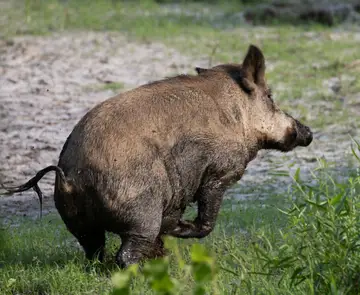
Photo: Cullen Hanks · CC BY 4.0 · iNaturalist Feral hog Sus scrofa
Invasive Species
Virginia DWR, undated page. 2 animals.
-
Northern snakehead Channa argus
Potomac and Rappahannock rivers and their tributaries; various ponds and lakes Virginia DWR
-
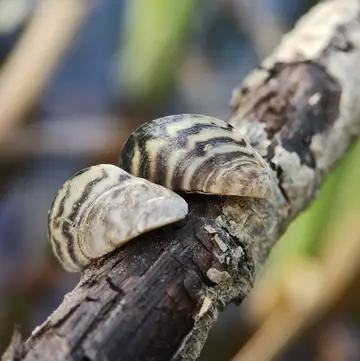
Photo: Harukano · CC0 1.0 · iNaturalist Zebra mussel Dreissena polymorpha
Problems with Nutria
Virginia DWR, undated page. 1 animal.
-
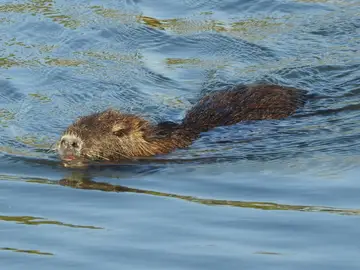
Photo: Sam Kieschnick · CC BY 4.0 · iNaturalist Nutria Myocastor coypus
Southeastern corner of the state and along the southern border Virginia DWR
VDACS Announces Expansion of Virginia’s Imported Fire Ant Quarantine
VDACS (press release), May 28, 2025. 1 animal.
-
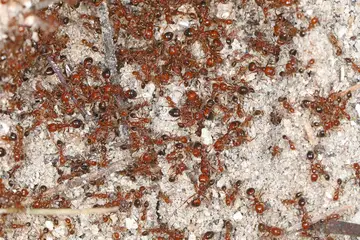
Photo: Judy Gallagher · CC BY 2.0 · Wikimedia Commons Red imported fire ant Solenopsis invicta
Quarantine area: 18 counties and 15 independent cities (VDACS) VDACS

Spotted Lanternfly
VDACS, undated page. 1 animal.
-
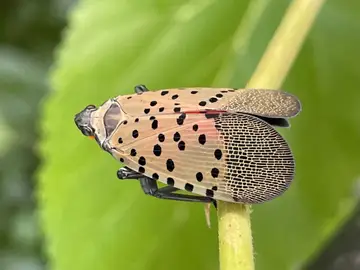
Photo: Isaac Caswell · CC0 1.0 · iNaturalist Spotted lanternfly Lycorma delicatula
Established in Virginia, per USGS records
The U.S. Geological Survey's Nonindigenous Aquatic Species (NAS) database tracks nonnative aquatic animals. These have at least one record with the status "established" in Virginia, which USGS defines as a population showing evidence of reproduction and overwinter survival.
| Animal | Group | First record | Latest record | Counties |
|---|---|---|---|---|
| African Clawed Frog Xenopus laevis | Frogs and Toads | 1984 | 1984 | 2 |
| Lionfish Pterois volitans/miles | Sharks and Marine Life | 2013 | 2013 | 1 |
| Nutria Myocastor coypus | Mammals | 1958 | 2024 | 5 |
Source: U.S. Geological Survey. [2026]. Nonindigenous Aquatic Species Database. Gainesville, Florida. Accessed [11/3/2026]. "Native Transplant" animals are native elsewhere in the US but not in Virginia.
How to report a sighting in Virginia
Virginia Wildlife Conflict Helpline (DWR), toll-free 1-855-571-9003 (wildlife problems; feral hog and nutria reports). Northern snakehead catches: DWR 804-367-2925. Rare wildlife sightings: DWR Virginia Rare Animal Observations Form. Imported fire ants outside the quarantine area: VDACS Invasive Species Reporting Tool. Wildlife crimes: [email protected] or 800-237-5712. Virginia DWR
Do not try to catch or handle the animal. A photo taken from a safe distance, the place and the date help the agency.
Sources
- Invasive Species. Virginia DWR. undated page; checked November 3, 2026.
Quoted passages (2)
“In Virginia since 2004, the snakehead species has shown up in the Potomac and Rappahannock rivers and their tributaries as well as in various ponds and lakes.”
“Virginia doesn’t currently have a known population of zebra mussels, but the state has had a few very close calls.”
- Problems with Nutria. Virginia DWR. undated page; checked November 3, 2026.
Quoted passages (1)
“Originally introduced from South America, wild populations of nutria can now be found in the southeastern corner of the state and along the southern border but are expanding their range north and west.”
- VDACS Announces Expansion of Virginia’s Imported Fire Ant Quarantine. VDACS (press release). May 28, 2025; checked November 3, 2026.
Quoted passages (1)
“Imported fire ants are an invasive species in Virginia and have an impact on agriculture and natural resources by damaging crops, agricultural equipment, and impacting wildlife.”
- Problems with Feral Hogs. Virginia DWR. undated page; checked November 3, 2026.
Quoted passages (1)
“Virginia is on the front lines of the northward spread of feral hogs in the eastern United States.”
- Spotted Lanternfly. VDACS. undated page; checked November 3, 2026.
Quoted passages (1)
“The Spotted lanternfly is an invasive insect pest in Virginia that damages grape vines, fruit trees, maples, and a wide variety of other plants by feeding on sap.”
- Help with Human-Wildlife Conflicts. Virginia DWR. undated page; checked November 3, 2026.
Quoted passages (1)
“If you are experiencing a problem with wildlife, please dial our toll-free wildlife conflict helpline at 1-855-571-9003.”
- U.S. Geological Survey. [2026]. Nonindigenous Aquatic Species Database. Gainesville, Florida. Accessed [11/3/2026].