Virginia has 3 venomous snakes named by official sources: Canebrake Rattlesnake and Timber Rattlesnake (two forms of one species), Eastern Copperhead and Northern Cottonmouth, as labelled by Virginia DWR. This guide covers 10 animal groups from Virginia Department of Wildlife Resources (DWR) lists and other official sources, with photos, venomous status and when each group is active.
Identification help has limits: a photo cannot confirm that an animal is safe. Watch from a distance and never handle a wild animal.
These are the animals official sources describe as venomous or as a risk to people in Virginia, across 4 groups. The reason is given in the source's own terms.
Venomous: “There are only 3 species of venomous snakes occurring in the Commonwealth: Northern Copperhead, Eastern Cottonmouth, and Timber Rattlesnake.”
Venomous: “There are only 3 species of venomous snakes occurring in the Commonwealth: Northern Copperhead, Eastern Cottonmouth, and Timber Rattlesnake.”
Venomous: “There are only 3 species of venomous snakes occurring in the Commonwealth: Northern Copperhead, Eastern Cottonmouth, and Timber Rattlesnake.”
Stinging caterpillar: “Both urticating hairs and poison spines can cause a stinging, burning reaction upon contact that can be as painful as a bee sting.”
Stinging caterpillar: “Both urticating hairs and poison spines can cause a stinging, burning reaction upon contact that can be as painful as a bee sting.”
Stinging caterpillar: “Both urticating hairs and poison spines can cause a stinging, burning reaction upon contact that can be as painful as a bee sting.”
Stinging caterpillar: “Both urticating hairs and poison spines can cause a stinging, burning reaction upon contact that can be as painful as a bee sting.”
Public safety concern when habituated to human food: “Habituated bears can pose public safety concerns and in some unfortunate circumstances may have to be killed.”
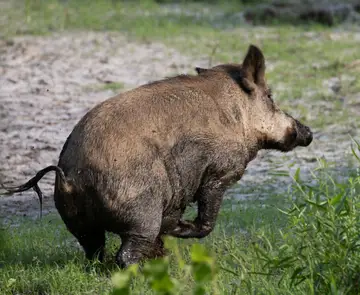
Disease: “They can harbor many diseases and parasites including swine brucellosis, pseudorabies, Trichinella, and toxoplasmosis, some of which are transmissible to livestock, pets, wildlife, or humans.”
6 nonnative animals are named on Virginia's official lists (Virginia DWR). The USGS Nonindigenous Aquatic Species database records 3 nonnative animals in our groups with an established population in Virginia.
Darker cells are the months with more open-licence observation records of each group in Virginia (GBIF). They show when people see and record these animals, not how many there are. The current month, this month, is highlighted.
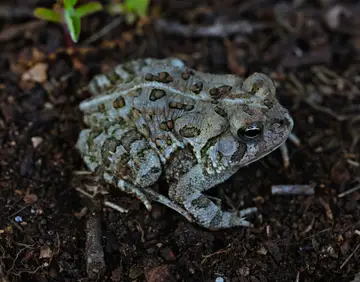
Frogs and toads call in spring and summer, especially during or after rain. Virginia DWR
Residential bear problems can happen any time of year but are more common in spring or when natural foods are scarce; DWR advises no bird feeders April-November. Virginia DWR
No. USGS lists eight released or escaped American alligator records in Virginia (1969-2008), every one with status "failed"; DWR's native and naturalized fauna list includes no crocodilians. US Geological Survey · More
How many venomous snakes are in Virginia?
Three venomous species: northern copperhead, eastern (northern) cottonmouth and timber rattlesnake (the canebrake rattlesnake is its southeastern population). Virginia DWR
How many snakes are in Virginia?
DWR: 32 snake species, only three venomous. Virginia DWR
Are there rattlesnakes in Virginia?
Yes. Timber rattlesnakes occur in the western mountains and, as the state-endangered canebrake rattlesnake, in a small area of extreme southeastern Virginia. Virginia DWR
Are there water moccasins in Virginia?
Yes. Cottonmouths (water moccasins) are mainly in southeastern Virginia, especially southern Virginia Beach and Chesapeake, with isolated populations elsewhere in the southeast. Virginia DWR
Are there coral snakes in Virginia?
No. DWR names only three venomous snakes in Virginia (copperhead, cottonmouth, timber rattlesnake); no coral snake is on DWR's list of Virginia fauna. Virginia DWR
Rarely. Natural range reaches only the very tip of southwestern Virginia; isolated (introduced) populations have been confirmed in several locations. Virginia Cooperative Extension, Virginia Tech
Are there scorpions in Virginia?
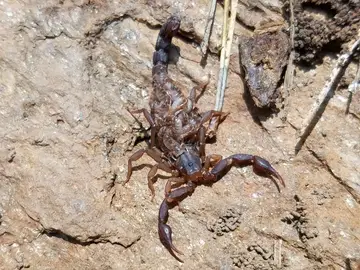
Sources differ. DWR lists one native scorpion, the Carolina Scorpion (Vaejovis carolinianus). The Virginia Poison Center says there are no naturally occurring scorpions in Virginia. DWR
Are there sharks in Virginia?
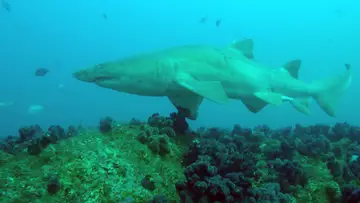
Yes. DWR's partial marine fish list includes sand tiger, sandbar, dusky, tiger, white, shortfin mako, silky and thresher sharks, three hammerheads and spiny dogfish. DWR
Are there black bears in Virginia?
Yes. Black bears occur in at least 92 of Virginia's 98 counties and cities; highest concentrations are in the Blue Ridge and Alleghany Mountains and around the Great Dismal Swamp. Virginia DWR
Yes. Coyotes are found throughout Virginia, including urban and suburban areas. Virginia DWR
Are there armadillos in Virginia?
Yes. DWR lists the Nine-banded Armadillo as a naturalized (non-native) species in Virginia. DWR
Are there feral hogs in Virginia?
Yes. Feral hogs are spreading northward into Virginia; DWR designates them a nuisance species. Virginia DWR
Are nutria dangerous?
No. DWR says nutria are not dangerous to humans but threaten wetlands. Virginia DWR
Are there snakeheads in Virginia?
Yes. Northern snakeheads have been in Virginia since 2004 in the Potomac and Rappahannock river systems and various ponds and lakes. Virginia DWR
Are skinks venomous?
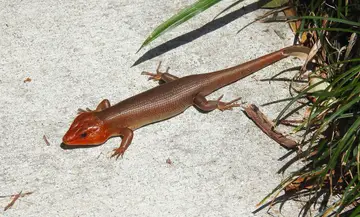
No. DWR: the common five-lined skink, southeastern five-lined skink and broad-headed skink are not venomous or poisonous. Virginia DWR
Are watersnakes venomous?
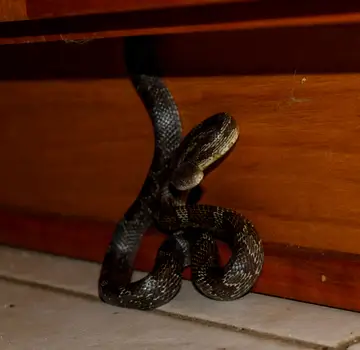
No. Virginia's three watersnakes (brown, northern, plain-bellied) are nonvenomous; the northern watersnake is the one most often mistaken for a cottonmouth. Virginia DWR
“The distribution of cottonmouths in Virginia is primarily limited to the southeastern part of the state, particularly the southern regions of Virginia Beach and Chesapeake with isolated populations in Brunswick, Chesterfield, Dinwiddie, Greensville, Prince George, Southampton, Surry, Sussex, and York counties, and the cities of Suffolk and Newport News.”
“Of the three species, the northern watersnake is by far the most misidentified as a cottonmouth.”
“Spiders with Potentially Harmful Venom Found in Virginia Widow Spiders”
“Spiders with Potentially Harmful Venom Found in Virginia”
“Both the northern (L. variolus Walckenaer) and the southern (L. mactans F.) black widow spiders are commonly found in Virginia.”
“Its natural range reaches to the very tip of southwestern Virginia, but isolated populations have been confirmed in several locations across Virginia.”
Guide to Prevention, Bites and Stings. Virginia Poison Center, VCU Health (state poison-control program). archived copy, captured July 9, 2024; checked November 3, 2026.Quoted passages (5)
“A single fire ant can and will sting repeatedly, even after the venom sac is empty.”
“All patients with known allergies to bee stings need to be evaluated by a health professional.”
“Like bee stings, the sting of a caterpillar can cause a serious allergic reaction in sensitive persons.”
“Call 911 for any breathing difficulty or chest tightness.”
“Bees typically establish new hives in the spring and fall. This is when they are most active.”
“As with other mammals including skunks, raccoons, fox, and domestic dogs, bats can carry rabies.”
“Because rabies is a fatal disease, all wild mammals should be viewed from a distance and treated as ‘wild animals.’”
Problems with Feral Hogs. Virginia DWR. undated page; checked November 3, 2026.Quoted passages (2)
“They can harbor many diseases and parasites including swine brucellosis, pseudorabies, Trichinella, and toxoplasmosis, some of which are transmissible to livestock, pets, wildlife, or humans.”
“Virginia is on the front lines of the northward spread of feral hogs in the eastern United States.”
Invasive Species. Virginia DWR. undated page; checked November 3, 2026.Quoted passages (2)
“In Virginia since 2004, the snakehead species has shown up in the Potomac and Rappahannock rivers and their tributaries as well as in various ponds and lakes.”
“Virginia doesn’t currently have a known population of zebra mussels, but the state has had a few very close calls.”
Problems with Nutria. Virginia DWR. undated page; checked November 3, 2026.Quoted passages (2)
“Originally introduced from South America, wild populations of nutria can now be found in the southeastern corner of the state and along the southern border but are expanding their range north and west.”
“Nutria are not dangerous to humans, but they pose a significant threat to Virginia’s wetland ecosystems.”
“Imported fire ants are an invasive species in Virginia and have an impact on agriculture and natural resources by damaging crops, agricultural equipment, and impacting wildlife.”
“The Spotted lanternfly is an invasive insect pest in Virginia that damages grape vines, fruit trees, maples, and a wide variety of other plants by feeding on sap.”
Problems with Snakes. Virginia DWR. undated page; checked November 3, 2026.Quoted passages (1)
“Timber rattlesnakes are common only in the mountainous regions of western Virginia and a small area of extreme southeastern Virginia where they are known as canebrake rattlesnakes; they are a state endangered species.”
Imported Fire Ant. Virginia Department of Agriculture and Consumer Services (VDACS), Office of Plant Industry Services. current 2026-11-03; checked November 3, 2026.Quoted passages (1)
“The quarantine now covers 18 counties and 15 independent cities across the state.”
Problems with Coyotes. Virginia DWR. undated page; checked November 3, 2026.Quoted passages (1)
“Coyotes are found throughout Virginia, including in urban and suburban areas.”
“These lizards are not venomous or poisonous, they are harmless and only eat bugs.”
“The males of these animals will call loudly in groups throughout spring and summer; exact time of year will depend upon the species.”
Season of the Snake. Virginia DWR (blog). June 8, 2015; checked November 3, 2026.Quoted passages (3)
“Snakes, even venomous snakes, will not bite a person unless it were a very last resort.”
“…never put your hands or feet where you cannot see”
“Every year around early- to mid-spring, we receive phone calls, emails, and the occasional visitor with questions about, photos of, specimens of snakes. This is the time of year these animals begin to venture out of their hibernacula in search of food, mates, and shelter.”
“To be safe, assume a snake may be venomous and leave it alone.”
“A bite victim should go to an emergency care facility”
Information Sheet: Black Widow Spiders. Blue Ridge Poison Center, UVA Health (state poison-control program). archived copy, captured August 9, 2025; checked November 3, 2026.Quoted passages (2)
“Call the Blue Ridge Poison Center toll free: 1-800-222-1222.”
“In fall, they may seek the warmth of indoors or may be accidentally carried inside with firewood.”
It’s Baby Snake Season! Virginia DWR (J.D. Kleopfer/DWR). September 18, 2019; checked November 3, 2026.Quoted passages (1)
“It’s that time of the year when eggs laid back in the spring have hatched and live-bearing snakes, which includes eastern copperheads, have given birth.”