Virginia Mammals: Species List With Pictures
Last checked November 3, 2026 against official sources.
On this page
This page lists 118 mammals: all from DWR's Virginia Department of Wildlife Resources, List of Native and Naturalized Fauna of Virginia. 8 are nonnative.
Which mammals can hurt you
Official sources single out these mammals in Virginia, in their own words:
-
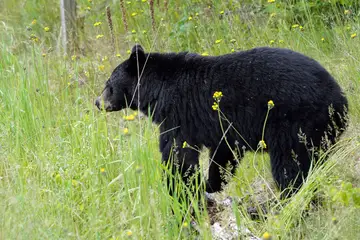
Photo: U.S. Fish and Wildlife Service - Midwest Region · Public domain · Wikimedia Commons American Black Bear
Public safety concern when habituated to human food. “Habituated bears can pose public safety concerns and in some unfortunate circumstances may have to be killed.” Virginia DWR
-
Bats
Disease. “As with other mammals including skunks, raccoons, fox, and domestic dogs, bats can carry rabies.” Virginia DWR
-
Skunks, raccoons, foxes
Disease. “As with other mammals including skunks, raccoons, fox, and domestic dogs, bats can carry rabies.” Virginia DWR
-
All wild mammals
Disease. “Because rabies is a fatal disease, all wild mammals should be viewed from a distance and treated as ‘wild animals.’” Virginia DWR
-
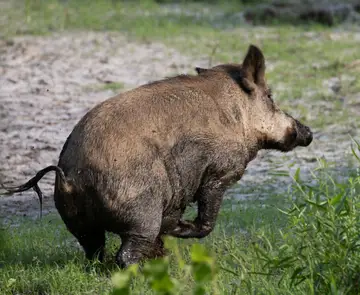
Photo: Cullen Hanks · CC BY 4.0 · iNaturalist Feral hog
Disease. “They can harbor many diseases and parasites including swine brucellosis, pseudorabies, Trichinella, and toxoplasmosis, some of which are transmissible to livestock, pets, wildlife, or humans.” Virginia DWR

All 118 mammals on the list
MAMMALS (89)
- Allegheny Woodrat Neotoma magister
- American Beaver Castor canadensis
- American Black Bear Ursus americanus
- American Mink Neogale vison vison
- American Pygmy Shrew Sorex hoyi
- American Water Shrew Sorex palustris
- Appalachian Cottontail Sylvilagus obscurus
- Big Brown Bat Eptesicus fuscus fuscus
- Black Rat (=Roof Rat, = House Rat) Rattus rattusNonnative
- Black-tailed Jack Rabbit Lepus californicusNonnative
- Bobcat Lynx rufus rufus
- Brazilian Free-tailed Bat Tadarida brasiliensis cynocephala
- Carolina Northern Flying Squirrel Glaucomys sabrinus coloratus
- Common Gray Fox Urocyon cinereoargenteus
- Common Muskrat Ondatra zibethicus
- Cotton Mouse Peromyscus gossypinus
- Coyote Canis latransNonnative
- Deer Mouse Peromyscus maniculatus
- Delmarva Peninsula Fox Squirrel Sciurus niger cinereus
- Dismal Swamp Short-tailed Shrew Blarina brevicauda telmalestes
- Dismal Swamp Southeastern Shrew Sorex longirostris fisheri
- Eastern Chipmunk Tamias striatus
- Eastern Cottontail Sylvilagus floridanus
- Eastern Fox Squirrel Sciurus niger
- Eastern Gray Squirrel Sciurus carolinensis
- Eastern Harvest Mouse Reithrodontomys humulis
- Eastern Mole Scalopus aquaticus aquaticus
- Eastern Red Bat Lasiurus borealis
- Eastern Shrew Sorex cinereus fontinalis
- Eastern Small-footed Myotis Myotis leibii
- Eastern Spotted Skunk Spilogale putorius putorius
- Elk Cervus elaphus
- Evening Bat Nycticeius humeralis humeralis
- Fisher Pekania pennanti
- Golden Mouse Ochrotomys nuttalli
- Gray Bat Myotis grisescens
- Hairy-tailed Mole Parascalops breweri
- Hispid Cotton Rat Sigmodon hispidus
- Hoary Bat Lasiurus cinereus
- House Mouse Mus musculusNonnative
- Indiana Bat Myotis sodalis
- Least Shrew Cryptotis parva
- Least Weasel Mustela nivalis rixosa
- Little Brown Bat Myotis lucifugus
- Long-tailed (=Rock) Shrew Sorex dispar
- Long-tailed Weasel Neogale frenata frenata
- Marsh Rabbit Sylvilagus palustris palustris
- Marsh Rice Rat Oryzomys palustris
- Masked Shrew Sorex cinereus cinereus
- Meadow Jumping Mouse Zapus hudsonius
- Meadow Vole Microtus pennsylvanicus
- Nine-banded Armadillo Dasypus novemcinctusNonnative
- North American Porcupine Erethizon dorsatum
- Northern Long-eared Bat Myotis septentrionalis
- Northern Raccoon Procyon lotor lotor
- Northern River Otter Lontra canadensis lataxina
- Northern Short-tailed Shrew Blarina brevicauda
- Northern Yellow Bat Lasiurus intermedius
- Norway Rat Rattus norvegicusNonnative
- Nutria Myocastor coypusNonnative
- Pungo White-footed Mouse Peromyscus leucopus easti
- Rafinesque’s Big-eared Bat Corynorhinus rafinesquii rafinesquii
- Rafinesque’s Eastern Big-eared Bat Corynorhinus rafinesquii macrotis
- Red Fox Vulpes vulpes
- Red Squirrel Tamiasciurus hudsonicus
- Rock Vole Microtus chrotorrhinus
- Seminole Bat Lasiurus seminolus
- Sika Deer Cervus nipponNonnative
- Silver-haired Bat Lasionycteris noctivagans
- Small Eastern Flying Squirrel (Species level common name = Southern Flying Squirrel) Glaucomys volans volans
- Smoky Shrew Sorex fumeus
- Snowshoe Hare Lepus americanus virginianus
- Southeastern Flying Squirrel (Species level common name = Southern Flying Squirrel) Glaucomys volans saturatus
- Southeastern Myotis Myotis austroriparius
- Southern Bog Lemming Synaptomys cooperi
- Southern Red-backed Vole Myodes gapperi
- Southern Short-tailed Shrew Blarina carolinensis
- Southern Shrew Sorex longirostris longirostris
- Star-nosed Mole Condylura cristata cristata
- Striped Skunk Mephitis mephitis
- Tri-colored (=Tricolored) Bat Perimyotis subflavus
- Virginia Big-eared Bat Corynorhinus (= Plecotus) townsendii virginianus
- Virginia Northern Flying Squirrel Glaucomys sabrinus fuscus
- Virginia Opossum Didelphis virginiana virginiana
- White-footed Mouse Peromyscus leucopus
- White-tailed Deer Odocoileus virginianus
- Woodchuck Marmota monax
- Woodland Jumping Mouse Napaeozapus insignis
- Woodland Vole Microtus pinetorum
MARINE MAMMALS (29)
- Antillean Beaked Whale Mesoplodon europaeus
- Atlantic Spotted Dolphin Stenella frontails
- Atlantic White-sided Dolphin Lagenorhynchus acutus
- Blue Whale Balaenoptera musculus
- Bottlenose Dolphin Tursiops truncatus
- Common Minke Whale Balaenoptera acutorostrada
- Dense-beaked Whale Mesoplodon densirostris
- Dwarf Sperm Whale Kogia simus
- Eden’s Whale Balaenoptera edeni
- False Killer Whale Pseudorca crassidens
- Finback Whale Baleanoptera physalus
- Goose-beaked Whale Ziphius cavirostris
- Grampus Grampus griseus
- Harbor Porpoise Phocoena phocoena
- Harbor Seal Phoca vitulina vitulina
- Humpback Whale Megaptera novaeangliae
- Killer Whale Orcinus orca
- Long-finned Pilot Whale Globicephala melas
- North Atlantic Right Whale Eubalaena glacialis
- Pygmy Sperm Whale Kogia breviceps
- Rough-toothed Dolphin Steno bredanensis
- Saddleback Dolphin Delphinus delphis
- Sei Whale Balaenoptera borealis
- Short-finned Pilot Whale Globicephala macrorhynchus
- Sperm Whale Physeter catodon (=macrocephalus)
- Spinner Dolphin Stenella longirostris
- Striped Dolphin Stenella caeruleoalba
- True’s Beaked Whale Mesoplodon mirus
- West Indian Manatee Trichechus manatus
Mammals people confuse
Nutria or American beaver?
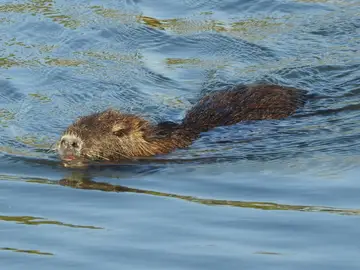
Nutria Not stated
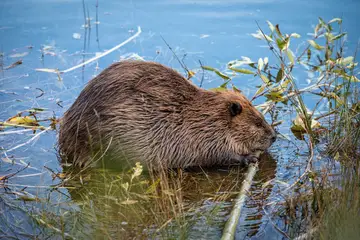

American beaver Not stated
Beavers have a wide, flat tail and dark whiskers and reach up to 60 pounds; nutria have a round, sparsely haired tail and white whiskers.
Nutria or Muskrat?
Nutria Not stated
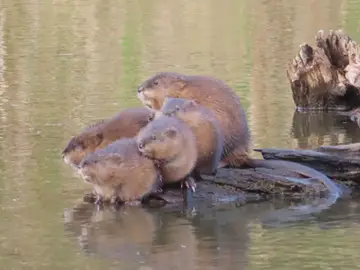
Muskrat Not stated
Muskrats have dark whiskers, a nearly triangular (side-flattened) tail and weigh at most 5 pounds. CDFW says most nutria reports it receives are actually muskrats.
Photos show typical adults; individuals vary. Never get close to compare.
When mammals are active in Virginia
Records of mammals in Virginia peak in April to July and September to October. They show when people record mammals, not how many there are (about month bars).
- Snake eggs are usually laid in May or June and hatch in late summer; live-bearing species give birth in late summer. Virginia DWR
- Residential bear problems can happen any time of year but are more common in spring or when natural foods are scarce; DWR advises no bird feeders April-November. Virginia DWR
If you are bitten or stung
Call 911 or Poison Help at 1-800-222-1222 right away. Poison Help connects you to your local poison center, any time of day.
Official advice from Virginia DWR:
- View all wild mammals from a distance (rabies). Virginia DWR
- If you see a bear, watch from a distance; if close, back away slowly. Virginia DWR
- Feeding bears, deliberately or inadvertently, is illegal in Virginia. Virginia DWR
- Report animals showing signs of rabies to the local health department. Virginia DWR
How to report
Virginia Wildlife Conflict Helpline (DWR), toll-free 1-855-571-9003 (wildlife problems; feral hog and nutria reports). Northern snakehead catches: DWR 804-367-2925. Rare wildlife sightings: DWR Virginia Rare Animal Observations Form. Imported fire ants outside the quarantine area: VDACS Invasive Species Reporting Tool. Wildlife crimes: [email protected] or 800-237-5712. Virginia DWR
What official sources say
Are there black bears in Virginia?
Yes. Black bears occur in at least 92 of Virginia's 98 counties and cities; highest concentrations are in the Blue Ridge and Alleghany Mountains and around the Great Dismal Swamp. Virginia DWR
“…bears occur in at least 92 of Virginia’s 98 counties and cities.”
Are there coyotes in Virginia?
Yes. Coyotes are found throughout Virginia, including urban and suburban areas. Virginia DWR
“Coyotes are found throughout Virginia, including in urban and suburban areas.”
Are there armadillos in Virginia?
Yes. DWR lists the Nine-banded Armadillo as a naturalized (non-native) species in Virginia. DWR
“Nine-banded Armadillo * Dasypus novemcinctus *”
About this list
The species list comes from Virginia Department of Wildlife Resources, List of Native and Naturalized Fauna of Virginia (MAMMALS; MARINE MAMMALS) (Virginia Department of Wildlife Resources (DWR), May, 2026).
Venom labels come only from official sources and link to them; "Not stated" never means harmless. How labels work.
"Nonnative" and "Invasive" follow the wording of the source list. See invasive species in Virginia.
Sources
- List of Native and Naturalized Fauna of Virginia. Virginia Department of Wildlife Resources (DWR). May, 2026; checked November 3, 2026.
Quoted passages (1)
“Nine-banded Armadillo * Dasypus novemcinctus *”
- Living with Black Bears in Virginia. Virginia DWR. undated page; checked November 3, 2026.
Quoted passages (5)
“Habituated bears can pose public safety concerns and in some unfortunate circumstances may have to be killed.”
“If you see a bear, enjoy watching from a distance. If you come into close contact, back away slowly and remember that bears have a natural distrust of humans and will run when given a safe escape route.”
“It is illegal to deliberately or inadvertently feed bears.”
“It is best not to put out food for birds from April–November.”
“…bears occur in at least 92 of Virginia’s 98 counties and cities.”
- Health Issues with Bats: Rabies, Histoplasmosis, and Parasites. Virginia DWR. undated page; checked November 3, 2026.
Quoted passages (2)
“As with other mammals including skunks, raccoons, fox, and domestic dogs, bats can carry rabies.”
“Because rabies is a fatal disease, all wild mammals should be viewed from a distance and treated as ‘wild animals.’”
- Problems with Feral Hogs. Virginia DWR. undated page; checked November 3, 2026.
Quoted passages (1)
“They can harbor many diseases and parasites including swine brucellosis, pseudorabies, Trichinella, and toxoplasmosis, some of which are transmissible to livestock, pets, wildlife, or humans.”
- Problems with Coyotes. Virginia DWR. undated page; checked November 3, 2026.
Quoted passages (2)
“Please contact your local health department if animal exhibits signs of rabies such as stumbling, foaming at the mouth or aggression.”
“Coyotes are found throughout Virginia, including in urban and suburban areas.”
- Celebrating Virginia’s Snakes in Honor of National Reptile Awareness Day. Virginia DWR (originally in Virginia Wildlife Magazine). undated page; checked November 3, 2026.
Quoted passages (1)
“Leathery shelled eggs are usually deposited in May or June, with young hatching in late summer.”
- Help with Human-Wildlife Conflicts. Virginia DWR. undated page; checked November 3, 2026.
Quoted passages (1)
“If you are experiencing a problem with wildlife, please dial our toll-free wildlife conflict helpline at 1-855-571-9003.”
- GBIF.org occurrence records, human observations licensed CC0 1.0 or CC BY 4.0 only, accessed November 3, 2026. The datasets behind these counts are listed on our Sources page.