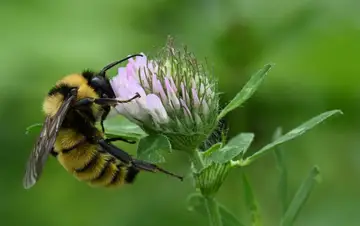
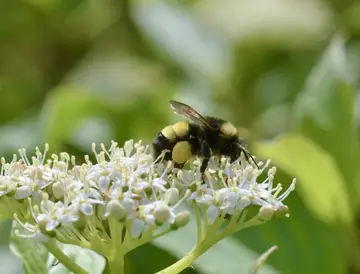
States Wildlife

Vermont Bugs and Insects That Sting or Bite

Last checked November 3, 2026 against official sources.

On this page
  1. Which insects can hurt you
  2. All 24 insects
  3. When they are active
  4. If you are bitten or stung
  5. How to report
  6. About this list
  7. Sources

Vermont Fish & Wildlife Department: 17# Species:

This page lists 24 insects. 4 are nonnative. Vermont Fish & Wildlife Department gives a total of 17; the 24 here are the insects official sources name one by one.

Not every species: no complete official list of Vermont insects exists, so this page covers the ones state and Extension sources name. How lists are built.

Which insects can hurt you

Official sources single out these insects in Vermont, in their own words:

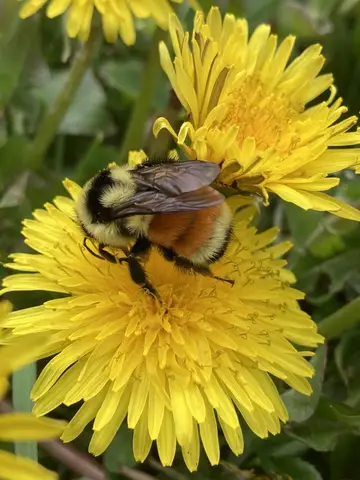
  • Yellowjackets, hornets, stinging wasps and bees
    Photo: Katja Schulz · CC BY 4.0 · iNaturalist

    Yellowjackets, hornets, stinging wasps and bees

    Stings. “…some are stinging insects and pose a serious risk to people and pets” University of Vermont Extension

  • Mosquitoes

    Disease. “Some mosquitoes can carry viruses that cause disease, including West Nile virus (WNV), Eastern equine encephalitis (EEE), and Jamestown Canyon virus (JCV).” Vermont Department of Health

All 24 insects

From A to Z. Do not handle them.

No confirmed photo of American Bumble Bee

American Bumble Bee

Bombus pensylvanicus

Not stated

Venom
No official source we use states whether this animal is venomous. That does not mean it is harmless: do not handle it.
Conservation
state endangered; federal status UR (code not defined in the list legend); SGCN (Vermont Wildlife Action Plan); state rank S1
No confirmed photo of Ashton Cuckoo Bumble Bee

Ashton Cuckoo Bumble Bee

Bombus ashtoni

Not stated

Venom
No official source we use states whether this animal is venomous. That does not mean it is harmless: do not handle it.
Conservation
state endangered; SGCN (Vermont Wildlife Action Plan); state rank SX
No confirmed photo of Asian Longhorned Beetle

Asian Longhorned Beetle

Anoplophora glabripennis

Not stated

Venom
No official source we use states whether this animal is venomous. That does not mean it is harmless: do not handle it.
Where in Vermont
Never detected in Vermont (watch-list pest) Vermont Invasives
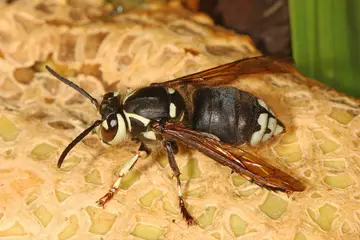
Bald-faced Hornet
Photo: Judy Gallagher · CC BY 2.0 · Wikimedia Commons

Bald-faced Hornet

Dolichovespula maculata

Not stated

Venom
No official source we use states whether this animal is venomous. That does not mean it is harmless: do not handle it.
Size
Missouri: workers 1/2 to 3/4 inch, queens 3/4 inch. University of Maryland: workers 5/8 to 3/4 inch, queens just over an inch. Penn State gives 13 to 20 mm for the queen and her offspring.
How to recognize it
  • Not yellow, unlike typical yellowjackets; larger, black and ivory
  • Large, rounded, gray paper nest hanging in trees or shrubs, sometimes on buildings
  • Nest entrance is the lowest opening of the cone- or egg-shaped nest
190 records by month.

Full Bald-faced Hornet guide

No confirmed photo of Black and Gold Bumble Bee

Black and Gold Bumble Bee

Bombus auricomus

Not stated

Venom
No official source we use states whether this animal is venomous. That does not mean it is harmless: do not handle it.
Conservation
state rank SU
No confirmed photo of Brown-belted Bumble Bee

Brown-belted Bumble Bee

Bombus griseocollis

Not stated

Venom
No official source we use states whether this animal is venomous. That does not mean it is harmless: do not handle it.
Conservation
state rank S4
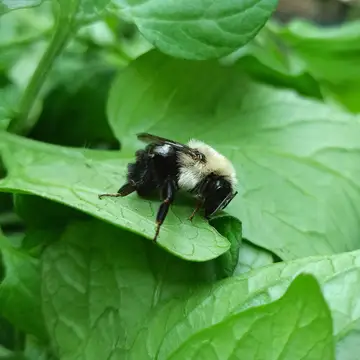
Common Eastern Bumble Bee
Photo: Juan Carlos Fonseca Mata · CC BY-SA 4.0 · Wikimedia Commons · resized

Common Eastern Bumble Bee

Bombus impatiens

Not stated

Venom
No official source we use states whether this animal is venomous. That does not mean it is harmless: do not handle it.
Conservation
state rank S5
No confirmed photo of Confusing Bumble Bee

Confusing Bumble Bee

Bombus perplexus

Not stated

Venom
No official source we use states whether this animal is venomous. That does not mean it is harmless: do not handle it.
Conservation
SGCN (Vermont Wildlife Action Plan); state rank S4
Eastern Yellowjacket
Photo: Katja Schulz · CC BY 4.0 · iNaturalist

Eastern Yellowjacket

Vespula maculifrons

Not stated

Venom
No official source we use states whether this animal is venomous. That does not mean it is harmless: do not handle it.
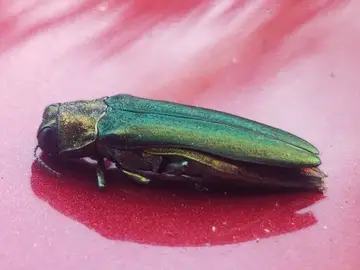
Emerald Ash Borer
Photo: Brandon McCracken · CC BY 4.0 · iNaturalist

Emerald Ash Borer

Agrilus planipennis

Not stated Invasive

Venom
No official source we use states whether this animal is venomous. That does not mean it is harmless: do not handle it.
Size
About 3/8 to 1/2 inch long and 1/8 inch wide; small enough to fit on a penny
How to recognize it
  • Slender, bullet-shaped body
  • Signs on ash trees: S-shaped galleries under the bark and D-shaped exit holes about 1/8 inch across
  • Tree symptoms: dead branches near the top, sprouts on the trunk, vertical bark cracks, and woodpecker 'blonding'
Where in Vermont
Confirmed in Vermont Vermont Invasives

Full Emerald Ash Borer guide

No confirmed photo of Fernald's Cuckoo Bumble Bee

Fernald's Cuckoo Bumble Bee

Bombus flavidus

Not stated

Venom
No official source we use states whether this animal is venomous. That does not mean it is harmless: do not handle it.
Conservation
SGCN (Vermont Wildlife Action Plan); state rank S3
No confirmed photo of Half-black Bumble Bee

Half-black Bumble Bee

Bombus vagans

Not stated

Venom
No official source we use states whether this animal is venomous. That does not mean it is harmless: do not handle it.
Conservation
state rank S5
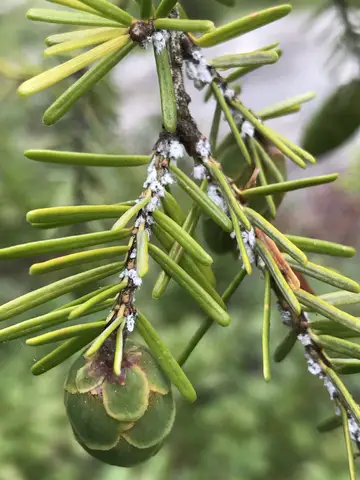
Hemlock Woolly Adelgid
Photo: Alan Weakley · CC0 1.0 · iNaturalist

Hemlock Woolly Adelgid

Adelges tsugae

Not stated Invasive

Venom
No official source we use states whether this animal is venomous. That does not mean it is harmless: do not handle it.
Where in Vermont
Southern Vermont Vermont Invasives
No confirmed photo of Lemon Cuckoo Bumble Bee

Lemon Cuckoo Bumble Bee

Bombus citrinus

Not stated

Venom
No official source we use states whether this animal is venomous. That does not mean it is harmless: do not handle it.
Conservation
SGCN (Vermont Wildlife Action Plan); state rank S2
No confirmed photo of Northern Amber Bumble Bee

Northern Amber Bumble Bee

Bombus borealis

Not stated

Venom
No official source we use states whether this animal is venomous. That does not mean it is harmless: do not handle it.
Conservation
state rank S4
Orange-belted Bumble Bee
Photo: rintzezelle · CC BY 4.0 · iNaturalist

Orange-belted Bumble Bee

Bombus ternarius

Not stated

Venom
No official source we use states whether this animal is venomous. That does not mean it is harmless: do not handle it.
Conservation
state rank S5
No confirmed photo of Red-belted Bumble Bee

Red-belted Bumble Bee

Bombus rufocinctus

Not stated

Venom
No official source we use states whether this animal is venomous. That does not mean it is harmless: do not handle it.
Conservation
SGCN (Vermont Wildlife Action Plan); state rank S3
Rusty-patched Bumble Bee
Photo: U.S. Fish and Wildlife Service - Midwest Region · Public domain · Wikimedia Commons (U.S. federal work, public domain)

Rusty-patched Bumble Bee

Bombus affinis

Not stated

Venom
No official source we use states whether this animal is venomous. That does not mean it is harmless: do not handle it.
Conservation
state endangered; federally endangered; SGCN (Vermont Wildlife Action Plan); state rank SX
No confirmed photo of Sanderson Bumble Bee

Sanderson Bumble Bee

Bombus sandersoni

Not stated

Venom
No official source we use states whether this animal is venomous. That does not mean it is harmless: do not handle it.
Conservation
state rank S3
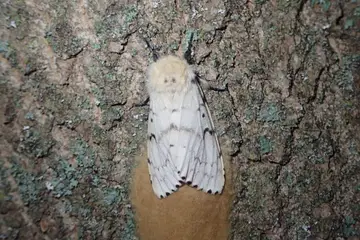
Spongy Moth (formerly gypsy moth)
Photo: Emmett Collins-Sussman · CC BY 4.0 · iNaturalist

Spongy Moth (formerly gypsy moth)

Lymantria dispar

Not stated Invasive

Venom
No official source we use states whether this animal is venomous. That does not mean it is harmless: do not handle it.
Size
Mature caterpillars 1.5 to 2.5 inches long (Missouri: up to 2 inches). Male moths about 1.5-inch wingspread; females larger, about 2 to 2.5 inches.
How to recognize it
  • Older caterpillars have a double row of five pairs of blue spots followed by six pairs of red spots down the back, and tufts of hair on each segment.
  • Spongy moth caterpillars do not make silk webs or tents.
  • Females are white and cannot fly; males are brown and fly erratically in daytime in July and August.
Where in Vermont
Established in Vermont Vermont Invasives
236 records by month.

Full Spongy Moth (formerly gypsy moth) guide

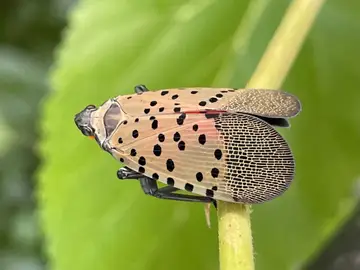
Spotted Lanternfly
Photo: Isaac Caswell · CC0 1.0 · iNaturalist

Spotted Lanternfly

Lycorma delicatula

Not stated Invasive

Venom
No official source we use states whether this animal is venomous. That does not mean it is harmless: do not handle it.
Size
Adults are roughly 1 inch long and 1/2 inch wide.
How to recognize it
  • Forewings brown or gray with black spots, ending in a speckled band.
  • Hind wings scarlet with black spots, plus white and black bars.
  • Abdomen yellow with black bars. Legs and head black.
Where in Vermont
Not established; three adults intercepted in a tractor trailer in August 2021. Vermont Invasives

Full Spotted Lanternfly guide

No confirmed photo of Two-spotted Bumble Bee

Two-spotted Bumble Bee

Bombus bimaculatus

Not stated

Venom
No official source we use states whether this animal is venomous. That does not mean it is harmless: do not handle it.
Conservation
state rank S5
Yellow Bumble Bee
Photo: Chrissy McClarren and Andy Reago · CC0 1.0 · iNaturalist

Yellow Bumble Bee

Bombus fervidus

Not stated

Venom
No official source we use states whether this animal is venomous. That does not mean it is harmless: do not handle it.
Conservation
SGCN (Vermont Wildlife Action Plan); state rank S2
Yellow-banded Bumble Bee
Photo: Bernie Paquette · CC BY 4.0 · iNaturalist

Yellow-banded Bumble Bee

Bombus terricola

Not stated

Venom
No official source we use states whether this animal is venomous. That does not mean it is harmless: do not handle it.
Conservation
state threatened; SGCN (Vermont Wildlife Action Plan); state rank S3

When insects are active in Vermont

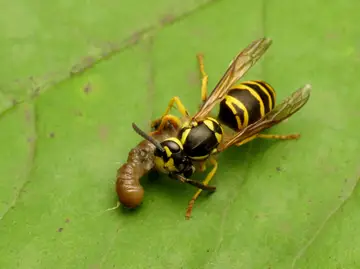
Records of insects in Vermont peak in June to August. They show when people record insects, not how many there are (about month bars).

96,716 records of insects in Vermont by month (GBIF, CC0 and CC BY records).

If you are bitten or stung

Call 911 or Poison Help at 1-800-222-1222 right away. Poison Help connects you to your local poison center, any time of day.

Official advice from Vermont Fish & Wildlife Department, Northern New England Poison Center and University of Vermont Extension:

  • Bears: never feed bears; feed birds only December to March; secure trash, pet food, chickens and beehives. Report a bear in a residential area or an aggressive bear to Vermont Fish & Wildlife. Vermont Fish & Wildlife Department
  • Suspected poisonous bite or sting: call 911 or Poison Help at 1-800-222-1222 (Northern New England Poison Center). Northern New England Poison Center
  • Stinging insects: if you are allergic to bee or wasp stings, do not deal with a nest yourself. University of Vermont Extension

How to report

Reptiles and amphibians (including Timber Rattlesnake sightings): Vermont Reptile and Amphibian Atlas (vtherpatlas.org). Bear incidents and rare animals: F&W Citizen Reporting forms. Invasive insects and aquatic animals: vtinvasives.org Report It! pages. Wildlife conflicts: U.S. Department of Agriculture's Animal Damage Control Unit (name as given on the F&W page), Berlin VT, 802-223-8690. Vermont Fish & Wildlife Department

About this list

The species list comes from No complete official insect list. Entries: Bumblebees of Vermont (F&W Natural Heritage Inventory, 17 species), UVM Extension wasps/hornets fact sheet, VT Invasives pest pages (Vermont Fish & Wildlife Department (Vermont Natural Heritage Inventory), 07 December 2022 (bumblebee list); see each source). 7 more entries come from other official sources named on each card.

Venom labels come only from official sources and link to them; "Not stated" never means harmless. How labels work.

"Nonnative" and "Invasive" follow the wording of the source list. See invasive species in Vermont.

Sources

  1. Reptiles and Amphibians of Vermont. Vermont Fish & Wildlife Department (Vermont Natural Heritage Inventory). document dated 13 March 2022; checked November 3, 2026.
  2. Bumblebees of Vermont. Vermont Fish & Wildlife Department (Vermont Natural Heritage Inventory). document dated 07 December 2022; checked November 3, 2026.
    Quoted passages (1)
    “17# Species:”
  3. Managing Stinging Wasps, Bees and Hornets. University of Vermont Extension (Entomology Research Laboratory). © University of Vermont, 2023; checked November 3, 2026.
    Quoted passages (3)
    “…some are stinging insects and pose a serious risk to people and pets”
    “If you know you are allergic to bee or wasp stings, do not deal with the nest yourself.”
    “In Vermont, most of these stinging insects die from the cold winter temperatures”
  4. Spotted Lanternfly. Vermont Invasives (website of Vermont Department of Forests, Parks and Recreation and UVM Extension, per site footer). undated page; checked November 3, 2026.
  5. Emerald Ash Borer in Vermont. Vermont Invasives (website of Vermont Department of Forests, Parks and Recreation and UVM Extension, per site footer). undated page; checked November 3, 2026.
  6. Hemlock Woolly Adelgid. Vermont Invasives (website of Vermont Department of Forests, Parks and Recreation and UVM Extension, per site footer). undated page; checked November 3, 2026.
  7. Spongy Moth Formally Gypsy Moth. Vermont Invasives (website of Vermont Department of Forests, Parks and Recreation and UVM Extension, per site footer). undated page; checked November 3, 2026.
    Quoted passages (2)
    “Older larvae (caterpillars) are brownish-gray, with tufts of hair on each segment and a double row of five pairs of blue spots, followed by six pairs of red spots, on the back.”
    “Mature larvae are from 1 1/2 to 2 1/2 inches long.”
  8. Asian Longhorned Beetle. Vermont Invasives (website of Vermont Department of Forests, Parks and Recreation and UVM Extension, per site footer). undated page; checked November 3, 2026.
  9. Mosquito-Borne Diseases. Vermont Department of Health. updated June 22, 2026; checked November 3, 2026.
    Quoted passages (2)
    “Some mosquitoes can carry viruses that cause disease, including West Nile virus (WNV), Eastern equine encephalitis (EEE), and Jamestown Canyon virus (JCV).”
    “Mosquitoes are active in Vermont from spring through fall.”
  10. Living with Black Bears. Vermont Fish & Wildlife Department. undated page; checked November 3, 2026.
    Quoted passages (1)
    “If you see a bear in a residential area or you encounter an aggressive bear, please contact the Vermont Fish & Wildlife Department.”
  11. Is that snake or spider poisonous? Northern New England Poison Center. blog post dated July 10, 2013; checked November 3, 2026.
    Quoted passages (1)
    “If you think you have been bitten by a poisonous animal, call the poison center at 1-800-222-1222 or chat online.”
  12. Tick Activity in Vermont. Vermont Department of Health. updated April 24, 2026; checked November 3, 2026.
    Quoted passages (1)
    “In Vermont, blacklegged tick peak activity typically occurs in May and June when nymphal ticks are looking for a host. Tick activity increases again in October and November”
  13. Citizen Reporting. Vermont Fish & Wildlife Department. undated page; checked November 3, 2026.
    Quoted passages (1)
    “Report incidents of property damage by bears, visits to birdfeeders, compost bins or garbage, bears on porches or decks, damage to bee hives, corn or other crops, and any incident where you feel threatened by a bear.”
  14. GBIF.org occurrence records, human observations licensed CC0 1.0 or CC BY 4.0 only, accessed November 3, 2026. The datasets behind these counts are listed on our Sources page.