Vermont has 1 venomous snake named by official sources: Timber Rattlesnake, as labelled by Vermont Fish & Wildlife Department. This guide covers 8 animal groups from Vermont Fish & Wildlife Department (Agency of Natural Resources) lists and other official sources, with photos, venomous status and when each group is active.
Identification help has limits: a photo cannot confirm that an animal is safe. Watch from a distance and never handle a wild animal.
These are the animals official sources describe as venomous or as a risk to people in Vermont, across 5 groups. The reason is given in the source's own terms.
Venomous: “Vermont is home to one venomous snake species, the Timber Rattlesnake, which is state endangered, legally protected, and restricted to western Rutland County.”
Transmits the bacteria that cause Rocky Mountain spotted fever in the Southwestern US (no evidence of transmission in Vermont): “Name: Brown dog tick (Rhipicephalus sanguineus) Distribution: throughout Vermont”
Disease: “Some mosquitoes can carry viruses that cause disease, including West Nile virus (WNV), Eastern equine encephalitis (EEE), and Jamestown Canyon virus (JCV).”
Large, strong wild animal: “Black bears are large, strong wild animals that should be treated with respect and appreciated from a distance to ensure your safety as well as the bear’s.”
Official sources say the southern black widow and the lone star tick are not native to Vermont or not found there. They are not counted among the dangerous animals above; each entry quotes the source.
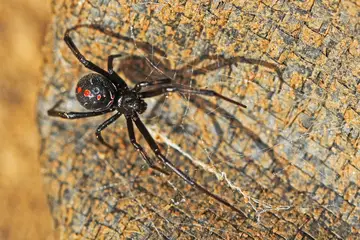
Southern Black Widow: does not live here. “Southern black widows do not live in Northern New England, but will occasionally come into the region from other parts of the country, often in produce, such as grapes.” Northern New England Poison Center
Darker cells are the months with more open-licence observation records of each group in Vermont (GBIF). They show when people see and record these animals, not how many there are. The current month, this month, is highlighted.
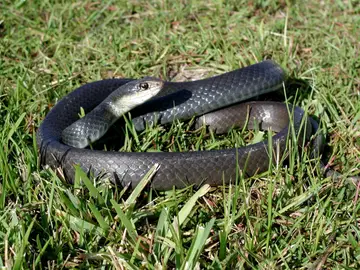
Snakes found indoors in fall or during a winter warmup are probably looking for an overwintering site. Vermont Fish & Wildlife Department
Blacklegged tick activity peaks in May–June and again in October–November; ticks may be active any time temperatures are above freezing. Vermont Department of Health
Stinging wasps and hornets grow more numerous and defensive as the season progresses; in Vermont most die in winter cold. University of Vermont Extension
Report: Reptiles and amphibians (including Timber Rattlesnake sightings): Vermont Reptile and Amphibian Atlas (vtherpatlas.org). Bear incidents and rare animals: F&W Citizen Reporting forms. Invasive insects and aquatic animals: vtinvasives.org Report It! pages. Wildlife conflicts: U.S. Department of Agriculture's Animal Damage Control Unit (name as given on the F&W page), Berlin VT, 802-223-8690. Vermont Fish & Wildlife Department
Official safety advice
If you find a rattlesnake on your property, do not handle or move it; call a Rattlesnake Response Program responder (free service). Vermont Fish & Wildlife Department
Identify a snake before approaching or handling it; head shape is not a reliable way to tell venomous snakes. Vermont Fish & Wildlife Department
If you suspect a Timber Rattlesnake in your home or property, photograph it from a safe distance and contact F&W (Luke Groff, 802-760-0089) or the Vermont Reptile and Amphibian Atlas. Vermont Fish & Wildlife Department
It is illegal to keep venomous snakes in Vermont; from January 1, 2027 Act 47 prohibits intentionally killing or harming any native reptile or amphibian. Vermont Fish & Wildlife Department
Bears: never feed bears; feed birds only December to March; secure trash, pet food, chickens and beehives. Report a bear in a residential area or an aggressive bear to Vermont Fish & Wildlife. Vermont Fish & Wildlife Department
Rabies: for a bite from a wild animal, contact the Vermont USDA Rabies Hotline 1-800-4-RABIES (1-800-472-2437) or a Game Warden. Vermont Department of Health
Questions people ask about Vermont wildlife
Are there venomous snakes in Vermont?
Yes. Vermont has one venomous snake, the Timber Rattlesnake. It is state endangered, legally protected, and restricted to western Rutland County. Vermont Fish & Wildlife Department
Are there rattlesnakes in Vermont?
Yes, but rare. Only two confirmed Timber Rattlesnake populations exist, both in Rutland County; they are most likely to be encountered June–September. Vermont Fish & Wildlife Department
How many snakes are in Vermont?
F&W counts 11 native snakes; its herp list also names the Eastern Hog-nosed Snake, whose native status is undetermined. Vermont Fish & Wildlife Department
Is a snake in my house in vermont venomous?
F&W: outside western Rutland County it is generally safe to assume a snake in your home is non-venomous, but snakes can hitch rides in vehicles and pets can escape. If you suspect a Timber Rattlesnake, photograph it from a safe distance and contact F&W. Vermont Fish & Wildlife Department
Rarely. The poison center says the northern black widow may live in the region but is rarely seen; southern black widows do not live in Northern New England but occasionally arrive in produce such as grapes. Northern New England Poison Center
Are there brown recluse spiders in Vermont?
No. The Northern New England Poison Center says brown recluses do not live in the region and are not known for traveling. Northern New England Poison Center
Are there poisonous spiders in Vermont?
Rarely. Vermont State Parks: most spiders that live in Vermont have venom that is not exceptionally harmful to humans, and there have been no confirmed bites of northern black widow or brown recluse in the past 15 years. Vermont State Parks (Vermont Dept. of Forests, Parks and Recreation) blog
Which ticks spread lyme disease in Vermont?
Blacklegged ticks are found throughout Vermont and are responsible for 99% of tick bite illnesses reported to the Health Department. Vermont Department of Health
Are there lone star ticks in Vermont?
Not established. The Health Department says the lone star tick is not considered established in Vermont. Vermont Department of Health
Which animals carry rabies in Vermont?
Rabies in Vermont is most often found in raccoons, skunks, foxes, and bats; most recent cases are in Orleans and Chittenden counties. Vermont Department of Health
Yes. Moose are on the F&W mammal list; motor vehicles are the main known cause of non-hunting moose deaths. Vermont Fish & Wildlife Department
Are there mountain lions in Vermont?
Not anymore. The Eastern Mountain Lion is on the F&W list as state rank SH (possibly extirpated; known only from historical occurrences but with hope of rediscovery) and state endangered. Vermont Fish & Wildlife Department
Sources
Reptiles and Amphibians of Vermont. Vermont Fish & Wildlife Department (Vermont Natural Heritage Inventory). document dated 13 March 2022; checked November 3, 2026.
Snake FAQs. Vermont Fish & Wildlife Department. undated page; checked November 3, 2026.Quoted passages (7)
“Vermont is home to one venomous snake species, the Timber Rattlesnake, which is state endangered, legally protected, and restricted to western Rutland County.”
“Vermont is home to 11 native snake species, representing a diversity of colors, patterns, sizes, distributions, and habitats.”
“Outside of western Rutland County, it is generally safe to assume that a snake found in your home is non-venomous”
“For safety reasons, it is wise to identify a snake before approaching or handling it.”
“If you suspect you have a Timber Rattlesnake in your home or on your property, please take a photograph from a safe distance and contact Luke Groff or the Vermont Reptile and Amphibian Atlas.”
“Additionally, Act 47 prohibits the intentional killing or harming of any native reptile or amphibian in Vermont, including snakes, starting on January 1, 2027.”
“Snakes found inside during the fall or a winter warmup were probably looking for an overwintering site or escaping cold temperatures.”
Bumblebees of Vermont. Vermont Fish & Wildlife Department (Vermont Natural Heritage Inventory). document dated 07 December 2022; checked November 3, 2026.Quoted passages (1)
“17# Species:”
Birds of Vermont. Vermont Fish & Wildlife Department (Vermont Natural Heritage Inventory). document dated 13 March 2022; checked November 3, 2026.Quoted passages (1)
“265# Species:”
Vertebrate Animals of Vermont. Vermont Fish & Wildlife Department (Vermont Natural Heritage Inventory). document dated 07 December 2022; checked November 3, 2026.Quoted passages (1)
“58# Species in Group:”
Venomous Spiders at Work. CDC / NIOSH. archived copy, captured October 13, 2026; checked November 3, 2026.Quoted passages (1)
“Venomous spiders found in the United States include the black widow and the brown recluse.”
Black Widow. Northern New England Poison Center. updated Monday May 2nd 2016; checked November 3, 2026.Quoted passages (3)
“The black widow is a type of spider with a poisonous bite.”
“Southern black widows do not live in Northern New England, but will occasionally come into the region from other parts of the country, often in produce, such as grapes.”
“The northern black widow, which usually has two red or orange patches on its underside, may live in our region but is rarely seen.”
Tick Activity in Vermont. Vermont Department of Health. updated April 24, 2026; checked November 3, 2026.Quoted passages (8)
“Name: Blacklegged tick (Ixodes scapularis) Distribution: throughout Vermont”
“Name: American dog tick (Dermacentor variabilis) Distribution: throughout Vermont”
“Name: Brown dog tick (Rhipicephalus sanguineus) Distribution: throughout Vermont”
“Name: Squirrel tick (Ixodes marxi) Distribution: throughout Vermont”
“Name: Woodchuck tick (Ixodes cookei) Distribution: throughout Vermont”
“…this tick is not considered established, or able to complete its entire life cycle, in Vermont”
“Blacklegged ticks are responsible for 99% of all tick bite illnesses reported to the Vermont Department of Health.”
“In Vermont, blacklegged tick peak activity typically occurs in May and June when nymphal ticks are looking for a host. Tick activity increases again in October and November”
“…some are stinging insects and pose a serious risk to people and pets”
“In Vermont, most of these stinging insects die from the cold winter temperatures”
Mosquito-Borne Diseases. Vermont Department of Health. updated June 22, 2026; checked November 3, 2026.Quoted passages (2)
“Some mosquitoes can carry viruses that cause disease, including West Nile virus (WNV), Eastern equine encephalitis (EEE), and Jamestown Canyon virus (JCV).”
“Mosquitoes are active in Vermont from spring through fall.”
Rabies. Vermont Department of Health. updated October 22, 2026; checked November 3, 2026.Quoted passages (2)
“In Vermont, the virus is most often found in raccoons, skunks, foxes, and bats”
“Call the Vermont USDA Rabies Hotline at 1-800-4-RABIES (1-800-472-2437) or 1-802-223-8690.”
If You Encounter a Bear. Vermont Fish & Wildlife Department. undated page; checked November 3, 2026.Quoted passages (1)
“Black bears are large, strong wild animals that should be treated with respect and appreciated from a distance to ensure your safety as well as the bear’s.”
Zebra Mussels. Vermont Invasives (website of Vermont Department of Forests, Parks and Recreation and UVM Extension, per site footer). undated page; checked November 3, 2026.Quoted passages (1)
“Zebra mussels were confirmed in Lake Champlain in 1993 and are now found throughout the lake. They were also confirmed in Lake Bomoseen (Rutland Co.) in 1999.”
Asian Clam. Vermont Invasives (website of Vermont Department of Forests, Parks and Recreation and UVM Extension, per site footer). undated page; checked November 3, 2026.Quoted passages (1)
“Asian clams were documented in Lake Bomoseen, Vermont, in 2016, which is the only known infestation in the state.”
Emerald Ash Borer in Vermont. Vermont Invasives (website of Vermont Department of Forests, Parks and Recreation and UVM Extension, per site footer). undated page; checked November 3, 2026.Quoted passages (1)
“Emerald ash borer (EAB) has been confirmed in Vermont.”
Hemlock Woolly Adelgid. Vermont Invasives (website of Vermont Department of Forests, Parks and Recreation and UVM Extension, per site footer). undated page; checked November 3, 2026.Quoted passages (1)
“Hemlock woolly adelgid has been confirmed in southern Vermont.”
Spongy Moth Formally Gypsy Moth. Vermont Invasives (website of Vermont Department of Forests, Parks and Recreation and UVM Extension, per site footer). undated page; checked November 3, 2026.Quoted passages (1)
“Spongy moth is established in Vermont.”
Spotted Lanternfly. Vermont Invasives (website of Vermont Department of Forests, Parks and Recreation and UVM Extension, per site footer). undated page; checked November 3, 2026.Quoted passages (1)
“In August 2021, three adult spotted lanternflies were intercepted (in Vermont) in a tractor trailer originating from a state with documented infestations of the invasive pest.”
Jumping Worms. Vermont Invasives (website of Vermont Department of Forests, Parks and Recreation and UVM Extension, per site footer). undated page; checked November 3, 2026.Quoted passages (1)
“There are three species of jumping worms found in Vermont.”
Cuban Treefrog collection info, Vermont. U.S. Geological Survey, Nonindigenous Aquatic Species (NAS) database. database queried November 3, 2026; checked November 3, 2026.Quoted passages (1)
Citizen Reporting. Vermont Fish & Wildlife Department. undated page; checked November 3, 2026.Quoted passages (1)
“Report incidents of property damage by bears, visits to birdfeeders, compost bins or garbage, bears on porches or decks, damage to bee hives, corn or other crops, and any incident where you feel threatened by a bear.”
Rattlesnake Response Program. Vermont Fish & Wildlife Department. undated page; checked November 3, 2026.Quoted passages (3)
“Currently, there are only two confirmed populations in the state, and both are in Rutland County.”
“If you find a rattlesnake on your property, do not attempt to handle or move it yourself.”
“In our state, rattlesnakes are most likely to be encountered during June–September as they migrate and forage miles from their overwintering den.”
“Most spiders that live in Vermont have venom that is not exceptionally harmful to humans.”
Mammals of Vermont. Vermont Fish & Wildlife Department (Vermont Natural Heritage Inventory). document dated 07 December 2022; checked November 3, 2026.Quoted passages (1)
“Ursus americanus American Black Bear S5 G5”
Moose. Vermont Fish & Wildlife Department. undated page; checked November 3, 2026.Quoted passages (1)
“The primary known cause of non-hunting moose deaths (mortalities) in Vermont is motor vehicles.”
Living with Black Bears. Vermont Fish & Wildlife Department. undated page; checked November 3, 2026.Quoted passages (2)
“If you see a bear in a residential area or you encounter an aggressive bear, please contact the Vermont Fish & Wildlife Department.”