States Wildlife

Vermont Turtles: Identification Guide With Pictures

Last checked November 3, 2026 against official sources.

On this page
  1. All 8 turtles
  2. Lookalikes
  3. When they are active
  4. How to report
  5. About this list
  6. Sources

This page lists 8 turtles: all from Vermont Fish & Wildlife Department's Reptiles and Amphibians of Vermont.

All 8 turtles

From A to Z.

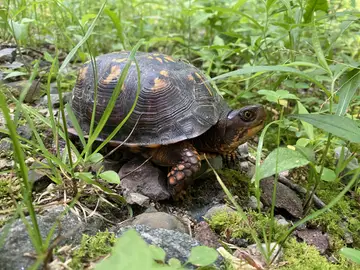
Eastern Box Turtle
Photo: Joshua Liverman · CC BY 4.0 · iNaturalist

Eastern Box Turtle

Terrapene carolina

Size
Small: adult shell usually 4.5 to 6 inches; up to about 7 to 8 inches (Alabama, Virginia).
How to recognize it
  • High, domed upper shell
  • Hinged lower shell that closes the turtle in completely
  • Ridge (keel) down the center of the shell, more obvious in young
Conservation
state rank SU (unrankable)

Full Eastern Box Turtle guide

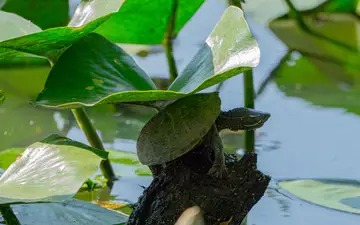
Eastern Musk Turtle (Stinkpot)
Photo: Curtis Meyers · CC BY-SA 4.0 · iNaturalist · resized

Eastern Musk Turtle (Stinkpot)

Sternotherus odoratus

Conservation
state special concern; SGCN (Vermont Wildlife Action Plan); state rank S2
No confirmed photo of Northern Map Turtle

Northern Map Turtle

Graptemys geographica

Conservation
state special concern; state rank S3
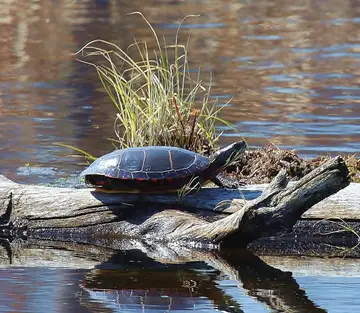
Painted Turtle
Photo: U. S. Fish and Wildlife Service - Northeast Region · Public domain · Wikimedia Commons

Painted Turtle

Chrysemys picta

Size
Small: adult shell usually 4 to 7 inches, up to about 10 inches; females are larger than males.
How to recognize it
  • Smooth, fairly flat shell with no keel and a smooth (not saw-toothed) rear edge
  • Red markings on the marginal shell plates
  • Yellow spot behind each eye and yellow stripes on the chin
Conservation
state rank S5
199 records by month.

Full Painted Turtle guide

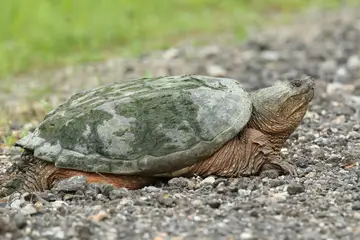
Snapping Turtle
Photo: Cephas · CC BY-SA 4.0 · Wikimedia Commons · resized

Snapping Turtle

Chelydra serpentina

Size
Upper shell usually 8 to 14 inches, occasionally to nearly 20; usually 10 to 35 lb, occasionally to 75 lb in the wild.
How to recognize it
  • Large head, long tail
  • Saw-toothed scales on the long tail
  • Small, cross-shaped lower shell
Conservation
state rank S5
118 records by month.

Full Snapping Turtle guide

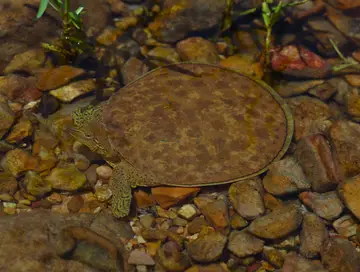
Spiny Softshell (Turtle)
Photo: Peter Paplanus · CC BY 2.0 · Wikimedia Commons

Spiny Softshell (Turtle)

Apalone spinifera

Conservation
state threatened; SGCN (Vermont Wildlife Action Plan); state rank S1
What the sources say

Habitat: Littoral zone, marshes and tributary streams to Lake Champlain (Vermont Fish & Wildlife Department)

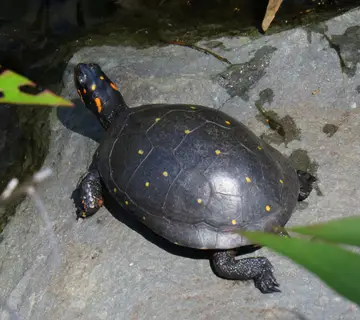
Spotted Turtle
Photo: Nick Block · CC BY 4.0 · iNaturalist

Spotted Turtle

Clemmys guttata

Conservation
state endangered; SGCN (Vermont Wildlife Action Plan); state rank S1
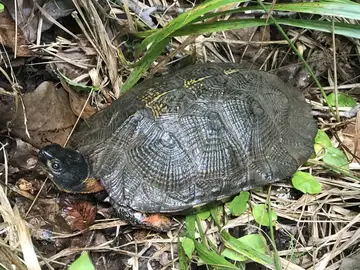
Wood Turtle
Photo: Michael Ellis · CC BY 4.0 · iNaturalist

Wood Turtle

Glyptemys insculpta

Size
14-20 cm (5.5-8 in)
How to recognize it
  • Lower shell has no hinge
  • Combination of brown shell, orange front limbs and a lower shell solidly fused to the upper shell
  • Males: concave lower shell, long thick tail, broader head
Conservation
state special concern; SGCN (Vermont Wildlife Action Plan); state rank S3
What the sources say

Habitat: Streams (winter and breeding); forages up to 1,000 feet from streams in hardwood forests or meadows (Vermont Fish & Wildlife Department)

Full Wood Turtle guide

Turtles people confuse

Wood Turtle or Eastern Box Turtle?

Wood Turtle
Photo: Michael Ellis · CC BY 4.0 · iNaturalist

Wood Turtle Not stated

Eastern Box Turtle
Photo: Summit Metro Parks · CC BY-SA 4.0 · iNaturalist · resized

Eastern Box Turtle Not stated

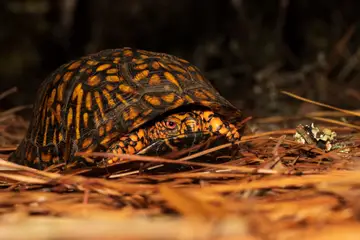
Box turtles are smaller and have a hinged lower shell that closes completely.

Eastern box turtle or Wood turtle?

Eastern box turtle
Photo: Summit Metro Parks · CC BY-SA 4.0 · iNaturalist · resized

Eastern box turtle Not stated

Wood turtle
Photo: Michael Ellis · CC BY 4.0 · iNaturalist

Wood turtle Not stated

The wood turtle lacks the high-domed shell and the hinged lower shell.

Photos show typical adults; individuals vary. Never get close to compare.

When turtles are active in Vermont

Records of turtles in Vermont peak in April to June and September. They show when people record turtles, not how many there are (about month bars).

373 records of turtles in Vermont by month (GBIF, CC0 and CC BY records).

How to report

Reptiles and amphibians (including Timber Rattlesnake sightings): Vermont Reptile and Amphibian Atlas (vtherpatlas.org). Bear incidents and rare animals: F&W Citizen Reporting forms. Invasive insects and aquatic animals: vtinvasives.org Report It! pages. Wildlife conflicts: U.S. Department of Agriculture's Animal Damage Control Unit (name as given on the F&W page), Berlin VT, 802-223-8690. Vermont Fish & Wildlife Department

About this list

The species list comes from Reptiles and Amphibians of Vermont (Vermont Fish & Wildlife Department (Vermont Natural Heritage Inventory), 13 March 2022).

Venom labels come only from official sources and link to them; "Not stated" never means harmless. How labels work.

Sources

  1. Reptiles and Amphibians of Vermont. Vermont Fish & Wildlife Department (Vermont Natural Heritage Inventory). document dated 13 March 2022; checked November 3, 2026.
  2. Wood Turtle (Vermont Critters: Reptiles). Vermont Fish & Wildlife Department. undated page; checked November 3, 2026.
  3. Eastern Spiny Softshell Turtle (Vermont Critters: Reptiles). Vermont Fish & Wildlife Department. undated page; checked November 3, 2026.
    Quoted passages (1)
    “Softshells in Lake Champlain hibernate for almost six months, generally from November through April.”
  4. Citizen Reporting. Vermont Fish & Wildlife Department. undated page; checked November 3, 2026.
    Quoted passages (1)
    “Report incidents of property damage by bears, visits to birdfeeders, compost bins or garbage, bears on porches or decks, damage to bee hives, corn or other crops, and any incident where you feel threatened by a bear.”
  5. GBIF.org occurrence records, human observations licensed CC0 1.0 or CC BY 4.0 only, accessed November 3, 2026. The datasets behind these counts are listed on our Sources page.