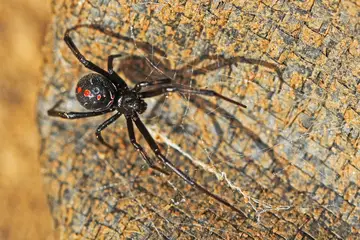

Northern Black Widow
Latrodectus variolus
What the sources say
Venom: “Venomous spiders found in the United States include the black widow and the brown recluse.” (CDC / NIOSH)
Last checked November 3, 2026 against official sources.
This page lists 1 spider. 1 is venomous by official accounts.
Not every species: no complete official list of Vermont spiders exists, so this page covers the ones state and Extension sources name. How lists are built.
Official sources single out these spiders in Vermont, in their own words:
Venomous. “The black widow is a type of spider with a poisonous bite.” Northern New England Poison Center
Official sources single out these ticks in Vermont, in their own words:
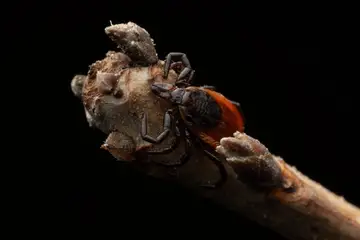
Disease vector. “Name: Blacklegged tick (Ixodes scapularis) Distribution: throughout Vermont” Vermont Department of Health
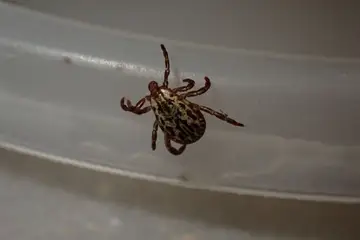
Disease vector. “Name: American dog tick (Dermacentor variabilis) Distribution: throughout Vermont” Vermont Department of Health
Transmits the bacteria that cause Rocky Mountain spotted fever in the Southwestern US (no evidence of transmission in Vermont). “Name: Brown dog tick (Rhipicephalus sanguineus) Distribution: throughout Vermont” Vermont Department of Health
Rarely bites humans. “Name: Squirrel tick (Ixodes marxi) Distribution: throughout Vermont” Vermont Department of Health
Rarely bites humans. “Name: Woodchuck tick (Ixodes cookei) Distribution: throughout Vermont” Vermont Department of Health
Official sources say the southern black widow and the lone star tick are not native to Vermont or not found there. They are not counted on this page; each entry quotes the source.
Does not live here. “Southern black widows do not live in Northern New England, but will occasionally come into the region from other parts of the country, often in produce, such as grapes.” Northern New England Poison Center
It is venomous, per CDC / NIOSH. If you find one, do not touch it.
Not established. “…this tick is not considered established, or able to complete its entire life cycle, in Vermont” Vermont Department of Health
Venomous species first, then A to Z. Do not handle them.
Latrodectus variolus
Venom: “Venomous spiders found in the United States include the black widow and the brown recluse.” (CDC / NIOSH)
Records of spiders in Vermont peak in June to September. They show when people record spiders, not how many there are (about month bars).
Call 911 or Poison Help at 1-800-222-1222 right away. Poison Help connects you to your local poison center, any time of day.
Reptiles and amphibians (including Timber Rattlesnake sightings): Vermont Reptile and Amphibian Atlas (vtherpatlas.org). Bear incidents and rare animals: F&W Citizen Reporting forms. Invasive insects and aquatic animals: vtinvasives.org Report It! pages. Wildlife conflicts: U.S. Department of Agriculture's Animal Damage Control Unit (name as given on the F&W page), Berlin VT, 802-223-8690. Vermont Fish & Wildlife Department
Rarely. The poison center says the northern black widow may live in the region but is rarely seen; southern black widows do not live in Northern New England but occasionally arrive in produce such as grapes. Northern New England Poison Center
“The northern black widow, which usually has two red or orange patches on its underside, may live in our region but is rarely seen.”
No. The Northern New England Poison Center says brown recluses do not live in the region and are not known for traveling. Northern New England Poison Center
“The brown recluse is a well-known poisonous spider, but they do not live here and are not known for traveling.”
The species list comes from No complete official Vermont spider list. Entries: Northern New England Poison Center Black Widow page; Vermont State Parks (FPR) spider blog; ticks from the Vermont Department of Health Tick Activity page (Northern New England Poison Center, see each source).
Venom labels come only from official sources and link to them; "Not stated" never means harmless. How labels work.
“The black widow is a type of spider with a poisonous bite.”
“Southern black widows do not live in Northern New England, but will occasionally come into the region from other parts of the country, often in produce, such as grapes.”
“The northern black widow, which usually has two red or orange patches on its underside, may live in our region but is rarely seen.”
“Venomous spiders found in the United States include the black widow and the brown recluse.”
“Name: Blacklegged tick (Ixodes scapularis) Distribution: throughout Vermont”
“Name: American dog tick (Dermacentor variabilis) Distribution: throughout Vermont”
“Name: Brown dog tick (Rhipicephalus sanguineus) Distribution: throughout Vermont”
“Name: Squirrel tick (Ixodes marxi) Distribution: throughout Vermont”
“Name: Woodchuck tick (Ixodes cookei) Distribution: throughout Vermont”
“…this tick is not considered established, or able to complete its entire life cycle, in Vermont”
“Report incidents of property damage by bears, visits to birdfeeders, compost bins or garbage, bears on porches or decks, damage to bee hives, corn or other crops, and any incident where you feel threatened by a bear.”
“The brown recluse is a well-known poisonous spider, but they do not live here and are not known for traveling.”