Invasive and nonnative animals in Vermont
Last checked November 3, 2026 against official sources.
On this page
8 nonnative animals are named on 8 official lists for Vermont: “Zebra Mussels” (Vermont Invasives), “Asian Clam” (Vermont Invasives), “Emerald Ash Borer in Vermont” (Vermont Invasives), “Hemlock Woolly Adelgid” (Vermont Invasives), “Spongy Moth Formally Gypsy Moth” (Vermont Invasives), “Spotted Lanternfly” (Vermont Invasives), “Jumping Worms” (Vermont Invasives) and “Cuban Treefrog collection info, Vermont” (US Geological Survey, Nonindigenous Aquatic Species (NAS) database).
To report a sighting, see how to report.
Being on a list of nonnative species does not always mean an animal is harmful or established: each list below is described in its source's terms. A sighting of a listed animal is still worth reporting to the agency.
Zebra Mussels
Vermont Invasives (website of Vermont Department of Forests, Parks and Recreation and UVM Extension, per site footer), undated page. 1 animal.
-
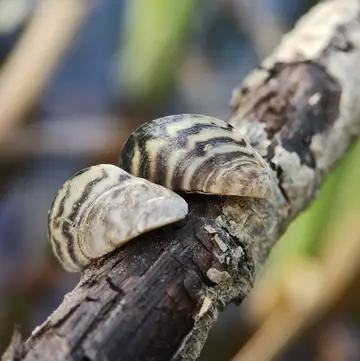
Photo: Harukano · CC0 1.0 · iNaturalist Zebra Mussel Dreissena polymorpha
Lake Champlain (throughout) and Lake Bomoseen Vermont Invasives
Asian Clam
Vermont Invasives (website of Vermont Department of Forests, Parks and Recreation and UVM Extension, per site footer), undated page. 1 animal.
-
Asian Clam Corbicula fluminea
Lake Bomoseen only Vermont Invasives
Emerald Ash Borer in Vermont
Vermont Invasives (website of Vermont Department of Forests, Parks and Recreation and UVM Extension, per site footer), undated page. 1 animal.
-
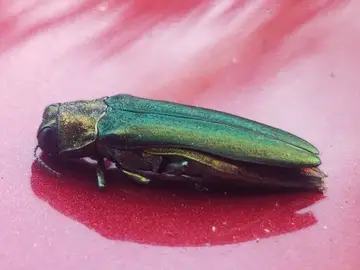
Photo: Brandon McCracken · CC BY 4.0 · iNaturalist Emerald Ash Borer Agrilus planipennis
Confirmed in Vermont; the page links an infested-area map and a list of municipalities with EAB (not reproduced here) Vermont Invasives
Hemlock Woolly Adelgid
Vermont Invasives (website of Vermont Department of Forests, Parks and Recreation and UVM Extension, per site footer), undated page. 1 animal.
-
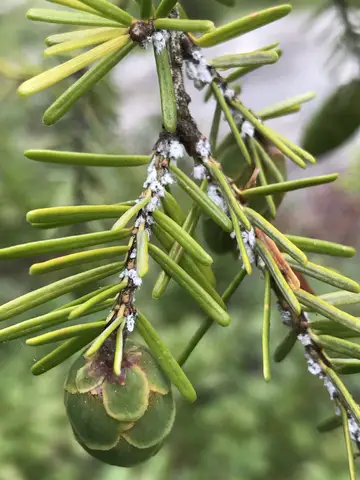
Photo: Alan Weakley · CC0 1.0 · iNaturalist Hemlock Woolly Adelgid Adelges tsugae
Southern Vermont Vermont Invasives
Spongy Moth Formally Gypsy Moth
Vermont Invasives (website of Vermont Department of Forests, Parks and Recreation and UVM Extension, per site footer), undated page. 1 animal.
-
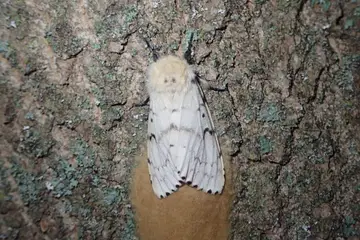
Photo: Emmett Collins-Sussman · CC BY 4.0 · iNaturalist Spongy Moth (formerly gypsy moth) Lymantria dispar
Established statewide (no county detail) Vermont Invasives
Spotted Lanternfly
Vermont Invasives (website of Vermont Department of Forests, Parks and Recreation and UVM Extension, per site footer), undated page. 1 animal.
-
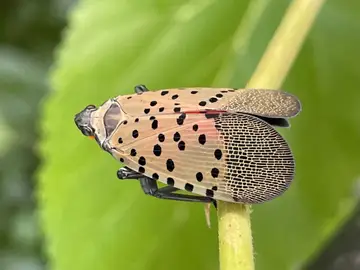
Photo: Isaac Caswell · CC0 1.0 · iNaturalist Spotted Lanternfly Lycorma delicatula
Not established; intercepted 2021 Vermont Invasives
Jumping Worms
Vermont Invasives (website of Vermont Department of Forests, Parks and Recreation and UVM Extension, per site footer), undated page. 1 animal.
-
Jumping Worms Amynthas tokionensis; Amynthas agrestis; Metaphire hilgendorfi
Found in Vermont Vermont Invasives
Cuban Treefrog collection info, Vermont
U.S. Geological Survey, Nonindigenous Aquatic Species (NAS) database, database queried November 3, 2026. 1 animal.
-
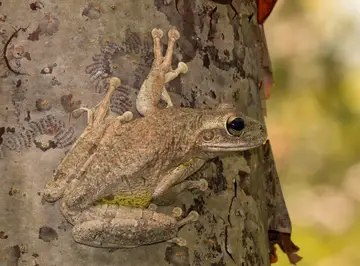
Photo: Charles J. Sharp · CC BY-SA 4.0 · Wikimedia Commons · resized Cuban Treefrog Osteopilus septentrionalis
One USGS NAS collection record, Chittenden County, 2022 (Winooski River drainage); USGS lists it as Exotic. Not on the F&W herp list; no evidence of establishment in the source. US Geological Survey, Nonindigenous Aquatic Species (NAS) database

How to report a sighting in Vermont
Reptiles and amphibians (including Timber Rattlesnake sightings): Vermont Reptile and Amphibian Atlas (vtherpatlas.org). Bear incidents and rare animals: F&W Citizen Reporting forms. Invasive insects and aquatic animals: vtinvasives.org Report It! pages. Wildlife conflicts: U.S. Department of Agriculture's Animal Damage Control Unit (name as given on the F&W page), Berlin VT, 802-223-8690. Vermont Fish & Wildlife Department
Do not try to catch or handle the animal. A photo taken from a safe distance, the place and the date help the agency.
Sources
- Zebra Mussels. Vermont Invasives (website of Vermont Department of Forests, Parks and Recreation and UVM Extension, per site footer). undated page; checked November 3, 2026.
Quoted passages (1)
“Zebra mussels were confirmed in Lake Champlain in 1993 and are now found throughout the lake. They were also confirmed in Lake Bomoseen (Rutland Co.) in 1999.”
- Asian Clam. Vermont Invasives (website of Vermont Department of Forests, Parks and Recreation and UVM Extension, per site footer). undated page; checked November 3, 2026.
Quoted passages (1)
“Asian clams were documented in Lake Bomoseen, Vermont, in 2016, which is the only known infestation in the state.”
- Emerald Ash Borer in Vermont. Vermont Invasives (website of Vermont Department of Forests, Parks and Recreation and UVM Extension, per site footer). undated page; checked November 3, 2026.
Quoted passages (1)
“Emerald ash borer (EAB) has been confirmed in Vermont.”
- Hemlock Woolly Adelgid. Vermont Invasives (website of Vermont Department of Forests, Parks and Recreation and UVM Extension, per site footer). undated page; checked November 3, 2026.
Quoted passages (1)
“Hemlock woolly adelgid has been confirmed in southern Vermont.”
- Spongy Moth Formally Gypsy Moth. Vermont Invasives (website of Vermont Department of Forests, Parks and Recreation and UVM Extension, per site footer). undated page; checked November 3, 2026.
Quoted passages (1)
“Spongy moth is established in Vermont.”
- Spotted Lanternfly. Vermont Invasives (website of Vermont Department of Forests, Parks and Recreation and UVM Extension, per site footer). undated page; checked November 3, 2026.
Quoted passages (1)
“In August 2021, three adult spotted lanternflies were intercepted (in Vermont) in a tractor trailer originating from a state with documented infestations of the invasive pest.”
- Jumping Worms. Vermont Invasives (website of Vermont Department of Forests, Parks and Recreation and UVM Extension, per site footer). undated page; checked November 3, 2026.
Quoted passages (1)
“There are three species of jumping worms found in Vermont.”
- Cuban Treefrog collection info, Vermont. U.S. Geological Survey, Nonindigenous Aquatic Species (NAS) database. database queried November 3, 2026; checked November 3, 2026.
Quoted passages (1)
“1700958 VT Chittenden [No locality description provided] 2022 04300103 Winooski River”
- Citizen Reporting. Vermont Fish & Wildlife Department. undated page; checked November 3, 2026.
Quoted passages (1)
“Report incidents of property damage by bears, visits to birdfeeders, compost bins or garbage, bears on porches or decks, damage to bee hives, corn or other crops, and any incident where you feel threatened by a bear.”