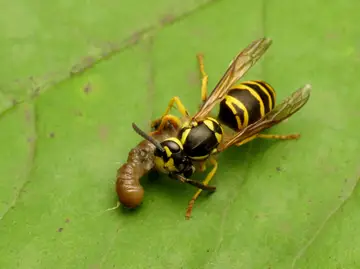
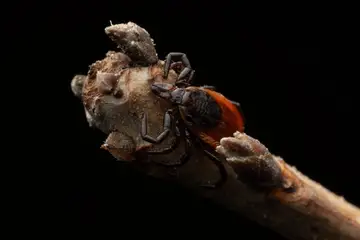
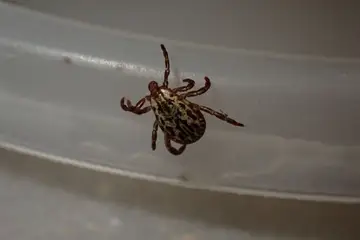
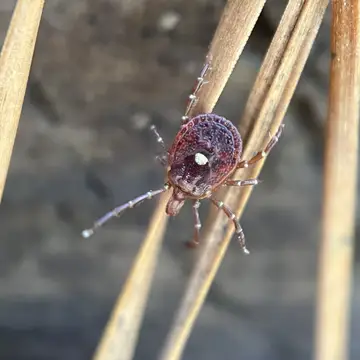
This page lists 9 insects and 6 ticks.
6 are venomous by official accounts. 5 are nonnative.
Not every species: no complete official list of Illinois insects exists, so this page covers the ones state and Extension sources name. How lists are built.
Which insects can hurt you
Official sources single out these insects in Illinois, in their own words:
Stings. “Still, when nests are near human activity areas their painful, and sometimes life threatening, stings are a real threat.” University of Illinois Extension
bees, hornets and yellow jackets
Stings. “Bees, hornets and yellow jackets all can sting humans. Symptoms of a sting range from minimal discomfort to life-threatening reactions to those with an allergy.” Illinois Poison Center
stinging insects (10 or more stings)
Multiple stings can cause severe anaphylactic and toxic reactions (Illinois Extension). “Multiple stings – 10 or more – can pose unique dangers to human health, especially in children, the elderly, and people who have heart or breathing issues.” University of Illinois Extension
mosquitoes
Disease. “…mosquitoes can transmit other diseases, including West Nile Virus” Illinois Poison Center
wasps
Can swarm an intruder, causing many stings (Illinois Extension). “Wasps are notorious for being aggressive and will swarm an intruder, which can result in many stings.” University of Illinois Extension
cockroaches
Human health threat. “Cockroaches are a common pest and human health threat. Their frass, or poop, can trigger asthma attacks and transmit pathogens.” University of Illinois Extension
Ticks (arachnids, not insects)
Official sources single out these ticks in Illinois, in their own words:
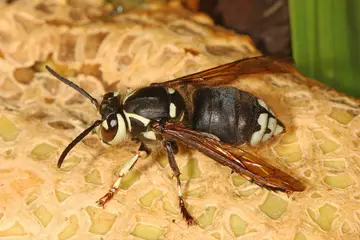
Missouri: workers 1/2 to 3/4 inch, queens 3/4 inch. University of Maryland: workers 5/8 to 3/4 inch, queens just over an inch. Penn State gives 13 to 20 mm for the queen and her offspring.
How to recognize it
Not yellow, unlike typical yellowjackets; larger, black and ivory
Large, rounded, gray paper nest hanging in trees or shrubs, sometimes on buildings
Nest entrance is the lowest opening of the cone- or egg-shaped nest
JFMAMJJASOND
180 records by month.What the sources say
Venom: “…some people may be allergic to bee or wasp venom without realizing it” (University of Illinois Extension)
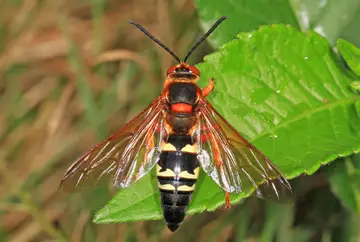
About 1 1/8 to 1 5/8 inches long (OSU, NC State); females up to nearly 2 inches, males up to 1.5 inches (University of Kentucky). Females larger than males.
How to recognize it
Nests in the ground: burrow about 1/2 inch wide with a U-shaped soil mound at the entrance
Hole about 1/2 inch across with excavated soil piled around it
Hovers 1-2 ft above the ground near nests
JFMAMJJASOND
100 records by month.What the sources say
Venom: “…some people may be allergic to bee or wasp venom without realizing it” (University of Illinois Extension)
“Still, when nests are near human activity areas their painful, and sometimes life threatening, stings are a real threat.” University of Illinois Extension
What the sources say
Venom: “…some people may be allergic to bee or wasp venom without realizing it” (University of Illinois Extension)
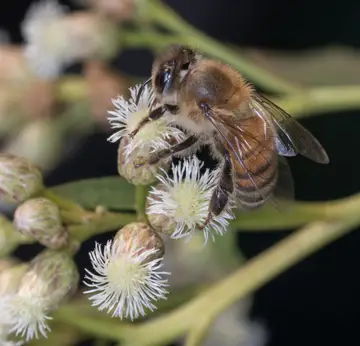
About 10 percent smaller than a European honey bee, a difference too subtle to see without measurement or lab tests.
How to recognize it
Cannot be identified by eye: only DNA testing or microscopic measurements can tell it from a European honey bee.
Clue is behavior and nest site: very defensive, and may nest in small cavities such as water meter boxes, old tires, house eaves or the ground.
JFMAMJJASOND
568 records by month.What the sources say
Venom: “Avoid squeezing the stinger to prevent injecting more venom into the wound. Note: Only honey bees lose their stingers.” (Illinois Poison Center)
No official source we use states whether this animal is venomous. That does not mean it is harmless: do not handle it.
Danger to people
“The blacklegged / deer tick can transmit Lyme disease, babesiosis and possibly ehrlichiosis to humans.” IDPH
Where in Illinois
In recent years it has been common only in limited areas, mostly in northern Illinois IDPH
No confirmed photo of brown dog tick
brown dog tick
Rhipicephalus sanguineus
Not statedNonnativeTick: an arachnid, not an insect
Venom
No official source we use states whether this animal is venomous. That does not mean it is harmless: do not handle it.
Photo: CDC/ Dr. Christopher Paddock/ James Gathany · Public domain · Wikimedia Commons
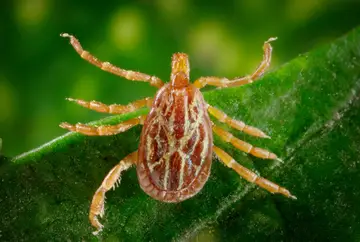
Gulf Coast tick
Amblyomma maculatum
Not statedNonnativeTick: an arachnid, not an insect
Venom
No official source we use states whether this animal is venomous. That does not mean it is harmless: do not handle it.
Where in Illinois
In the past few years, it has been discovered in several counties in Illinois and has established populations in Jackson, Saline and possibly more counties. IDNR
“Avoid squeezing the stinger to prevent injecting more venom into the wound. Note: Only honey bees lose their stingers.”
“Bees, hornets and yellow jackets all can sting humans. Symptoms of a sting range from minimal discomfort to life-threatening reactions to those with an allergy.”
“Call 9-1-1 for emergency transport to the nearest healthcare facility.”
“Warmer weather means more bee stings”
Wild About Illinois Ticks! Illinois Department of Natural Resources (IDNR). undated page; checked November 3, 2026.
“The American dog tick can transmit Rocky Mountain spotted fever, tularemia and possibly ehrlichiosis to humans.”
“The blacklegged / deer tick can transmit Lyme disease, babesiosis and possibly ehrlichiosis to humans.”
“This tick also may transmit tularemia and ehrlichiosis to humans.”
“The best way to protect yourself against tickborne illness is to avoid tick bites. … Check yourself, children and other family members every two to three hours for ticks.”
“In Illinois, the adults are most active in April, May and June. … The lone star tick is most active from April through the end of July.”
“Ticks can be active on winter days when the ground temperatures are about 45”
Wild About Illinois Beetles! Illinois Department of Natural Resources (IDNR). undated page; checked November 3, 2026.
Dangerous Encounters (Wildlife). University of Illinois Extension. undated page; checked November 3, 2026.Quoted passages (1)
“Multiple stings – 10 or more – can pose unique dangers to human health, especially in children, the elderly, and people who have heart or breathing issues.”
“IPC is here to help. Calls to our helpline, 1-800-222-1222, are free and confidential. … Call 911 if someone is unconscious or is having difficulty breathing.”