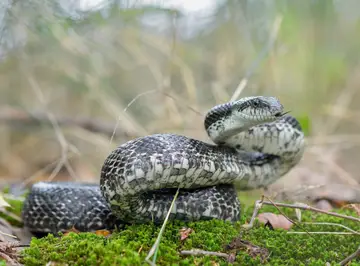
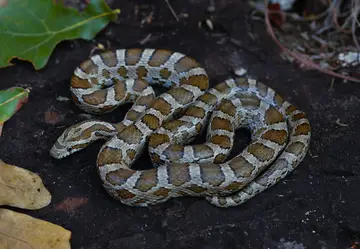
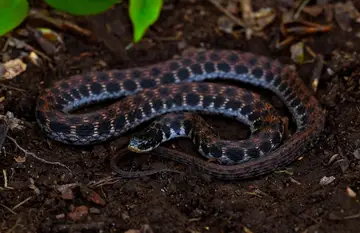
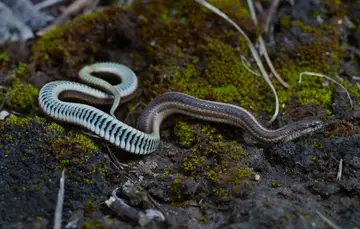
States Wildlife

Illinois Snakes: Identification Guide With Pictures

Last checked November 3, 2026 against official sources.

On this page
  1. Venomous snakes
  2. The other 36 snakes
  3. Lookalikes
  4. When they are active
  5. If you are bitten or stung
  6. How to report
  7. Common questions
  8. What official sources say
  9. About this list
  10. Sources

IDNR: Thirty-nine species of snakes inhabit Illinois

This page lists 40 snakes: 38 from IDNR's Wild About Illinois Snakes! - Gallery by Family and Species, cross-checked with the INHS "Illinois Species" list and 2 named in other official sources. 4 are venomous by official accounts: Eastern Copperhead, Northern Cottonmouth, Timber Rattlesnake and Eastern Massasauga. IDNR gives a total of 39; the 40 here are the snakes official sources name one by one.

Venomous snakes in Illinois

Official sources label these snakes venomous in Illinois. Venomous snakes in Illinois has more on each one.

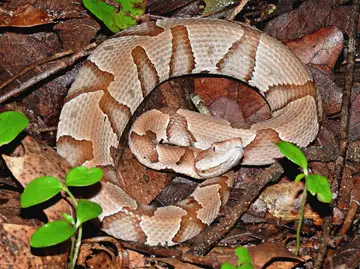
Eastern Copperhead
Photo: USFWSmidwest · Public domain · Wikimedia Commons

Eastern Copperhead

Agkistrodon contortrix

Venomous per IDNR

Danger to people
“While venomous snakes are not aggressive and tend to bite people only when stepped on, picked up, or cornered, their bite is a serious matter.” IDNR
Size
Adults usually about 2 to 3 feet (24-36 in); record about 53 inches.
How to recognize it
  • Vertical (cat-like) pupils and a heat-sensing pit between eye and nostril
  • Heavy-bodied; keeled scales
  • Head shape alone is not a reliable way to identify copperheads
Where in Illinois
Copperheads occur in the southern one-third of Illinois, south of Route 16 and in the lower Illinois River valley … IDNR
31 records by month.
What the sources say

Venom: “Four species of Ililnois snakes, the eastern copperhead (Agkistrodon contortrix), the northern cottonmouth (Agkistrodon piscivorus), the timber rattlesnake (Crotalus horridus) and the eastern massasauga (Sistrurus catenatus) are venomous.” (IDNR)

Range: Copperheads occur in the southern one-third of Illinois, south of Route 16 and in the lower Illinois River valley. They prefer upland forests or river bluffs with limestone or sandstone outcroppings.

Habitat: Wooded, rocky hillsides and forest edges, sometimes in meadows and fields during summer. (Illinois Natural History Survey (INHS), Prairie Research Institute, University of Illinois Urbana-Champaign)

Full Eastern Copperhead guide

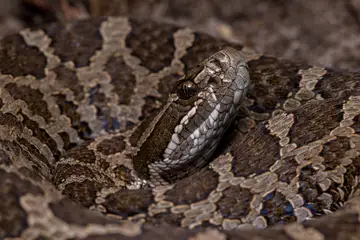
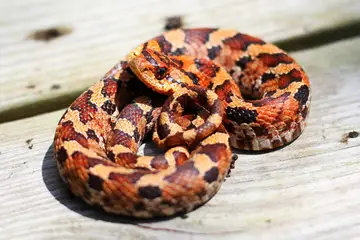
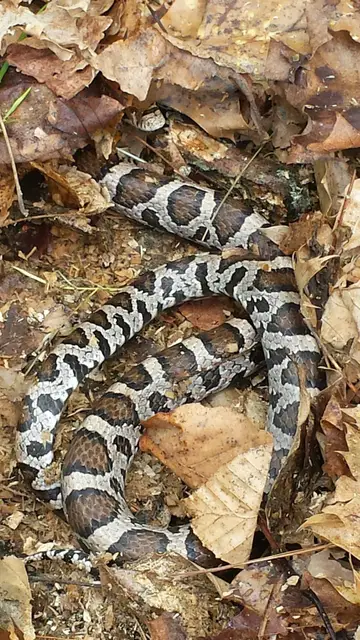
Eastern Massasauga
Photo: User:Rstanton13 · CC BY-SA 4.0 · Wikimedia Commons · resized

Eastern Massasauga

Sistrurus catenatus

Venomous per IDNR

Danger to people
“While venomous snakes are not aggressive and tend to bite people only when stepped on, picked up, or cornered, their bite is a serious matter.” IDNR
Size
Usually 18 to 30 inches long (New York DEC: 18 to 40 inches, average 27.5). The western massasauga in Arizona reaches only about 22 inches.
How to recognize it
  • A segmented rattle (a single button in newborns) and vertical, catlike pupils. In Michigan it is the only snake with both.
  • Nine large plates on top of the head (the timber rattlesnake has many small scales there)
  • A heat-sensing pit on each side of the head between the eye and nostril; the head is flat and much wider than the neck
Where in Illinois
Massasaugas live in scattered locations within the counties of Madison, Clinton, Piatt, Knox, Warren, Will, Cook and Lake … IDNR
Conservation
Illinois endangered; federally threatened (*) (Illinois E&T checklist, effective Oct 31, 2025: "Eastern Massasauga* Sistrurus catenatus")
What the sources say

Venom: “Four species of Ililnois snakes, the eastern copperhead (Agkistrodon contortrix), the northern cottonmouth (Agkistrodon piscivorus), the timber rattlesnake (Crotalus horridus) and the eastern massasauga (Sistrurus catenatus) are venomous.” (IDNR)

Range: Massasaugas live in scattered locations within the counties of Madison, Clinton, Piatt, Knox, Warren, Will, Cook and Lake. Their habitats are prairie wetlands and river floodplains.

Habitat: Old fields, floodplain forests, marshlands, and bogs. (Illinois Natural History Survey (INHS), Prairie Research Institute, University of Illinois Urbana-Champaign)

Full Eastern Massasauga guide

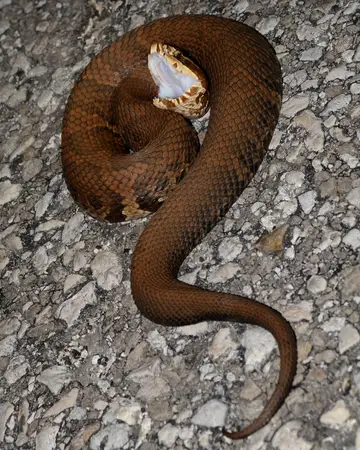
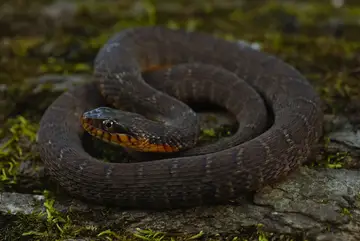
Northern Cottonmouth
Photo: Geoff Gallice from Gainesville · CC BY 2.0 · Wikimedia Commons

Northern Cottonmouth

Agkistrodon piscivorus

Venomous per IDNR

Danger to people
“While venomous snakes are not aggressive and tend to bite people only when stepped on, picked up, or cornered, their bite is a serious matter.” IDNR
Size
Typically 30 to 48 inches (about 3 to 4 feet); recorded up to 75 inches.
How to recognize it
  • Heat-sensing pit between nostril and eye; no rattle
  • Head much wider than the neck, with a dark bar from the eye to the jaw; vertical (cat-eye) pupils
  • Gapes to show the white lining of its mouth when threatened
Where in Illinois
Cottonmouths live in swamps and wet bottomlands in southern Illinois, south of Route 13. IDNR
251 records by month.
What the sources say

Venom: “Four species of Ililnois snakes, the eastern copperhead (Agkistrodon contortrix), the northern cottonmouth (Agkistrodon piscivorus), the timber rattlesnake (Crotalus horridus) and the eastern massasauga (Sistrurus catenatus) are venomous.” (IDNR)

Habitat: Cypress-tupelo swamps, sloughs, and oxbow lakes of extreme southern counties. (Illinois Natural History Survey (INHS), Prairie Research Institute, University of Illinois Urbana-Champaign)

Full Northern Cottonmouth guide

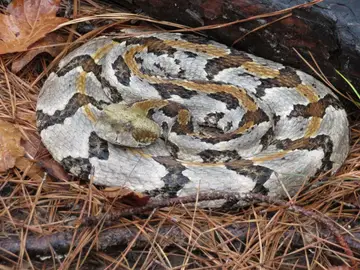
Timber Rattlesnake
Photo: NPS Photo · Public domain · Wikimedia Commons

Timber Rattlesnake

Crotalus horridus

Venomous per IDNR

Danger to people
“While venomous snakes are not aggressive and tend to bite people only when stepped on, picked up, or cornered, their bite is a serious matter.” IDNR
Size
Most adults 36 to 60 inches (3 to 5 feet); record 74.5 inches.
How to recognize it
  • Black tail ending in a rattle
  • Heat-sensing pit between nostril and eye
  • Large, thick head distinct from the neck; cat-like vertical pupil
Where in Illinois
Timber rattlesnakes may be found in the southern one-fourth of the state (south of Interstate 64), in the lower Illinois River valley, in the Mississippi River valley … IDNR
Conservation
Illinois threatened (Illinois E&T checklist, effective Oct 31, 2025: "Timber Rattlesnake Crotalus horridus")
What the sources say

Venom: “Four species of Ililnois snakes, the eastern copperhead (Agkistrodon contortrix), the northern cottonmouth (Agkistrodon piscivorus), the timber rattlesnake (Crotalus horridus) and the eastern massasauga (Sistrurus catenatus) are venomous.” (IDNR)

Range: Timber rattlesnakes may be found in the southern one-fourth of the state (south of Interstate 64), in the lower Illinois River valley, in the Mississippi River valley and in a few other locations. These snakes prefer heavy timber with rock outcrops and bluffs.

Habitat: Heavy forest along rocky outcrops and bluffs. (Illinois Natural History Survey (INHS), Prairie Research Institute, University of Illinois Urbana-Champaign)

Full Timber Rattlesnake guide

The other 36 snakes

From A to Z. Some harmless snakes mimic venomous ones: leave every snake alone.

Coachwhip
Photo: Peter Paplanus from St. Louis, Missouri · CC BY 2.0 · Wikimedia Commons

Coachwhip

Coluber flagellum

Non-venomous per Illinois Poison Center

Size
Most adults about 42 to 60 inches (3.5 to 5 ft); record 102 inches (8.5 ft). Ranges given by agencies: 41 to 84 in (Louisiana), 36 to 82 in (Oklahoma), adults average 50 to 72 in (Alabama), up to 94 in (NC State Extension), up to 80 in in Colorado and up to 68 in in Arizona.
How to recognize it
  • Long, slowly tapering tail whose scales look like a braided whip
  • Very long and slender, with smooth scales
  • Large eyes with round pupils
What the sources say

Venom: “Of the 40 snakes in Illinois, only four venomous snakes are native to the state:” (Illinois Poison Center)

Habitat: Rocky, open hillsides, glades, and hill prairies. (Illinois Natural History Survey (INHS), Prairie Research Institute, University of Illinois Urbana-Champaign)

Full Coachwhip guide

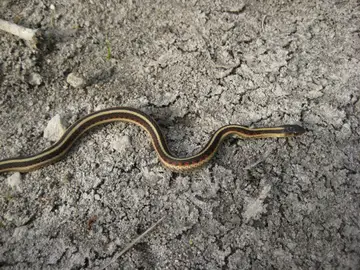
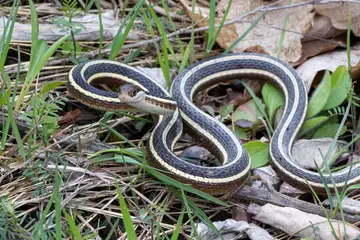
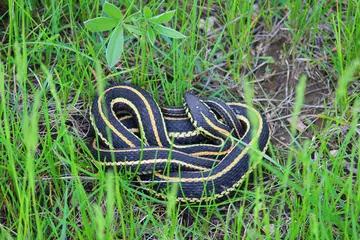
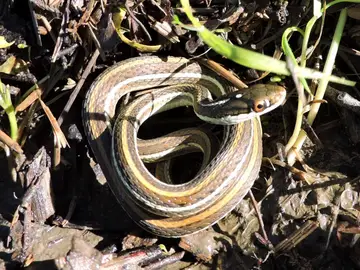
Common Gartersnake
Photo: kclarksdnhmorg · CC BY 4.0 · iNaturalist

Common Gartersnake

Thamnophis sirtalis

Non-venomous per IDNR

231 records by month.
What the sources say

Venom: “Family: Natricidae - … They are harmless to humans.” (IDNR)

Habitat: Forests and edge habitats, commonly near water. Vacant lots in cities. (Illinois Natural History Survey (INHS), Prairie Research Institute, University of Illinois Urbana-Champaign)

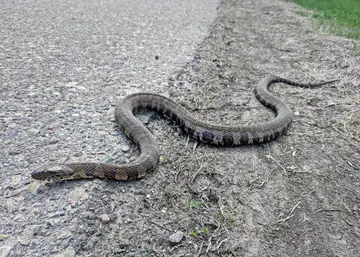
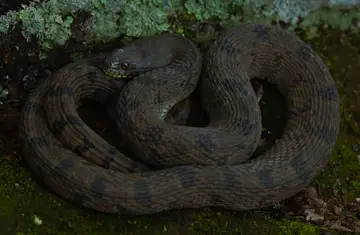
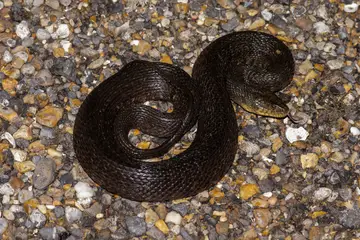
Common Watersnake
Photo: U.S. Fish and Wildlife Service - Midwest Region · Public domain · Wikimedia Commons

Common Watersnake

Nerodia sipedon

Non-venomous per IDNR

Size
Adults 22 to 42 inches long, occasionally to 59 inches (Missouri). Pennsylvania gives 24 to over 50 inches; females are usually bigger than males.
How to recognize it
  • Dark crossbands on the front part of the body break up into rows of blotches from the middle of the body to the tail.
  • Belly white, yellow or orange, usually with dark half-moon-shaped spots.
  • Keeled (ridged) scales, so it feels rough; round pupils like other nonvenomous snakes in Missouri.
159 records by month.
What the sources say

Venom: “Family: Natricidae - … They are harmless to humans.” (IDNR)

Habitat: Streams, lakes, ponds, and ditches. Commonly seen basking on rocks and logs or foraging in the water. Takes shelter under rocks, logs, and other debris along shore. (Illinois Natural History Survey (INHS), Prairie Research Institute, University of Illinois Urbana-Champaign)

Full Common Watersnake guide

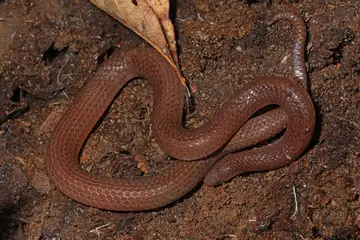
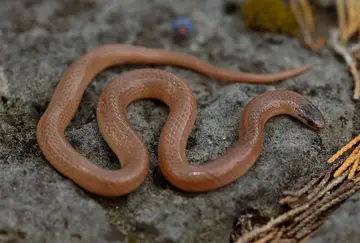
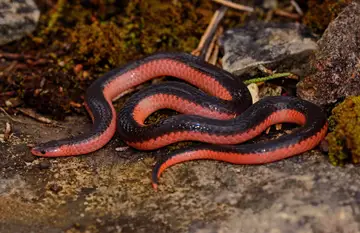
Common Wormsnake
Photo: Judy Gallagher · CC BY 2.0 · Wikimedia Commons

Common Wormsnake

Carphophis amoenus

Non-venomous per IDNR

What the sources say

Venom: “Family: Dipsadidae - The members of this family are generally small snakes that have teeth in the back of the jaw that are used to transfer venom into their prey. They lay eggs and are harmless to humans.” (IDNR)

Habitat: Wooded areas, usually those with rocky soils. (Illinois Natural History Survey (INHS), Prairie Research Institute, University of Illinois Urbana-Champaign)

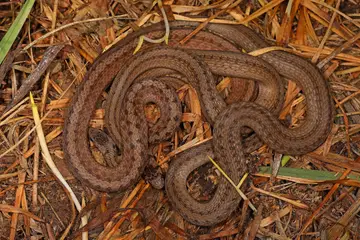
DeKay’s Brownsnake
Photo: Judy Gallagher · CC BY 2.0 · Wikimedia Commons

DeKay’s Brownsnake

Storeria dekayi

Non-venomous per IDNR

Size
Most adults 9 to 13 inches; occasionally up to about 20 inches.
How to recognize it
  • Dark top of head; a dark spot under each eye and on each side of the neck
  • Keeled (ridged) scales in 17 rows; round pupil
  • Tennessee: a small dark downward streak on the side of the head
165 records by month.
What the sources say

Venom: “Family: Natricidae - … They are harmless to humans.” (IDNR)

Habitat: Variety of forest and prairie habitats, floodplains and uplands, forest edges, even cultivated fields, and especially in vacant lots in cities. (Illinois Natural History Survey (INHS), Prairie Research Institute, University of Illinois Urbana-Champaign)

Full DeKay’s Brownsnake guide

Diamond-backed Watersnake
Photo: Peter Paplanus from St. Louis, Missouri · CC BY 2.0 · Wikimedia Commons

Diamond-backed Watersnake

Nerodia rhombifer

Non-venomous per IDNR

What the sources say

Venom: “Family: Natricidae - … They are harmless to humans.” (IDNR)

Habitat: Quiet, permanent backwaters, swamps, sloughs, lakes, and sluggish streams in the southern third of the state, often in very warm water. (Illinois Natural History Survey (INHS), Prairie Research Institute, University of Illinois Urbana-Champaign)

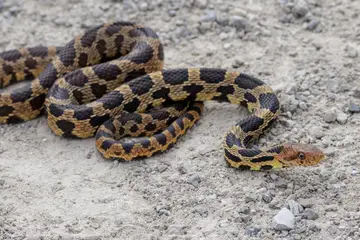
Eastern Foxsnake
Photo: User:Rstanton13 · CC BY-SA 4.0 · Wikimedia Commons · resized

Eastern Foxsnake

Pantherophis vulpinus

Non-venomous per IDNR

What the sources say

Venom: “Family: Colubridae - … All of the colubrid snakes in Illinois lay eggs and are harmless to humans.” (IDNR)

Habitat: Variety of open and former prairie habitats, including intensively cultivated fields and pastures, in the northern half of the state. (Illinois Natural History Survey (INHS), Prairie Research Institute, University of Illinois Urbana-Champaign)

Eastern Hog-nosed Snake
Photo: Joshua Liverman · CC BY 4.0 · iNaturalist

Eastern Hog-nosed Snake

Heterodon platirhinos

Non-venomous per IDNR

What the sources say

Venom: “Family: Dipsadidae - The members of this family are generally small snakes that have teeth in the back of the jaw that are used to transfer venom into their prey. They lay eggs and are harmless to humans.” (IDNR)

Habitat: Forest-edge habitats and dry, open woods on clay or sandy loam; sand areas of northern counties. (Illinois Natural History Survey (INHS), Prairie Research Institute, University of Illinois Urbana-Champaign)

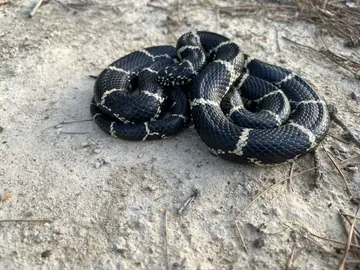
Eastern Kingsnake
Photo: Matthew Lumsden · CC BY 4.0 · iNaturalist

Eastern Kingsnake

Lampropeltis getula

Non-venomous per IDNR

Size
Most adults are about 36-48 inches. Maryland gives a record of 82 inches; Alabama gives up to 6.9 feet.
How to recognize it
  • Smooth, shiny scales and an indistinct neck.
  • Round pupil.
  • Florida Museum counts 19-32 crossbands in Florida; Alabama counts 23 to 52.
What the sources say

Venom: “Family: Colubridae - … All of the colubrid snakes in Illinois lay eggs and are harmless to humans.” (IDNR)

Habitat: Wooded hills. (Illinois Natural History Survey (INHS), Prairie Research Institute, University of Illinois Urbana-Champaign)

Full Eastern Kingsnake guide

Eastern Ribbonsnake
Photo: Rstanton13 · CC BY-SA 4.0 · Wikimedia Commons · resized

Eastern Ribbonsnake

Thamnophis sauritus

Non-venomous per IDNR

Conservation
Illinois threatened (Illinois E&T checklist, effective Oct 31, 2025: "Eastern Ribbonsnake Thamnophis saurita")
What the sources say

Venom: “Family: Natricidae - … They are harmless to humans.” (IDNR)

Habitat: Lowland forests, in vegetation along banks of sloughs, cypress-tupelo swamps, and other similar bodies of water. (Illinois Natural History Survey (INHS), Prairie Research Institute, University of Illinois Urbana-Champaign)

Flat-headed Snake
Photo: Peter Paplanus · CC BY 2.0 · Wikimedia Commons

Flat-headed Snake

Tantilla gracilis

Non-venomous per IDNR

Conservation
Illinois threatened (Illinois E&T checklist, effective Oct 31, 2025: "Flat-headed Snake Tantilla gracilis")
What the sources say

Venom: “Family: Colubridae - … All of the colubrid snakes in Illinois lay eggs and are harmless to humans.” (IDNR)

Habitat: Rocky, wooded limestone hillsides. (Illinois Natural History Survey (INHS), Prairie Research Institute, University of Illinois Urbana-Champaign)

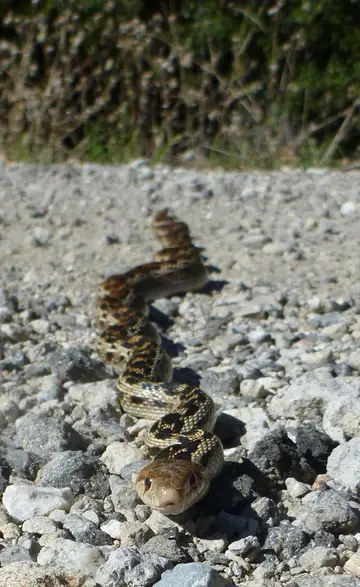
Gophersnake
Photo: National Park Service from USA · Public domain · Wikimedia Commons

Gophersnake

Pituophis catenifer

Non-venomous per IDNR

Size
Usually 3 to 6 feet; Arizona's longest snake, up to 92 inches (AZGFD); Missouri record 105 inches
How to recognize it
  • No rattle: tail tapers to a point
  • Round pupils; keeled back scales (separates it from the similar glossy snake)
  • Head somewhat triangular, more so when agitated (so head shape alone is not a safe test)
What the sources say

Venom: “Family: Colubridae - … All of the colubrid snakes in Illinois lay eggs and are harmless to humans.” (IDNR)

Full Gophersnake guide

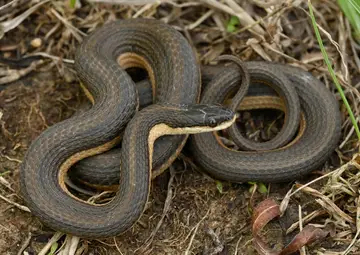
Graham’s Crayfish Snake
Photo: Chad Wallis · CC BY 4.0 · Wikimedia Commons

Graham’s Crayfish Snake

Regina grahamii

Non-venomous per IDNR

What the sources say

Venom: “Family: Natricidae - … They are harmless to humans.” (IDNR)

Habitat: The still-water, prairie equivalent of the queen snake, it lives in and along banks of soft-bottomed, heavily vegetated lakes, ponds, sluggish streams, sloughs, and roadside ditches. (Illinois Natural History Survey (INHS), Prairie Research Institute, University of Illinois Urbana-Champaign)

Gray Ratsnake
Photo: Will Brown · CC BY 2.0 · Wikimedia Commons

Gray Ratsnake

Pantherophis spiloides

Non-venomous per IDNR

What the sources say

Venom: “Family: Colubridae - … All of the colubrid snakes in Illinois lay eggs and are harmless to humans.” (IDNR)

Habitat: Variety of forest, shrub, and edge habitats. Common around farm buildings and abandoned houses. (Illinois Natural History Survey (INHS), Prairie Research Institute, University of Illinois Urbana-Champaign)

Great Plains Ratsnake
Photo: Peter Paplanus · CC BY 2.0 · Wikimedia Commons

Great Plains Ratsnake

Pantherophis emoryi

Non-venomous per IDNR

Conservation
Illinois endangered (Illinois E&T checklist, effective Oct 31, 2025: "Great Plains Ratsnake Pantherophis emoryi")
What the sources say

Venom: “Family: Colubridae - … All of the colubrid snakes in Illinois lay eggs and are harmless to humans.” (IDNR)

Habitat: Rocky, wooded hillsides, hill prairies, bluffs, and adjacent brushy fields. (Illinois Natural History Survey (INHS), Prairie Research Institute, University of Illinois Urbana-Champaign)

Kirtland’s Snake
Photo: Peter Paplanus from St. Louis, Missouri · CC BY 4.0 · Wikimedia Commons

Kirtland’s Snake

Clonophis kirtlandii

Non-venomous per IDNR

Conservation
Illinois threatened (Illinois E&T checklist, effective Oct 31, 2025: "Kirtland's Snake Clonophis kirtlandii")
What the sources say

Venom: “Family: Natricidae - … They are harmless to humans.” (IDNR)

Habitat: Prairie wetlands, wet meadows, and grassy edges of creeks, ditches, and ponds, usually in association with crayfish burrows. Has been found in damp habitat remnants in vacant lots of urban settings. (Illinois Natural History Survey (INHS), Prairie Research Institute, University of Illinois Urbana-Champaign)

Lined Snake
Photo: Peter Paplanus from St. Louis, Missouri · CC BY 2.0 · Wikimedia Commons

Lined Snake

Tropidoclonion lineatum

Non-venomous per IDNR

Conservation
Illinois threatened (Illinois E&T checklist, effective Oct 31, 2025: "Lined Snake Tropidoclonion lineatum")
What the sources say

Venom: “Family: Natricidae - … They are harmless to humans.” (IDNR)

Habitat: Grasslands and urban lots in former prairie, where it is found under rocks, logs, leaves, boards, and other debris. (Illinois Natural History Survey (INHS), Prairie Research Institute, University of Illinois Urbana-Champaign)

Milksnake
Photo: Tom Norton · CC BY 4.0 · iNaturalist

Milksnake

Lampropeltis triangulum

Non-venomous per IDNR

Size
Eastern milksnake 24 to 52 inches (Alabama); TN gives 24 to 36 inches for eastern and 21 to 28 for red milksnake.
How to recognize it
  • Eastern milksnake: black-and-white checkerboard belly (Ohio). Western milksnake in Louisiana: underside dull white with scattered black marks.
  • Eastern milksnake: a light Y- or V-shaped mark is usually present on the nape
  • Smooth, shiny scales and round pupils
32 records by month.
What the sources say

Venom: “Family: Colubridae - … All of the colubrid snakes in Illinois lay eggs and are harmless to humans.” (IDNR)

Habitat: A variety of habitats from rocky, wooded hillsides and glades to old fields and wetlands. (Illinois Natural History Survey (INHS), Prairie Research Institute, University of Illinois Urbana-Champaign)

Full Milksnake guide

Mississippi Green Watersnake
Photo: Stanton · CC BY-SA 4.0 · Wikimedia Commons · resized

Mississippi Green Watersnake

Nerodia cyclopion

Non-venomous per IDNR

Conservation
Illinois threatened (Illinois E&T checklist, effective Oct 31, 2025: "Mississippi Green Watersnake Nerodia cyclopion")
What the sources say

Venom: “Family: Natricidae - … They are harmless to humans.” (IDNR)

Habitat: Quiet backwater sloughs and cypress-tupelo swamps of extreme southwestern counties. (Illinois Natural History Survey (INHS), Prairie Research Institute, University of Illinois Urbana-Champaign)

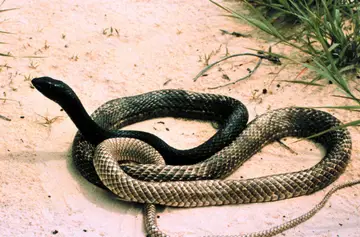
North American Racer
Photo: Everglades NPS from Homestead, Florida, United States · Public domain · Wikimedia Commons

North American Racer

Coluber constrictor

Non-venomous per IDNR

Size
Most adults about 3 to 5 ft. Sources range from 20 to 56 inches (Florida Museum) to 34 to 77 inches (New Jersey); Alabama says some exceed 6 ft.
How to recognize it
  • Smooth scales
  • Long and slender with large eyes
  • White chin
55 records by month.
What the sources say

Venom: “Family: Colubridae - … All of the colubrid snakes in Illinois lay eggs and are harmless to humans.” (IDNR)

Habitat: A variety of habitats including forests, open areas, and edges of forests near open fields. (Illinois Natural History Survey (INHS), Prairie Research Institute, University of Illinois Urbana-Champaign)

Full North American Racer guide

Plain-bellied Watersnake
Photo: Peter Paplanus · CC BY 2.0 · Wikimedia Commons

Plain-bellied Watersnake

Nerodia erythrogaster

Non-venomous per IDNR

53 records by month.
What the sources say

Venom: “Family: Natricidae - … They are harmless to humans.” (IDNR)

Habitat: Backwater sloughs, cypress-tupelo swamps, and lowland lakes and ponds with abundant vegetation and muddy bottoms. Often seen in nearby forest. (Illinois Natural History Survey (INHS), Prairie Research Institute, University of Illinois Urbana-Champaign)

Plains Gartersnake
Photo: Photo Credit: Krista Lundgren/USFWS USFWS Mountain-Prairie · Public domain · Wikimedia Commons

Plains Gartersnake

Thamnophis radix

Non-venomous per IDNR

What the sources say

Venom: “Family: Natricidae - … They are harmless to humans.” (IDNR)

Habitat: Former black-soil prairies, cultivated fields, pastures, wet meadows and marshes, and vacant lots. (Illinois Natural History Survey (INHS), Prairie Research Institute, University of Illinois Urbana-Champaign)

Prairie Kingsnake
Photo: Peter Paplanus · CC BY 2.0 · Wikimedia Commons

Prairie Kingsnake

Lampropeltis calligaster

Non-venomous per IDNR

What the sources say

Venom: “Family: Colubridae - … All of the colubrid snakes in Illinois lay eggs and are harmless to humans.” (IDNR)

Habitat: Grasslands from high-quality remnant prairie to degraded brushy fields. Less common in heavily farmed black-soil prairie. (Illinois Natural History Survey (INHS), Prairie Research Institute, University of Illinois Urbana-Champaign)

Queensnake
Photo: Rstanton13 · CC BY-SA 4.0 · Wikimedia Commons · resized

Queensnake

Regina septemvittata

Non-venomous per IDNR

What the sources say

Venom: “Family: Natricidae - … They are harmless to humans.” (IDNR)

Habitat: In and along banks of relatively unpolluted, rocky woodland streams where crayfish are abundant. (Illinois Natural History Survey (INHS), Prairie Research Institute, University of Illinois Urbana-Champaign)

Red-bellied Mudsnake
Photo: Annika Lindqvist · CC BY 4.0 · iNaturalist

Red-bellied Mudsnake

Farancia abacura

Non-venomous per IDNR

What the sources say

Venom: “Family: Dipsadidae - The members of this family are generally small snakes that have teeth in the back of the jaw that are used to transfer venom into their prey. They lay eggs and are harmless to humans.” (IDNR)

Habitat: Shallow ponds, sloughs, and swamps containing rotting logs in the Coastal Plain of extreme southern counties. Often crosses roads on rainy nights. (Illinois Natural History Survey (INHS), Prairie Research Institute, University of Illinois Urbana-Champaign)

Red-bellied Snake
Photo: Rstanton13 · CC BY-SA 4.0 · Wikimedia Commons · resized

Red-bellied Snake

Storeria occipitomaculata

Non-venomous per IDNR

Size
Usually 8 to 10 inches; state figures run from about 4 to 16 inches, with a Florida record of 16.6 inches.
How to recognize it
  • Plain, unmarked red or orange belly.
  • Three light spots just behind the head, which may fuse into a collar.
  • Keeled (ridged) scales in 15 rows at midbody and round pupils.
What the sources say

Venom: “Family: Natricidae - … They are harmless to humans.” (IDNR)

Habitat: Forests and moist woods, occasionally in pastures, bogs, and wet meadows, even in predominantly prairie counties. (Illinois Natural History Survey (INHS), Prairie Research Institute, University of Illinois Urbana-Champaign)

Full Red-bellied Snake guide

Ring-necked Snake
Photo: Peter Paplanus from St. Louis, Missouri · CC BY 2.0 · Wikimedia Commons

Ring-necked Snake

Diadophis punctatus

Non-venomous per IDNR

Size
Usually 8 to 15 inches long; Alabama reports up to about 18 inches, rarely 24. AZGFD gives a maximum of 34 inches for Arizona animals.
How to recognize it
  • A yellow, cream or orange ring around the neck; it may be incomplete, and some Lower Florida Keys and western Arizona snakes lack it.
  • Bright yellow to orange or red belly, often with a row of black half-moon spots; the underside of the tail is often red.
  • Smooth, shiny scales and a small head only slightly wider than the neck.
33 records by month.
What the sources say

Venom: “Family: Dipsadidae - The members of this family are generally small snakes that have teeth in the back of the jaw that are used to transfer venom into their prey. They lay eggs and are harmless to humans.” (IDNR)

Habitat: Hill prairies, bluffs, and open forests. (Illinois Natural History Survey (INHS), Prairie Research Institute, University of Illinois Urbana-Champaign)

Full Ring-necked Snake guide

Rough Greensnake
Photo: Joshua Liverman · CC BY 4.0 · iNaturalist

Rough Greensnake

Opheodrys aestivus

Non-venomous per IDNR

Size
Most adults are 14 to 33 inches long (Florida Museum), with a record of 46 inches. Maryland, Missouri, Tennessee and Arkansas give 22 to 32 inches. The tail is long and thin, about a third or more of the total length.
How to recognize it
  • Keeled (ridged) scales in 17 rows, which feel rough; the smooth green snake has smooth scales.
  • Extremely long, thin tail and round pupils.
  • Large eyes.
38 records by month.
What the sources say

Venom: “Family: Colubridae - … All of the colubrid snakes in Illinois lay eggs and are harmless to humans.” (IDNR)

Habitat: Inhabitants of small trees, bushes, and vines, especially near lakes and streams along forest edges. (Illinois Natural History Survey (INHS), Prairie Research Institute, University of Illinois Urbana-Champaign)

Full Rough Greensnake guide

Scarletsnake
Photo: Stanton · CC BY-SA 4.0 · Wikimedia Commons · resized

Scarletsnake

Cemophora coccinea

Non-venomous per IDNR

What the sources say

Venom: “Family: Colubridae - … All of the colubrid snakes in Illinois lay eggs and are harmless to humans.” (IDNR)

Habitat: Mixed woodlands on rocky, sandy soils. (Illinois Natural History Survey (INHS), Prairie Research Institute, University of Illinois Urbana-Champaign)

Smooth Earthsnake
Photo: Stanton · CC BY-SA 4.0 · Wikimedia Commons · resized

Smooth Earthsnake

Virginia valeriae

Non-venomous per IDNR

What the sources say

Venom: “Family: Natricidae - … They are harmless to humans.” (IDNR)

Habitat: Rocky, wooded hillsides. (Illinois Natural History Survey (INHS), Prairie Research Institute, University of Illinois Urbana-Champaign)

Smooth Greensnake
Photo: User:Rstanton13 · CC BY-SA 4.0 · Wikimedia Commons · resized

Smooth Greensnake

Opheodrys vernalis

Non-venomous per IDNR

What the sources say

Venom: “Family: Colubridae - … All of the colubrid snakes in Illinois lay eggs and are harmless to humans.” (IDNR)

Habitat: Moist prairie remnants, savannas, bogs, marshes, wet meadows, old fields, and vacant lots. (Illinois Natural History Survey (INHS), Prairie Research Institute, University of Illinois Urbana-Champaign)

No confirmed photo of Southern Watersnake

Southern Watersnake

Nerodia fasciata

Non-venomous per Illinois Poison Center

What the sources say

Venom: “Of the 40 snakes in Illinois, only four venomous snakes are native to the state:” (Illinois Poison Center)

Habitat: Quiet backwaters and cypress swamps in extreme southwestern Illinois. (Illinois Natural History Survey (INHS), Prairie Research Institute, University of Illinois Urbana-Champaign)

Western Foxsnake
Photo: Jonathan Bayer · CC BY 4.0 · iNaturalist

Western Foxsnake

Pantherophis ramspotti

Non-venomous per IDNR

What the sources say

Venom: “Family: Colubridae - … All of the colubrid snakes in Illinois lay eggs and are harmless to humans.” (IDNR)

Western Hog-nosed Snake
Photo: Dean Hester · CC BY 4.0 · iNaturalist

Western Hog-nosed Snake

Heterodon nasicus

Non-venomous per IDNR

Conservation
Illinois threatened (Illinois E&T checklist, effective Oct 31, 2025: "Plains Hog-nosed Snake Heterodon nasicus")
What the sources say

Venom: “Family: Dipsadidae - The members of this family are generally small snakes that have teeth in the back of the jaw that are used to transfer venom into their prey. They lay eggs and are harmless to humans.” (IDNR)

Habitat: Sand prairies, savannas, and adjacent woodlots in well-drained soil. (Illinois Natural History Survey (INHS), Prairie Research Institute, University of Illinois Urbana-Champaign)

Western Ribbonsnake
Photo: Sam Kieschnick · CC BY 4.0 · iNaturalist

Western Ribbonsnake

Thamnophis proximus

Non-venomous per IDNR

What the sources say

Venom: “Family: Natricidae - … They are harmless to humans.” (IDNR)

Habitat: Border vegetation around permanent bodies of water (swamps, marshes, ponds, rivers, ditches) and along bases of nearby rock outcrops where some individuals hibernate. Climbs onto piles of plants and low bushes. (Illinois Natural History Survey (INHS), Prairie Research Institute, University of Illinois Urbana-Champaign)

Western Wormsnake
Photo: Peter Paplanus · CC BY 2.0 · Wikimedia Commons

Western Wormsnake

Carphophis vermis

Non-venomous per IDNR

What the sources say

Venom: “Family: Dipsadidae - The members of this family are generally small snakes that have teeth in the back of the jaw that are used to transfer venom into their prey. They lay eggs and are harmless to humans.” (IDNR)

Snakes people confuse

Black Racer or Cottonmouth?

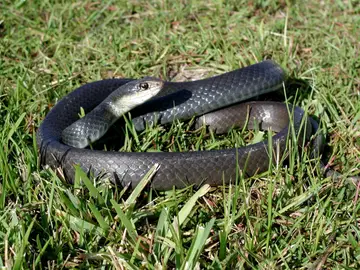
Black Racer
Photo: Everglades NPS from Homestead, Florida, United States · Public domain · Wikimedia Commons

Black Racer Non-venomous

Cottonmouth
Photo: Geoff Gallice from Gainesville · CC BY 2.0 · Wikimedia Commons

Cottonmouth Venomous

NPS says black racers can resemble the venomous water moccasin and advises leaving alone any snake you cannot identify. It gives no safe field mark, and none is offered here.

Black Racer or Timber rattlesnake?

Black Racer
Photo: Everglades NPS from Homestead, Florida, United States · Public domain · Wikimedia Commons

Black Racer Non-venomous

Timber rattlesnake
Photo: NPS Photo · Public domain · Wikimedia Commons

Timber rattlesnake Venomous

NH Fish and Game: the rattlesnake has a blunt rattle, is thicker, and has keeled scales and a triangular head.

Black Racer or Gray or eastern ratsnake?

Black Racer
Photo: Everglades NPS from Homestead, Florida, United States · Public domain · Wikimedia Commons

Black Racer Non-venomous

Gray or eastern ratsnake
Photo: Will Brown · CC BY 2.0 · Wikimedia Commons

Gray or eastern ratsnake Non-venomous

Ratsnakes have keeled scales and a loaf-of-bread body shape; young have distinct dark blotches on the tail.

Black Racer or Eastern coachwhip (black variant)?

Black Racer
Photo: Everglades NPS from Homestead, Florida, United States · Public domain · Wikimedia Commons

Black Racer Non-venomous

Eastern coachwhip (black variant)
Photo: NOAA · Public domain · Wikimedia Commons

Eastern coachwhip (black variant) Non-venomous

Distinctly lighter or reddish toward the rear of the body.

Black Racer or Northern water snake?

Black Racer
Photo: Everglades NPS from Homestead, Florida, United States · Public domain · Wikimedia Commons

Black Racer Non-venomous

Northern water snake
Photo: U.S. Fish and Wildlife Service - Midwest Region · Public domain · Wikimedia Commons

Northern water snake Non-venomous

NH lists it as commonly confused; it gives no separating feature.

Eastern Kingsnake or Florida kingsnake?

Eastern Kingsnake
Photo: Matthew Lumsden · CC BY 4.0 · iNaturalist

Eastern Kingsnake Non-venomous

No confirmed photo of Florida kingsnake

Florida kingsnake Non-venomous

More than 34 light crossbands, lightened scales between the bands, a weaker chain pattern on the sides, and usually 23 scale rows at midbody.

Photos show typical adults; individuals vary. Never get close to compare.

When snakes are active in Illinois

Records of snakes in Illinois peak in April to June and October. They show when people record snakes, not how many there are (about month bars).

1,529 records of snakes in Illinois by month (GBIF, CC0 and CC BY records).

If you are bitten or stung

Call 911 or Poison Help at 1-800-222-1222 right away. Poison Help connects you to your local poison center, any time of day.

Official advice from Illinois Poison Center, IDNR and University of Illinois Extension:

  • Snakebite, spider bite or sting: call 911 or Poison Help at 1-800-222-1222. Illinois Poison Center
  • Do not try to move a snake, even one that seems dead; even freshly killed snakes can bite. Illinois Poison Center
  • Where venomous snakes may live: wear leather boots, do not reach under or step over rocks or logs, look around before you sit. IDNR
  • Do not try to kill or collect a snake that has bitten someone. University of Illinois Extension

How to report

Report mountain lion, black bear, gray wolf, feral swine, armadillo (north-central/northern counties) and nutria sightings to IDNR through Wildlife Illinois (wildlifeillinois.org/report-sightings/). Report spotted lanternfly with photos to [email protected]. Wildlife Illinois, website authorized by IDNR

Common questions

What official sources say

Are there rattlesnakes in Illinois?

Yes. IDNR lists the timber rattlesnake (state threatened) and eastern massasauga (state endangered, federally threatened) among the four venomous snakes. IDNR

“Four species of Ililnois snakes, the eastern copperhead (Agkistrodon contortrix), the northern cottonmouth (Agkistrodon piscivorus), the timber rattlesnake (Crotalus horridus) and the eastern massasauga (Sistrurus catenatus) are venomous.”

About this list

The species list comes from Wild About Illinois Snakes! - Gallery by Family and Species (IDNR), cross-checked with the INHS "Illinois Species" list (Field Guide to Amphibians and Reptiles of Illinois) (Illinois Department of Natural Resources (IDNR), undated page; as retrieved 2026-11-03; conservation text "as of 2020"). 2 more entries come from other official sources named on each card.

Venom labels come only from official sources and link to them; "Not stated" never means harmless. How labels work.

Want a paper copy? Print the Illinois snakes ID chart.

Sources

  1. IDNR Mission Statement. Illinois Department of Natural Resources (IDNR). undated page; checked November 3, 2026.
  2. Wild About Illinois Snakes! (species gallery by family). Illinois Department of Natural Resources (IDNR). undated page; checked November 3, 2026.
    Quoted passages (8)
    “Thirty-nine species of snakes inhabit Illinois”
    “Family: Colubridae - … All of the colubrid snakes in Illinois lay eggs and are harmless to humans.”
    “Four species of Ililnois snakes, the eastern copperhead (Agkistrodon contortrix), the northern cottonmouth (Agkistrodon piscivorus), the timber rattlesnake (Crotalus horridus) and the eastern massasauga (Sistrurus catenatus) are venomous.”
    “While venomous snakes are not aggressive and tend to bite people only when stepped on, picked up, or cornered, their bite is a serious matter.”
    “Family: Dipsadidae - The members of this family are generally small snakes that have teeth in the back of the jaw that are used to transfer venom into their prey. They lay eggs and are harmless to humans.”
    “Family: Natricidae - … They are harmless to humans.”
    “These snakes should be avoided and precautions taken (wear leather boots, do not reach under rocks or logs, do not step over rocks or logs, look around before you sit) if you are entering an area possibly inhabited by venomous snakes.”
    “Illinois snake species hibernate during the cold winter months, becoming active in spring as temperatures and day length increase. … They are generally active during the day, but they can become nocturnal when summer temperatures rise.”
  3. Scarletsnake (Field Guide to Amphibians and Reptiles of Illinois). Illinois Natural History Survey (INHS), Prairie Research Institute, University of Illinois Urbana-Champaign. undated page; checked November 3, 2026.
  4. North American Racer (Field Guide to Amphibians and Reptiles of Illinois). Illinois Natural History Survey (INHS), Prairie Research Institute, University of Illinois Urbana-Champaign. undated page; checked November 3, 2026.
  5. Prairie Kingsnake (Field Guide to Amphibians and Reptiles of Illinois). Illinois Natural History Survey (INHS), Prairie Research Institute, University of Illinois Urbana-Champaign. undated page; checked November 3, 2026.
  6. Eastern Kingsnake (Field Guide to Amphibians and Reptiles of Illinois). Illinois Natural History Survey (INHS), Prairie Research Institute, University of Illinois Urbana-Champaign. undated page; checked November 3, 2026.
  7. Eastern Milksnake (Field Guide to Amphibians and Reptiles of Illinois). Illinois Natural History Survey (INHS), Prairie Research Institute, University of Illinois Urbana-Champaign. undated page; checked November 3, 2026.
  8. Rough Greensnake (Field Guide to Amphibians and Reptiles of Illinois). Illinois Natural History Survey (INHS), Prairie Research Institute, University of Illinois Urbana-Champaign. undated page; checked November 3, 2026.
  9. Smooth Greensnake (Field Guide to Amphibians and Reptiles of Illinois). Illinois Natural History Survey (INHS), Prairie Research Institute, University of Illinois Urbana-Champaign. undated page; checked November 3, 2026.
  10. Great Plains Ratsnake (Field Guide to Amphibians and Reptiles of Illinois). Illinois Natural History Survey (INHS), Prairie Research Institute, University of Illinois Urbana-Champaign. undated page; checked November 3, 2026.
  11. Gray Ratsnake (Field Guide to Amphibians and Reptiles of Illinois). Illinois Natural History Survey (INHS), Prairie Research Institute, University of Illinois Urbana-Champaign. undated page; checked November 3, 2026.
  12. Eastern Foxsnake (Field Guide to Amphibians and Reptiles of Illinois). Illinois Natural History Survey (INHS), Prairie Research Institute, University of Illinois Urbana-Champaign. undated page; checked November 3, 2026.
  13. Flat-headed Snake (Field Guide to Amphibians and Reptiles of Illinois). Illinois Natural History Survey (INHS), Prairie Research Institute, University of Illinois Urbana-Champaign. undated page; checked November 3, 2026.
  14. Eastern Copperhead (Field Guide to Amphibians and Reptiles of Illinois). Illinois Natural History Survey (INHS), Prairie Research Institute, University of Illinois Urbana-Champaign. undated page; checked November 3, 2026.
    Quoted passages (1)
    “This shy snake is active April through October.”
  15. Northern Cottonmouth (Field Guide to Amphibians and Reptiles of Illinois). Illinois Natural History Survey (INHS), Prairie Research Institute, University of Illinois Urbana-Champaign. undated page; checked November 3, 2026.
  16. Timber Rattlesnake (Field Guide to Amphibians and Reptiles of Illinois). Illinois Natural History Survey (INHS), Prairie Research Institute, University of Illinois Urbana-Champaign. undated page; checked November 3, 2026.
  17. Eastern Massasauga (Field Guide to Amphibians and Reptiles of Illinois). Illinois Natural History Survey (INHS), Prairie Research Institute, University of Illinois Urbana-Champaign. undated page; checked November 3, 2026.
    Quoted passages (2)
    “The timber rattlesnake, Crotalus horridus, has dorsal blotches that are usually uniform in width across the back (not wider at the edges, or ‘bow tie’ shaped as in the Eastern Massasauga) and very narrow, sometimes approaching a chevron.”
    “The fox snake, Pantherophis vulpinus, has rounder dorsal blotches (again, not ‘bow tie’ shaped) and only one row of smaller blotches on each side.”
  18. Common Wormsnake (Field Guide to Amphibians and Reptiles of Illinois). Illinois Natural History Survey (INHS), Prairie Research Institute, University of Illinois Urbana-Champaign. undated page; checked November 3, 2026.
  19. Ring-Necked Snake (Field Guide to Amphibians and Reptiles of Illinois). Illinois Natural History Survey (INHS), Prairie Research Institute, University of Illinois Urbana-Champaign. undated page; checked November 3, 2026.
  20. Red-Bellied Mudsnake (Field Guide to Amphibians and Reptiles of Illinois). Illinois Natural History Survey (INHS), Prairie Research Institute, University of Illinois Urbana-Champaign. undated page; checked November 3, 2026.
  21. Plains Hog-nosed Snake (Field Guide to Amphibians and Reptiles of Illinois). Illinois Natural History Survey (INHS), Prairie Research Institute, University of Illinois Urbana-Champaign. undated page; checked November 3, 2026.
  22. Eastern Hog-nosed Snake (Field Guide to Amphibians and Reptiles of Illinois). Illinois Natural History Survey (INHS), Prairie Research Institute, University of Illinois Urbana-Champaign. undated page; checked November 3, 2026.
  23. Kirtland's Snake (Field Guide to Amphibians and Reptiles of Illinois). Illinois Natural History Survey (INHS), Prairie Research Institute, University of Illinois Urbana-Champaign. undated page; checked November 3, 2026.
  24. Mississippi Green Watersnake (Field Guide to Amphibians and Reptiles of Illinois). Illinois Natural History Survey (INHS), Prairie Research Institute, University of Illinois Urbana-Champaign. undated page; checked November 3, 2026.
  25. Plain-bellied Watersnake (Field Guide to Amphibians and Reptiles of Illinois). Illinois Natural History Survey (INHS), Prairie Research Institute, University of Illinois Urbana-Champaign. undated page; checked November 3, 2026.
  26. Diamond-backed Watersnake (Field Guide to Amphibians and Reptiles of Illinois). Illinois Natural History Survey (INHS), Prairie Research Institute, University of Illinois Urbana-Champaign. undated page; checked November 3, 2026.
  27. Common Watersnake (Field Guide to Amphibians and Reptiles of Illinois). Illinois Natural History Survey (INHS), Prairie Research Institute, University of Illinois Urbana-Champaign. undated page; checked November 3, 2026.
  28. Graham's Crayfish Snake (Field Guide to Amphibians and Reptiles of Illinois). Illinois Natural History Survey (INHS), Prairie Research Institute, University of Illinois Urbana-Champaign. undated page; checked November 3, 2026.
  29. Queensnake (Field Guide to Amphibians and Reptiles of Illinois). Illinois Natural History Survey (INHS), Prairie Research Institute, University of Illinois Urbana-Champaign. undated page; checked November 3, 2026.
  30. Dekay's Brownsnake (Field Guide to Amphibians and Reptiles of Illinois). Illinois Natural History Survey (INHS), Prairie Research Institute, University of Illinois Urbana-Champaign. undated page; checked November 3, 2026.
  31. Red-bellied Snake (Field Guide to Amphibians and Reptiles of Illinois). Illinois Natural History Survey (INHS), Prairie Research Institute, University of Illinois Urbana-Champaign. undated page; checked November 3, 2026.
    Quoted passages (1)
    “Three light spots just behind the head; plain red belly”
  32. Western Ribbonsnake (Field Guide to Amphibians and Reptiles of Illinois). Illinois Natural History Survey (INHS), Prairie Research Institute, University of Illinois Urbana-Champaign. undated page; checked November 3, 2026.
  33. Plains Gartersnake (Field Guide to Amphibians and Reptiles of Illinois). Illinois Natural History Survey (INHS), Prairie Research Institute, University of Illinois Urbana-Champaign. undated page; checked November 3, 2026.
  34. Eastern Ribbonsnake (Field Guide to Amphibians and Reptiles of Illinois). Illinois Natural History Survey (INHS), Prairie Research Institute, University of Illinois Urbana-Champaign. undated page; checked November 3, 2026.
  35. Common Gartersnake (Field Guide to Amphibians and Reptiles of Illinois). Illinois Natural History Survey (INHS), Prairie Research Institute, University of Illinois Urbana-Champaign. undated page; checked November 3, 2026.
  36. Lined Snake (Field Guide to Amphibians and Reptiles of Illinois). Illinois Natural History Survey (INHS), Prairie Research Institute, University of Illinois Urbana-Champaign. undated page; checked November 3, 2026.
  37. Smooth Earthsnake (Field Guide to Amphibians and Reptiles of Illinois). Illinois Natural History Survey (INHS), Prairie Research Institute, University of Illinois Urbana-Champaign. undated page; checked November 3, 2026.
  38. Illinois Species (Field Guide to Amphibians and Reptiles of Illinois species list). Illinois Natural History Survey (INHS), Prairie Research Institute, University of Illinois Urbana-Champaign. undated page; checked November 3, 2026.
  39. Snakes (Health & Safety: Insects and Animals). Illinois Poison Center (Illinois Health and Hospital Association). undated page; checked November 3, 2026.
    Quoted passages (3)
    “Of the 40 snakes in Illinois, only four venomous snakes are native to the state:”
    “IPC is here to help. Calls to our helpline, 1-800-222-1222, are free and confidential. … Call 911 if someone is unconscious or is having difficulty breathing.”
    “Do not attempt to move a snake, even if you think it’s dead.”
  40. Coachwhip (Field Guide to Amphibians and Reptiles of Illinois). Illinois Natural History Survey (INHS), Prairie Research Institute, University of Illinois Urbana-Champaign. undated page; checked November 3, 2026.
    Quoted passages (1)
    “Key Characters: Tail scales patterned like a braided whip; back scales smooth; anal plate divided. Similar Species: North American Racer, Gray Ratsnake.”
  41. Southern Watersnake (Field Guide to Amphibians and Reptiles of Illinois). Illinois Natural History Survey (INHS), Prairie Research Institute, University of Illinois Urbana-Champaign. undated page; checked November 3, 2026.
  42. Dangerous Encounters (Wildlife). University of Illinois Extension. undated page; checked November 3, 2026.
    Quoted passages (1)
    “Do not attempt to kill or collect the snake, as you risk further aggravating it.”
  43. Report Large Carnivore Sightings (Wildlife Illinois). Wildlife Illinois, website authorized by IDNR (project W-147-T). undated page; checked November 3, 2026.
    Quoted passages (1)
    “If you have recently seen a mountain lion, black bear, or gray wolf in Illinois, please report the sighting below to the Illinois Department of Natural Resources.”
  44. GBIF.org occurrence records, human observations licensed CC0 1.0 or CC BY 4.0 only, accessed November 3, 2026. The datasets behind these counts are listed on our Sources page.