States Wildlife

Scorpions in Illinois: Species, Stings & Lookalikes

Last checked November 3, 2026 against official sources.

On this page
  1. Which scorpions can hurt you
  2. The one scorpion
  3. If you are bitten or stung
  4. What official sources say
  5. About this list
  6. Sources

Illinois Natural History Survey (INHS), Prairie Research Institute, University of Illinois Urbana-Champaign: Illinois is home to a single scorpion species*, but how it came to be here is something of a mystery.

This page lists 1 scorpion: all from Illinois Endangered Species Protection Board / IDNR's Checklist of Endangered and Threatened Animals and Plants of Illinois: Scorpions - Common Striped Scorpion. 1 is venomous by official accounts.

Not every species: no complete official list of Illinois scorpions exists, so this page covers the ones state and Extension sources name. How lists are built.

Which scorpions can hurt you

Official sources single out these scorpions in Illinois, in their own words:

The one scorpion on the list

Venomous species first, then A to Z. Do not handle them.

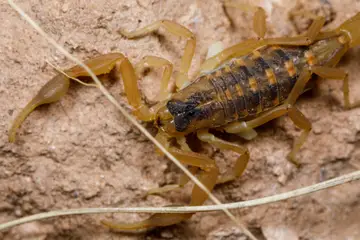
Common Striped Scorpion (striped bark scorpion)
Photo: Meghan Cassidy · CC BY-SA 4.0 · iNaturalist · resized

Common Striped Scorpion (striped bark scorpion)

Centruroides vittatus

Venomous per IDNR

Size
Usually about 2.5 inches. Sources range from 1 to 1.5 inches on average (Missouri Department of Conservation) to up to 3.5 inches (Oklahoma State).
How to recognize it
  • Slender pincers and a long, slender tail. The tail is longer on males than females.
  • Tail ends in a stinger, usually carried up and over the body.
  • Glows under ultraviolet light.
Where in Illinois
The striped bark scorpion may be found in southwestern Illinois. IDNR
Conservation
Illinois endangered (2025 E&T checklist). INHS (2018) said "listed by the state as threatened"; the 2025 checklist is the current official list.
What the sources say

Venom: “The venom produced by this species has a low toxicity.” (IDNR)

Habitat: It lives in places with crevices, like rocky areas and woods, and also in open, grassy areas. (IDNR)

Full Common Striped Scorpion (striped bark scorpion) guide

If you are bitten or stung

Call 911 or Poison Help at 1-800-222-1222 right away. Poison Help connects you to your local poison center, any time of day.

What official sources say

Are there scorpions in Illinois?

Yes. INHS: Illinois is home to a single scorpion species. IDNR: it may be found in southwestern Illinois and its venom has a low toxicity. It is on the 2025 Illinois endangered list. Illinois Natural History Survey (INHS), Prairie Research Institute, University of Illinois Urbana-Champaign

“Illinois is home to a single scorpion species”

About this list

The species list comes from Checklist of Endangered and Threatened Animals and Plants of Illinois (2025): Scorpions - Common Striped Scorpion (Illinois Endangered Species Protection Board / IDNR, E&T checklist effective October 31, 2025; INHS post March 12, 2018).

Venom labels come only from official sources and link to them; "Not stated" never means harmless. How labels work.

Sources

  1. IDNR Mission Statement. Illinois Department of Natural Resources (IDNR). undated page; checked November 3, 2026.
  2. Checklist of Endangered and Threatened Animals and Plants of Illinois (effective October 31, 2025). Illinois Endangered Species Protection Board / IDNR. Effective October 31, 2025; checked November 3, 2026.
  3. Studying the striped bark scorpion (INHS video post). Illinois Natural History Survey (INHS), Prairie Research Institute, University of Illinois Urbana-Champaign. Mar 12, 2018; checked November 3, 2026.
    Quoted passages (2)
    “Illinois is home to a single scorpion species*, but how it came to be here is something of a mystery.”
    “Illinois is home to a single scorpion species”
  4. Striped Bark Scorpion (Biodiversity of Illinois). Illinois Department of Natural Resources (IDNR). archived copy, captured March 3, 2023; checked November 3, 2026.
    Quoted passages (2)
    “The venom produced by this species has a low toxicity.”
    “The tail ends in a stinger that is usually carried up and over the body.”