This page lists 16 insects.
13 are venomous by official accounts. 6 are nonnative.
Not every species: no complete official list of Georgia insects exists, so this page covers the ones state and Extension sources name. How lists are built.
Which insects can hurt you
Official sources single out these insects in Georgia, in their own words:
Yellow jackets
Stinging. “Yellow jackets will vigorously pursue an intruder who threatens their nest and are generally considered the most dangerous of the social insects.” University of Georgia Cooperative Extension
Bees, wasps and hornets (colonial)
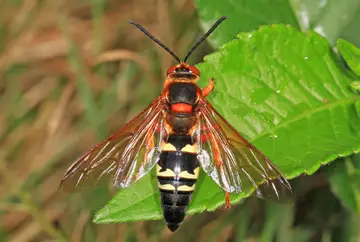
Can attack in large numbers, exposing victims to dangerous amounts of venom. “Bees and wasps that live in colonies can attack in large numbers, potentially exposing victims to dangerous amounts of venom.” University of Georgia Cooperative Extension
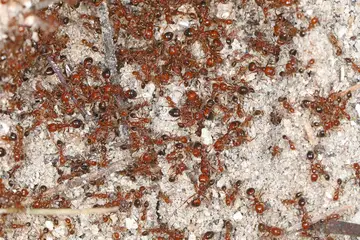
Stings can cause serious medical problems. “The two species of imported fire ants (red imported fire ant, Solenopsis invicta Buren, and black imported fire ant, Solenopsis richteri Forel) and their hybrid are nuisance insects whose stings can cause serious medical problems.” University of Georgia Cooperative Extension
Venom allergy (any stinging insect)
Anaphylactic shock in a few people. “A third type of reaction is called anaphylactic shock. In a few people, the immune system reacts severely and within minutes after receiving a sting they may develop: … in extreme cases, (e) unconsciousness or death.” University of Georgia Cooperative Extension
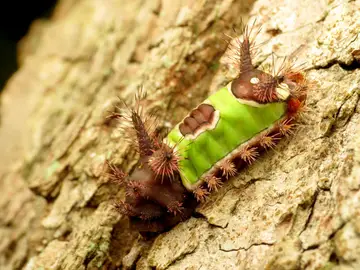
Venomous spines. “Contact with this caterpillar’s spines can be extremely painful and severe reactions are possible for sensitive individuals.” University of Georgia Cooperative Extension
Can carry the parasite that causes Chagas disease (spread through feces, not the bite). “Kissing bugs are not deadly and most of them are not infected with the parasite that causes Chagas disease … The Chagas disease parasite is transmitted only through the feces of specific kissing bugs.” University of Georgia CAES Field Report
All 16 insects
Venomous species first, then A to Z. Do not handle them.
Venom: “Bees, wasps, hornets, fire ants and scorpions that inject venom from the tip of their abdomen are sometimes considered beneficial because of their importance in pollination or because they prey on other pest insects.” (University of Georgia Cooperative Extension)
Venom: “Bees, wasps, hornets, fire ants and scorpions that inject venom from the tip of their abdomen are sometimes considered beneficial because of their importance in pollination or because they prey on other pest insects.” (University of Georgia Cooperative Extension)
Venom: “Bees, wasps, hornets, fire ants and scorpions that inject venom from the tip of their abdomen are sometimes considered beneficial because of their importance in pollination or because they prey on other pest insects.” (University of Georgia Cooperative Extension)
No confirmed photo of European hornet (giant hornet)
Venom: “Bees, wasps, hornets, fire ants and scorpions that inject venom from the tip of their abdomen are sometimes considered beneficial because of their importance in pollination or because they prey on other pest insects.” (University of Georgia Cooperative Extension)
Venom: “Bees, wasps, hornets, fire ants and scorpions that inject venom from the tip of their abdomen are sometimes considered beneficial because of their importance in pollination or because they prey on other pest insects.” (University of Georgia Cooperative Extension)
Venom: “Bees, wasps, hornets, fire ants and scorpions that inject venom from the tip of their abdomen are sometimes considered beneficial because of their importance in pollination or because they prey on other pest insects.” (University of Georgia Cooperative Extension)
“The two species of imported fire ants (red imported fire ant, Solenopsis invicta Buren, and black imported fire ant, Solenopsis richteri Forel) and their hybrid are nuisance insects whose stings can …” University of Georgia Cooperative Extension
JFMAMJJASOND
264 records by month.What the sources say
Venom: “As with wasps and hornets, fire ants inject venom from the tip of the abdomen.” (University of Georgia Cooperative Extension)
Venom: “Bees, wasps, hornets, fire ants and scorpions that inject venom from the tip of their abdomen are sometimes considered beneficial because of their importance in pollination or because they prey on other pest insects.” (University of Georgia Cooperative Extension)
“Yellow jackets will vigorously pursue an intruder who threatens their nest and are generally considered the most dangerous of the social insects.” University of Georgia Cooperative Extension
What the sources say
Venom: “Bees, wasps, hornets, fire ants and scorpions that inject venom from the tip of their abdomen are sometimes considered beneficial because of their importance in pollination or because they prey on other pest insects.” (University of Georgia Cooperative Extension)
No confirmed photo of Kissing bugs (group)
Kissing bugs (group)
Not stated
Venom
No official source we use states whether this animal is venomous. That does not mean it is harmless: do not handle it.
Records of insects in Georgia peak in May to September. They show when people record insects, not how many there are (about month bars).
JanFebMarAprMayJunJulAugSepOctNovDec
66,847 records of insects in Georgia by month (GBIF, CC0 and CC BY records).
Eastern diamondbacks are dormant underground over late fall and winter, emerging briefly on warm sunny days; regularly above ground again with spring warmth. Georgia DNR Wildlife Resources Division
Yes. UGA Extension says a large population of hybrid imported fire ants extends into parts of Georgia, and the Georgia Department of Agriculture administers the imported fire ant quarantine in the state. University of Georgia Cooperative Extension
“Another species, the black imported fire ant, Solenopsis richteri Forel, was also introduced, but the range of this species is limited to northeastern Mississippi, northwestern Alabama and southern Tennessee, with a large population of hybrids between S. richteri and S. invicta that extends into parts of Georgia (Figure 1).”
About this list
Venom labels come only from official sources and link to them; "Not stated" never means harmless. How labels work.
“The two species of imported fire ants (red imported fire ant, Solenopsis invicta Buren, and black imported fire ant, Solenopsis richteri Forel) and their hybrid are nuisance insects whose stings can cause serious medical problems.”
“The winged forms, or reproductives, live in the mound until their mating flight, which usually occurs in the late morning and afternoon soon after a rainy period. Mating flights are most common in spring and fall.”
“Fire ants from colonies close to homes and other buildings sometimes forage indoors for food and moisture, particularly during the hot, dry, summer months.”
“Another species, the black imported fire ant, Solenopsis richteri Forel, was also introduced, but the range of this species is limited to northeastern Mississippi, northwestern Alabama and southern Tennessee, with a large population of hybrids between S. richteri and S. invicta that extends into parts of Georgia (Figure 1).”
“As with wasps and hornets, fire ants inject venom from the tip of the abdomen.”
“Bees, wasps, hornets, fire ants and scorpions that inject venom from the tip of their abdomen are sometimes considered beneficial because of their importance in pollination or because they prey on other pest insects.”
“Yellow jackets will vigorously pursue an intruder who threatens their nest and are generally considered the most dangerous of the social insects.”
“Among these hairs are hollow spines with venom.”
“Stings on the hand can cause the entire arm to swell and become numb.”
“Venom-filled spines are located on fleshy ‘knobs’ on all sides of its body.”
“Contact with this caterpillar’s spines can be extremely painful and severe reactions are possible for sensitive individuals.”
“The caterpillars of some moths have sharp, hollow spines or hairs that contain venom.”
“Bees and wasps that live in colonies can attack in large numbers, potentially exposing victims to dangerous amounts of venom.”
“A third type of reaction is called anaphylactic shock. In a few people, the immune system reacts severely and within minutes after receiving a sting they may develop: … in extreme cases, (e) unconsciousness or death.”
“In the fall, when temperatures decline and food becomes scarce, the female wasps and hornets frequently enter homes for hibernation.”
Yellow-Legged Hornet. Georgia Department of Agriculture. HTTP Last-Modified 2026-11-02; checked November 3, 2026.Quoted passages (2)
“We urge the public to be cautious in the event they come across a suspected yellow-legged hornet. If you can safely take a photo of the suspected yellow-legged hornet, we encourage you to do so to assist us with identification.”
“From December to March, the queens enter a dormancy period. As spring arrives, queens awaken and start constructing small embryo nests, roughly the size of a tennis ball, where they lay eggs that will develop into worker hornets. From April to June, these embryo nests evolve into primary nests, which grow from the size of a softball to that of a watermelon. Between June and September, worker hornets focus on expanding secondary nests, which can reach sizes capable of accommodating up to 6,000 hornets.”
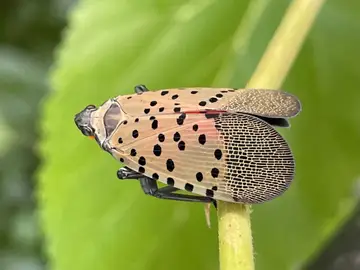
Spotted Lanternfly. Georgia Department of Agriculture. undated page; checked November 3, 2026.
“Kissing bugs are not deadly and most of them are not infected with the parasite that causes Chagas disease … The Chagas disease parasite is transmitted only through the feces of specific kissing bugs.”
“Most of these conflicts can be easily resolved or prevented by taking a few simple steps to eliminate attractants and haze unwanted wildlife from your yard or property.”
“Over the late fall and winter, eastern diamondbacks enter a dormancy period in their underground shelters. They may emerge briefly on warm sunny days, but are not seen above ground regularly until the warmth of spring.”