States Wildlife

Scorpions in Georgia: Species, Stings & Lookalikes

Last checked November 3, 2026 against official sources.

On this page
  1. All 2 scorpions
  2. Lookalikes
  3. When they are active
  4. If you are bitten or stung
  5. Common questions
  6. About this list
  7. Sources

UGA College of Agricultural and Environmental Sciences: At least two species, Gray said, are native to Georgia: the Southern devil (Vejovis carolinianus) and striped (Centruroides vittatus) scorpions.

This page lists 2 scorpions. 2 are venomous by official accounts.

Not every species: no complete official list of Georgia scorpions exists, so this page covers the ones state and Extension sources name. How lists are built.

All 2 scorpions

Venomous species first, then A to Z. Do not handle them.

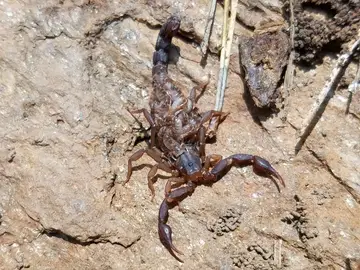
Southern devil scorpion
Photo: Leila Dasher · CC BY 4.0 · iNaturalist

Southern devil scorpion

Vaejovis carolinianus

Venomous per University of Georgia Cooperative Extension

84 records by month.
What the sources say

Venom: “Bees, wasps, hornets, fire ants and scorpions that inject venom from the tip of their abdomen are sometimes considered beneficial because of their importance in pollination or because they prey on other pest insects.” (University of Georgia Cooperative Extension)

Habitat: "Scorpions prefer to nest under rocks, tree bark, boards, garbage cans, and rubbish piles." (UGA College of Agricultural and Environmental Sciences)

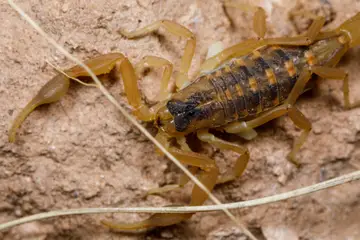
Striped scorpion
Photo: Meghan Cassidy · CC BY-SA 4.0 · iNaturalist · resized

Striped scorpion

Centruroides vittatus

Venomous per University of Georgia Cooperative Extension

Size
Usually about 2.5 inches. Sources range from 1 to 1.5 inches on average (Missouri Department of Conservation) to up to 3.5 inches (Oklahoma State).
How to recognize it
  • Slender pincers and a long, slender tail. The tail is longer on males than females.
  • Tail ends in a stinger, usually carried up and over the body.
  • Glows under ultraviolet light.
What the sources say

Venom: “Bees, wasps, hornets, fire ants and scorpions that inject venom from the tip of their abdomen are sometimes considered beneficial because of their importance in pollination or because they prey on other pest insects.” (University of Georgia Cooperative Extension)

Full Striped scorpion guide

Scorpions people confuse

Striped Bark Scorpion or Southern devil scorpion (southern unstriped scorpion)?

Striped Bark Scorpion
Photo: Meghan Cassidy · CC BY-SA 4.0 · iNaturalist · resized

Striped Bark Scorpion Venomous

Southern devil scorpion (southern unstriped scorpion)
Photo: Leila Dasher · CC BY 4.0 · iNaturalist

Southern devil scorpion (southern unstriped scorpion) Venomous

More uniformly brown and about 1 inch long when grown, with no stripes.

Photos show typical adults; individuals vary. Never get close to compare.

When scorpions are active in Georgia

Records of scorpions in Georgia peak in March to July. They show when people record scorpions, not how many there are (about month bars).

96 records of scorpions in Georgia by month (GBIF, CC0 and CC BY records).

If you are bitten or stung

Call 911 or Poison Help at 1-800-222-1222 right away. Poison Help connects you to your local poison center, any time of day.

Official advice from UGA College of Agricultural and Environmental Sciences:

Common questions

About this list

Venom labels come only from official sources and link to them; "Not stated" never means harmless. How labels work.

Sources

  1. Georgia DNR Wildlife Resources Division home page. Georgia DNR Wildlife Resources Division. undated page; checked November 3, 2026.
  2. Scorpions not as dangerous as they look. UGA College of Agricultural and Environmental Sciences (CAES Field Report/newswire). July 17, 2003; checked November 3, 2026.
    Quoted passages (3)
    “At least two species, Gray said, are native to Georgia: the Southern devil (Vejovis carolinianus) and striped (Centruroides vittatus) scorpions.”
    “Wear gloves when moving rocks or boards around the yard. Avoid putting your hands where your eyes can’t see. And be sure to wear shoes when walking outside at night.”
    “‘Scorpions are nocturnal,’ Gray said, ‘and hide under debris, including boards, rocks, tree bark and rubbish piles during the day.”
  3. Stinging and Biting Pests (Circular 782). University of Georgia Cooperative Extension. October 26, 2022; checked November 3, 2026.
    Quoted passages (1)
    “Bees, wasps, hornets, fire ants and scorpions that inject venom from the tip of their abdomen are sometimes considered beneficial because of their importance in pollination or because they prey on other pest insects.”
  4. GBIF.org occurrence records, human observations licensed CC0 1.0 or CC BY 4.0 only, accessed November 3, 2026. The datasets behind these counts are listed on our Sources page.