Invasive and nonnative animals in Georgia
Last checked November 3, 2026 against official sources.
On this page
- Argentine Black and White Tegus
- Osteopilus septentrionalis — Nonindigenous Aquatic Species fact sheet
- Feral Hog Management
- Aquatic Nuisance Species (ANS) in Georgia
- Cane Toad - Collections (Georgia)
- Greenhouse Frog - Collections (Georgia)
- Nile Monitor - Collections (Georgia)
- Burmese Python - Collections (Georgia)
- nutria - Collections (Georgia)
- giant applesnail - Collections (Georgia)
- green mussel - Collections (Georgia)
- Australian spotted jellyfish - Collections (Georgia)
- Indo-Pacific swimming crab - Collections (Georgia)
- Managing Joro Spiders in the Landscape (Circular 1289)
- Yellow-legged Hornet FAQ
- Spotted Lanternfly
- Managing Imported Fire Ants in Urban Areas (Bulletin 1191)
- USGS established records
- How to report
- Sources
32 nonnative animals are named on 17 official lists for Georgia: “Argentine Black and White Tegus” (Georgia DNR Wildlife Resources Division), “Osteopilus septentrionalis — Nonindigenous Aquatic Species fact sheet” (US Geological Survey), “Feral Hog Management” (Georgia DNR Wildlife Resources Division), “Aquatic Nuisance Species (ANS) in Georgia” (Georgia DNR Wildlife Resources Division), “Cane Toad - Collections (Georgia)” (USGS Nonindigenous Aquatic Species database), “Greenhouse Frog - Collections (Georgia)” (USGS Nonindigenous Aquatic Species database), “Nile Monitor - Collections (Georgia)” (USGS Nonindigenous Aquatic Species database), “Burmese Python - Collections (Georgia)” (USGS Nonindigenous Aquatic Species database), “nutria - Collections (Georgia)” (USGS Nonindigenous Aquatic Species database), “giant applesnail - Collections (Georgia)” (USGS Nonindigenous Aquatic Species database), “green mussel - Collections (Georgia)” (USGS Nonindigenous Aquatic Species database), “Australian spotted jellyfish - Collections (Georgia)” (USGS Nonindigenous Aquatic Species database), “Indo-Pacific swimming crab - Collections (Georgia)” (USGS Nonindigenous Aquatic Species database), “Managing Joro Spiders in the Landscape (Circular 1289)” (University of Georgia Cooperative Extension), “Yellow-legged Hornet FAQ” (Georgia Department of Agriculture), “Spotted Lanternfly” (Georgia Department of Agriculture) and “Managing Imported Fire Ants in Urban Areas (Bulletin 1191)” (University of Georgia Cooperative Extension).
The USGS Nonindigenous Aquatic Species database records an established population in Georgia for 3 nonnative animals in the groups this guide covers.
To report a sighting, see how to report.
Being on a list of nonnative species does not always mean an animal is harmful or established: each list below is described in its source's terms. A sighting of a listed animal is still worth reporting to the agency.
Argentine Black and White Tegus
Georgia DNR Wildlife Resources Division, undated page. 1 animal.
-
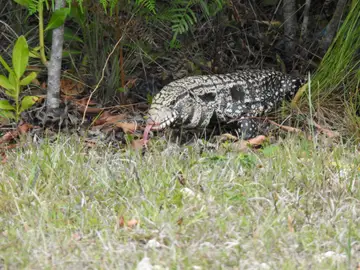
Photo: Andrew Durso · CC BY 4.0 · iNaturalist Argentine Black and White Tegu Salvator merianae
Toombs and Tattnall counties (only known wild population); occasional escapes elsewhere Georgia DNR Wildlife Resources Division
Osteopilus septentrionalis — Nonindigenous Aquatic Species fact sheet
U.S. Geological Survey, Revision Date 6/12/2024. 1 animal.
-
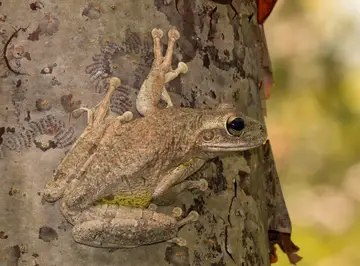
Photo: Charles J. Sharp · CC BY-SA 4.0 · Wikimedia Commons · resized Cuban Treefrog Osteopilus septentrionalis
Atlantic coast to Savannah US Geological Survey

Feral Hog Management
Georgia DNR Wildlife Resources Division, undated page. 1 animal.
-
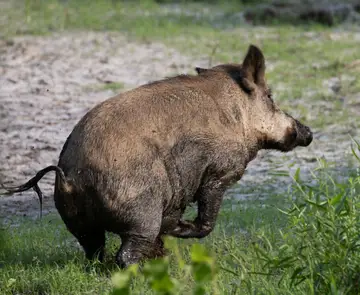
Photo: Cullen Hanks · CC BY 4.0 · iNaturalist Feral hog
Aquatic Nuisance Species (ANS) in Georgia
Georgia DNR Wildlife Resources Division, undated page. 16 animals.
-
Alabama Bass Micropterus henshalli
Lake Lanier and many other large waterbodies (introduced) Georgia DNR Wildlife Resources Division
-
Alewife Alosa pseudoharengus
Carters Lake, Lake Allatoona, Coosa and Savannah rivers Georgia DNR Wildlife Resources Division
-
Asian Swamp Eel Monopterus albus
Multiple locations; USGS NAS records in Fulton and Cobb counties (Chattahoochee River area) Georgia DNR Wildlife Resources Division
-
Asian Tiger Shrimp Penaeus monodon
Georgia coast Georgia DNR Wildlife Resources Division
-
Blue Catfish Ictalurus furcatus
Ocmulgee, Oconee, Altamaha, Satilla and other rivers (introduced); native only to the Coosa River Georgia DNR Wildlife Resources Division
-
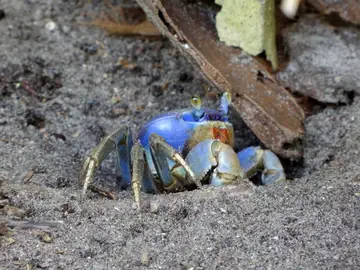
Photo: Lyndsey · CC BY 4.0 · iNaturalist Blue Land Crab Cardisoma guanhumi
Georgia coast Georgia DNR Wildlife Resources Division
-
Blueback Herring (inland introductions) Alosa aestivalis
Several inland waterbodies (native on the coast) Georgia DNR Wildlife Resources Division
-
Chinese Mystery Snail Cipangopaludina chinensis
Several waterbodies around the state Georgia DNR Wildlife Resources Division
-
Flathead Catfish Pylodictis olivaris
Altamaha River; Satilla River (introduced); native only to the Coosa River Georgia DNR Wildlife Resources Division
-
Island Apple Snail Pomacea insularum
-
Japanese Mystery Snail Cipangopaludina japonica
Several waterbodies around the state Georgia DNR Wildlife Resources Division
-
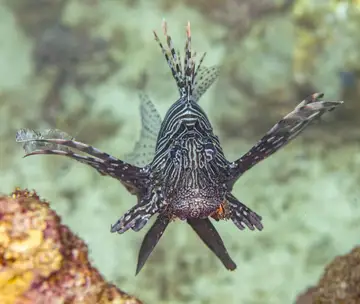
Photo: Diego Delso · CC BY-SA 4.0 · Wikimedia Commons · resized Lionfish Pterois miles
Offshore Georgia waters; USGS NAS records include Gray's Reef National Marine Sanctuary Georgia DNR Wildlife Resources Division
-
Northern Snakehead Channa argus
Gwinnett County (first confirmed 2019) Georgia DNR Wildlife Resources Division
-
Oriental Weather Loach Misgurnus anguillicaudatus
McNutt Creek near Athens (found November 2020) Georgia DNR Wildlife Resources Division
-
Spotted Bass Micropterus punctulatus
Various waterbodies Georgia DNR Wildlife Resources Division
-
Yellow Bass Morone mississippiensis
Coosa, Etowah and Oostanaula rivers, Rocky Mountain PFA, Carters Lake Georgia DNR Wildlife Resources Division

Cane Toad - Collections (Georgia)
USGS Nonindigenous Aquatic Species database, database queried November 3, 2026. 1 animal.
-
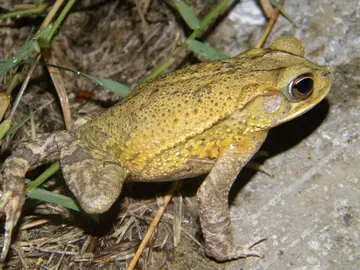
Photo: Maximilian Paradiz from Amsterdam, Netherlands · CC BY 2.0 · Wikimedia Commons Cane Toad Rhinella marina
USGS NAS: one record, Camden County, 2020 (status blank) USGS Nonindigenous Aquatic Species database

Greenhouse Frog - Collections (Georgia)
USGS Nonindigenous Aquatic Species database, database queried November 3, 2026. 1 animal.
-
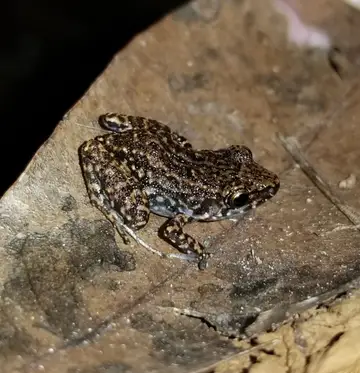
Photo: Rachel Crane · CC BY 4.0 · iNaturalist Greenhouse Frog Eleutherodactylus planirostris
USGS NAS records incl. Chatham (established), Glynn, Lowndes, Thomas, Bulloch, Decatur, Tift counties USGS Nonindigenous Aquatic Species database
Nile Monitor - Collections (Georgia)
USGS Nonindigenous Aquatic Species database, database queried November 3, 2026. 1 animal.
-
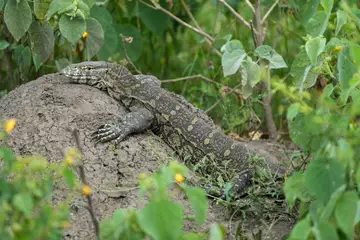
Photo: Giles Laurent · CC BY-SA 4.0 · Wikimedia Commons · resized Nile Monitor Varanus niloticus
USGS NAS: records in Cobb (2021), Fulton (2025), Taylor (2016) counties, status unknown USGS Nonindigenous Aquatic Species database

Burmese Python - Collections (Georgia)
USGS Nonindigenous Aquatic Species database, database queried November 3, 2026. 1 animal.
-
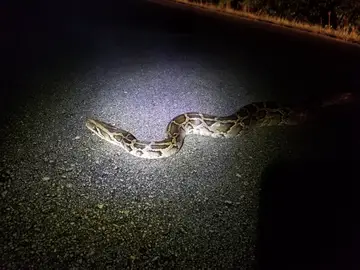
Photo: Court Harding · CC BY 4.0 · iNaturalist Burmese Python Python bivittatus
USGS NAS: one record, Charlton County, 2012, status unknown USGS Nonindigenous Aquatic Species database
nutria - Collections (Georgia)
USGS Nonindigenous Aquatic Species database, database queried November 3, 2026. 1 animal.
-
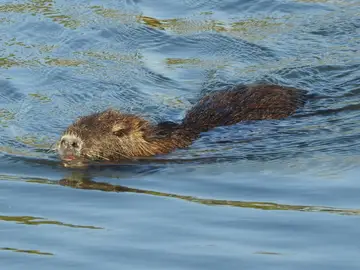
Photo: Sam Kieschnick · CC BY 4.0 · iNaturalist Nutria Myocastor coypus
USGS NAS records in Bibb, Crisp, Macon counties USGS Nonindigenous Aquatic Species database
giant applesnail - Collections (Georgia)
USGS Nonindigenous Aquatic Species database, database queried November 3, 2026. 1 animal.
-
Giant Applesnail Pomacea maculata
USGS NAS: many records, e.g., Bacon, Ben Hill, Brooks, Camden counties, many marked established USGS Nonindigenous Aquatic Species database
green mussel - Collections (Georgia)
USGS Nonindigenous Aquatic Species database, database queried November 3, 2026. 1 animal.
-
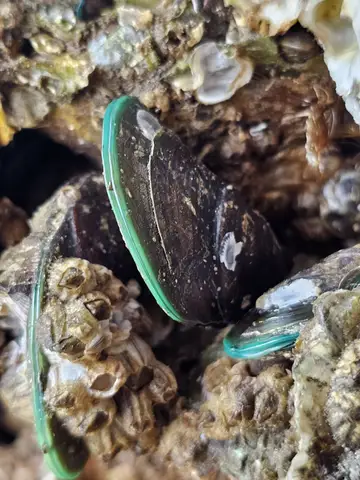
Photo: Marisa · CC BY 4.0 · iNaturalist Green Mussel Perna viridis
USGS NAS: Chatham, Glynn, McIntosh counties and offshore artificial reefs USGS Nonindigenous Aquatic Species database
Australian spotted jellyfish - Collections (Georgia)
USGS Nonindigenous Aquatic Species database, database queried November 3, 2026. 1 animal.
-
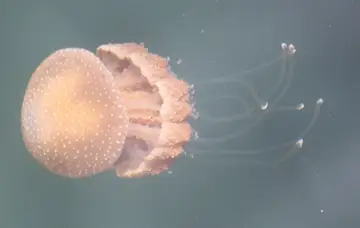
Photo: Millie Basden · CC BY 4.0 · iNaturalist Australian Spotted Jellyfish Phyllorhiza punctata
USGS NAS: one record, Glynn County, 2020 USGS Nonindigenous Aquatic Species database
Indo-Pacific swimming crab - Collections (Georgia)
USGS Nonindigenous Aquatic Species database, database queried November 3, 2026. 1 animal.
-
Indo-Pacific Swimming Crab Charybdis hellerii
USGS NAS: St. Simons Island, Glynn County, 2020 USGS Nonindigenous Aquatic Species database
Managing Joro Spiders in the Landscape (Circular 1289)
University of Georgia Cooperative Extension, August 27, 2026. 1 animal.
-
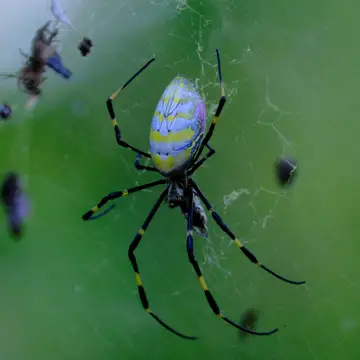
Photo: Amit Naik · CC BY 4.0 · iNaturalist Joro spider Trichonephila clavata
Northeast Georgia (Braselton/Hoschton along I-85), spreading University of Georgia Cooperative Extension
Yellow-legged Hornet FAQ
Georgia Department of Agriculture, undated page. 1 animal.
-
Yellow-legged hornet Vespa velutina
Chatham, Bryan, Effingham and Liberty counties Georgia Department of Agriculture
Spotted Lanternfly
Georgia Department of Agriculture, undated page. 1 animal.
-
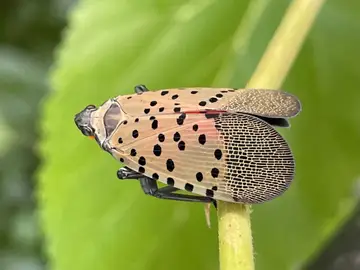
Photo: Isaac Caswell · CC0 1.0 · iNaturalist Spotted lanternfly Lycorma delicatula
Fulton County Georgia Department of Agriculture
Managing Imported Fire Ants in Urban Areas (Bulletin 1191)
University of Georgia Cooperative Extension, March 5, 2026. 1 animal.
-
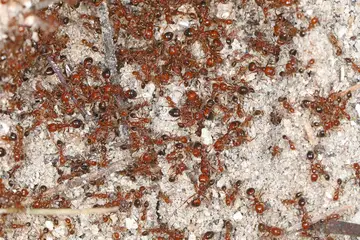
Photo: Judy Gallagher · CC BY 2.0 · Wikimedia Commons Red imported fire ant Solenopsis invicta
Parts of Georgia (hybrid population per source); Georgia quarantine map in source University of Georgia Cooperative Extension

Established in Georgia, per USGS records
The U.S. Geological Survey's Nonindigenous Aquatic Species (NAS) database tracks nonnative aquatic animals. These have at least one record with the status "established" in Georgia, which USGS defines as a population showing evidence of reproduction and overwinter survival.
| Animal | Group | First record | Latest record | Counties |
|---|---|---|---|---|
| Cuban Treefrog Osteopilus septentrionalis | Frogs and Toads | 2004 | 2025 | 22 |
| Greenhouse Frog Eleutherodactylus planirostris | Frogs and Toads | 1998 | 2024 | 7 |
| Lionfish Pterois volitans/miles | Sharks and Marine Life | 2001 | 2015 | 1 |
Source: U.S. Geological Survey. [2026]. Nonindigenous Aquatic Species Database. Gainesville, Florida. Accessed [11/3/2026]. "Native Transplant" animals are native elsewhere in the US but not in Georgia.
How to report a sighting in Georgia
Wildlife conflict advice: Georgia DNR 1-800-366-2661. Mountain lion sightings: regional WRD Game Management office (Region 1 706-295-6041; Region 2 770-535-5700; Region 3 706-595-4222; Region 4 229-426-5267; Region 5 229-430-4254; Region 6 912-262-3173), after hours 800-241-4113. Georgia DNR Wildlife Resources Division
Do not try to catch or handle the animal. A photo taken from a safe distance, the place and the date help the agency.
Sources
- Argentine Black and White Tegus. Georgia DNR Wildlife Resources Division. undated page; checked November 3, 2026.
Quoted passages (1)
“Growing up to 4 feet long and weighing 10 pounds or more, this lizard native to South America is an invasive species that threatens Georgia wildlife.”
- Osteopilus septentrionalis — Nonindigenous Aquatic Species fact sheet. U.S. Geological Survey. Revision Date 6/12/2024; checked November 3, 2026.
Quoted passages (1)
“In the United States, the Osteopilus septentrionalis is established throughout Florida in the peninsula and panhandle, as well as along the Atlantic coast to Savanah, Georgia”
- Aquatic Nuisance Species (ANS) in Georgia. Georgia DNR Wildlife Resources Division. undated page; checked November 3, 2026.
Quoted passages (15)
“Native to the Coosa and Tallapoosa rivers in Georgia, their popularity resulted in illegal introduction throughout many other large state waterbodies, including Lake Lanier in the early 1970's.”
“Native throughout much of the Atlantic coast north of Georgia, alewife (Alosa pseudoharengus) have been introduced in several inland waterbodies, including Lakes Carters and Allatoona, and the Coosa and Savannah Rivers.”
“Found in multiple locations in Georgia but native to Asia, India, and China, the Asian swamp eel (Monopterus albus) is not a true eel.”
“Native to Indo-Pacific, Asian, and Australian waters, Asian tiger shrimp (Penaeus monodon) are now found along the southeast and Gulf coasts of the United States, including Georgia.”
“One of the largest freshwater catfish species in North America, blue catfish (Ictalurus furcatus) are native only to the Coosa River in Georgia but have been illegally introduced into several rivers, including the Ocmulgee, Oconee, Altamaha and Satilla (to name a few).”
“Georgia DNR staff have recently been receiving reports of a new non-native marine crab being found along the Georgia coast.”
“An anadromous species native along much of the Atlantic coast, including Georgia, blueback herring (Alosa aestivalis) have been introduced in several inland waterbodies.”
“Chinese (Cipangopaludina chinensis) and Japanese (Cipangopaludina japonica) Mystery Snails both continue to be found in Georgia.”
“Native only to the Coosa River in Georgia, flathead catfish (Pylodictis olivaris) have decimated the popular redbreast sunfish and bullhead fisheries in the Altamaha River since their illegal introduction in the mid-1970s.”
“Island Apple Snails (Pomacea insularum) are originally native to South America.”
“Since its first sighting in the Atlantic off the Florida coast in 1985, the northern expansion of the lionfish (Pterois miles) population has created much concern for fishery managers.”
“In October 2019, the first confirmed northern snakehead in GA was captured and reported by an angler in Gwinnett County.”
“Oriental weather loach (Misgurnus anguillicaudatus), a common aquarium species native to Eurasia and north Africa that is sometimes used as bait but one that had never been reported in Georgia.”
“While the species is not native to most of Georgia, it has been introduced into various waterbodies in Georgia in recent years.”
“This smaller Morone species has been introduced into other locales in Georgia, including the Coosa, Etowah and Oostanaula rivers, Rocky Mountain Public Fishing Area, and Carter's Lake.”
- Cane Toad - Collections (Georgia). USGS Nonindigenous Aquatic Species database. database queried November 3, 2026; checked November 3, 2026.
- Greenhouse Frog - Collections (Georgia). USGS Nonindigenous Aquatic Species database. database queried November 3, 2026; checked November 3, 2026.
- Nile Monitor - Collections (Georgia). USGS Nonindigenous Aquatic Species database. database queried November 3, 2026; checked November 3, 2026.
- Burmese Python - Collections (Georgia). USGS Nonindigenous Aquatic Species database. database queried November 3, 2026; checked November 3, 2026.
- nutria - Collections (Georgia). USGS Nonindigenous Aquatic Species database. database queried November 3, 2026; checked November 3, 2026.
- giant applesnail - Collections (Georgia). USGS Nonindigenous Aquatic Species database. database queried November 3, 2026; checked November 3, 2026.
- green mussel - Collections (Georgia). USGS Nonindigenous Aquatic Species database. database queried November 3, 2026; checked November 3, 2026.
- Australian spotted jellyfish - Collections (Georgia). USGS Nonindigenous Aquatic Species database. database queried November 3, 2026; checked November 3, 2026.
- Indo-Pacific swimming crab - Collections (Georgia). USGS Nonindigenous Aquatic Species database. database queried November 3, 2026; checked November 3, 2026.
- Managing Joro Spiders in the Landscape (Circular 1289). University of Georgia Cooperative Extension. August 27, 2026; checked November 3, 2026.
Quoted passages (1)
“The Joro spider, Trichonephila clavata, (Figure 1) is a native of Japan and East Asia that was first documented in the United States in 2014 in northeast Georgia (Figure 2). The initial population appeared to be centered around Braselton and Hoschton, GA, along I-85.”
- Yellow-legged Hornet FAQ. Georgia Department of Agriculture. undated page; checked November 3, 2026.
Quoted passages (1)
“Currently, Yellow-legged Hornets have only been detected in the Savannah area, specifically in Chatham, Bryan, Effingham, and Liberty counties.”
- Spotted Lanternfly. Georgia Department of Agriculture. undated page; checked November 3, 2026.
Quoted passages (1)
“Notably, the first live population in Georgia was found in Fulton County in October 2024, marking the only known presence of this pest in the state.”
- Managing Imported Fire Ants in Urban Areas (Bulletin 1191). University of Georgia Cooperative Extension. March 5, 2026; checked November 3, 2026.
Quoted passages (1)
“More than 65 years ago, the red imported fire ant, Solenopsis invicta Buren, was accidentally brought into Mobile, Alabama, from South America.”
- Feral Hog Management. Georgia DNR Wildlife Resources Division. undated page; checked November 3, 2026.
Quoted passages (1)
“Feral hogs are an invasive species that can cause extensive damage to native flora and fauna, agricultural crops, livestock, forest regeneration, and the environment.”
- Preventing Wildlife Conflicts. Georgia DNR Wildlife Resources Division. undated page; checked November 3, 2026.
Quoted passages (1)
“Need more advice? Call 1-800-366-2661.”
- U.S. Geological Survey. [2026]. Nonindigenous Aquatic Species Database. Gainesville, Florida. Accessed [11/3/2026].