Palmetto Bug
Blattidae (large cockroaches; mainly Eurycotis floridana and Periplaneta americana) · also called Florida woods cockroach, Florida stinkroach, skunk cockroach and American cockroach · Last checked November 3, 2026.
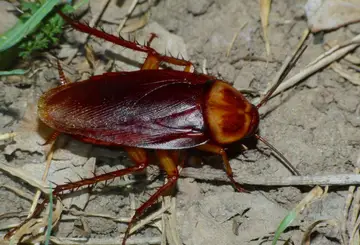
"Palmetto bug" is a name for large cockroaches. UF/IFAS says the Florida woods cockroach, a native, slow-moving roach of the southeastern US without working wings, is often called a palmetto bug, but the name may also describe any large cockroach around homes, including the American and smokybrown cockroaches. No official source checked calls them venomous. The adult Florida woods cockroach can spray an oily defensive secretion that irritates skin and is harmful to the eyes. Virginia Cooperative Extension says American cockroaches carry bacteria and produce allergens, although they have never been implicated as the cause of a disease outbreak. UF/IFAS Extension
This page covers a family (Blattidae (large cockroaches; mainly Eurycotis floridana and Periplaneta americana)), not a single species.
On this page
Is the palmetto bug dangerous?
Florida woods cockroach: its oily defensive secretion is harmful to skin and sensitive tissue such as the eyes; direct contact is a potent irritant. UF/IFAS Extension
“…such as the eyes. Direct contact is a potent irritant”
No official source we use states whether this animal is venomous. That does not mean it is harmless: do not handle it.
How to identify a palmetto bug
A photo or description can narrow it down, but cannot confirm what an animal is or that it is safe. Look from a distance and do not handle wild animals.
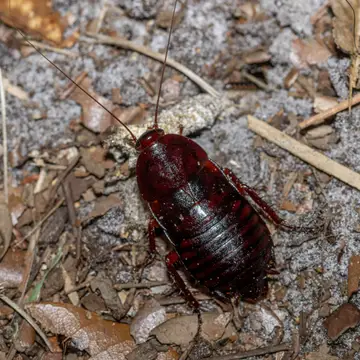
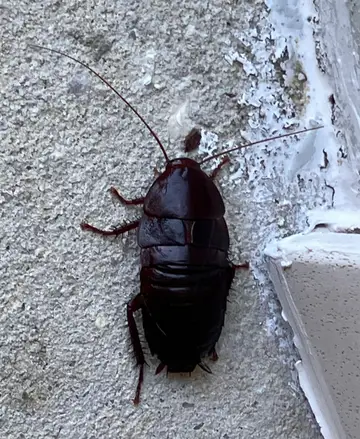
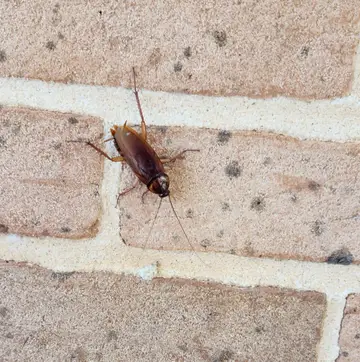
Size: Florida woods cockroach: 30 to 40 mm (1.2 to 1.6 in) long, up to 24 mm wide. UF/IFAS Extension
Colors: Florida woods cockroach: reddish brown to nearly black; american cockroach: reddish brown with a pale brown or yellow band around the edge of the pronotum (the shield behind the head). Pattern: American cockroach: yellow margin on the shield behind the head.
Key features
- Florida woods cockroach: no working wings, only short leathery pads that do not cover the abdomen UF/IFAS Extension
- Florida woods cockroach: slow-moving and not quick to run UF/IFAS Extension
- American cockroach: adults have wings and occasionally fly, but prefer to run Virginia Tech
Young
Florida woods cockroach nymphs are reddish brown to black; late nymphs often have yellow edges on the thorax.
Animals mistaken for the palmetto bug
Palmetto Bug or American cockroach?
Palmetto Bug
American cockroach Periplaneta americana
Adult American cockroaches have wings (in males they extend 4 to 8 mm past the tip of the abdomen) and a pale brown or yellow band around the edge of the shield behind the head. The Florida woods cockroach has only short wing pads that do not cover any of the abdomen. Caution: American cockroach nymphs have no wings either (UF/IFAS), so wing length separates adults only.
UF/IFAS: can become a public health problem through association with human waste and disease.
Palmetto Bug or Florida woods cockroach?
Palmetto Bug
Florida woods cockroach Eurycotis floridana
Wing pads barely meet at the midline and do not cover any of the abdomen. UF/IFAS Extension
UF/IFAS: defensive secretion is harmful to skin and eyes.
Where the palmetto bug lives
- Native or listed
- Nonnative or not established
- No official record in our data
- 1–9
- 10–99
- 100–999
- 1,000+
State boundaries: U.S. Census Bureau, cartographic boundary file cb_2024_us_state_20m.
When it is active
American cockroach: avoids light and rests by day near water pipes, sinks, baths and toilets. UF/IFAS Extension
US open-licence records for all large cockroaches in the family Blattidae peak in April to September.
Habitat and habits
Habitat: Florida woods cockroach: tree cavities and stumps, under bark, leaf litter and dense shrubs; around homes in woodpiles, palms and other shady spots. UF/IFAS Extension
Behavior: Florida woods cockroach: occasionally comes indoors, usually carried in on items such as firewood; it does not commonly breed indoors.
Diet: Florida woods cockroach: mainly decaying plant matter.
Young: Florida woods cockroach: eggs are laid in a case (ootheca) and take about 48 days to hatch at 30 to 36 °C; egg to adult takes an estimated 150 days.
Legal status and reporting
Invasive status: American cockroach: introduced to the United States from Africa (not described as invasive in sources checked). Florida woods cockroach: native. UF/IFAS Extension
Questions about the palmetto bug
Palmetto bug
A Southern name for large cockroaches. UF/IFAS says it often refers to the native Florida woods cockroach, but also to the American and smokybrown cockroaches.
Is a palmetto bug a cockroach?
Yes. Every insect UF/IFAS lists under this name is a cockroach. Virginia Cooperative Extension also gives "palmetto bug" as another name for the American cockroach.
Florida bugs that look like roaches
In Florida, the large "palmetto bug" may be the Florida woods cockroach (slow, with only short wing pads) or the American cockroach (adults have wings and a yellow band behind the head; its young have no wings). Both are cockroaches.
Sources
- Florida Woods Cockroach (AKA Palmetto Bug) Eurycotis floridana (Walker), EENY-514. UF/IFAS Extension (EDIS / Featured Creatures). Original publication December 2011; checked November 3, 2026.
Quoted passages (10)
“…such as the eyes. Direct contact is a potent irritant”
“The adult is distinctively large in size, ranging from 30–40 mm (1.20–1.60 in) long and up to 24 mm (1.00 in) wide.”
“This species also lacks developed wings in either sex, instead having reduced wing pads and absent hind wings.”
“…the Florida woods cockroach is relatively slow moving and not quick to run away from disturbance.”
“Eurycotis floridana nymphs are reddish brown to black in color. Nymphs average seven molts during pre-adult growth. Late nymphal stages commonly have yellow thoracic margins.”
“…common habitations would include the cavities in trees or stumps, under tree bark, limestone cavities, leaf litter, and densely shaded shrubs … In peridomestic environments, habitations can include holes in signs, around the base of ornamental trees such as coconut and palm, woodpiles, and other shaded areas”
“The Florida woods cockroach feeds primarily on decomposing plant matter and is effectively a detritivore.”
“Its presence in the home is typically a result of being transported indoors on another item, such as fire-wood … Eurycotis floridana has not been shown to commonly colonize inside structures”
“Eggs within the ootheca take approximately 48 days to hatch at 30°C–36°C. … Egg to adult maturation time is estimated to be 150 days”
“The wings form short leathery pads, referred to as tegmina, which barely meet on the midline of the body and do not extend to cover any portion of the abdomen.”
- American Cockroach, Periplaneta americana (Linnaeus), EENY141. UF/IFAS Extension (EDIS / Featured Creatures). Original June 2000; checked November 3, 2026.
Quoted passages (2)
“During the day the American cockroach, which responds negatively to light, rests in harborages close to water pipes, sinks, baths, and toilets”
“The American cockroach (Periplaneta americana) was introduced to the United States from Africa as early as 1625”
- American Cockroach, Publication 444-288. Virginia Cooperative Extension (Virginia Tech). 2010; checked November 3, 2026.
Quoted passages (1)
“Adult American cockroaches have wings and will occasionally fly. However, they are awkward fliers and prefer to run when disturbed.”
- GBIF.org occurrence records, human observations licensed CC0 1.0 or CC BY 4.0 only, accessed November 3, 2026. The datasets behind these counts are listed on our Sources page.
- State boundaries: U.S. Census Bureau, cartographic boundary file cb_2024_us_state_20m.