This page lists 13 insects and 2 ticks and mites.
3 are venomous by official accounts. 2 are nonnative.
Not every species: no complete official list of Arkansas insects exists, so this page covers the ones state and Extension sources name. How lists are built.
Which insects can hurt you
Official sources single out these insects in Arkansas, in their own words:
Repeated painful stings that can cause severe allergic responses. “…can also induce severe allergic responses in humans” University of Arkansas Arthropod Museum
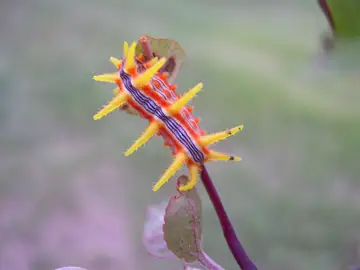
Venomous spines cause skin irritation when touched. “Venom enters the skin of humans or animals when the caterpillars are touched” University of Arkansas Arthropod Museum
Mosquitoes
Disease. “Mosquitoes in Arkansas can carry West Nile Virus and other less common diseases.” AGFC
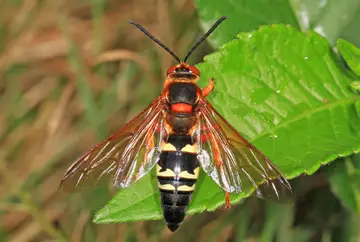
Painful sting that may last up to a week. “A cicada killer sting causes sharp pain that may last as long as a week, but these wasps are not aggressive, and they sting only when provoked.” University of Arkansas Arthropod Museum
Ticks (arachnids, not insects)
Official sources single out these ticks in Arkansas, in their own words:
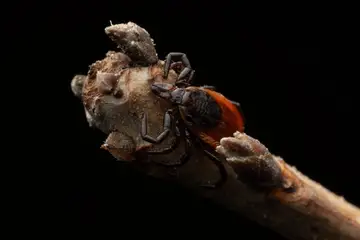
Ticks
Disease. “Arkansas has some of the highest rates in the nation for tick-borne diseases, such as Rocky Mountain Spotted Fever, Ehrlichiosis and Tularemia.” AGFC
All 13 insects and 2 ticks and mites
Venomous species first, then A to Z. Do not handle them.
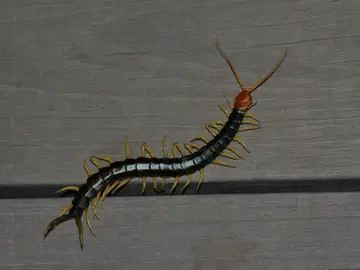
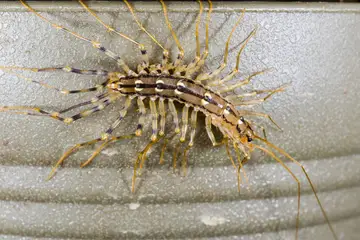
Venom: “Severe swelling and pain can result from the venom injected, but in most cases the bite is no worse than the sting of a bee.” (University of Arkansas Arthropod Museum)
Venom: “Venom enters the skin of humans or animals when the caterpillars are touched and the tips of the spines break off.” (University of Arkansas Arthropod Museum)
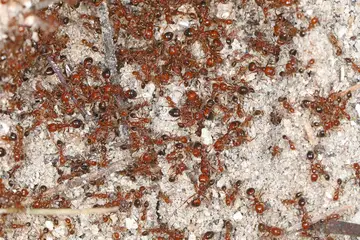
Missouri: workers 1/2 to 3/4 inch, queens 3/4 inch. University of Maryland: workers 5/8 to 3/4 inch, queens just over an inch. Penn State gives 13 to 20 mm for the queen and her offspring.
How to recognize it
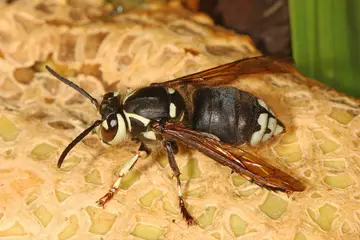
Not yellow, unlike typical yellowjackets; larger, black and ivory
Large, rounded, gray paper nest hanging in trees or shrubs, sometimes on buildings
Nest entrance is the lowest opening of the cone- or egg-shaped nest
No official source we use states whether this animal is venomous. That does not mean it is harmless: do not handle it.
Danger to people
“A cicada killer sting causes sharp pain that may last as long as a week, but these wasps are not aggressive, and they sting only when provoked.” University of Arkansas Arthropod Museum
Size
About 1 1/8 to 1 5/8 inches long (OSU, NC State); females up to nearly 2 inches, males up to 1.5 inches (University of Kentucky). Females larger than males.
How to recognize it
Nests in the ground: burrow about 1/2 inch wide with a U-shaped soil mound at the entrance
Hole about 1/2 inch across with excavated soil piled around it
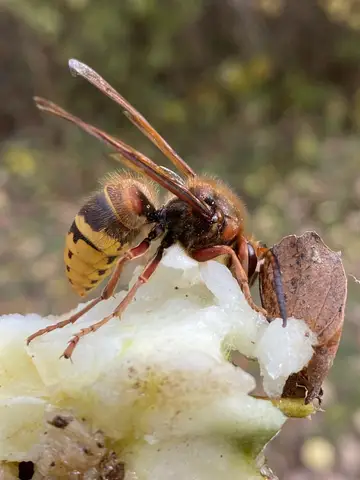
Cicada killer abdomens are mostly black with yellow markings, and cicada killers are solitary and nest in the ground; European hornet abdomens are mostly yellow with brown markings and they build paper nests in aerial locations.
Cicada killer abdomen mostly black with yellow marks and nests in the ground; European hornet abdomen mostly yellow with brown marks, paper nest above ground (often in hollow trees).
Photos show typical adults; individuals vary. Never get close to compare.
When insects are active in Arkansas
Records of insects in Arkansas peak in June to September. They show when people record insects, not how many there are (about month bars).
JanFebMarAprMayJunJulAugSepOctNovDec
22,842 records of insects in Arkansas by month (GBIF, CC0 and CC BY records).
If you are bitten or stung
Call 911 or Poison Help at 1-800-222-1222 right away. Poison Help connects you to your local poison center, any time of day.
Official advice from AGFC:
Snake repellents have not been shown to work; mow, remove debris and seal the house instead. AGFC
Bears: remove attractants such as trash, pet food and bird feeders. AGFC
Ticks and mosquitoes: use EPA-approved repellent, check for ticks and remove standing water. AGFC
Nuisance Wildlife. Arkansas Game and Fish Commission (AGFC). undated page; checked November 3, 2026.
Red imported fire ant (Arkansas Arthropods). University of Arkansas Arthropod Museum (Department of Entomology and Plant Pathology). WordPress modified 2017-07-05; checked November 3, 2026.Quoted passages (2)
“Fire ant bites are occasionally fatal for hypersensitive individuals.”
“It reached southern Arkansas in 1950”
European hornet (Arkansas Arthropods). University of Arkansas Arthropod Museum (Department of Entomology and Plant Pathology). WordPress modified 2017-07-05; checked November 3, 2026.
Baldfaced hornet (Arkansas Arthropods). University of Arkansas Arthropod Museum (Department of Entomology and Plant Pathology). WordPress modified 2017-07-05; checked November 3, 2026.Quoted passages (1)
“…can also induce severe allergic responses in humans”
Red velvet ant (cow killer) (Arkansas Arthropods). University of Arkansas Arthropod Museum (Department of Entomology and Plant Pathology). WordPress modified 2017-07-05; checked November 3, 2026.Quoted passages (1)
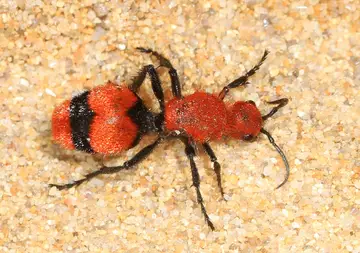
“…the painful reputation of their stings”
Red wasp (Arkansas Arthropods). University of Arkansas Arthropod Museum (Department of Entomology and Plant Pathology). WordPress modified 2017-07-05; checked November 3, 2026.Quoted passages (1)
“…red wasps have been known to be quite aggressive, delivering painful stings”
Ringed paper wasp (Arkansas Arthropods). University of Arkansas Arthropod Museum (Department of Entomology and Plant Pathology). WordPress modified 2017-07-05; checked November 3, 2026.
Carpenter bee (Arkansas Arthropods). University of Arkansas Arthropod Museum (Department of Entomology and Plant Pathology). WordPress modified 2017-07-05; checked November 3, 2026.
Stinging rose caterpillar (Arkansas Arthropods). University of Arkansas Arthropod Museum (Department of Entomology and Plant Pathology). WordPress modified 2017-07-05; checked November 3, 2026.Quoted passages (2)
“Venom enters the skin of humans or animals when the caterpillars are touched and the tips of the spines break off.”
“Venom enters the skin of humans or animals when the caterpillars are touched”
Deer ticks (Arkansas Arthropods). University of Arkansas Arthropod Museum (Department of Entomology and Plant Pathology). WordPress modified 2017-07-05; checked November 3, 2026.
Chigger (Arkansas Arthropods). University of Arkansas Arthropod Museum (Department of Entomology and Plant Pathology). WordPress modified 2017-07-05; checked November 3, 2026.
Giant redheaded centipede (Arkansas Arthropods). University of Arkansas Arthropod Museum (Department of Entomology and Plant Pathology). WordPress modified 2017-07-05; checked November 3, 2026.Quoted passages (1)
“Poison glands are located in the basal segments of the claws”
House centipede (Arkansas Arthropods). University of Arkansas Arthropod Museum (Department of Entomology and Plant Pathology). WordPress modified 2017-07-05; checked November 3, 2026.Quoted passages (1)
“Severe swelling and pain can result from the venom injected, but in most cases the bite is no worse than the sting of a bee.”
Wheel bug (Arkansas Arthropods). University of Arkansas Arthropod Museum (Department of Entomology and Plant Pathology). WordPress modified 2017-07-05; checked November 3, 2026.
Ebony blister beetle (Arkansas Arthropods). University of Arkansas Arthropod Museum (Department of Entomology and Plant Pathology). WordPress modified 2017-07-05; checked November 3, 2026.
Cicada killer (Arkansas Arthropods). University of Arkansas Arthropod Museum (Department of Entomology and Plant Pathology). WordPress modified 2017-07-05; checked November 3, 2026.Quoted passages (1)
“A cicada killer sting causes sharp pain that may last as long as a week, but these wasps are not aggressive, and they sting only when provoked.”