States Wildlife

Arkansas Spiders: Identification, Pictures & Which Bite

Last checked November 3, 2026 against official sources.

On this page
  1. Which spiders can hurt you
  2. All 12 spiders
  3. When they are active
  4. If you are bitten or stung
  5. What official sources say
  6. About this list
  7. Sources

This page lists 12 spiders. 4 are venomous by official accounts, and 1 mildly venomous. 1 is nonnative.

Not every species: no complete official list of Arkansas spiders exists, so this page covers the ones state and Extension sources name. How lists are built.

Which spiders can hurt you

Official sources single out these spiders in Arkansas, in their own words:

All 12 spiders

Venomous species first, then A to Z. Do not handle them.

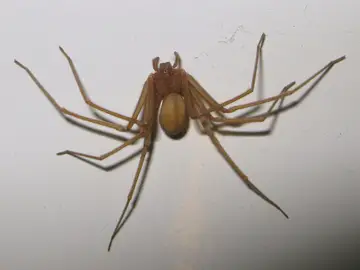
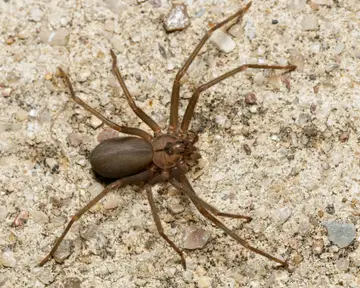
Brown Recluse
Photo: Meghan Cassidy · CC BY-SA 4.0 · iNaturalist · resized

Brown Recluse

Loxosceles reclusa

Venomous per University of Arkansas System Division of Agriculture, Cooperative Extension Service

Danger to people
“Human reactions to bites can vary from minor temporary irritation to severe systemic conditions that occasionally result in death.” University of Arkansas Arthropod Museum
Size
Body about 7 to 12 mm (about 3/8 inch); females average about 9 mm and males about 8 mm. UC IPM says a recluse body is not more than 3/8 inch long.
How to recognize it
  • Six equal-sized eyes in three pairs. UC IPM calls this the most definitive feature, since most spiders have eight eyes.
  • The violin mark alone is not a reliable way to identify it
  • UC IPM's five-point check: six eyes in pairs, evenly colored finely haired abdomen, no spines on the legs, evenly colored legs, body no more than 3/8 inch
37 records by month.
What the sources say

Venom: “In Arkansas, two spiders are poisonous. They are the black widow and the brown recluse spiders.” (University of Arkansas System Division of Agriculture, Cooperative Extension Service)

Habitat: Urban and rural settings (University of Arkansas Arthropod Museum)

Full Brown Recluse guide

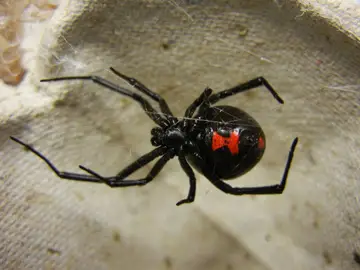
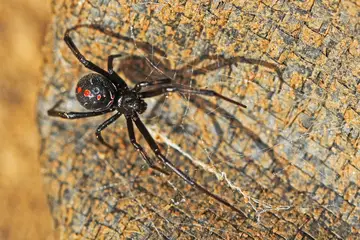
Northern Black Widow
Photo: Judy Gallagher · CC BY 2.0 · Wikimedia Commons

Northern Black Widow

Latrodectus variolus

Venomous per University of Arkansas System Division of Agriculture, Cooperative Extension Service

Where in Arkansas
Throughout Arkansas (black widows as a group) University of Arkansas Arthropod Museum
What the sources say

Venom: “In Arkansas, two spiders are poisonous. They are the black widow and the brown recluse spiders.” (University of Arkansas System Division of Agriculture, Cooperative Extension Service)

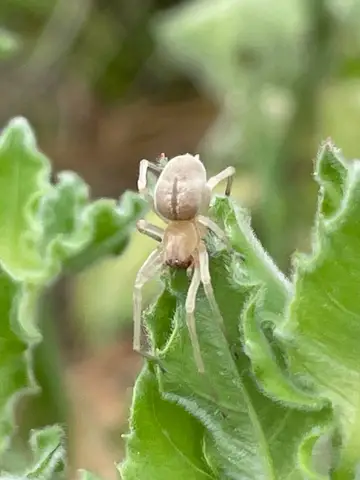
Agrarian Sac Spider
Photo: Evelyn Lazzaretti 🏳️‍⚧️ · CC0 1.0 · iNaturalist

Agrarian Sac Spider

Cheiracanthium inclusum

Mildly venomous per University of Arkansas Arthropod Museum

What the sources say

Venom: “The venom has mild and local cytotoxic and neurotoxic effects.” (University of Arkansas Arthropod Museum)

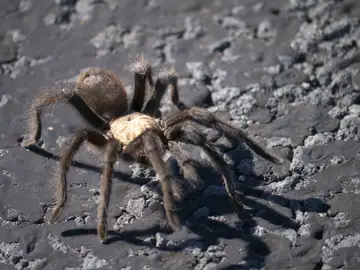
Arkansas Chocolate Tarantula
Photo: xpda · CC BY-SA 4.0 · Wikimedia Commons · resized

Arkansas Chocolate Tarantula

Aphonopelma hentzi

Not stated

Venom
No official source we use states whether this animal is venomous. That does not mean it is harmless: do not handle it.
Where in Arkansas
Most of the state; apparently absent from the Mississippi delta region University of Arkansas Arthropod Museum
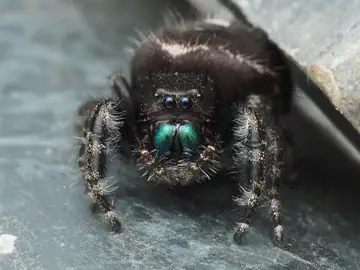
Bold Jumping Spider
Photo: Zygy · CC0 1.0 · iNaturalist

Bold Jumping Spider

Phidippus audax

Not stated

Venom
No official source we use states whether this animal is venomous. That does not mean it is harmless: do not handle it.
57 records by month.
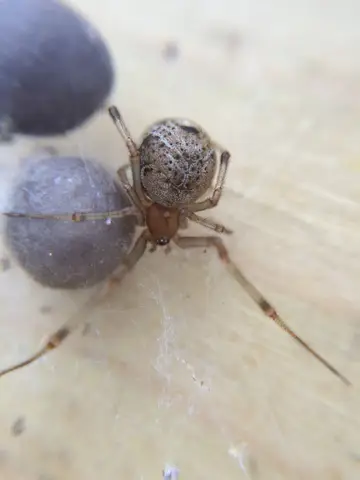
Common House Spider
Photo: Erin Lalime · CC BY 4.0 · iNaturalist

Common House Spider

Achaearanea tepidariorum

Not stated

Venom
No official source we use states whether this animal is venomous. That does not mean it is harmless: do not handle it.
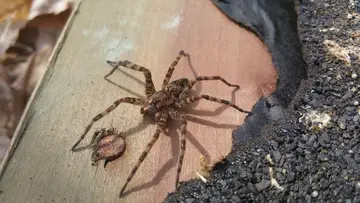
Dark Fishing Spider
Photo: Naota3k · CC BY-SA 4.0 · Wikimedia Commons · resized

Dark Fishing Spider

Dolomedes tenebrosus

Not stated

Venom
No official source we use states whether this animal is venomous. That does not mean it is harmless: do not handle it.
32 records by month.
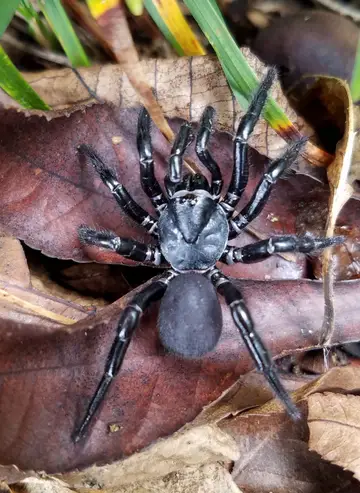
Trapdoor Spider
Photo: Leila Dasher · CC BY 4.0 · iNaturalist

Trapdoor Spider

Ummidia audouini

Not stated

Venom
No official source we use states whether this animal is venomous. That does not mean it is harmless: do not handle it.
No confirmed photo of Trapdoor Spider

Trapdoor Spider

Ummidia carabivora

Not stated

Venom
No official source we use states whether this animal is venomous. That does not mean it is harmless: do not handle it.
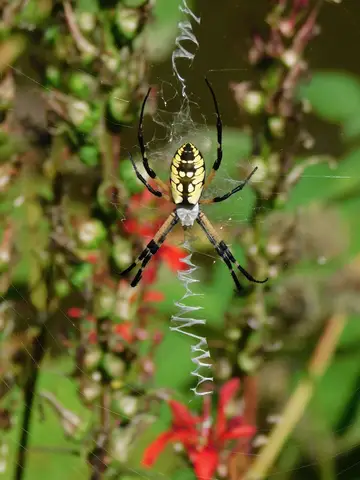
Yellow Garden Spider
Photo: Michael J. Papay · CC BY 4.0 · iNaturalist

Yellow Garden Spider

Argiope aurantia

Not stated

Venom
No official source we use states whether this animal is venomous. That does not mean it is harmless: do not handle it.
Size
Females 3/4 to 1 inch long, not counting legs (Missouri); 19 to 28 mm (Penn State); Texas A&M says the female body is more than 1 inch. Males about 1/4 inch (Missouri); 5 to 8 mm (Penn State).
How to recognize it
  • Round web about 2 feet across, built only by females; the spider rests head-down at the center, where a zigzag silk band (stabilimentum) runs vertically.
  • Abdomen an elongated oval, pointed at the rear, with two humps (shoulders) at the front.
  • Males are much smaller than females and rarely noticed.
68 records by month.

Full Yellow Garden Spider guide

When spiders are active in Arkansas

Records of spiders in Arkansas peak in May to June and August to October. They show when people record spiders, not how many there are (about month bars).

1,381 records of spiders in Arkansas by month (GBIF, CC0 and CC BY records).

If you are bitten or stung

Call 911 or Poison Help at 1-800-222-1222 right away. Poison Help connects you to your local poison center, any time of day.

What official sources say

Are there brown recluse spiders in Arkansas?

Yes. Arkansas is at the center of the species’ natural distribution, and it is common in urban and rural settings. University of Arkansas Arthropod Museum

“Arkansas is at the center of the species’ natural distribution”

Are there black widows in Arkansas?

Yes. Black widows can be found throughout Arkansas. University of Arkansas Arthropod Museum

“Black widows can be found throughout Arkansas.”

Are there tarantulas in Arkansas?

Yes. They occur throughout most of the state but are apparently absent from the Mississippi delta region. The museum says bites are not considered particularly dangerous. University of Arkansas Arthropod Museum

“In Arkansas, these spiders occur throughout most of the state, but they are apparently absent from the Mississippi delta region.”

Are there joro spiders in Arkansas?

Extension says joro spiders had not been reliably reported in Arkansas at the time of the article. The article is undated, so this may have changed. University of Arkansas System Division of Agriculture, Cooperative Extension Service

“They have not yet been reliably reported in Arkansas at the time of this article.”

About this list

Venom labels come only from official sources and link to them; "Not stated" never means harmless. How labels work.

"Nonnative" and "Invasive" follow the wording of the source list. See invasive species in Arkansas.

Sources

  1. Nuisance Wildlife. Arkansas Game and Fish Commission (AGFC). undated page; checked November 3, 2026.
  2. Biology and Control of Spiders, Scorpions, Centipedes and Millipedes (FSA7018). University of Arkansas System Division of Agriculture, Cooperative Extension Service. PDF created 2014-04-30, modified 2025-04-10; checked November 3, 2026.
    Quoted passages (2)
    “In Arkansas, two spiders are poisonous. They are the black widow and the brown recluse spiders.”
    “Most of the bites experienced by humans occur from June to October.”
  3. Southern and northern black widow spiders (Arkansas Arthropods). University of Arkansas Arthropod Museum (Department of Entomology and Plant Pathology). WordPress modified 2017-07-05; checked November 3, 2026.
    Quoted passages (1)
    “Black widows can be found throughout Arkansas.”
  4. Brown recluse and Mediterranean recluse spiders (Arkansas Arthropods). University of Arkansas Arthropod Museum (Department of Entomology and Plant Pathology). WordPress modified 2017-07-05; checked November 3, 2026.
    Quoted passages (4)
    “Human reactions to bites can vary from minor temporary irritation to severe systemic conditions that occasionally result in death.”
    “Although it has not been studied as thoroughly as the brown recluse, it should be regarded as venomous and dangerous.”
    “…it should be regarded as venomous and dangerous.”
    “Arkansas is at the center of the species’ natural distribution”
  5. Tarantula (Arkansas Arthropods). University of Arkansas Arthropod Museum (Department of Entomology and Plant Pathology). WordPress modified 2017-07-05; checked November 3, 2026.
    Quoted passages (1)
    “In Arkansas, these spiders occur throughout most of the state, but they are apparently absent from the Mississippi delta region.”
  6. Trapdoor spider (Arkansas Arthropods). University of Arkansas Arthropod Museum (Department of Entomology and Plant Pathology). WordPress modified 2017-07-05; checked November 3, 2026.
  7. Agrarian sac spider (Arkansas Arthropods). University of Arkansas Arthropod Museum (Department of Entomology and Plant Pathology). WordPress modified 2017-07-05; checked November 3, 2026.
    Quoted passages (1)
    “The venom has mild and local cytotoxic and neurotoxic effects.”
  8. Bold jumping spider (Arkansas Arthropods). University of Arkansas Arthropod Museum (Department of Entomology and Plant Pathology). WordPress modified 2017-07-05; checked November 3, 2026.
  9. Dark fishing spider (Arkansas Arthropods). University of Arkansas Arthropod Museum (Department of Entomology and Plant Pathology). WordPress modified 2017-07-05; checked November 3, 2026.
  10. Yellow garden spider (Arkansas Arthropods). University of Arkansas Arthropod Museum (Department of Entomology and Plant Pathology). WordPress modified 2017-07-05; checked November 3, 2026.
  11. Common house spider (Arkansas Arthropods). University of Arkansas Arthropod Museum (Department of Entomology and Plant Pathology). WordPress modified 2017-07-05; checked November 3, 2026.
  12. No need to fear the giant flying electric joro spider. University of Arkansas System Division of Agriculture, Cooperative Extension Service. undated page; checked November 3, 2026.
    Quoted passages (1)
    “They have not yet been reliably reported in Arkansas at the time of this article.”
  13. GBIF.org occurrence records, human observations licensed CC0 1.0 or CC BY 4.0 only, accessed November 3, 2026. The datasets behind these counts are listed on our Sources page.