States Wildlife

Arkansas Lizards: Identification Guide With Pictures

Last checked November 3, 2026 against official sources.

On this page
  1. All 15 lizards
  2. Lookalikes
  3. When they are active
  4. How to report
  5. About this list
  6. Sources

This page lists 15 lizards.

All 15 lizards

From A to Z.

Broadhead Skink
Photo: Laura Gaudette · CC BY 4.0 · iNaturalist

Broadhead Skink

Eumeces laticeps

Not stated

Venom
No official source we use states whether this animal is venomous. That does not mean it is harmless: do not handle it.
Size
About 6.5 to 12.75 inches in total length. Oklahoma gives about 12 inches for large adults and SREL up to 13 inches. Males are larger than females.
How to recognize it
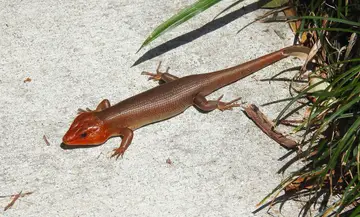
  • Large, wide head; breeding males have swollen orange-red jowls.
  • Smooth, glass-like scales, short legs and a stocky body.
  • Upper-lip scales separate it from five-lined skinks: Maryland, Tennessee and North Carolina count five labial scales between the nostril and the eye rather than four. Oklahoma and Missouri count differently, around 8 or 9 in the full lip row.
Where in Arkansas
Buffalo National River National Park Service

Full Broadhead Skink guide

Coal Skink
Photo: Thomas Koffel · CC BY 4.0 · iNaturalist

Coal Skink

Eumeces anthracinus

Not stated

Venom
No official source we use states whether this animal is venomous. That does not mean it is harmless: do not handle it.
Where in Arkansas
Buffalo National River National Park Service
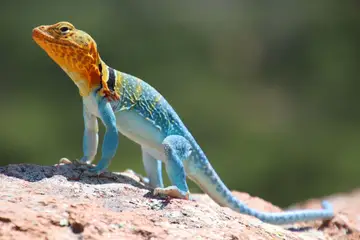
Eastern Collared Lizard
Photo: B. P. White · CC BY-SA 4.0 · iNaturalist · resized

Eastern Collared Lizard

Crotaphytus collaris

Not stated

Venom
No official source we use states whether this animal is venomous. That does not mean it is harmless: do not handle it.
Size
Adult total length 8 to 14 inches (Missouri); up to about 14 inches (Colorado). Snout to vent up to 4.65 inches (Arizona).
How to recognize it
  • Large head, long tail about twice the body length, distinct black collar
  • Round tail in cross-section, separating it from the Great Basin collared lizard; inside of mouth and throat often black
  • Runs on its hind legs at top speed
Conservation
Species of Greatest Conservation Need, 2025 Arkansas Wildlife Action Plan; may not be kept as a pet (AGFC Code 09.14)
What the sources say

Habitat: Clear glades with little vegetative cover and open rocky crevices (AGFC)

Full Eastern Collared Lizard guide

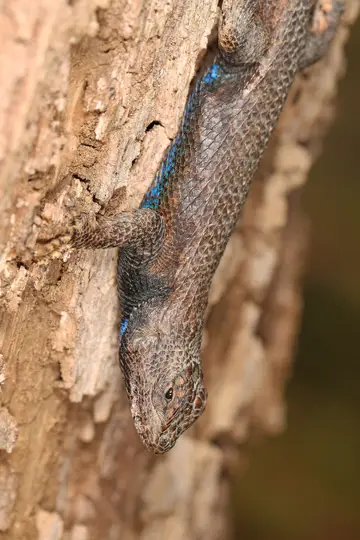
Fence Lizard
Photo: Judy Gallagher · CC BY 2.0 · Wikimedia Commons

Fence Lizard

Sceloporus undulatus

Not stated

Venom
No official source we use states whether this animal is venomous. That does not mean it is harmless: do not handle it.
Size
About 4 to 7.25 inches total length (SREL, Ohio DNR); Illinois gives up to about 19 cm (7.5 in).
How to recognize it
  • Rough, spiny, keeled scales: the only native lizard in North Carolina (and in Georgia and South Carolina) that looks rough or spiny
  • Often on fences, trees, logs, stumps, rocks and buildings; dashes up a tree and keeps to the far side when approached
Where in Arkansas
Buffalo National River; Hot Springs National Park National Park Service

Full Fence Lizard guide

No confirmed photo of Five-lined Skink

Five-lined Skink

Eumeces fasciatus

Non-venomous per National Park Service

Size
5 to 8.5 inches
How to recognize it
  • Smooth, shiny scales
  • Enlarged middle row of scales under the tail (separates it from the southeastern five-lined skink)
  • Tail breaks off easily and twitches to distract predators; it grows back shorter
Where in Arkansas
Buffalo National River; Hot Springs National Park National Park Service
77 records by month.
What the sources say

Venom: “…there are five different species of skinks that share several features. All of which are harmless and nonvenomous.” (National Park Service)

Full Five-lined Skink guide

Great Plains Skink
Photo: Peter Paplanus from St. Louis, Missouri · CC BY 2.0 · Wikimedia Commons

Great Plains Skink

Plestiodon obsoletus

Not stated

Venom
No official source we use states whether this animal is venomous. That does not mean it is harmless: do not handle it.
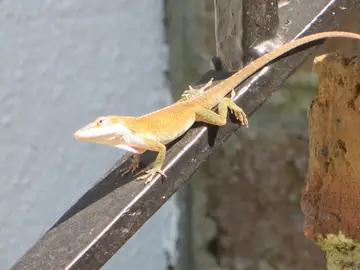
Green Anole
Photo: Mgoodyear · CC BY-SA 3.0 · Wikimedia Commons · resized

Green Anole

Not stated

Venom
No official source we use states whether this animal is venomous. That does not mean it is harmless: do not handle it.
Where in Arkansas
Hot Springs National Park National Park Service
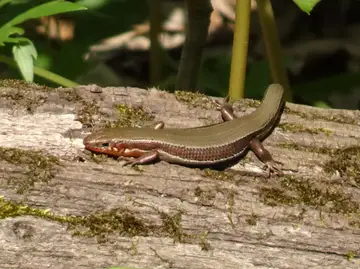
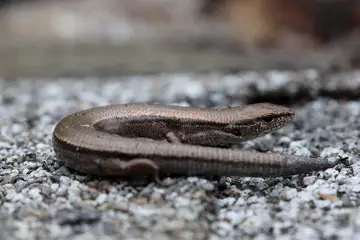
Ground Skink
Photo: Rstanton13 · CC BY-SA 4.0 · Wikimedia Commons · resized

Ground Skink

Scincella lateralis

Not stated

Venom
No official source we use states whether this animal is venomous. That does not mean it is harmless: do not handle it.
Where in Arkansas
Buffalo National River National Park Service
50 records by month.
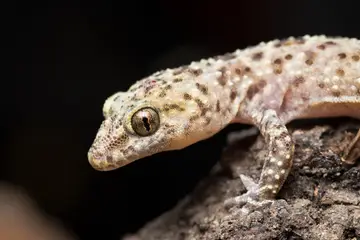
Mediterranean Gecko
Photo: Konstantinos Kalaentzis · CC BY-SA 4.0 · Wikimedia Commons · resized

Mediterranean Gecko

Not stated

Venom
No official source we use states whether this animal is venomous. That does not mean it is harmless: do not handle it.
Where in Arkansas
Hot Springs National Park National Park Service
No confirmed photo of Prairie Lizard

Prairie Lizard

Not stated

Venom
No official source we use states whether this animal is venomous. That does not mean it is harmless: do not handle it.
Where in Arkansas
Hot Springs National Park National Park Service
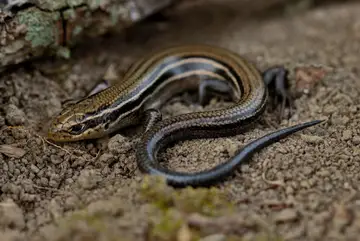
Prairie Skink
Photo: Peter Paplanus · CC BY 2.0 · Wikimedia Commons

Prairie Skink

Plestiodon septentrionalis

Not stated

Venom
No official source we use states whether this animal is venomous. That does not mean it is harmless: do not handle it.
No confirmed photo of Shining Skink (printed "Shinning Skink"; blue-tailed skink)

Shining Skink (printed "Shinning Skink"; blue-tailed skink)

Non-venomous per National Park Service

Where in Arkansas
Hot Springs National Park National Park Service
What the sources say

Venom: “…there are five different species of skinks that share several features. All of which are harmless and nonvenomous.” (National Park Service)

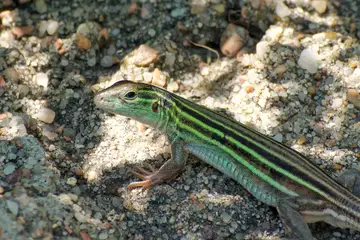
Six-lined Racerunner
Photo: Joe Brewer · CC BY 4.0 · iNaturalist

Six-lined Racerunner

Cnemidophorus sexlineatus

Not stated

Venom
No official source we use states whether this animal is venomous. That does not mean it is harmless: do not handle it.
Where in Arkansas
Buffalo National River National Park Service
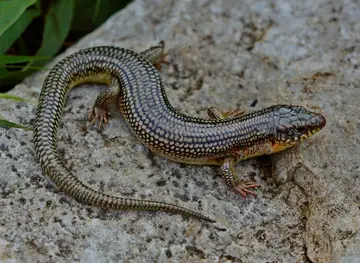
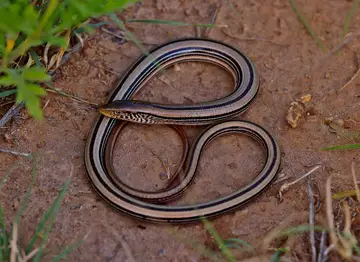
Slender Glass Lizard
Photo: Peter Paplanus from St. Louis, Missouri · CC BY 4.0 · Wikimedia Commons

Slender Glass Lizard

Ophisaurus attenuatus

Not stated

Venom
No official source we use states whether this animal is venomous. That does not mean it is harmless: do not handle it.
Conservation
Species of Greatest Conservation Need, 2025 Arkansas Wildlife Action Plan
No confirmed photo of Southern Prairie Skink

Southern Prairie Skink

Plestiodon obtusirostris

Not stated

Venom
No official source we use states whether this animal is venomous. That does not mean it is harmless: do not handle it.
Conservation
Species of Greatest Conservation Need, 2025 Arkansas Wildlife Action Plan

Lizards people confuse

Common Five-lined Skink or Broad-headed Skink?

No confirmed photo of Common Five-lined Skink

Common Five-lined Skink Non-venomous

Broad-headed Skink
Photo: Laura Gaudette · CC BY 4.0 · iNaturalist

Broad-headed Skink Not stated

NCWRC: broadhead skinks reach a much larger size. ODWC: juveniles can be told apart by counting the upper lip scales (five-lined: seven, with two post-labials; broad-headed: nine, with no post-labials).

Broad-headed skink or Great Plains skink?

Broad-headed skink
Photo: Laura Gaudette · CC BY 4.0 · iNaturalist

Broad-headed skink Not stated

Great Plains skink
Photo: Peter Paplanus from St. Louis, Missouri · CC BY 2.0 · Wikimedia Commons

Great Plains skink Not stated

Oklahoma: its background color is tan to yellow, each scale bordered with black, giving the look of eleven irregular narrow stripes.

Photos show typical adults; individuals vary. Never get close to compare.

When lizards are active in Arkansas

Records of lizards in Arkansas peak in March to May and October. They show when people record lizards, not how many there are (about month bars).

378 records of lizards in Arkansas by month (GBIF, CC0 and CC BY records).

How to report

Nuisance wildlife hotline 833-345-0315, 8 a.m.-4:30 p.m., voicemail any time; alligator nuisance calls answered 24/7. Aquatic nuisance species sightings: AGFC Aquatic Nuisance Species Form (www.agfc.com/ans); suspected apple snails also to the ANS Program Coordinator at 501-604-0485. Mountain lion sightings with verifiable evidence: nearest AGFC office. AGFC

About this list

The species list comes from No AGFC lizard checklist found. Names come from the 2025 Wildlife Action Plan Table 2.2, a 2016 AGFC list, and NPS Buffalo National River and Hot Springs park lists (Arkansas Game and Fish Commission (AGFC), 2025 plan; PDF created 2026-06-26). 12 more entries come from other official sources named on each card.

Venom labels come only from official sources and link to them; "Not stated" never means harmless. How labels work.

Want a paper copy? Print the Arkansas lizards ID chart.

Sources

  1. Nuisance Wildlife. Arkansas Game and Fish Commission (AGFC). undated page; checked November 3, 2026.
    Quoted passages (1)
    “The nuisance wildlife hotline, 833-345-0315, is available during 8 a.m.-4:30 p.m. for immediate assistance, although voicemails can be left at any time that will be returned during normal working hours. Alligator nuisance calls will be answered 24/7 via an emergency liaison. … Report sightings immediately by filling out the Aquatic Nuisance Species Form … report the location immediately to AGFC at www.agfc.com/ans or immediately call the Aquatic Nuisance Species (ANS) Program Coordinator, Matt Horton, at 501-604-0485 … The public is encouraged to contact their nearest AGFC office with any sightings of mountain lions with verifiable evidence.”
  2. 2025 Arkansas Wildlife Action Plan, Chapter 2: Species of Greatest Conservation Need. Arkansas Game and Fish Commission (AGFC). 2025 plan; checked November 3, 2026.
  3. Arkansas Endangered, Threatened, Regulated, And Species of Greatest Conservation Need (28 January 2016 list; superseded by the 2025 plan). Arkansas Game and Fish Commission (AGFC). 28 January 2016; checked November 3, 2026.
  4. Table 1. Species Expected and Abundance by Taxonomy (Buffalo National River spreadsheet; text strings extracted). National Park Service. undated page; checked November 3, 2026.
  5. Reptiles - Hot Springs National Park. National Park Service. updated October 6, 2022; checked November 3, 2026.
    Quoted passages (1)
    “…there are five different species of skinks that share several features. All of which are harmless and nonvenomous.”
  6. Descriptions of Common Reptiles in the park - Hot Springs National Park. National Park Service. updated October 6, 2022; checked November 3, 2026.
  7. GBIF.org occurrence records, human observations licensed CC0 1.0 or CC BY 4.0 only, accessed November 3, 2026. The datasets behind these counts are listed on our Sources page.