States Wildlife

Arkansas wildlife: what lives here and what is dangerous

Last checked November 3, 2026 against official sources.

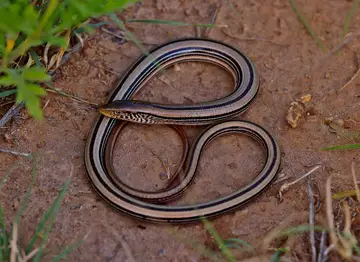
Slender Glass Lizard
Photo: Peter Paplanus from St. Louis, Missouri · CC BY 4.0 · Wikimedia Commons

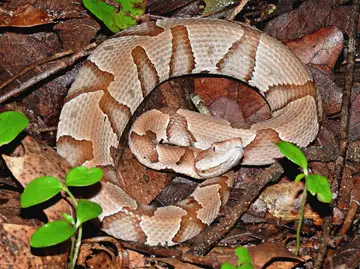
Arkansas has 6 venomous snakes named by official sources: Copperhead, Cottonmouth, Western Diamondback Rattlesnake, Timber Rattlesnake, Western Pigmy Rattlesnake and Texas Coral Snake, as labelled by AGFC. This guide covers 9 animal groups from Arkansas Game and Fish Commission lists and other official sources, with photos, venomous status and when each group is active.

Identification help has limits: a photo cannot confirm that an animal is safe. Watch from a distance and never handle a wild animal.

On this page
  1. Animal groups
  2. Dangerous animals
  3. Invasive species
  4. Seasons
  5. Official agency and reporting
  6. Questions
  7. Sources

Animal groups in Arkansas

Dangerous animals in Arkansas

These are the animals official sources describe as venomous or as a risk to people in Arkansas, across 6 groups. The reason is given in the source's own terms.

AnimalGroupWhy, per the sourceSource
CopperheadSnakesVenomousAGFC
CottonmouthSnakesVenomousAGFC
Western Diamondback RattlesnakeSnakesVenomousAGFC
Timber RattlesnakeSnakesVenomousAGFC
Western Pigmy RattlesnakeSnakesVenomousAGFC
Texas Coral SnakeSnakesVenomousAGFC
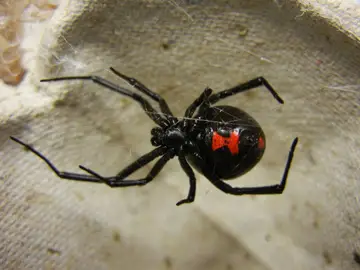
Southern Black WidowSpidersVenomous: “In Arkansas, two spiders are poisonous. They are the black widow and the brown recluse spiders.”University of Arkansas System Division of Agriculture, Cooperative Extension Service
Northern Black WidowSpidersVenomous: “In Arkansas, two spiders are poisonous. They are the black widow and the brown recluse spiders.”University of Arkansas System Division of Agriculture, Cooperative Extension Service
Brown RecluseSpidersVenomous: “In Arkansas, two spiders are poisonous. They are the black widow and the brown recluse spiders.”University of Arkansas System Division of Agriculture, Cooperative Extension Service
Mediterranean RecluseSpidersVenomous: “Although it has not been studied as thoroughly as the brown recluse, it should be regarded as venomous and dangerous.”University of Arkansas Arthropod Museum
Black widowsSpidersPoisonous per Extension. The museum says females bite when provoked and the bite is primarily neurological: “In Arkansas, two spiders are poisonous. They are the black widow and the brown recluse spiders.”University of Arkansas System Division of Agriculture, Cooperative Extension Service
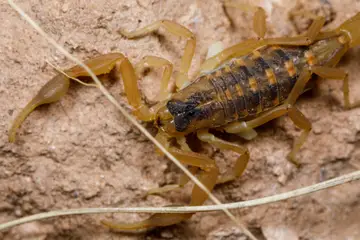
Striped Bark ScorpionScorpionsVenomous: “The scorpion has venom glands in the bulbous structure at its posterior end.”University of Arkansas Arthropod Museum
Stinging Rose CaterpillarInsects and BugsVenomous: “Venom enters the skin of humans or animals when the caterpillars are touched and the tips of the spines break off.”University of Arkansas Arthropod Museum
Giant Redheaded Centipede (not an insect)Insects and BugsVenomous: “Poison glands are located in the basal segments of the claws”University of Arkansas Arthropod Museum
House Centipede (not an insect)Insects and BugsVenomous: “Severe swelling and pain can result from the venom injected, but in most cases the bite is no worse than the sting of a bee.”University of Arkansas Arthropod Museum
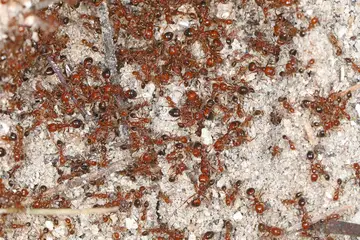
Red Imported Fire AntInsects and BugsPainful stings: “Fire ant bites are occasionally fatal for hypersensitive individuals.”University of Arkansas Arthropod Museum
Baldfaced HornetInsects and BugsRepeated painful stings that can cause severe allergic responses: “…can also induce severe allergic responses in humans”University of Arkansas Arthropod Museum
Red WaspInsects and BugsCan be aggressive: “…red wasps have been known to be quite aggressive, delivering painful stings”University of Arkansas Arthropod Museum
Red Velvet Ant (Cow Killer)Insects and BugsPainful sting: “…the painful reputation of their stings”University of Arkansas Arthropod Museum
TicksTicks (arachnids)Disease: “Arkansas has some of the highest rates in the nation for tick-borne diseases, such as Rocky Mountain Spotted Fever, Ehrlichiosis and Tularemia.”AGFC
MosquitoesInsects and BugsDisease: “Mosquitoes in Arkansas can carry West Nile Virus and other less common diseases.”AGFC
Cicada KillerInsects and BugsPainful sting that may last up to a week: “A cicada killer sting causes sharp pain that may last as long as a week, but these wasps are not aggressive, and they sting only when provoked.”University of Arkansas Arthropod Museum
SkunksMammalsRabies: “Skunks made up the largest component of animal carriers reported, with 13 animals testing positive.”AGFC
BatsMammalsRabies: “Bats can carry rabies, so they should not be handled by people.”National Park Service
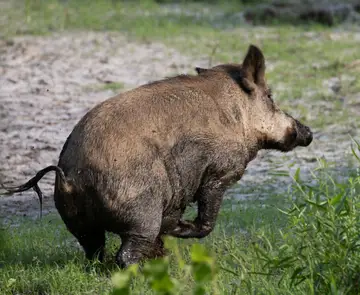
Feral HogMammalsDisease: “They also carry up to 45 bacteria, diseases and parasites, including Trichinellosis, Brucellosis and swine herpes virus.”AGFC
Black BearMammalsA bear fed by people can lose its fear of them and become more aggressive: “Once that bear begins to lose its fear of people, it can become more aggressive or damage property seeking more food.”AGFC
Mountain LionMammalsRare in Arkansas: “They are typically shy and reclusive, and they rarely attack humans.”AGFC
Nine-banded ArmadilloMammalsExtension lists Hansen’s disease (leprosy) in armadillos as a wildlife disease of health and safety concern: “Hansen’s Disease (leprosy)- armadillos”University of Arkansas System Division of Agriculture, Cooperative Extension Service

Venomous snakes in Arkansas shows each venomous snake with photos and range.

Invasive and nonnative species

18 nonnative animals are named on Arkansas's official lists (AGFC). The USGS Nonindigenous Aquatic Species database records 1 nonnative animal in our groups with an established population in Arkansas.

  • Feral Hog Sus scrofa
  • Nutria
  • Black Rat
  • House Mouse
  • Red Imported Fire Ant Solenopsis invicta
  • European Hornet Vespa crabro
  • Bighead Carp Hypophthalmichthys nobilis
  • Black Carp Mylopharyngodon piceus

All invasive species in Arkansas, with where they live and how to report them.

When animals are active in Arkansas

Darker cells are the months with more open-licence observation records of each group in Arkansas (GBIF). They show when people see and record these animals, not how many there are. The current month, this month, is highlighted.

JanFebMarAprMayJunJulAugSepOctNovDec
SnakesJanuary: 9 recordsFebruary: 28 recordsMarch: 91 recordsApril: 213 recordsMay: 350 recordsJune: 203 recordsJuly: 76 recordsAugust: 65 recordsSeptember: 75 recordsOctober: 94 recordsNovember: 41 recordsDecember: 6 records
SpidersJanuary: 17 recordsFebruary: 12 recordsMarch: 47 recordsApril: 105 recordsMay: 199 recordsJune: 162 recordsJuly: 159 recordsAugust: 166 recordsSeptember: 197 recordsOctober: 197 recordsNovember: 67 recordsDecember: 52 records
LizardsJanuary: 3 recordsFebruary: 12 recordsMarch: 44 recordsApril: 93 recordsMay: 56 recordsJune: 35 recordsJuly: 26 recordsAugust: 17 recordsSeptember: 37 recordsOctober: 42 recordsNovember: 10 recordsDecember: 3 records
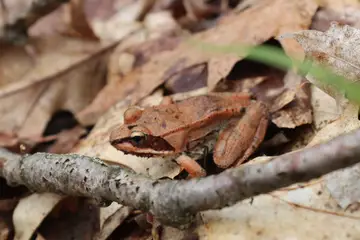
Frogs and ToadsJanuary: 22 recordsFebruary: 42 recordsMarch: 100 recordsApril: 93 recordsMay: 177 recordsJune: 86 recordsJuly: 57 recordsAugust: 45 recordsSeptember: 50 recordsOctober: 106 recordsNovember: 41 recordsDecember: 16 records
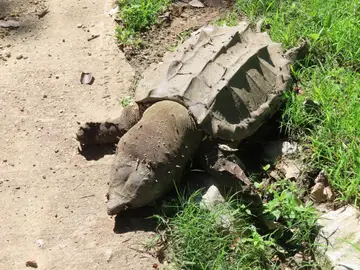
TurtlesJanuary: 3 recordsFebruary: 10 recordsMarch: 42 recordsApril: 81 recordsMay: 152 recordsJune: 109 recordsJuly: 58 recordsAugust: 35 recordsSeptember: 39 recordsOctober: 24 recordsNovember: 19 recordsDecember: 8 records
Insects and BugsJanuary: 129 recordsFebruary: 105 recordsMarch: 596 recordsApril: 1,833 recordsMay: 2,118 recordsJune: 3,075 recordsJuly: 2,955 recordsAugust: 2,759 recordsSeptember: 2,180 recordsOctober: 1,580 recordsNovember: 506 recordsDecember: 244 records
MammalsJanuary: 66 recordsFebruary: 68 recordsMarch: 72 recordsApril: 65 recordsMay: 89 recordsJune: 93 recordsJuly: 58 recordsAugust: 43 recordsSeptember: 45 recordsOctober: 63 recordsNovember: 84 recordsDecember: 60 records

What official sources say about seasons

  • Copperhead: active April-November (AGFC Arkansas Snake Guide). AGFC
  • Cottonmouth: active April-November (AGFC Arkansas Snake Guide). AGFC
  • Western Diamondback Rattlesnake: active April-October (AGFC Arkansas Snake Guide). AGFC
  • Timber Rattlesnake: active April-October (AGFC Arkansas Snake Guide). AGFC
  • Western Pigmy Rattlesnake: active April-October (AGFC Arkansas Snake Guide). AGFC
  • Texas Coral Snake: active late February through mid-November (AGFC Arkansas Snake Guide). AGFC
  • Scarlet Snake: active March-October (AGFC Arkansas Snake Guide). AGFC
  • Milk Snake: active March-October (AGFC Arkansas Snake Guide). AGFC

Official agency and how to report

Arkansas's wildlife agency is the Arkansas Game and Fish Commission.

Report: Nuisance wildlife hotline 833-345-0315, 8 a.m.-4:30 p.m., voicemail any time; alligator nuisance calls answered 24/7. Aquatic nuisance species sightings: AGFC Aquatic Nuisance Species Form (www.agfc.com/ans); suspected apple snails also to the ANS Program Coordinator at 501-604-0485. Mountain lion sightings with verifiable evidence: nearest AGFC office. AGFC

Official safety advice

  • If bitten or stung by a venomous animal: call 911 or Poison Help at 1-800-222-1222. The Arkansas Poison and Drug Information Center answers that number 24 hours a day. University of Arkansas for Medical Sciences (UAMS) College of Pharmacy
  • Leave snakes alone; they bite only if cornered or threatened. AGFC
  • Do not try to capture, handle or kill a venomous snake. AGFC
  • Do not rely on pupil shape or head shape to identify a venomous snake. AGFC
  • Wear boots that go past the ankles and watch where you put hands and feet. AGFC
  • Snake repellents have not been shown to work; mow, remove debris and seal the house instead. AGFC

Questions people ask about Arkansas wildlife

Are there venomous snakes in Arkansas?

Yes. Copperhead, cottonmouth, western diamondback rattlesnake, timber rattlesnake, western pigmy rattlesnake and Texas coral snake. AGFC

How many kinds of snakes are in Arkansas?

The AGFC guide says 36 species, Extension says 39 native species, and NPS Hot Springs says approximately 40. All AGFC and Extension sources agree six are venomous. AGFC

Are there rattlesnakes in Arkansas?

Yes. Timber rattlesnake (statewide), western pigmy rattlesnake (statewide, lacking records for most of the Mississippi Delta) and western diamondback (uplands of the Ouachita Mountains and southwestern Ozark highlands). University of Arkansas System Division of Agriculture, Cooperative Extension Service

Are there coral snakes in Arkansas?

Yes. The Texas coral snake is venomous and occurs in southern Arkansas, west of the Ouachita River and south of the Little Missouri River. AGFC

Are there water moccasins in Arkansas?

Yes. The cottonmouth occurs statewide and is uncommon in upland streams of the Ozark Highlands and Ouachita Mountains. Several harmless water snakes are mistaken for it. AGFC

Is every snake in the water a cottonmouth?

No. AGFC marks this as false: several harmless water snakes are mistaken for cottonmouths. AGFC

Are hognose snakes dangerous?

They rarely bite. AGFC says their saliva has little effect on humans, although some people have had short-lived swelling, burning and tingling. AGFC

Are there alligators in Arkansas?

Yes. The American alligator is native to Arkansas. It now ranges as far northwest as Petit Jean Wildlife Management Area and as far northeast as the St. Francis River near Paragould. AGFC

Have alligators attacked people in Arkansas?

AGFC reports two bites in recent years: one after a person stepped on an alligator and one after people tried to catch it. AGFC

Are there scorpions in Arkansas?

Yes. The striped bark scorpion occurs throughout Arkansas and is most abundant in the more western counties. University of Arkansas Arthropod Museum

Are there brown recluse spiders in Arkansas?

Yes. Arkansas is at the center of the species’ natural distribution, and it is common in urban and rural settings. University of Arkansas Arthropod Museum

Are there black widows in Arkansas?

Yes. Black widows can be found throughout Arkansas. University of Arkansas Arthropod Museum

Are there tarantulas in Arkansas?

Yes. They occur throughout most of the state but are apparently absent from the Mississippi delta region. The museum says bites are not considered particularly dangerous. University of Arkansas Arthropod Museum

Are there joro spiders in Arkansas?

Extension says joro spiders had not been reliably reported in Arkansas at the time of the article. The article is undated, so this may have changed. University of Arkansas System Division of Agriculture, Cooperative Extension Service

Are there bears in Arkansas?

Yes. The American black bear is the only bear species living in the state; AGFC says there are over 5,000. AGFC

Are there mountain lions in Arkansas?

Rarely. AGFC says they lived throughout Arkansas until about 1920 and reports 23 confirmed sightings since 2010, as of February 2024. AGFC

Are there feral hogs in Arkansas?

Yes. AGFC calls them invasive, a public nuisance and a threat to Arkansas. AGFC

Are there fire ants in Arkansas?

Yes. The red imported fire ant reached southern Arkansas in 1950. University of Arkansas Arthropod Museum

Are there rabid animals in Arkansas?

Yes. The Arkansas Department of Health says rabies lives in the wild in skunks and bats, and that Arkansas does not have the raccoon variant. Arkansas Department of Health, hosted by AGFC

How many kinds of ticks are in Arkansas?

Extension blog: 16 hard ticks and three soft ticks. University of Arkansas System Division of Agriculture, Cooperative Extension Service

Sources

  1. Nuisance Wildlife. Arkansas Game and Fish Commission (AGFC). undated page; checked November 3, 2026.
    Quoted passages (1)
    “The nuisance wildlife hotline, 833-345-0315, is available during 8 a.m.-4:30 p.m. for immediate assistance, although voicemails can be left at any time that will be returned during normal working hours. Alligator nuisance calls will be answered 24/7 via an emergency liaison. … Report sightings immediately by filling out the Aquatic Nuisance Species Form … report the location immediately to AGFC at www.agfc.com/ans or immediately call the Aquatic Nuisance Species (ANS) Program Coordinator, Matt Horton, at 501-604-0485 … The public is encouraged to contact their nearest AGFC office with any sightings of mountain lions with verifiable evidence.”
  2. Arkansas Snake Guide (pocket guide; Kelly J. Irwin, AGFC herpetologist). Arkansas Game and Fish Commission (AGFC). undated page; checked November 3, 2026.
    Quoted passages (10)
    “Arkansas is home to 36 species of snakes, six of which are venomous”
    “Range Southern Arkansas, west of the Ouachita River and south of the Little Missouri River”
    “Range Statewide; uncommon in upland streams of Ozark Highlands and Ouachita mountains”
    “There are several kinds of harmless water snakes that are mistaken as cottonmouths”
    “Leave snakes alone and they will leave you alone”
    “Do not attempt to capture, handle or kill a venomous snake. More people are bitten during these activities than in any other situation”
    “Several commercial products claim to repel snakes, although none has been shown to be effective”
    “Active April- October”
    “Active late February through mid-November”
    “Active March- October”
  3. Box turtles making moves across Arkansas. Arkansas Game and Fish Commission (AGFC). April 15, 2020; checked November 3, 2026.
    Quoted passages (1)
    “Arkansas is home to 16 species of turtle, but only two are land dwellers”
  4. Striped bark scorpion (Arkansas Arthropods). University of Arkansas Arthropod Museum (Department of Entomology and Plant Pathology). WordPress modified 2017-07-05; checked November 3, 2026.
    Quoted passages (2)
    “The only scorpion known to occur in Arkansas is the common striped bark scorpion”
    “The scorpion has venom glands in the bulbous structure at its posterior end.”
  5. 2025 Arkansas Wildlife Action Plan, Chapter 2: Species of Greatest Conservation Need. Arkansas Game and Fish Commission (AGFC). 2025 plan; checked November 3, 2026.
    Quoted passages (2)
    “The class Mammalia has 67 species in 9 different orders in Arkansas.”
    “…troublesome invasive species, such as nutria, black rats, and house mice”
  6. Biology and Control of Spiders, Scorpions, Centipedes and Millipedes (FSA7018). University of Arkansas System Division of Agriculture, Cooperative Extension Service. PDF created 2014-04-30, modified 2025-04-10; checked November 3, 2026.
    Quoted passages (1)
    “In Arkansas, two spiders are poisonous. They are the black widow and the brown recluse spiders.”
  7. Brown recluse and Mediterranean recluse spiders (Arkansas Arthropods). University of Arkansas Arthropod Museum (Department of Entomology and Plant Pathology). WordPress modified 2017-07-05; checked November 3, 2026.
    Quoted passages (2)
    “Although it has not been studied as thoroughly as the brown recluse, it should be regarded as venomous and dangerous.”
    “Arkansas is at the center of the species’ natural distribution”
  8. Stinging rose caterpillar (Arkansas Arthropods). University of Arkansas Arthropod Museum (Department of Entomology and Plant Pathology). WordPress modified 2017-07-05; checked November 3, 2026.
    Quoted passages (1)
    “Venom enters the skin of humans or animals when the caterpillars are touched and the tips of the spines break off.”
  9. Giant redheaded centipede (Arkansas Arthropods). University of Arkansas Arthropod Museum (Department of Entomology and Plant Pathology). WordPress modified 2017-07-05; checked November 3, 2026.
    Quoted passages (1)
    “Poison glands are located in the basal segments of the claws”
  10. House centipede (Arkansas Arthropods). University of Arkansas Arthropod Museum (Department of Entomology and Plant Pathology). WordPress modified 2017-07-05; checked November 3, 2026.
    Quoted passages (1)
    “Severe swelling and pain can result from the venom injected, but in most cases the bite is no worse than the sting of a bee.”
  11. Red imported fire ant (Arkansas Arthropods). University of Arkansas Arthropod Museum (Department of Entomology and Plant Pathology). WordPress modified 2017-07-05; checked November 3, 2026.
    Quoted passages (3)
    “Fire ant bites are occasionally fatal for hypersensitive individuals.”
    “It reached southern Arkansas in 1950, probably through movement of untreated nursery stock.”
    “It reached southern Arkansas in 1950”
  12. Baldfaced hornet (Arkansas Arthropods). University of Arkansas Arthropod Museum (Department of Entomology and Plant Pathology). WordPress modified 2017-07-05; checked November 3, 2026.
    Quoted passages (1)
    “…can also induce severe allergic responses in humans”
  13. Red wasp (Arkansas Arthropods). University of Arkansas Arthropod Museum (Department of Entomology and Plant Pathology). WordPress modified 2017-07-05; checked November 3, 2026.
    Quoted passages (1)
    “…red wasps have been known to be quite aggressive, delivering painful stings”
  14. Red velvet ant (cow killer) (Arkansas Arthropods). University of Arkansas Arthropod Museum (Department of Entomology and Plant Pathology). WordPress modified 2017-07-05; checked November 3, 2026.
    Quoted passages (1)
    “…the painful reputation of their stings”
  15. ADH urges Arkansans to take precautions during tick and mosquito season (Arkansas Department of Health release carried by AGFC). Arkansas Game and Fish Commission (AGFC). June 16, 2021; checked November 3, 2026.
    Quoted passages (2)
    “Arkansas has some of the highest rates in the nation for tick-borne diseases, such as Rocky Mountain Spotted Fever, Ehrlichiosis and Tularemia.”
    “Mosquitoes in Arkansas can carry West Nile Virus and other less common diseases.”
  16. Cicada killer (Arkansas Arthropods). University of Arkansas Arthropod Museum (Department of Entomology and Plant Pathology). WordPress modified 2017-07-05; checked November 3, 2026.
    Quoted passages (1)
    “A cicada killer sting causes sharp pain that may last as long as a week, but these wasps are not aggressive, and they sting only when provoked.”
  17. World Rabies Day reminds Arkansans about prevention, control. Arkansas Game and Fish Commission (AGFC). September 28, 2022; checked November 3, 2026.
    Quoted passages (1)
    “Skunks made up the largest component of animal carriers reported, with 13 animals testing positive.”
  18. Mammals - Hot Springs National Park. National Park Service. updated September 26, 2022; checked November 3, 2026.
    Quoted passages (1)
    “Bats can carry rabies, so they should not be handled by people.”
  19. Feral Hogs. Arkansas Game and Fish Commission (AGFC). undated page; checked November 3, 2026.
    Quoted passages (2)
    “They also carry up to 45 bacteria, diseases and parasites, including Trichinellosis, Brucellosis and swine herpes virus.”
    “Feral hogs are not native to the United States. They are an invasive species, a public nuisance and a threat to Arkansas.”
  20. Bears back on the move, AGFC offers advice to be bearwise. Arkansas Game and Fish Commission (AGFC). May 11, 2021; checked November 3, 2026.
    Quoted passages (1)
    “Once that bear begins to lose its fear of people, it can become more aggressive or damage property seeking more food.”
  21. Mountain lion carcass found on Sylamore WMA. Arkansas Game and Fish Commission (AGFC). February 9, 2024; checked November 3, 2026.
    Quoted passages (2)
    “They are typically shy and reclusive, and they rarely attack humans.”
    “There have been 23 confirmed mountain lion sightings in Arkansas since 2010.”
  22. Health & Safety with Wildlife. University of Arkansas System Division of Agriculture, Cooperative Extension Service. undated page; checked November 3, 2026.
    Quoted passages (1)
    “Hansen’s Disease (leprosy)- armadillos”
  23. European hornet (Arkansas Arthropods). University of Arkansas Arthropod Museum (Department of Entomology and Plant Pathology). WordPress modified 2017-07-05; checked November 3, 2026.
    Quoted passages (1)
    “…have recently found a home and breeding grounds in the Ozarks of Northwest Arkansas”
  24. Aquatic Nuisance Species (ANS). Arkansas Game and Fish Commission (AGFC). undated page; checked November 3, 2026.
    Quoted passages (2)
    “Bighead Carp (Hypophthalmichthys nobilis)”
    “Black Carp (Mylopharngodon piceus)”
  25. Encountering Native Snakes in Arkansas. University of Arkansas System Division of Agriculture, Cooperative Extension Service. undated page; checked November 3, 2026.
    Quoted passages (1)
    “…western diamond-backed rattlesnake (Crotalus atrox) timber rattlesnake (Crotalus horridus) western pigmy rattlesnake (Sistrurus miliarius)”
  26. Big faker: Eastern hognose is Arkansas's counterfeit cobra. Arkansas Game and Fish Commission (AGFC). May 21, 2024; checked November 3, 2026.
    Quoted passages (1)
    “Hognose are non-aggressive despite this impressive show – they rarely bite people”
  27. American Alligator (brochure). Arkansas Game and Fish Commission (AGFC). undated page; checked November 3, 2026.
    Quoted passages (2)
    “Alligators now range as far northwest as Petit Jean Wildlife Management Area, and as far northeast as the St. Francis River near Paragould.”
    “The AGFC has no record of an unprovoked attack or a death from an alligator.”
  28. Southern and northern black widow spiders (Arkansas Arthropods). University of Arkansas Arthropod Museum (Department of Entomology and Plant Pathology). WordPress modified 2017-07-05; checked November 3, 2026.
    Quoted passages (1)
    “Black widows can be found throughout Arkansas.”
  29. Tarantula (Arkansas Arthropods). University of Arkansas Arthropod Museum (Department of Entomology and Plant Pathology). WordPress modified 2017-07-05; checked November 3, 2026.
    Quoted passages (1)
    “In Arkansas, these spiders occur throughout most of the state, but they are apparently absent from the Mississippi delta region.”
  30. No need to fear the giant flying electric joro spider. University of Arkansas System Division of Agriculture, Cooperative Extension Service. undated page; checked November 3, 2026.
    Quoted passages (1)
    “They have not yet been reliably reported in Arkansas at the time of this article.”
  31. Bear. Arkansas Game and Fish Commission (AGFC). undated page; checked November 3, 2026.
    Quoted passages (1)
    “Arkansas is home to the American black bear, the only bear species that lives in the state.”
  32. Rabies in Arkansas (Arkansas Department of Health fact sheet hosted by AGFC). Arkansas Department of Health, hosted by AGFC. undated page; checked November 3, 2026.
    Quoted passages (1)
    “Rabies in Arkansas lives in the wild in skunks and bats. Arkansas does not have the raccoon variant of rabies.”
  33. Tickborne Diseases (Musings on Nature blog). University of Arkansas System Division of Agriculture, Cooperative Extension Service. undated page; checked November 3, 2026.
    Quoted passages (1)
    “There are 19 species of ticks in Arkansas; 16 are of the hard-shelled variety and three are soft-shelled.”
  34. Arkansas Poison and Drug Information Center. University of Arkansas for Medical Sciences (UAMS) College of Pharmacy. undated page; checked November 3, 2026.
    Quoted passages (1)
    “Call Now 800-222-1222”
  35. Learn how to identify Arkansas's venomous snakes. Arkansas Game and Fish Commission (AGFC). March 10, 2021; checked November 3, 2026.
    Quoted passages (1)
    “…if you’re close enough to tell what kind of pupil they have, you’re probably getting too close to the snake”
  36. Thwart a snakebite before it happens. Arkansas Game and Fish Commission (AGFC). August 11, 2021; checked November 3, 2026.
    Quoted passages (1)
    “Wearing boots or shoes that go past the ankles can be some protection … Watch where you place your hands and feet”
  37. GBIF.org occurrence records, human observations licensed CC0 1.0 or CC BY 4.0 only, accessed November 3, 2026. The datasets behind these counts are listed on our Sources page.