States Wildlife

Arkansas Snakes: Identification Guide With Pictures

Last checked November 3, 2026 against official sources.

On this page
  1. Venomous snakes
  2. The other 31 snakes
  3. Lookalikes
  4. When they are active
  5. If you are bitten or stung
  6. How to report
  7. What official sources say
  8. About this list
  9. Sources

AGFC: Arkansas is home to 36 species of snakes, six of which are venomous

This page lists 37 snakes: 36 from AGFC's Arkansas Snake Guide and 1 named in other official sources. 6 are venomous by official accounts: Copperhead, Cottonmouth, Western Diamondback Rattlesnake, Timber Rattlesnake, Western Pigmy Rattlesnake and Texas Coral Snake. AGFC gives a total of 36; the 37 here are the snakes official sources name one by one.

Venomous snakes in Arkansas

Official sources label these snakes venomous in Arkansas. Venomous snakes in Arkansas has more on each one.

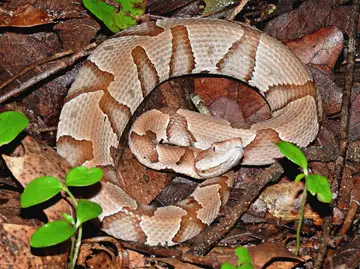
Copperhead
Photo: USFWSmidwest · Public domain · Wikimedia Commons

Copperhead

Agkistrodon contortrix

Venomous per AGFC

Size
Adults usually about 2 to 3 feet (24-36 in); record about 53 inches.
How to recognize it
  • Vertical (cat-like) pupils and a heat-sensing pit between eye and nostril
  • Heavy-bodied; keeled scales
  • Head shape alone is not a reliable way to identify copperheads
Where in Arkansas
Statewide AGFC
89 records by month.
What the sources say

Habitat: Occurs in mixed pine-hardwood forests, bottomland hardwood forests, and rocky or brushy fields and hillsides (AGFC)

Full Copperhead guide

Cottonmouth
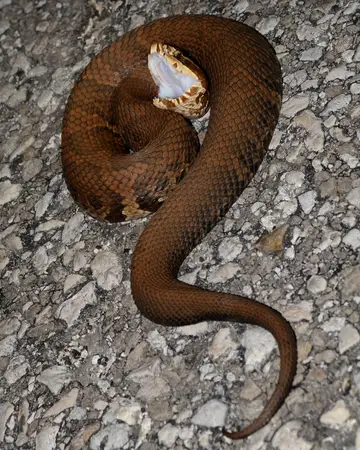
Photo: Geoff Gallice from Gainesville · CC BY 2.0 · Wikimedia Commons

Cottonmouth

Agkistrodon piscivorus

Venomous per AGFC

Size
Typically 30 to 48 inches (about 3 to 4 feet); recorded up to 75 inches.
How to recognize it
  • Heat-sensing pit between nostril and eye; no rattle
  • Head much wider than the neck, with a dark bar from the eye to the jaw; vertical (cat-eye) pupils
  • Gapes to show the white lining of its mouth when threatened
Where in Arkansas
Statewide; uncommon in upland streams of Ozark Highlands and Ouachita mountains AGFC
80 records by month.
What the sources say

Habitat: Occurs in variety of wetland habitats: swamps, oxbow lakes, sloughs, drainage ditches and streams (AGFC)

Full Cottonmouth guide

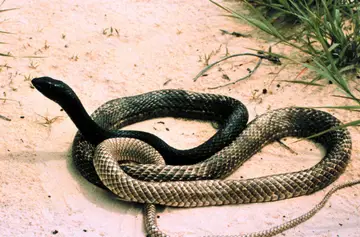
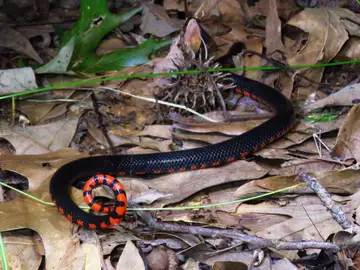
Texas Coral Snake
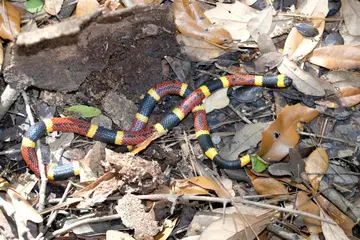
Photo: Brady Reed · CC0 1.0 · iNaturalist

Texas Coral Snake

Micrurus tener

Venomous per AGFC

Danger to people
“…the venomous coral snake has a slender head” AGFC
Size
Usually 2.5 feet or shorter (TPWD); adults average 20 to 30 inches (AGFC).
How to recognize it
  • The only snake in Texas with touching red and yellow bands
  • Slender with a small head and round pupils; AGFC warns round pupils and a slender head do not mean a snake is nonvenomous
Where in Arkansas
Southern Arkansas, west of the Ouachita River and south of the Little Missouri River AGFC
What the sources say

Habitat: Prefers moist pine, hardwood or mixed pine-hardwood forests with loose, sandy soils and pine straw, leaf litter and logs for cover (AGFC)

Full Texas Coral Snake guide

Timber Rattlesnake
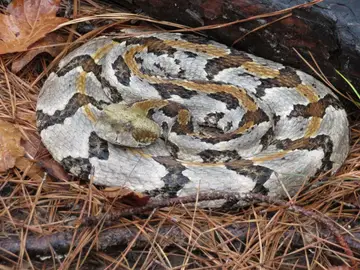
Photo: NPS Photo · Public domain · Wikimedia Commons

Timber Rattlesnake

Crotalus horridus

Venomous per AGFC

Size
Most adults 36 to 60 inches (3 to 5 feet); record 74.5 inches.
How to recognize it
  • Black tail ending in a rattle
  • Heat-sensing pit between nostril and eye
  • Large, thick head distinct from the neck; cat-like vertical pupil
Where in Arkansas
Statewide AGFC
39 records by month.
What the sources say

Habitat: Occurs in hardwood, mixed pine-hardwood, bottomland hardwood forests and rocky or brushy fields and hillsides (AGFC)

Full Timber Rattlesnake guide

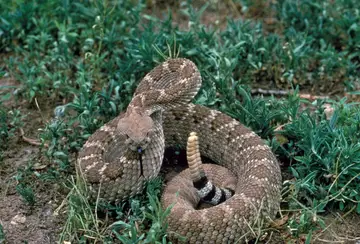
Western Diamondback Rattlesnake
Photo: Gary Stolz (original) · Public domain · Wikimedia Commons

Western Diamondback Rattlesnake

Crotalus atrox

Venomous per AGFC

Danger to people
“Arkansas’ rarest venomous snake Western Diamondback Rattlesnake” AGFC
Size
Usually about 3.5 to 4.5 feet; Texas says it can reach seven feet. Arizona's maximum is 66 inches excluding the rattle; Saguaro National Park gives a range of 30 to 90 inches.
How to recognize it
  • Rattle at the end of the tail
  • Broad triangular head on a slender neck; vertical pupils
  • Thin light stripe from behind the eye down to the upper lip
Where in Arkansas
Uplands of Ouachita Mountains and southwestern Ozark highlands AGFC
What the sources say

Habitat: Found in upland rocky, open pine-hardwood forests and rocky outcrops (AGFC)

Full Western Diamondback Rattlesnake guide

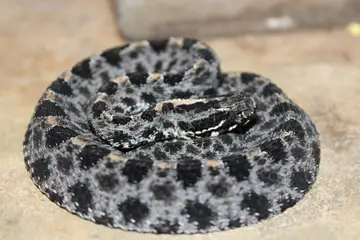
Western Pigmy Rattlesnake
Photo: Jolieokefenokee · CC BY 4.0 · Wikimedia Commons

Western Pigmy Rattlesnake

Sistrurus miliarius

Venomous per AGFC

Danger to people
“Rattle sounds like the buzz of an insect and can be heard only at very close distances” AGFC
Size
Adults usually 12-24 inches (30-61 cm); record 31-33 inches. Newborns about 5-6 inches.
How to recognize it
  • Tiny rattle at the end of a slender tail; buzz sounds like an insect
  • Pit viper: heat-sensing pit between nostril and eye, vertical (cat-like) pupils, keeled scales; nine large plates on top of the head
  • Large head scales (other rattlesnakes have small scales on the head)
Where in Arkansas
Statewide; lacking records for most of the Mississippi Delta AGFC
What the sources say

Habitat: Prefers open brushy lowlands, open hardwood and mixed pine-hardwood forests (AGFC)

Full Western Pigmy Rattlesnake guide

The other 31 snakes

From A to Z. "Not stated" means no official source we use gives a venom status, not that the snake is harmless. Some harmless snakes mimic venomous ones: leave every snake alone.

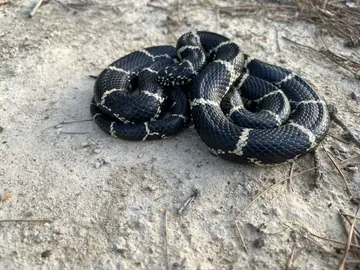
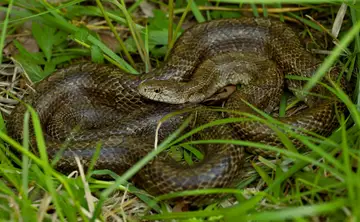
No confirmed photo of Black Rat Snake

Black Rat Snake

Pantherophis obsoleta

Non-venomous per AGFC

Where in Arkansas
Statewide AGFC
What the sources say

Venom: “Arkansas is home to 36 species of snakes, six of which are venomous” (AGFC)

Habitat: Forests and woodlands; an excellent climber (AGFC)

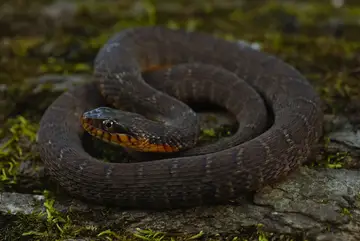
No confirmed photo of Broad-banded Water Snake

Broad-banded Water Snake

Nerodia fasciata

Non-venomous per AGFC

Where in Arkansas
Mississippi Delta and Coastal Plain; also found in areas of eastern Ozark and Ouachita mountains AGFC
67 records by month.
What the sources say

Venom: “Arkansas is home to 36 species of snakes, six of which are venomous” (AGFC)

Habitat: A lowland water snake of swamps, oxbow lakes, sloughs, ponds and sluggish streams (AGFC)

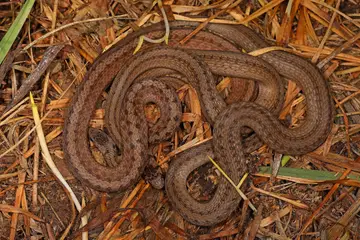
Brown Snake
Photo: Judy Gallagher · CC BY 2.0 · Wikimedia Commons

Brown Snake

Storeria dekayi

Non-venomous per AGFC

Size
Most adults 9 to 13 inches; occasionally up to about 20 inches.
How to recognize it
  • Dark top of head; a dark spot under each eye and on each side of the neck
  • Keeled (ridged) scales in 17 rows; round pupil
  • Tennessee: a small dark downward streak on the side of the head
Where in Arkansas
Statewide AGFC
65 records by month.
What the sources say

Venom: “Arkansas is home to 36 species of snakes, six of which are venomous” (AGFC)

Habitat: Prefers moist environments of forests, woodland edge, swamps and floodplains (AGFC)

Full Brown Snake guide

Coachwhip
Photo: NOAA · Public domain · Wikimedia Commons

Coachwhip

Masticophis flagellum

Non-venomous per AGFC

Size
Most adults about 42 to 60 inches (3.5 to 5 ft); record 102 inches (8.5 ft). Ranges given by agencies: 41 to 84 in (Louisiana), 36 to 82 in (Oklahoma), adults average 50 to 72 in (Alabama), up to 94 in (NC State Extension), up to 80 in in Colorado and up to 68 in in Arizona.
How to recognize it
  • Long, slowly tapering tail whose scales look like a braided whip
  • Very long and slender, with smooth scales
  • Large eyes with round pupils
Where in Arkansas
Almost statewide; absent from Mississippi Delta AGFC
What the sources say

Venom: “Arkansas is home to 36 species of snakes, six of which are venomous” (AGFC)

Habitat: Found in open forests, rocky glades and grasslands (AGFC)

Full Coachwhip guide

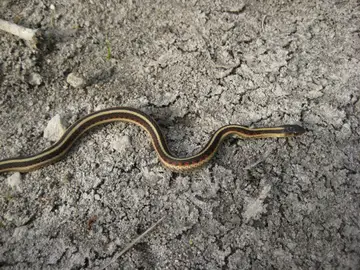
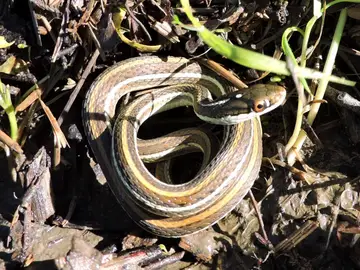
Common Garter Snake
Photo: kclarksdnhmorg · CC BY 4.0 · iNaturalist

Common Garter Snake

Thamnophis sirtalis

Non-venomous per AGFC

Where in Arkansas
Statewide AGFC
68 records by month.
What the sources say

Venom: “Arkansas is home to 36 species of snakes, six of which are venomous” (AGFC)

Habitat: Found in a variety of wet habitats, marshes, floodplains, lake and pond edges and wet pastures (AGFC)

Diamondback Water Snake
Photo: Peter Paplanus from St. Louis, Missouri · CC BY 2.0 · Wikimedia Commons

Diamondback Water Snake

Nerodia rhombifer

Non-venomous per AGFC

Where in Arkansas
Coastal Plain, Mississippi Delta and the valleys of the Arkansas and White rivers AGFC
What the sources say

Venom: “Arkansas is home to 36 species of snakes, six of which are venomous” (AGFC)

Habitat: Found in a variety of wetland habitats: swamps, sloughs, marshes, oxbow lakes, rivers and streams (AGFC)

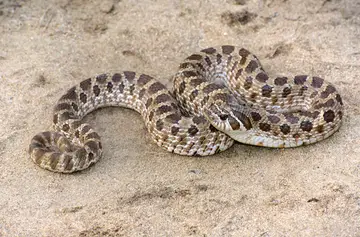
Eastern Hognose Snake
Photo: Joshua Liverman · CC BY 4.0 · iNaturalist

Eastern Hognose Snake

Heterodon platirhinos

Non-venomous per AGFC

Where in Arkansas
Statewide, but very localized populations AGFC
What the sources say

Venom: “Spoiler alert: Said snake is harmless to humans. … Hognose snakes also produce a mild venom with their saliva … it has little effect on humans although some people have experienced a bit of swelling along with a burning and tingling sensation, all short-lived.” (AGFC)

Habitat: Found in a variety of habitats with sandy or loose soil (AGFC)

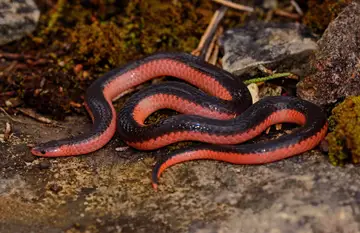
Eastern Worm Snake
Photo: Judy Gallagher · CC BY 2.0 · Wikimedia Commons

Eastern Worm Snake

Carphophis amoenus

Non-venomous per AGFC

Where in Arkansas
Crowley’s Ridge, Ozark Plateau, Ouachita Mountains and western Coastal Plain AGFC
What the sources say

Venom: “Arkansas is home to 36 species of snakes, six of which are venomous” (AGFC)

Habitat: Inhabits forests, rocky, wooded hillsides and forest edges (AGFC)

Flathead Snake
Photo: Peter Paplanus · CC BY 2.0 · Wikimedia Commons

Flathead Snake

Tantilla gracilis

Non-venomous per AGFC

Where in Arkansas
Ozark Plateau, Ouachita Mountains, Coastal Plain, and one known locality from Crowley’s Ridge Absent from Mississippi Delta AGFC
What the sources say

Venom: “Arkansas is home to 36 species of snakes, six of which are venomous” (AGFC)

Habitat: Found in rocky, open forests or pastures, or in upland mixed pine-hardwood forests (AGFC)

Glossy Crayfish Snake
Photo: William L. Farr · CC BY-SA 4.0 · Wikimedia Commons · resized

Glossy Crayfish Snake

Regina rigida

Non-venomous per AGFC

Where in Arkansas
Mississippi Delta and Coastal Plain AGFC
What the sources say

Venom: “Arkansas is home to 36 species of snakes, six of which are venomous” (AGFC)

Habitat: Glossy crayfish snakes inhabit the margins of swamps, marshes, sloughs and saturated soils of bottomland hardwood forests (AGFC)

Graham’s Crayfish Snake
Photo: Chad Wallis · CC BY 4.0 · Wikimedia Commons

Graham’s Crayfish Snake

Regina grahamii

Non-venomous per AGFC

Where in Arkansas
Mississippi Delta and Coastal Plain; isolated record from the western Arkansas River Valley AGFC
What the sources say

Venom: “Arkansas is home to 36 species of snakes, six of which are venomous” (AGFC)

Habitat: Often seen in early spring basking on low branches or brush over water in marshes, ditches and sloughs (AGFC)

Great Plains Rat Snake
Photo: Peter Paplanus · CC BY 2.0 · Wikimedia Commons

Great Plains Rat Snake

Pantherophis emoryi

Non-venomous per AGFC

Where in Arkansas
An uncommon snake of the Ozark Plateau and Ouachita Mountains AGFC
What the sources say

Venom: “Arkansas is home to 36 species of snakes, six of which are venomous” (AGFC)

Habitat: A snake of open forests, forest edges and rocky hillsides (AGFC)

Ground Snake
Photo: Peter Paplanus · CC BY 2.0 · Wikimedia Commons

Ground Snake

Sonora semiannulata

Non-venomous per AGFC

Where in Arkansas
Two records from Benton County AGFC
What the sources say

Venom: “Arkansas is home to 36 species of snakes, six of which are venomous” (AGFC)

Habitat: An inhabitant of dry, rocky cedar glades or rocky, open forests with southerly exposures (AGFC)

Lined Snake
Photo: Peter Paplanus from St. Louis, Missouri · CC BY 2.0 · Wikimedia Commons

Lined Snake

Tropidoclonion lineatum

Not stated

Venom
No official source we use states whether this animal is venomous. That does not mean it is harmless: do not handle it.
Conservation
Species of Greatest Conservation Need, 2025 Arkansas Wildlife Action Plan
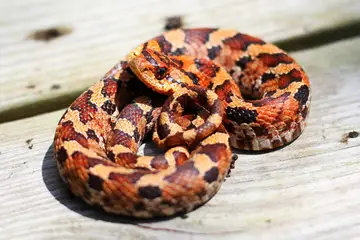
Milk Snake
Photo: Tom Norton · CC BY 4.0 · iNaturalist

Milk Snake

Lampropeltis triangulum

Non-venomous per AGFC

Size
Eastern milksnake 24 to 52 inches (Alabama); TN gives 24 to 36 inches for eastern and 21 to 28 for red milksnake.
How to recognize it
  • Eastern milksnake: black-and-white checkerboard belly (Ohio). Western milksnake in Louisiana: underside dull white with scattered black marks.
  • Eastern milksnake: a light Y- or V-shaped mark is usually present on the nape
  • Smooth, shiny scales and round pupils
Where in Arkansas
Statewide AGFC
What the sources say

Venom: “Arkansas is home to 36 species of snakes, six of which are venomous” (AGFC)

Habitat: Pine, hardwood, mixed pine-hardwood and bottomland forests, especially around rocky areas and under logs (AGFC)

Full Milk Snake guide

Mississippi Green Water Snake
Photo: Stanton · CC BY-SA 4.0 · Wikimedia Commons · resized

Mississippi Green Water Snake

Nerodia cyclopion

Non-venomous per AGFC

Where in Arkansas
Mississippi Delta and Coastal Plain AGFC
What the sources say

Venom: “Arkansas is home to 36 species of snakes, six of which are venomous” (AGFC)

Habitat: Inhabits still or very slow-moving waters, such as lakes, ponds, oxbows, ditches and swamps (AGFC)

Mud Snake
Photo: Annika Lindqvist · CC BY 4.0 · iNaturalist

Mud Snake

Farancia abacura

Non-venomous per AGFC

Where in Arkansas
Mississippi Delta and Coastal Plain AGFC
What the sources say

Venom: “This snake is completely harmless and never attempts to bite … Arkansas is home to 36 species of snakes, six of which are venomous” (AGFC)

Habitat: This thoroughly aquatic snake inhabits cypress/tupelo gum swamps, bottomland hardwood sloughs and the margins of cypress-lined oxbow lakes (AGFC)

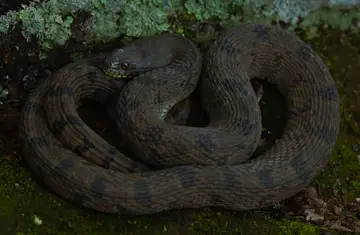
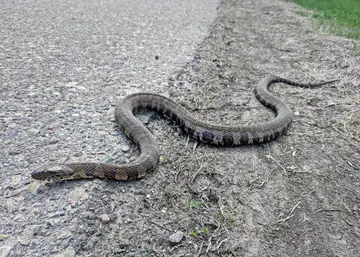
Northern Water Snake
Photo: U.S. Fish and Wildlife Service - Midwest Region · Public domain · Wikimedia Commons

Northern Water Snake

Nerodia sipedon

Non-venomous per AGFC

Size
Adults 22 to 42 inches long, occasionally to 59 inches (Missouri). Pennsylvania gives 24 to over 50 inches; females are usually bigger than males.
How to recognize it
  • Dark crossbands on the front part of the body break up into rows of blotches from the middle of the body to the tail.
  • Belly white, yellow or orange, usually with dark half-moon-shaped spots.
  • Keeled (ridged) scales, so it feels rough; round pupils like other nonvenomous snakes in Missouri.
Where in Arkansas
Statewide, but uncommon in the Delta AGFC
61 records by month.
What the sources say

Venom: “Arkansas is home to 36 species of snakes, six of which are venomous” (AGFC)

Habitat: Most commonly seen water snake in reservoirs and fast-flowing streams and rivers (AGFC)

Full Northern Water Snake guide

Plainbelly Water Snake
Photo: Peter Paplanus · CC BY 2.0 · Wikimedia Commons

Plainbelly Water Snake

Nerodia erythrogaster

Non-venomous per AGFC

Where in Arkansas
Almost statewide; apparently absent from north-central Ozarks AGFC
71 records by month.
What the sources say

Venom: “Arkansas is home to 36 species of snakes, six of which are venomous” (AGFC)

Habitat: This water snake can be found in sluggish water habitats of swamps, oxbow lakes, sloughs, rivers and streams (AGFC)

Prairie Kingsnake
Photo: Peter Paplanus · CC BY 2.0 · Wikimedia Commons

Prairie Kingsnake

Lampropeltis calligaster

Non-venomous per AGFC

Where in Arkansas
Almost statewide, apparently absent east of the White River AGFC
What the sources say

Venom: “Arkansas is home to 36 species of snakes, six of which are venomous” (AGFC)

Habitat: Occurs in open forests, pastures and prairie habitats (AGFC)

Queen Snake
Photo: Rstanton13 · CC BY-SA 4.0 · Wikimedia Commons · resized

Queen Snake

Regina septemvittata

Non-venomous per AGFC

Where in Arkansas
Restricted to isolated streams in the Ozark Plateau AGFC
Conservation
Species of Greatest Conservation Need, 2025 Arkansas Wildlife Action Plan (listed as Queensnake). The plan says this confers no special regulatory status.
What the sources say

Venom: “Arkansas is home to 36 species of snakes, six of which are venomous” (AGFC)

Habitat: Occurs along the margins of rocky bottomed streams, marshes, oxbow lakes, rivers and streams (AGFC)

Racer
Photo: Everglades NPS from Homestead, Florida, United States · Public domain · Wikimedia Commons

Racer

Coluber constrictor

Non-venomous per AGFC

Size
Most adults about 3 to 5 ft. Sources range from 20 to 56 inches (Florida Museum) to 34 to 77 inches (New Jersey); Alabama says some exceed 6 ft.
How to recognize it
  • Smooth scales
  • Long and slender with large eyes
  • White chin
Where in Arkansas
Statewide AGFC
63 records by month.
What the sources say

Venom: “Arkansas is home to 36 species of snakes, six of which are venomous” (AGFC)

Full Racer guide

Redbelly Snake
Photo: Rstanton13 · CC BY-SA 4.0 · Wikimedia Commons · resized

Redbelly Snake

Storeria occipitomaculata

Non-venomous per AGFC

Size
Usually 8 to 10 inches; state figures run from about 4 to 16 inches, with a Florida record of 16.6 inches.
How to recognize it
  • Plain, unmarked red or orange belly.
  • Three light spots just behind the head, which may fuse into a collar.
  • Keeled (ridged) scales in 15 rows at midbody and round pupils.
Where in Arkansas
Statewide, but very few records from the Mississippi Delta AGFC
What the sources say

Venom: “Arkansas is home to 36 species of snakes, six of which are venomous” (AGFC)

Habitat: Inhabits moist forests, hiding under logs, rocks and leaf litter (AGFC)

Full Redbelly Snake guide

Ringneck Snake
Photo: Peter Paplanus from St. Louis, Missouri · CC BY 2.0 · Wikimedia Commons

Ringneck Snake

Diadophis punctatus

Non-venomous per AGFC

Size
Usually 8 to 15 inches long; Alabama reports up to about 18 inches, rarely 24. AZGFD gives a maximum of 34 inches for Arizona animals.
How to recognize it
  • A yellow, cream or orange ring around the neck; it may be incomplete, and some Lower Florida Keys and western Arizona snakes lack it.
  • Bright yellow to orange or red belly, often with a row of black half-moon spots; the underside of the tail is often red.
  • Smooth, shiny scales and a small head only slightly wider than the neck.
Where in Arkansas
Statewide, but only two records known east of the White River AGFC
78 records by month.
What the sources say

Venom: “Arkansas is home to 36 species of snakes, six of which are venomous” (AGFC)

Habitat: This snake can be found in forests, woodland edges, pastures and rocky glades (AGFC)

Full Ringneck Snake guide

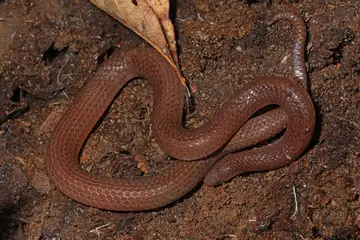
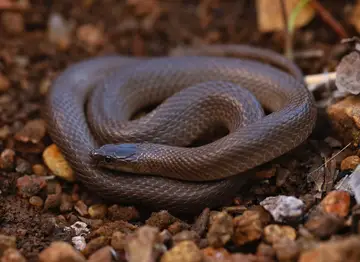
Rough Earth Snake
Photo: Peter Paplanus · CC BY 2.0 · Wikimedia Commons

Rough Earth Snake

Virginia striatula

Non-venomous per AGFC

Where in Arkansas
Statewide, very few records for Mississippi Delta AGFC
What the sources say

Venom: “Arkansas is home to 36 species of snakes, six of which are venomous” (AGFC)

Habitat: Prefers rocky, wooded hillsides, forest edges, bottomland hardwood forests and pine forests (AGFC)

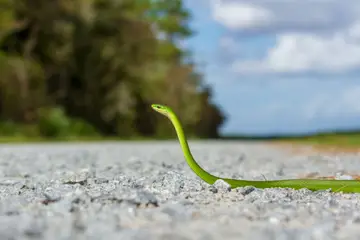
Rough Green Snake
Photo: Joshua Liverman · CC BY 4.0 · iNaturalist

Rough Green Snake

Opheodrys aestivus

Non-venomous per AGFC

Size
Most adults are 14 to 33 inches long (Florida Museum), with a record of 46 inches. Maryland, Missouri, Tennessee and Arkansas give 22 to 32 inches. The tail is long and thin, about a third or more of the total length.
How to recognize it
  • Keeled (ridged) scales in 17 rows, which feel rough; the smooth green snake has smooth scales.
  • Extremely long, thin tail and round pupils.
  • Large eyes.
Where in Arkansas
Statewide AGFC
54 records by month.
What the sources say

Venom: “Arkansas is home to 36 species of snakes, six of which are venomous” (AGFC)

Habitat: Rough green snakes are (AGFC)

Full Rough Green Snake guide

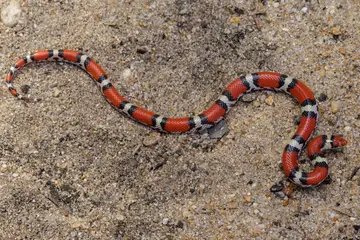
Scarlet Snake
Photo: Stanton · CC BY-SA 4.0 · Wikimedia Commons · resized

Scarlet Snake

Cemophora coccinea

Non-venomous per AGFC

Where in Arkansas
Statewide AGFC
What the sources say

Venom: “Arkansas is home to 36 species of snakes, six of which are venomous” (AGFC)

Habitat: Pine, hardwood or mixed pine-hardwood forests, with loose or sandy soils (AGFC)

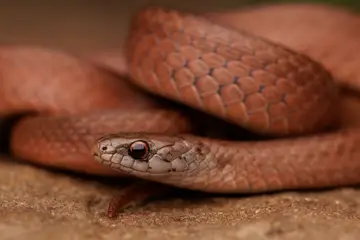
Smooth Earth Snake
Photo: Stanton · CC BY-SA 4.0 · Wikimedia Commons · resized

Smooth Earth Snake

Virginia valeriae

Non-venomous per AGFC

Where in Arkansas
Ozark Plateau, Ouachita Mountains and Coastal Plain Absent from Crowley’s Ridge and Mississippi Delta AGFC
What the sources say

Venom: “Arkansas is home to 36 species of snakes, six of which are venomous” (AGFC)

Habitat: This small snake is (AGFC)

Speckled Kingsnake
Photo: Matthew Lumsden · CC BY 4.0 · iNaturalist

Speckled Kingsnake

Lampropeltis getula

Non-venomous per AGFC

Size
Most adults are about 36-48 inches. Maryland gives a record of 82 inches; Alabama gives up to 6.9 feet.
How to recognize it
  • Smooth, shiny scales and an indistinct neck.
  • Round pupil.
  • Florida Museum counts 19-32 crossbands in Florida; Alabama counts 23 to 52.
Where in Arkansas
Statewide AGFC
What the sources say

Venom: “Arkansas is home to 36 species of snakes, six of which are venomous” (AGFC)

Habitat: Habitats include swamps, bottomland hardwood forests, marshes, prairies, pastures and mixed pine-hardwood forests (AGFC)

Full Speckled Kingsnake guide

Western Ribbon Snake
Photo: Sam Kieschnick · CC BY 4.0 · iNaturalist

Western Ribbon Snake

Thamnophis proximus

Non-venomous per AGFC

Where in Arkansas
Statewide AGFC
What the sources say

Venom: “Arkansas is home to 36 species of snakes, six of which are venomous” (AGFC)

Habitat: Prefers to live near the edges of swamps, sloughs, marshes, oxbow lakes, rivers and streams (AGFC)

Western Worm Snake
Photo: Peter Paplanus · CC BY 2.0 · Wikimedia Commons

Western Worm Snake

Carphophis vermis

Non-venomous per AGFC

Where in Arkansas
Crowley’s Ridge, Ozark Plateau, Ouachita Mountains and western Coastal Plain AGFC
What the sources say

Venom: “Arkansas is home to 36 species of snakes, six of which are venomous” (AGFC)

Habitat: Inhabits forests, rocky, wooded hillsides and forest edges (AGFC)

Snakes people confuse

Copperhead or Cottonmouth (water moccasin)?

Copperhead
Photo: USFWSmidwest · Public domain · Wikimedia Commons

Copperhead Venomous

Cottonmouth (water moccasin)
Photo: Geoff Gallice from Gainesville · CC BY 2.0 · Wikimedia Commons

Cottonmouth (water moccasin) Venomous

Also venomous. Juvenile cottonmouths have many dark spots and speckles inside their dark crossbands (copperhead bands have none or at most one). The Florida Museum says adult Florida cottonmouths are typically uniformly dark, but SCDNR says cottonmouth color ranges from dark brown and black to olive drab and yellow-tan, so a pale snake is not ruled out. The copperhead's eye is not obscured by the dark facial band typical of the cottonmouth. Cottonmouths are almost always associated with wetlands.

Copperhead or Northern water snake?

Copperhead
Photo: USFWSmidwest · Public domain · Wikimedia Commons

Copperhead Venomous

Northern water snake
Photo: U.S. Fish and Wildlife Service - Midwest Region · Public domain · Wikimedia Commons

Northern water snake Non-venomous

Its dark bands form a 'reverse hourglass': wider across the back and narrower on the sides (the copperhead's are narrow on the back, wide on the sides). Older water snakes can look solid dark.

Copperhead or Eastern milk snake?

Copperhead
Photo: USFWSmidwest · Public domain · Wikimedia Commons

Copperhead Venomous

Eastern milk snake
Photo: Tom Norton · CC BY 4.0 · iNaturalist

Eastern milk snake Non-venomous

Milk snake blotches are outlined in black and widest across the middle of the back; belly is a black-and-white checkerboard (copperhead belly is mottled white to gray).

Copperhead or Eastern hognose snake?

Copperhead
Photo: USFWSmidwest · Public domain · Wikimedia Commons

Copperhead Venomous

Eastern hognose snake
Photo: Dean Hester · CC BY 4.0 · iNaturalist

Eastern hognose snake Non-venomous

Named by Delaware DNREC and Rutgers as a frequent copperhead misidentification. Use the hourglass test: in Delaware only the copperhead has dark hourglass crossbands narrowest at the center of the back.

Cottonmouth or Watersnakes?

Cottonmouth
Photo: Geoff Gallice from Gainesville · CC BY 2.0 · Wikimedia Commons

Cottonmouth Venomous

Watersnakes
Photo: U.S. Fish and Wildlife Service - Midwest Region · Public domain · Wikimedia Commons

Watersnakes Non-venomous

Seen from directly above, a watersnake's eyes are visible but a cottonmouth's are not. Watersnakes have round pupils and no facial pit, and they usually have thin dark vertical lines on the lips.

Cottonmouth or Diamond-backed Watersnake?

Cottonmouth
Photo: Geoff Gallice from Gainesville · CC BY 2.0 · Wikimedia Commons

Cottonmouth Venomous

Diamond-backed Watersnake
Photo: Peter Paplanus from St. Louis, Missouri · CC BY 2.0 · Wikimedia Commons

Diamond-backed Watersnake Non-venomous

Alabama DCNR says this snake is often confused with the cottonmouth. TWRA: the diamond-backed watersnake is lighter, with a chain-like pattern; watersnakes in general lack the cottonmouth's facial pits (see the watersnake entry above).

Photos show typical adults; individuals vary. Never get close to compare.

When snakes are active in Arkansas

Records of snakes in Arkansas peak in April to June. They show when people record snakes, not how many there are (about month bars).

1,251 records of snakes in Arkansas by month (GBIF, CC0 and CC BY records).
  • Copperhead: active April-November (AGFC Arkansas Snake Guide). AGFC
  • Cottonmouth: active April-November (AGFC Arkansas Snake Guide). AGFC
  • Western Diamondback Rattlesnake: active April-October (AGFC Arkansas Snake Guide). AGFC
  • Timber Rattlesnake: active April-October (AGFC Arkansas Snake Guide). AGFC
  • Western Pigmy Rattlesnake: active April-October (AGFC Arkansas Snake Guide). AGFC
  • Texas Coral Snake: active late February through mid-November (AGFC Arkansas Snake Guide). AGFC
  • Scarlet Snake: active March-October (AGFC Arkansas Snake Guide). AGFC
  • Milk Snake: active March-October (AGFC Arkansas Snake Guide). AGFC
  • Plainbelly Water Snake: active March-November (AGFC Arkansas Snake Guide). AGFC
  • Broad-banded Water Snake: active late March-October (AGFC Arkansas Snake Guide). AGFC
  • Diamondback Water Snake: active March-October (AGFC Arkansas Snake Guide). AGFC
  • Northern Water Snake: active March-October (AGFC Arkansas Snake Guide). AGFC
  • Great Plains Rat Snake: active March-October (AGFC Arkansas Snake Guide). AGFC
  • Black Rat Snake: active March-November (AGFC Arkansas Snake Guide). AGFC
  • Eastern Hognose Snake: active March-October (AGFC Arkansas Snake Guide). AGFC
  • Prairie Kingsnake: active March-October (AGFC Arkansas Snake Guide). AGFC
  • Speckled Kingsnake: active March-November (AGFC Arkansas Snake Guide). AGFC
  • Western Ribbon Snake: active March-October (AGFC Arkansas Snake Guide). AGFC
  • Common Garter Snake: active March-November (AGFC Arkansas Snake Guide). AGFC
  • Mud Snake: active April-October (AGFC Arkansas Snake Guide). AGFC
  • Glossy Crayfish Snake: active March-October (AGFC Arkansas Snake Guide). AGFC
  • Queen Snake: active late March-October (AGFC Arkansas Snake Guide). AGFC
  • Eastern Worm Snake: active March-November (AGFC Arkansas Snake Guide). AGFC
  • Western Worm Snake: active March-November (AGFC Arkansas Snake Guide). AGFC
  • Ringneck Snake: active March-November (AGFC Arkansas Snake Guide). AGFC
  • Ground Snake: active April-October (AGFC Arkansas Snake Guide). AGFC
  • Brown Snake: active late March-October (AGFC Arkansas Snake Guide). AGFC
  • Redbelly Snake: active March-October (AGFC Arkansas Snake Guide). AGFC
  • Flathead Snake: active March-October (AGFC Arkansas Snake Guide). AGFC
  • Rough Earth Snake: active April-October (AGFC Arkansas Snake Guide). AGFC
  • Smooth Earth Snake: active April-October (AGFC Arkansas Snake Guide). AGFC

If you are bitten or stung

Call 911 or Poison Help at 1-800-222-1222 right away. Poison Help connects you to your local poison center, any time of day.

Official advice from AGFC and University of Arkansas System Division of Agriculture, Cooperative Extension Service:

How to report

Nuisance wildlife hotline 833-345-0315, 8 a.m.-4:30 p.m., voicemail any time; alligator nuisance calls answered 24/7. Aquatic nuisance species sightings: AGFC Aquatic Nuisance Species Form (www.agfc.com/ans); suspected apple snails also to the ANS Program Coordinator at 501-604-0485. Mountain lion sightings with verifiable evidence: nearest AGFC office. AGFC

What official sources say

Are there venomous snakes in Arkansas?

Yes. Copperhead, cottonmouth, western diamondback rattlesnake, timber rattlesnake, western pigmy rattlesnake and Texas coral snake. AGFC

“Arkansas is home to 36 species of snakes, six of which are venomous”

Are there rattlesnakes in Arkansas?

Yes. Timber rattlesnake (statewide), western pigmy rattlesnake (statewide, lacking records for most of the Mississippi Delta) and western diamondback (uplands of the Ouachita Mountains and southwestern Ozark highlands). University of Arkansas System Division of Agriculture, Cooperative Extension Service

“…western diamond-backed rattlesnake (Crotalus atrox) timber rattlesnake (Crotalus horridus) western pigmy rattlesnake (Sistrurus miliarius)”

Are there coral snakes in Arkansas?

Yes. The Texas coral snake is venomous and occurs in southern Arkansas, west of the Ouachita River and south of the Little Missouri River. AGFC

“Range Southern Arkansas, west of the Ouachita River and south of the Little Missouri River”

Are there water moccasins in Arkansas?

Yes. The cottonmouth occurs statewide and is uncommon in upland streams of the Ozark Highlands and Ouachita Mountains. Several harmless water snakes are mistaken for it. AGFC

“Range Statewide; uncommon in upland streams of Ozark Highlands and Ouachita mountains”

About this list

The species list comes from Arkansas Snake Guide (AGFC pocket guide) (Arkansas Game and Fish Commission (AGFC), undated; PDF created 2023-01-06; linked from AGFC Free Publications). 1 more entry comes from other official sources named on each card.

Venom labels come only from official sources and link to them; "Not stated" never means harmless. How labels work.

Want a paper copy? Print the Arkansas snakes ID chart.

Sources

  1. Nuisance Wildlife. Arkansas Game and Fish Commission (AGFC). undated page; checked November 3, 2026.
    Quoted passages (1)
    “The nuisance wildlife hotline, 833-345-0315, is available during 8 a.m.-4:30 p.m. for immediate assistance, although voicemails can be left at any time that will be returned during normal working hours. Alligator nuisance calls will be answered 24/7 via an emergency liaison. … Report sightings immediately by filling out the Aquatic Nuisance Species Form … report the location immediately to AGFC at www.agfc.com/ans or immediately call the Aquatic Nuisance Species (ANS) Program Coordinator, Matt Horton, at 501-604-0485 … The public is encouraged to contact their nearest AGFC office with any sightings of mountain lions with verifiable evidence.”
  2. Arkansas Snake Guide (pocket guide; Kelly J. Irwin, AGFC herpetologist). Arkansas Game and Fish Commission (AGFC). undated page; checked November 3, 2026.
    Quoted passages (23)
    “Arkansas is home to 36 species of snakes, six of which are venomous”
    “Arkansas’ rarest venomous snake Western Diamondback Rattlesnake”
    “Rattle sounds like the buzz of an insect and can be heard only at very close distances”
    “This snake is completely harmless and never attempts to bite … Arkansas is home to 36 species of snakes, six of which are venomous”
    “Leave snakes alone and they will leave you alone”
    “Do not attempt to capture, handle or kill a venomous snake. More people are bitten during these activities than in any other situation”
    “Several commercial products claim to repel snakes, although none has been shown to be effective”
    “Active April- October”
    “Active late February through mid-November”
    “Active March- October”
    “Active late March-October”
    “Active from March-October”
    “Active from March-November”
    “Active by day from March-October”
    “Active from March- November”
    “…active by day from March-November”
    “Active from April-October”
    “…active from March-October”
    “Active from late March-October”
    “…active from March-November”
    “…active from April-October”
    “Range Southern Arkansas, west of the Ouachita River and south of the Little Missouri River”
    “Range Statewide; uncommon in upland streams of Ozark Highlands and Ouachita mountains”
  3. Learn how to identify Arkansas's venomous snakes. Arkansas Game and Fish Commission (AGFC). March 10, 2021; checked November 3, 2026.
    Quoted passages (3)
    “…the coral snake which is a venomous snake native to Arkansas has round pupils”
    “…the venomous coral snake has a slender head”
    “…if you’re close enough to tell what kind of pupil they have, you’re probably getting too close to the snake”
  4. Big faker: Eastern hognose is Arkansas's counterfeit cobra. Arkansas Game and Fish Commission (AGFC). May 21, 2024; checked November 3, 2026.
    Quoted passages (1)
    “Spoiler alert: Said snake is harmless to humans. … Hognose snakes also produce a mild venom with their saliva … it has little effect on humans although some people have experienced a bit of swelling along with a burning and tingling sensation, all short-lived.”
  5. 2025 Arkansas Wildlife Action Plan, Chapter 2: Species of Greatest Conservation Need. Arkansas Game and Fish Commission (AGFC). 2025 plan; checked November 3, 2026.
  6. Snakes of Arkansas (FSA9102). University of Arkansas System Division of Agriculture, Cooperative Extension Service. PDF created 2021-08-11, modified 2025-04-04; checked November 3, 2026.
    Quoted passages (1)
    “All native snakes, including venomous snakes, are protected by law.”
  7. Encountering Native Snakes in Arkansas. University of Arkansas System Division of Agriculture, Cooperative Extension Service. undated page; checked November 3, 2026.
    Quoted passages (1)
    “…western diamond-backed rattlesnake (Crotalus atrox) timber rattlesnake (Crotalus horridus) western pigmy rattlesnake (Sistrurus miliarius)”
  8. GBIF.org occurrence records, human observations licensed CC0 1.0 or CC BY 4.0 only, accessed November 3, 2026. The datasets behind these counts are listed on our Sources page.