States Wildlife

Montana Bugs and Insects That Sting or Bite

Last checked November 3, 2026 against official sources.

On this page
  1. Which insects can hurt you
  2. Ticks (arachnids, not insects)
  3. All 20 insects and 6 ticks
  4. Lookalikes
  5. When they are active
  6. If you are bitten or stung
  7. About this list
  8. Sources

This page lists 20 insects and 6 ticks. 3 are venomous by official accounts. 4 are nonnative.

Not every species: no complete official list of Montana insects exists, so this page covers the ones state and Extension sources name. How lists are built.

Which insects can hurt you

Official sources single out these insects in Montana, in their own words:

Ticks (arachnids, not insects)

Official sources single out these ticks in Montana, in their own words:

All 20 insects and 6 ticks

Venomous species first, then A to Z. Do not handle them.

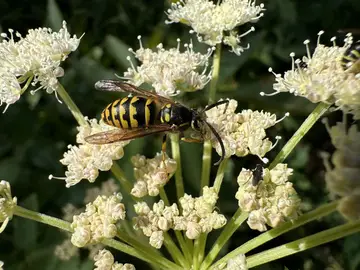
Aerial Yellow-jacket
Photo: Darin J McGuire · CC BY 4.0 · iNaturalist

Aerial Yellow-jacket

Dolichovespula arenaria

Venomous per Montana State University Extension

What the sources say

Venom: “Social wasps use their sting and venom for defense and can sting multiple times.” (Montana State University Extension)

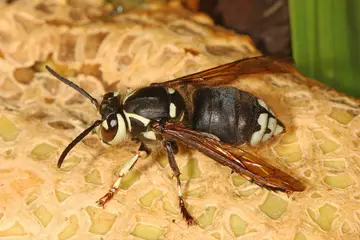
Bald-faced Hornet
Photo: Judy Gallagher · CC BY 2.0 · Wikimedia Commons

Bald-faced Hornet

Dolichovespula maculata

Venomous per Montana State University Extension

Size
Missouri: workers 1/2 to 3/4 inch, queens 3/4 inch. University of Maryland: workers 5/8 to 3/4 inch, queens just over an inch. Penn State gives 13 to 20 mm for the queen and her offspring.
How to recognize it
  • Not yellow, unlike typical yellowjackets; larger, black and ivory
  • Large, rounded, gray paper nest hanging in trees or shrubs, sometimes on buildings
  • Nest entrance is the lowest opening of the cone- or egg-shaped nest
What the sources say

Venom: “Social wasps use their sting and venom for defense and can sting multiple times.” (Montana State University Extension)

Full Bald-faced Hornet guide

No confirmed photo of Western Yellowjacket

Western Yellowjacket

Vespula pensylvanica

Venomous per Montana State University Extension

Danger to people
“…most of our stings come from the western yellowjacket” Montana State University Extension
What the sources say

Venom: “Social wasps use their sting and venom for defense and can sting multiple times.” (Montana State University Extension)

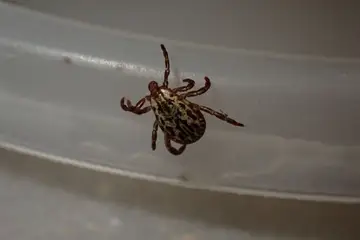
American Dog Tick
Photo: Turner Brockman · CC BY-SA 4.0 · iNaturalist · resized

American Dog Tick

Dermacentor variabilis

Not stated Tick: an arachnid, not an insect

Venom
No official source we use states whether this animal is venomous. That does not mean it is harmless: do not handle it.
Danger to people
“It is one of the major vectors of RMSF and can also transmit tularemia.” Montana State University Extension
No confirmed photo of Bed Bug

Bed Bug

Cimex lectularius

Not stated Nonnative

Venom
No official source we use states whether this animal is venomous. That does not mean it is harmless: do not handle it.
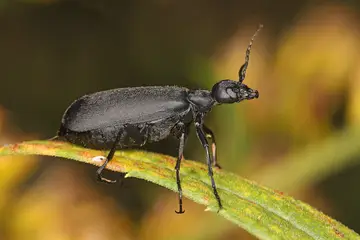
Black Blister Beetle
Photo: Judy Gallagher · CC BY 2.0 · Wikimedia Commons

Black Blister Beetle

Epicauta pensylvanica

Not stated

Venom
No official source we use states whether this animal is venomous. That does not mean it is harmless: do not handle it.
No confirmed photo of Blackjacket

Blackjacket

Vespula consobrina

Not stated

Venom
No official source we use states whether this animal is venomous. That does not mean it is harmless: do not handle it.
No confirmed photo of Brown Dog Tick

Brown Dog Tick

Rhipicephalus sanguineus

Not stated Tick: an arachnid, not an insect

Venom
No official source we use states whether this animal is venomous. That does not mean it is harmless: do not handle it.
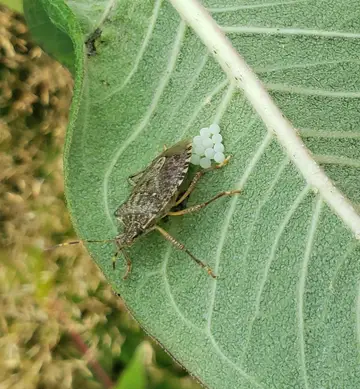
Brown Marmorated Stink Bug
Photo: Alexa Hoffman · CC BY 4.0 · iNaturalist

Brown Marmorated Stink Bug

Halyomorpha halys

Not stated Nonnative

Venom
No official source we use states whether this animal is venomous. That does not mean it is harmless: do not handle it.
Size
Adults about 5/8 inch (about 17 mm) long; shield-shaped, almost as wide as long.
How to recognize it
  • Two white bands on the antennae; blunt front edge of head; smooth shoulder margin; dark bands at the tip of the membranous forewings; banded abdominal edge visible beside the wings
  • Smooth (not spiny) shoulders; slightly larger than most native stink bugs
Where in Montana
Confirmed in Billings Montana State University Extension

Full Brown Marmorated Stink Bug guide

No confirmed photo of Cuckoo Yellowjacket

Cuckoo Yellowjacket

Vespula infernalis

Not stated

Venom
No official source we use states whether this animal is venomous. That does not mean it is harmless: do not handle it.
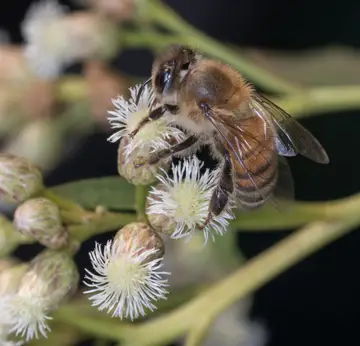
European Honey Bee
Photo: Jesse Rorabaugh · CC0 1.0 · iNaturalist

European Honey Bee

Apis mellifera

Not stated Nonnative

Venom
No official source we use states whether this animal is venomous. That does not mean it is harmless: do not handle it.
Size
About 10 percent smaller than a European honey bee, a difference too subtle to see without measurement or lab tests.
How to recognize it
  • Cannot be identified by eye: only DNA testing or microscopic measurements can tell it from a European honey bee.
  • Clue is behavior and nest site: very defensive, and may nest in small cavities such as water meter boxes, old tires, house eaves or the ground.
60 records by month.

Full European Honey Bee guide

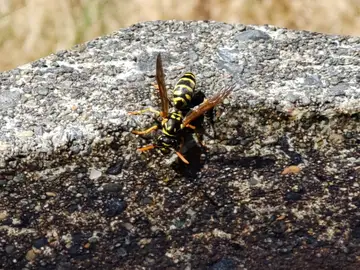
European Paper Wasp
Photo: Gavin Slater · CC BY 4.0 · iNaturalist

European Paper Wasp

Polistes dominula

Not stated Nonnative

Venom
No official source we use states whether this animal is venomous. That does not mean it is harmless: do not handle it.
No confirmed photo of Forest Yellowjacket

Forest Yellowjacket

Vespula acadica

Not stated

Venom
No official source we use states whether this animal is venomous. That does not mean it is harmless: do not handle it.
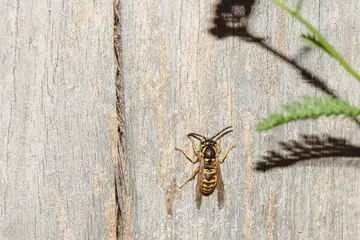
German Yellow-jacket
Photo: Flocci Nivis · CC BY 4.0 · Wikimedia Commons

German Yellow-jacket

Vespula germanica

Not stated

Venom
No official source we use states whether this animal is venomous. That does not mean it is harmless: do not handle it.
No confirmed photo of Golden Paper Wasp

Golden Paper Wasp

Polistes aurifer

Not stated

Venom
No official source we use states whether this animal is venomous. That does not mean it is harmless: do not handle it.
No confirmed photo of Northern Aerial Yellowjacket

Northern Aerial Yellowjacket

Dolichovespula norvegicoides

Not stated

Venom
No official source we use states whether this animal is venomous. That does not mean it is harmless: do not handle it.
No confirmed photo of Northern Paper Wasp

Northern Paper Wasp

Polistes fuscatus

Not stated

Venom
No official source we use states whether this animal is venomous. That does not mean it is harmless: do not handle it.
No confirmed photo of Old World Yellowjacket

Old World Yellowjacket

Vespula alascensis

Not stated

Venom
No official source we use states whether this animal is venomous. That does not mean it is harmless: do not handle it.
No confirmed photo of Parasitic Yellowjacket

Parasitic Yellowjacket

Dolichovespula arctica

Not stated

Venom
No official source we use states whether this animal is venomous. That does not mean it is harmless: do not handle it.
No confirmed photo of Prairie Yellowjacket

Prairie Yellowjacket

Vespula atropilosa

Not stated

Venom
No official source we use states whether this animal is venomous. That does not mean it is harmless: do not handle it.
No confirmed photo of Rocky Mountain Aerial Yellowjacket

Rocky Mountain Aerial Yellowjacket

Dolichovespula alpicola

Not stated

Venom
No official source we use states whether this animal is venomous. That does not mean it is harmless: do not handle it.
No confirmed photo of Rocky Mountain Wood Tick

Rocky Mountain Wood Tick

Dermacentor andersoni

Not stated Tick: an arachnid, not an insect

Venom
No official source we use states whether this animal is venomous. That does not mean it is harmless: do not handle it.
Danger to people
“It can transmit viral Colorado tick fever (CTF), Rocky Mountain spotted fever (RMSF), bovine anaplasmosis, and tularemia.” Montana State University Extension
No confirmed photo of Soft Ticks

Soft Ticks

Ornithodoros spp.

Not stated Tick: an arachnid, not an insect

Venom
No official source we use states whether this animal is venomous. That does not mean it is harmless: do not handle it.
No confirmed photo of Spinose Ear Tick

Spinose Ear Tick

Otobius megnini

Not stated Tick: an arachnid, not an insect

Venom
No official source we use states whether this animal is venomous. That does not mean it is harmless: do not handle it.
No confirmed photo of Western Encephalitis Mosquito

Western Encephalitis Mosquito

Culex tarsalis

Not stated

Venom
No official source we use states whether this animal is venomous. That does not mean it is harmless: do not handle it.
No confirmed photo of Winter Tick

Winter Tick

Dermacentor albipictus

Not stated Tick: an arachnid, not an insect

Venom
No official source we use states whether this animal is venomous. That does not mean it is harmless: do not handle it.

Insects and Bugs people confuse

Africanized Honey Bee or European honey bee?

Africanized Honey Bee
Photo: Jesse Rorabaugh · CC0 1.0 · iNaturalist

Africanized Honey Bee Not stated

European honey bee
Photo: Jesse Rorabaugh · CC0 1.0 · iNaturalist

European honey bee Not stated

Not by sight: same species and same appearance. Differences are behavior and nest choice, and a confirmed ID needs testing.

Photos show typical adults; individuals vary. Never get close to compare.

When insects are active in Montana

Records of insects in Montana peak in July to August. They show when people record insects, not how many there are (about month bars).

13,812 records of insects in Montana by month (GBIF, CC0 and CC BY records).

If you are bitten or stung

Call 911 or Poison Help at 1-800-222-1222 right away. Poison Help connects you to your local poison center, any time of day.

About this list

Venom labels come only from official sources and link to them; "Not stated" never means harmless. How labels work.

"Nonnative" and "Invasive" follow the wording of the source list. See invasive species in Montana.

Sources

  1. Contact Us. Montana Fish, Wildlife & Parks. archived copy, captured October 19, 2026; checked November 3, 2026.
  2. Montana Field Guide: Insects, selected families only. Montana Natural Heritage Program (Montana State Library) with Montana Fish, Wildlife & Parks: Montana Field Guide. archived copy, captured January 17, 2026; checked November 3, 2026.
  3. Social Wasps in Montana. Montana State University Extension. undated page; checked November 3, 2026.
    Quoted passages (2)
    “Social wasps use their sting and venom for defense and can sting multiple times.”
    “…most of our stings come from the western yellowjacket”
  4. Tickborne Illnesses. Montana Department of Public Health and Human Services. archived copy, captured May 18, 2026; checked November 3, 2026.
    Quoted passages (1)
    “Ticks are most active from April through July, but Montanans are most likely to encounter ticks in May.”
  5. It's Tick Season (fact sheet). Montana State University Extension. May 2022; checked November 3, 2026.
    Quoted passages (2)
    “It can transmit viral Colorado tick fever (CTF), Rocky Mountain spotted fever (RMSF), bovine anaplasmosis, and tularemia.”
    “It is one of the major vectors of RMSF and can also transmit tularemia.”
  6. Montana Field Guide: Spiders class Arachnida (family species lists). Montana Natural Heritage Program (Montana State Library) with Montana Fish, Wildlife & Parks: Montana Field Guide. archived copy, captured December 3, 2021; checked November 3, 2026.
  7. Brown Marmorated Stink Bug in Montana. Montana State University Extension. undated page; checked November 3, 2026.
  8. Blister Beetles in the Yard and Garden. Montana State University Extension. undated page; checked November 3, 2026.
    Quoted passages (1)
    “…they have a defensive oil called cantharidin that can cause blistering”
  9. GBIF.org occurrence records, human observations licensed CC0 1.0 or CC BY 4.0 only, accessed November 3, 2026. The datasets behind these counts are listed on our Sources page.