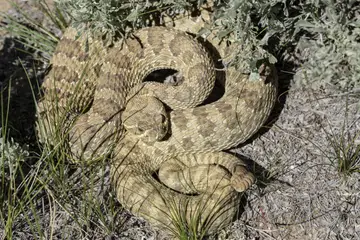
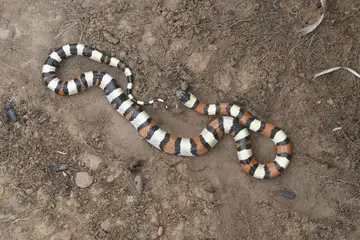
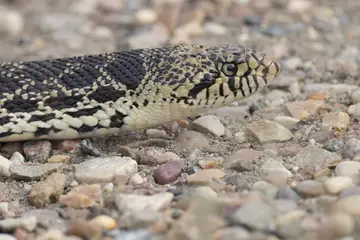
Montana Fish, Wildlife & Parks: Of the 10 species of snakes found in Montana only the western rattlesnake is poisonous.
This page lists 10 snakes: all from Montana Natural Heritage Program (Montana State Library) with Montana Fish, Wildlife & Parks: Montana Field Guide's Montana Field Guide: Reptiles; FWP: Living with Snakes.
1 is venomous by official accounts: Prairie Rattlesnake.
Venomous snakes in Montana
Official sources label these snakes venomous in Montana. Venomous snakes in Montana has more on each one.
Usually about 3 to 4 feet; Montana gives 15 to 60 inches and NPS says up to 5 feet. Arizona gives a maximum of 28 to 64 inches (excluding rattle) depending on subspecies; in Colorado it is rarely over 39 inches.
How to recognize it
Rattle (or a button in newborns) at the tail tip
Head much broader than the neck, many small scales on top of the head, heat-sensing pit between eye and nostril
Venom: “Montana only has 10 native snake species, of which, only the Prairie Rattlesnake (Crotalus viridis) is venomous.” (Montana State University Extension)
Habitat: Favor open and arid country but are also found in ponderosa pine stands and mixed grass-coniferous forests (Montana State University Extension)
Venom: “Of the 10 species of snakes found in Montana only the western rattlesnake is poisonous.” (Montana Fish, Wildlife & Parks)
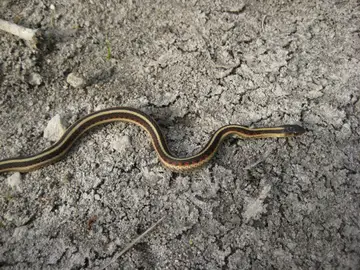
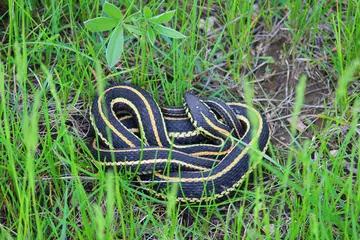
Habitat: Common Gartersnakes are found in nearly all habitats, but most commonly at lower elevations around water. (Montana Natural Heritage Program (Montana State Library) with Montana Fish, Wildlife & Parks: Montana Field Guide)
Photo: National Park Service from USA · Public domain · Wikimedia Commons
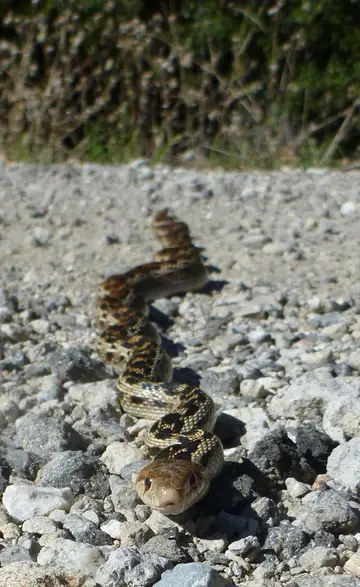
Usually 3 to 6 feet; Arizona's longest snake, up to 92 inches (AZGFD); Missouri record 105 inches
How to recognize it
No rattle: tail tapers to a point
Round pupils; keeled back scales (separates it from the similar glossy snake)
Head somewhat triangular, more so when agitated (so head shape alone is not a safe test)
Conservation
State Rank S5
JFMAMJJASOND
58 records by month.What the sources say
Venom: “Of the 10 species of snakes found in Montana only the western rattlesnake is poisonous.” (Montana Fish, Wildlife & Parks)
Habitat: Gophersnakes are associated with dry habitats, including open pine forests. (Montana Natural Heritage Program (Montana State Library) with Montana Fish, Wildlife & Parks: Montana Field Guide)
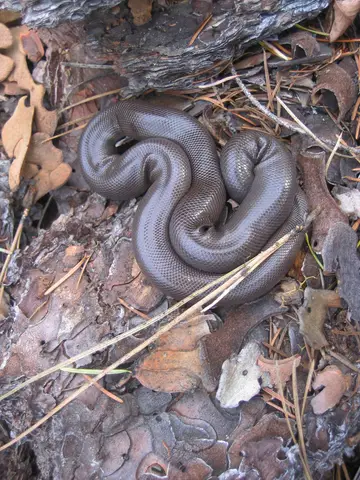
In the Northwest it rarely exceeds about two feet (WDFW). Montana: 14 to 28 inches total length; Yellowstone gives a maximum of 28 inches; Colorado gives a maximum of about 33 inches.
How to recognize it
Thick body, small eyes, tiny scales, and a blunt tail that looks like the head
Loose, wrinkled skin gives a rubbery look and feel
Venom: “Of the 10 species of snakes found in Montana only the western rattlesnake is poisonous.” (Montana Fish, Wildlife & Parks)
Habitat: Northern Rubber Boa are secretive, slow-moving, docile snakes. (Montana Natural Heritage Program (Montana State Library) with Montana Fish, Wildlife & Parks: Montana Field Guide)
Venom: “Of the 10 species of snakes found in Montana only the western rattlesnake is poisonous.” (Montana Fish, Wildlife & Parks)
Habitat: Plains Gartersnakes are found in nearly all habitats, but most commonly at lower elevations around water. (Montana Natural Heritage Program (Montana State Library) with Montana Fish, Wildlife & Parks: Montana Field Guide)
Species of Concern; State Rank S2; BLM: SENSITIVE; FWP SWAP: SGCN
What the sources say
Venom: “Of the 10 species of snakes found in Montana only the western rattlesnake is poisonous.” (Montana Fish, Wildlife & Parks)
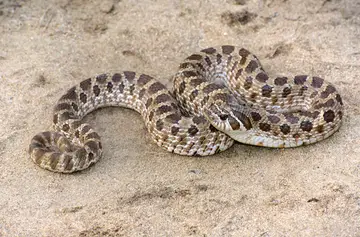
Habitat: The Western Hog-nosed Snake prefers plains and savannahs with well drained sandy or gravelly soil where it can easily burrow or dig out prey. (Montana Natural Heritage Program (Montana State Library) with Montana Fish, Wildlife & Parks: Montana Field Guide)
Species of Concern; State Rank S2; BLM: SENSITIVE; FWP SWAP: SGCN
What the sources say
Venom: “Of the 10 species of snakes found in Montana only the western rattlesnake is poisonous.” (Montana Fish, Wildlife & Parks)
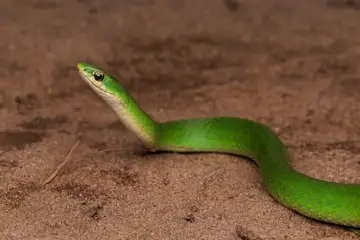
Habitat: Smooth Greensnakes prefer mesic habitat such as wet prairies, meadows, marshes, open forests, and riparian corridors with lush shrubby and herbaceous cover. (Montana Natural Heritage Program (Montana State Library) with Montana Fish, Wildlife & Parks: Montana Field Guide)
Photo: Yellowstone National Park · Public domain · Wikimedia Commons
Venom: “Of the 10 species of snakes found in Montana only the western rattlesnake is poisonous.” (Montana Fish, Wildlife & Parks)
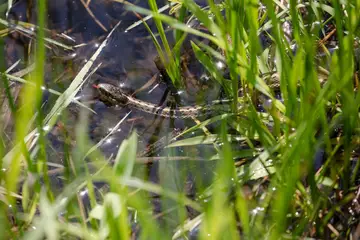
Habitat: Terrestrial Gartersnakes are found in nearly all habitats, but most commonly at lower elevations around water. (Montana Natural Heritage Program (Montana State Library) with Montana Fish, Wildlife & Parks: Montana Field Guide)
Species of Concern; State Rank S2; BLM: SENSITIVE; FWP SWAP: SGCN
What the sources say
Venom: “Of the 10 species of snakes found in Montana only the western rattlesnake is poisonous.” (Montana Fish, Wildlife & Parks)
Habitat: Little specific information is available. (Montana Natural Heritage Program (Montana State Library) with Montana Fish, Wildlife & Parks: Montana Field Guide)
Snakes people confuse
Rubber Boa or Racer (Western Yellow-bellied Racer)?
WDFW: racers have large eyes, large back scales and a tail that tapers to a point; rubber boas have small eyes, tiny scales and a blunt tail. Racers are fast and will strike and bite if cornered or handled; rubber boas are slow and non-aggressive. Yellowstone adds that racers have round pupils.
The bullsnake has no rattle, an oval or rounded head and large round pupils; the prairie rattlesnake has a triangular head, slit pupils and a rattle. Bullsnakes are often mistaken for rattlesnakes: when threatened they may coil, flatten the head, hiss and vibrate the tail in dry leaves to sound like a rattle, so do not judge by behavior or by head shape alone.
Boat or trailer with aquatic organisms: 1-800-TIP-MONT (1-800-847-6668). FWP main office: (406) 444-2535. Montana Fish, Wildlife & Parks
What official sources say
Are there copperheads or water moccasins in Montana?
No. FWP says the rattlesnake is the only venomous snake of Montana's 10 species; neither appears on the Field Guide list. Montana Fish, Wildlife & Parks
“Of the 10 species of snakes found in Montana only the western rattlesnake is poisonous.”
About this list
The species list comes from Montana Field Guide: Reptiles (snake families); FWP: Living with Snakes (Montana Natural Heritage Program (Montana State Library) with Montana Fish, Wildlife & Parks: Montana Field Guide, Internet Archive captures 2025-05-06 to 2026-09-02, one per family page (each listed below)).
Venom labels come only from official sources and link to them; "Not stated" never means harmless. How labels work.
Sources
Contact Us. Montana Fish, Wildlife & Parks. archived copy, captured October 19, 2026; checked November 3, 2026.