This page lists 6 insects and 2 ticks.
1 is venomous by official accounts. 2 are nonnative.
Not every species: no complete official list of Alabama insects exists, so this page covers the ones state and Extension sources name. How lists are built.
Which insects can hurt you
Official sources single out these insects in Alabama, in their own words:
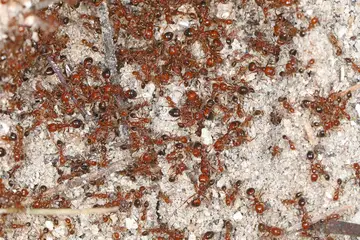
Stings. “In areas of the South infested with red imported fire ants, these ants and their colonies can present a potentially serious medical threat to people and animals during times of flooding.” Alabama Cooperative Extension System
Repeated stings. “They are a danger to humans because they can sting repeatedly; they do not loss their stingers like honeybees do. Yellow jacket stings can trigger dangerous allergic reactions.” Alabama Cooperative Extension System
Chagas disease vector. “Chagas disease, caused by the parasite Trypanosoma cruzi, is primarily spread through the bite of infected kissing bugs, which are found in the southern U.S., including Alabama.” Alabama Department of Public Health
Mosquitoes and ticks
Disease vectors. “Alabama’s climate creates ideal conditions for mosquitoes and ticks, which can transmit diseases such as West Nile virus, Eastern equine encephalitis, Lyme disease, and spotted fever rickettsiosis.” Alabama Department of Public Health
All 6 insects and 2 ticks
Venomous species first, then A to Z. Do not handle them.
“In areas of the South infested with red imported fire ants, these ants and their colonies can present a potentially serious medical threat to people and animals during times of flooding.” Alabama Cooperative Extension System
What the sources say
Venom: “Many people may be allergic to fire ant venom.” (Alabama Cooperative Extension System)
No confirmed photo of Africanized honeybee
Africanized honeybee
Not statedInvasive
Venom
No official source we use states whether this animal is venomous. That does not mean it is harmless: do not handle it.
The Alabama Department of Agriculture and Industries (ADAI) has confirmed the presence of Africanized Honeybees (AHB) in Jackson and St. Clair Counties. Alabama Department of Agriculture and Industries
No confirmed photo of Asian Longhorned Tick
Asian Longhorned Tick
Haemaphysalis longicornis
Not statedNonnativeTick: an arachnid, not an insect
Venom
No official source we use states whether this animal is venomous. That does not mean it is harmless: do not handle it.
No official source we use states whether this animal is venomous. That does not mean it is harmless: do not handle it.
Danger to people
“Chagas disease, caused by the parasite Trypanosoma cruzi, is primarily spread through the bite of infected kissing bugs, which are found in the southern U.S., including Alabama.” Alabama Department of Public Health
No confirmed photo of Mosquitoes
Mosquitoes
Not stated
Venom
No official source we use states whether this animal is venomous. That does not mean it is harmless: do not handle it.
No confirmed photo of Ticks
Ticks
Not statedTick: an arachnid, not an insect
Venom
No official source we use states whether this animal is venomous. That does not mean it is harmless: do not handle it.
No confirmed photo of Wasps and hornets
Wasps and hornets
Not stated
Venom
No official source we use states whether this animal is venomous. That does not mean it is harmless: do not handle it.
No confirmed photo of Yellow jackets
Yellow jackets
Not stated
Venom
No official source we use states whether this animal is venomous. That does not mean it is harmless: do not handle it.
Danger to people
“They are a danger to humans because they can sting repeatedly; they do not loss their stingers like honeybees do. Yellow jacket stings can trigger dangerous allergic reactions.” Alabama Cooperative Extension System
When insects are active in Alabama
Records of insects in Alabama peak in May to August. They show when people record insects, not how many there are (about month bars).
JanFebMarAprMayJunJulAugSepOctNovDec
45,265 records of insects in Alabama by month (GBIF, CC0 and CC BY records).
Watchable Wildlife. Alabama Department of Conservation and Natural Resources (Outdoor Alabama). undated page; checked November 3, 2026.
Flooding and Fire Ants. Alabama Cooperative Extension System. published 2018-12-12; checked November 3, 2026.Quoted passages (2)
“Many people may be allergic to fire ant venom.”
“In areas of the South infested with red imported fire ants, these ants and their colonies can present a potentially serious medical threat to people and animals during times of flooding.”
“They are a danger to humans because they can sting repeatedly; they do not loss their stingers like honeybees do. Yellow jacket stings can trigger dangerous allergic reactions.”
“Africanized Honeybees can be highly defensive and pose a risk to humans and animals.”
Zoonoses. Alabama Department of Public Health. updated 2026-06-30; checked November 3, 2026.Quoted passages (1)
“Chagas disease, caused by the parasite Trypanosoma cruzi, is primarily spread through the bite of infected kissing bugs, which are found in the southern U.S., including Alabama.”
“Alabama’s climate creates ideal conditions for mosquitoes and ticks, which can transmit diseases such as West Nile virus, Eastern equine encephalitis, Lyme disease, and spotted fever rickettsiosis.”
“In Alabama, tick activity can occur year-round but is especially common in warmer months.”