These are the animals official sources describe as venomous or as a risk to people in Alabama, across 7 groups. The reason is given in the source's own terms.
Venomous: “There are six species of venomous snakes in Alabama. Those species include the copperhead, cottonmouth, eastern diamondback rattlesnake, timber rattlesnake, pygmy rattlesnake, and eastern coral snake.”
Venomous: “There are six species of venomous snakes in Alabama. Those species include the copperhead, cottonmouth, eastern diamondback rattlesnake, timber rattlesnake, pygmy rattlesnake, and eastern coral snake.”
Venomous: “There are six species of venomous snakes in Alabama. Those species include the copperhead, cottonmouth, eastern diamondback rattlesnake, timber rattlesnake, pygmy rattlesnake, and eastern coral snake.”
Venomous: “There are six species of venomous snakes in Alabama. Those species include the copperhead, cottonmouth, eastern diamondback rattlesnake, timber rattlesnake, pygmy rattlesnake, and eastern coral snake.”
Venomous: “There are six species of venomous snakes in Alabama. Those species include the copperhead, cottonmouth, eastern diamondback rattlesnake, timber rattlesnake, pygmy rattlesnake, and eastern coral snake.”
Venomous: “There are six species of venomous snakes in Alabama. Those species include the copperhead, cottonmouth, eastern diamondback rattlesnake, timber rattlesnake, pygmy rattlesnake, and eastern coral snake.”
Venomous: “The venom produced by recluse spiders is cytoxic, causing necrosis, or death, of body tissue at the bite area, and there have been reports of kidney failure associated with recluse bites.”
Venomous: “The venom produced by recluse spiders is cytoxic, causing necrosis, or death, of body tissue at the bite area, and there have been reports of kidney failure associated with recluse bites.”
Venomous: “The venom produced by recluse spiders is cytoxic, causing necrosis, or death, of body tissue at the bite area, and there have been reports of kidney failure associated with recluse bites.”
Skin secretions irritating to people: “In case of attack, pickerel frogs produce skin secretions which are irritating to people and toxic to many reptiles and other amphibians, making them unappetizing to some predators.”
Bufotoxin can irritate mucous membranes: “However, the bufotoxin secreted from the parotoid glands can, in some cases, cause some irritation to human mucous membranes.”
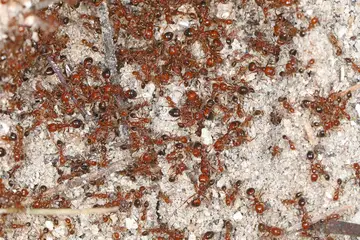
Repeated stings: “They are a danger to humans because they can sting repeatedly; they do not loss their stingers like honeybees do. Yellow jacket stings can trigger dangerous allergic reactions.”
Chagas disease vector: “Chagas disease, caused by the parasite Trypanosoma cruzi, is primarily spread through the bite of infected kissing bugs, which are found in the southern U.S., including Alabama.”
Disease vectors: “Alabama’s climate creates ideal conditions for mosquitoes and ticks, which can transmit diseases such as West Nile virus, Eastern equine encephalitis, Lyme disease, and spotted fever rickettsiosis.”
Pathogens: “Roof rats (or their ectoparasites) are able to carry a number of pathogens, of which bubonic plague (via the rat flea), typhus, Weil's disease, toxoplasmosis, and trichinosis are the best known.”
Venomous: “The most common stinging jellyfish in our area is the sea nettle … It is this toxin that produces the severe burning sensation when people come in contact with jellyfish.”
Venomous: “Moon jellyfish are said to produce a milder stingthan other jellyfish. … It is this toxin that produces the severe burning sensation when people come in contact with jellyfish.”
Venomous: “The tentacles contain stinging nematocysts, microscopic capsules loaded with coiled, barbed tubes that deliver venom capable of paralyzing and killing small fish and crustaceans …”
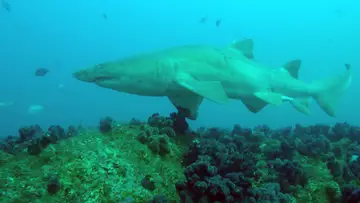
Danger to humans: “Danger to humans: Very few attacks on people have been attributed to this species, and it is likely that without a food stimulus or other special circumstances that this species is of little hazard …”
Danger to humans: “Danger to humans: Probably the most dangerous shark species of tropical and subtropical waters. Bull sharks are one of the three most dangerous species, beside the white shark and tiger shark.”
Marine pests that can cause minor injuries (purple beach flag): “Purple: Marine pests, such as jellyfish, stingrays, or other marine life which can cause minor injuries are present in the water.”
3 nonnative animals are named on Alabama's official lists (Outdoor Alabama). The USGS Nonindigenous Aquatic Species database records 4 nonnative animals in our groups with an established population in Alabama.
Darker cells are the months with more open-licence observation records of each group in Alabama (GBIF). They show when people see and record these animals, not how many there are. The current month, this month, is highlighted.
No. Extension reported none on a page last modified 2026-04-09 and warned they may be present unobserved. Recheck before publishing. Alabama Cooperative Extension System · More
Are there sharks in Alabama?
Yes. The agency publishes an ID guide to common shark species in Alabama coastal waters. Outdoor Alabama
Are there black bears in Alabama?
Yes, but rare. Rare; breeding populations remain north of Mobile and small ones in northeast Alabama. Outdoor Alabama
Are there mountain lions in Alabama?
No. The agency lists the cougar as extirpated and says reported sightings are likely misidentifications. Outdoor Alabama
Are there wolves in Alabama?
No. The agency lists the red wolf as extirpated. Outdoor Alabama
Are there armadillos in Alabama?
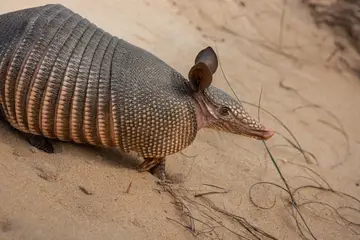
Yes. Counted among the native mammals by the agency. Outdoor Alabama
Are there wild hogs in Alabama?
Yes. Feral swine are listed as exotic, introduced mammals. Outdoor Alabama
Are there manatees in Alabama?
Yes. West Indian manatees use Alabama waters, and public sightings suggest increasing numbers. Outdoor Alabama
Do sea turtles nest in Alabama?
Yes. Loggerheads, Kemp’s ridleys and greens nest on the Gulf Coast. Outdoor Alabama
Watchable Wildlife. Alabama Department of Conservation and Natural Resources (Outdoor Alabama). undated page; checked November 3, 2026.
Nongame Wildlife FAQs. Alabama Department of Conservation and Natural Resources (Outdoor Alabama). undated page; checked November 3, 2026.Quoted passages (4)
“There are six species of venomous snakes in Alabama. Those species include the copperhead, cottonmouth, eastern diamondback rattlesnake, timber rattlesnake, pygmy rattlesnake, and eastern coral snake.”
“The best way to keep snakes out of your yard is to get rid of the food source.”
“The best thing to do when you encounter a baby animal is to leave it alone and not to touch it or move it, unless it is in immediate danger (in the middle of a busy road, being harassed by a cat or dog, etc.).”
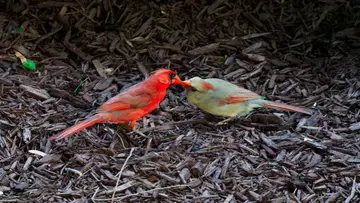
“Hummingbirds typically migrate into Alabama in March and leave by September/ early October.”
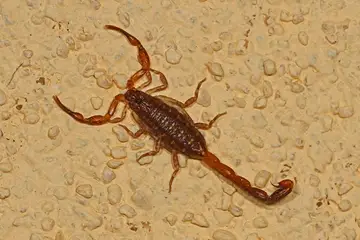
“Three types of scorpions can be found in Alabama. Of these, only two species are native and commonly find their way into garages, basements, and homes”
“Scorpions are known for their painful, venomous sting. Fortunately, scorpions native to Alabama are not potentially lethal to humans.”
Birds. Alabama Department of Conservation and Natural Resources (Outdoor Alabama). undated page; checked November 3, 2026.Quoted passages (1)
“This list is composed of 420 species that comprise the official Alabama Ornithological Society (AOS) state list.”
Mammals. Alabama Department of Conservation and Natural Resources (Outdoor Alabama). undated page; checked November 3, 2026.Quoted passages (2)
“Alabama is home to 62 native mammals, including 22 species of rodents, 16 species of bats, 11 species of carnivores, six species of insectivores, four species of rabbits, one ungulate, one opossum and one armadillo.”
“In addition, there are six exotic species that have been introduced in Alabama - the black rat, Norway rat, house mouse, nutria (coypu), fallow deer and feral swine.”
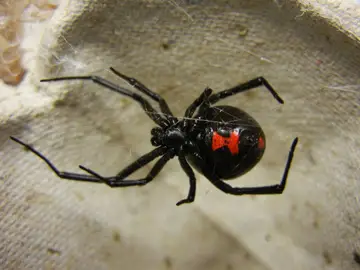
“Widow spiders are thought to have one of the most toxic venoms in the order Araneae (spiders).”
“The venom produced by recluse spiders is cytoxic, causing necrosis, or death, of body tissue at the bite area, and there have been reports of kidney failure associated with recluse bites.”
“The venom is classified as a neurotoxin, a compound that affects the nervous system, and no pain is usually associated with the bite.”
“Two species of widow spiders inhabit Alabama”
Venomous Spiders at Work. CDC/NIOSH. archived copy, captured October 6, 2026; checked November 3, 2026.Quoted passages (1)
“Venomous spiders found in the United States include the black widow and the brown recluse.”
Pickerel Frog. Alabama Department of Conservation and Natural Resources (Outdoor Alabama). undated page; checked November 3, 2026.Quoted passages (1)
“In case of attack, pickerel frogs produce skin secretions which are irritating to people and toxic to many reptiles and other amphibians, making them unappetizing to some predators.”
Southern Toad. Alabama Department of Conservation and Natural Resources (Outdoor Alabama). undated page; checked November 3, 2026.Quoted passages (1)
“However, the bufotoxin secreted from the parotoid glands can, in some cases, cause some irritation to human mucous membranes.”
Fowler's Toad. Alabama Department of Conservation and Natural Resources (Outdoor Alabama). undated page; checked November 3, 2026.Quoted passages (1)
“These glands emit a white, toxic fluid which helps them escape predators.”
Flooding and Fire Ants. Alabama Cooperative Extension System. published 2018-12-12; checked November 3, 2026.Quoted passages (1)
“They are a danger to humans because they can sting repeatedly; they do not loss their stingers like honeybees do. Yellow jacket stings can trigger dangerous allergic reactions.”
“Africanized Honeybees can be highly defensive and pose a risk to humans and animals.”
“The Alabama Department of Agriculture and Industries (ADAI) has confirmed the presence of Africanized Honeybees (AHB) in Jackson and St. Clair Counties.”
Zoonoses. Alabama Department of Public Health. updated 2026-06-30; checked November 3, 2026.Quoted passages (1)
“Chagas disease, caused by the parasite Trypanosoma cruzi, is primarily spread through the bite of infected kissing bugs, which are found in the southern U.S., including Alabama.”
“Alabama’s climate creates ideal conditions for mosquitoes and ticks, which can transmit diseases such as West Nile virus, Eastern equine encephalitis, Lyme disease, and spotted fever rickettsiosis.”
“In Alabama, tick activity can occur year-round but is especially common in warmer months.”
Big Brown Bat. Alabama Department of Conservation and Natural Resources (Outdoor Alabama). undated page; checked November 3, 2026.Quoted passages (1)
“Big brown bats can and do contract and transmit rabies.”
Eastern Red Bat. Alabama Department of Conservation and Natural Resources (Outdoor Alabama). undated page; checked November 3, 2026.Quoted passages (1)
“As with most wild mammals, the eastern red bat can and does contract and transmit rabies.”
Evening Bat. Alabama Department of Conservation and Natural Resources (Outdoor Alabama). undated page; checked November 3, 2026.Quoted passages (1)
“As with most wild mammals, the evening bat can and does contract and transmit rabies.”
Hoary Bat. Alabama Department of Conservation and Natural Resources (Outdoor Alabama). undated page; checked November 3, 2026.Quoted passages (2)
“As with most wild mammals, hoary bats can and do contract and transmit rabies.”
“…any bat that appears sick or cannot fly should be avoided”
Silver-haired Bat. Alabama Department of Conservation and Natural Resources (Outdoor Alabama). undated page; checked November 3, 2026.Quoted passages (1)
“As with most wild mammals, they can and do contract and transmit rabies.”
Tri-colored Bat. Alabama Department of Conservation and Natural Resources (Outdoor Alabama). undated page; checked November 3, 2026.Quoted passages (1)
“As with most wild mammals, tri-colored bats can and do contract and transmit rabies.”
Roof Rat. Alabama Department of Conservation and Natural Resources (Outdoor Alabama). undated page; checked November 3, 2026.Quoted passages (1)
“Roof rats (or their ectoparasites) are able to carry a number of pathogens, of which bubonic plague (via the rat flea), typhus, Weil's disease, toxoplasmosis, and trichinosis are the best known.”
House Mouse. Alabama Department of Conservation and Natural Resources (Outdoor Alabama). undated page; checked November 3, 2026.Quoted passages (1)
“In areas that they thieve in, house mice will leave large amount of dropping which can be dangerous to humans.”
Jellyfish in Alabama. Alabama Cooperative Extension System. published 2018-12-06; checked November 3, 2026.Quoted passages (2)
“The most common stinging jellyfish in our area is the sea nettle … It is this toxin that produces the severe burning sensation when people come in contact with jellyfish.”
“Moon jellyfish are said to produce a milder stingthan other jellyfish. … It is this toxin that produces the severe burning sensation when people come in contact with jellyfish.”
What is a Portuguese man o' war? NOAA National Ocean Service. updated September 23, 2026; checked November 3, 2026.Quoted passages (1)
“The tentacles contain stinging nematocysts, microscopic capsules loaded with coiled, barbed tubes that deliver venom capable of paralyzing and killing small fish and crustaceans. While the man o’ war’s sting is rarely deadly to people, it packs a painful punch and causes welts on exposed skin.”
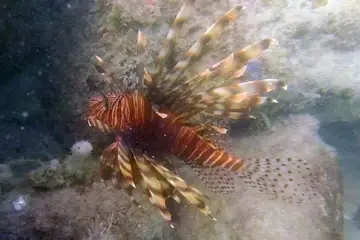
“The dorsal- and anal-fin spines of the lionfish contain a potent venom that can administer a painful sting (Steinitz 1959).”
Blacktip Shark. Alabama Department of Conservation and Natural Resources (Outdoor Alabama). undated page; checked November 3, 2026.Quoted passages (1)
“Danger to humans: Very few attacks on people have been attributed to this species, and it is likely that without a food stimulus or other special circumstances that this species is of little hazard to people.”
Bull Shark. Alabama Department of Conservation and Natural Resources (Outdoor Alabama). undated page; checked November 3, 2026.Quoted passages (1)
“Danger to humans: Probably the most dangerous shark species of tropical and subtropical waters. Bull sharks are one of the three most dangerous species, beside the white shark and tiger shark.”
Scalloped Hammerhead. Alabama Department of Conservation and Natural Resources (Outdoor Alabama). undated page; checked November 3, 2026.Quoted passages (1)
“Danger to humans: Potentially dangerous.”
Tiger Shark. Alabama Department of Conservation and Natural Resources (Outdoor Alabama). undated page; checked November 3, 2026.Quoted passages (1)
“Purple: Marine pests, such as jellyfish, stingrays, or other marine life which can cause minor injuries are present in the water.”
Spearfishers Cash in on Lionfish Money. Alabama Department of Conservation and Natural Resources (Outdoor Alabama). undated page; checked November 3, 2026.Quoted passages (1)
“An invasive species from the Indo-Pacific, lionfish have spread throughout Gulf of Mexico and South Atlantic waters.”
Invasive Carp in Alabama. Alabama Department of Conservation and Natural Resources (Outdoor Alabama). undated page; checked November 3, 2026.Quoted passages (1)
“Four species of invasive carp have been introduced in the U.S. Those species include silver carp, bighead carp, grass carp, and black carp.”
Report Aquatic Invasive Species. Alabama Department of Conservation and Natural Resources (Outdoor Alabama). undated page; checked November 3, 2026.Quoted passages (1)
“Reports can be submitted at: [email protected] or by phone at (256)-353-2634.”
Living with Alligators. Alabama Department of Conservation and Natural Resources (Outdoor Alabama). undated page; checked November 3, 2026.Quoted passages (4)
“Alligators are found statewide in Alabama.”
“State law prohibits killing, harassing, or possessing alligators. Handling even small alligators can result in injury.”
“Feeding an alligator is dangerous and illegal.”
“Alligators are most active between dusk and dawn.”
Diamond-backed Water Snake. Alabama Department of Conservation and Natural Resources (Outdoor Alabama). undated page; checked November 3, 2026.Quoted passages (1)
“Diamondback water snakes often are confused with the venomous, but more docile, cottonmouth, a.k.a. water moccasin (Agkistrodon piscivorus), and are killed needlessly.”
Eastern Coral Snake. Alabama Department of Conservation and Natural Resources (Outdoor Alabama). undated page; checked November 3, 2026.Quoted passages (2)
“Rare and possibly threatened. Few recent observations may indicate that this secretive species has declined in Alabama.”
“…potentially very hazardous to humans and should never be handled”
“The brown recluse spider has been collected throughout Alabama but is more commonly found in the state’s northern half.”
Joro Spiders: What You Need to Know. Alabama Cooperative Extension System. published 2022-03-11; checked November 3, 2026.Quoted passages (1)
“There are currently no reports of the Joro spider in Alabama.”
Shark ID. Alabama Department of Conservation and Natural Resources (Outdoor Alabama). undated page; checked November 3, 2026.Quoted passages (1)
“Common Shark Species Occurring in Alabama's Coastal Waters Identification and Information Guide”
Black Bear. Alabama Department of Conservation and Natural Resources (Outdoor Alabama). undated page; checked November 3, 2026.Quoted passages (1)
“Rare. Once found statewide, but now extirpated from most of the state.”
Cougar. Alabama Department of Conservation and Natural Resources (Outdoor Alabama). undated page; checked November 3, 2026.Quoted passages (1)
“Although sightings are still commonly reported in Alabama, these are likely misidentifications of domestic dogs and cats, coyotes, and bobcats.”
Red Wolf. Alabama Department of Conservation and Natural Resources (Outdoor Alabama). undated page; checked November 3, 2026.Quoted passages (1)
“Extirpated. Once inhabited a variety of habitats statewide.”
West Indian Manatee Study. Alabama Department of Conservation and Natural Resources (Outdoor Alabama). undated page; checked November 3, 2026.Quoted passages (1)
“Public sighting and tagged animal data suggest that a larger number of West Indian manatees (Trichechus manatus), Alabama's State Marine Mammal, are traveling to and using habitat in Alabama and nearby waters of the northern Gulf of America.”
What to know about sea turtles. Alabama Department of Conservation and Natural Resources (Outdoor Alabama). undated page; checked November 3, 2026.Quoted passages (2)
“Three species of sea turtles nest on the Gulf Coast: loggerheads (most frequent), Kemp’s ridley and greens.”
“In Alabama, sea turtle season runs from May 1st, when mom sea turtles come to nest, through October 31st, when nests have finished hatching.”
American Alligator. Alabama Department of Conservation and Natural Resources (Outdoor Alabama). undated page; checked November 3, 2026.Quoted passages (1)
“Mating season for alligators is April through May and breeding occurs in open water.”
Timber Rattlesnake. Alabama Department of Conservation and Natural Resources (Outdoor Alabama). undated page; checked November 3, 2026.Quoted passages (1)
“Timber rattlesnakes hibernate in a den during the winter, forming a winter colony.”