This page lists 6 spiders: 5 from Alabama Cooperative Extension System's Black Widow and Recluses: Avoiding Venomous Spiders of the Southeast and 1 named in other official sources.
5 are venomous by official accounts. 2 are nonnative.
Not every species: no complete official list of Alabama spiders exists, so this page covers the ones state and Extension sources name. How lists are built.
Which spiders can hurt you
Official sources single out these spiders in Alabama, in their own words:
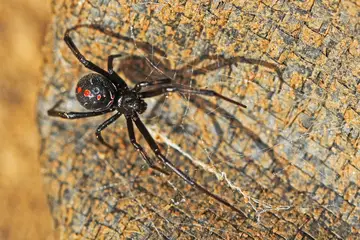
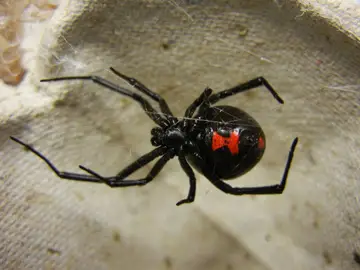
Venomous. “The venom is classified as a neurotoxin, a compound that affects the nervous system, and no pain is usually associated with the bite.” Alabama Cooperative Extension System
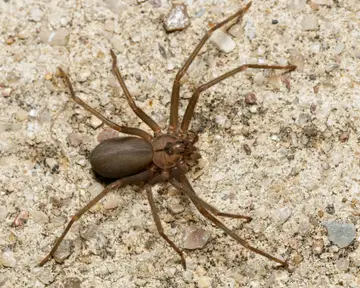
Venomous. “The venom produced by recluse spiders is cytoxic, causing necrosis, or death, of body tissue at the bite area, and there have been reports of kidney failure associated with recluse bites.” Alabama Cooperative Extension System
Chilean Recluse
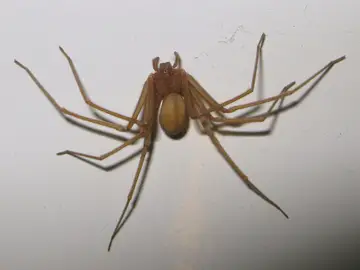
Venomous. “The venom produced by recluse spiders is cytoxic, causing necrosis, or death, of body tissue at the bite area, and there have been reports of kidney failure associated with recluse bites.” Alabama Cooperative Extension System
Venomous. “The venom produced by recluse spiders is cytoxic, causing necrosis, or death, of body tissue at the bite area, and there have been reports of kidney failure associated with recluse bites.” Alabama Cooperative Extension System
Black widow and brown recluse
Venomous spiders in the United States. “Venomous spiders found in the United States include the black widow and the brown recluse.” CDC/NIOSH
All 6 spiders
Venomous species first, then A to Z. Do not handle them.
“The venom is classified as a neurotoxin, a compound that affects the nervous system, and no pain is usually associated with the bite.” Alabama Cooperative Extension System
What the sources say
Venom: “Widow spiders are thought to have one of the most toxic venoms in the order Araneae (spiders).” (Alabama Cooperative Extension System)
Body about 7 to 12 mm (about 3/8 inch); females average about 9 mm and males about 8 mm. UC IPM says a recluse body is not more than 3/8 inch long.
How to recognize it
Six equal-sized eyes in three pairs. UC IPM calls this the most definitive feature, since most spiders have eight eyes.
The violin mark alone is not a reliable way to identify it
UC IPM's five-point check: six eyes in pairs, evenly colored finely haired abdomen, no spines on the legs, evenly colored legs, body no more than 3/8 inch
Where in Alabama
The brown recluse spider has been collected throughout Alabama but is more commonly found in the state’s northern half. Alabama Cooperative Extension System
What the sources say
Venom: “The venom produced by recluse spiders is cytoxic, causing necrosis, or death, of body tissue at the bite area, and there have been reports of kidney failure associated with recluse bites.” (Alabama Cooperative Extension System)
These two species are not native to the United States, however, and have been found in only a few small, isolated locations. Alabama Cooperative Extension System
What the sources say
Venom: “The venom produced by recluse spiders is cytoxic, causing necrosis, or death, of body tissue at the bite area, and there have been reports of kidney failure associated with recluse bites.” (Alabama Cooperative Extension System)
No official source we use states whether this animal is venomous. That does not mean it is harmless: do not handle it.
Size
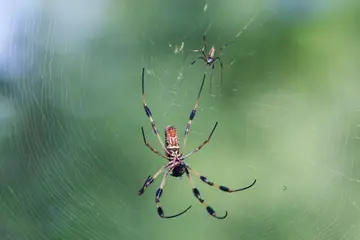
Female body 24 to 40 mm (about 1 to 1.6 in) (UF/IFAS); Clemson gives an average female body length of 1½ to 2 inches. Males are much smaller: about 6 mm on average (UF/IFAS).
How to recognize it
Hairy "bottlebrush" tufts on some leg segments, which tell it apart from other big yellow orb weavers, including the Joro spider.
White cephalothorax (head and leg section).
Abdomen yellow-orange with two rows of silvery white spots; legs yellow-orange with brown bands and black tufts near the joints of the 1st, 2nd and 4th pairs.
Records of spiders in Alabama peak in April to May and July to September. They show when people record spiders, not how many there are (about month bars).
JanFebMarAprMayJunJulAugSepOctNovDec
3,470 records of spiders in Alabama by month (GBIF, CC0 and CC BY records).
If you are bitten or stung
Call 911 or Poison Help at 1-800-222-1222 right away. Poison Help connects you to your local poison center, any time of day.
How to report
Nuisance wildlife: permitted Nuisance Wildlife Control Operators or the WFF district office; Wildlife Section 334-242-3469. Sea turtle strandings 1-866-732-8878. Dolphin and whale strandings 877-942-5343. Manatee sightings 866-493-5803. Invasive carp [email protected] or (256)-353-2634. Outdoor Alabama
“Widow spiders are thought to have one of the most toxic venoms in the order Araneae (spiders).”
“The venom is classified as a neurotoxin, a compound that affects the nervous system, and no pain is usually associated with the bite.”
“The venom produced by recluse spiders is cytoxic, causing necrosis, or death, of body tissue at the bite area, and there have been reports of kidney failure associated with recluse bites.”