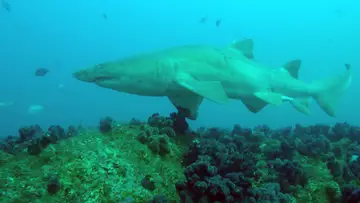
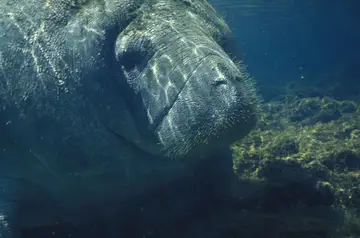
This page lists 18 sharks, rays and other marine animals.
4 are venomous by official accounts. 2 are nonnative.
Not every species: this page shows the sharks, rays and other marine animals named in the official sources below. How lists are built.
Which sharks, rays and other marine animals can hurt you
Official sources single out these sharks, rays and other marine animals in Alabama, in their own words:
Blacktip Shark
Danger to humans. “Danger to humans: Very few attacks on people have been attributed to this species, and it is likely that without a food stimulus or other special circumstances that this species is of little hazard to people.” Outdoor Alabama
Bull Shark
Danger to humans. “Danger to humans: Probably the most dangerous shark species of tropical and subtropical waters. Bull sharks are one of the three most dangerous species, beside the white shark and tiger shark.” Outdoor Alabama
Marine pests that can cause minor injuries (purple beach flag). “Purple: Marine pests, such as jellyfish, stingrays, or other marine life which can cause minor injuries are present in the water.” Alabama Department of Public Health
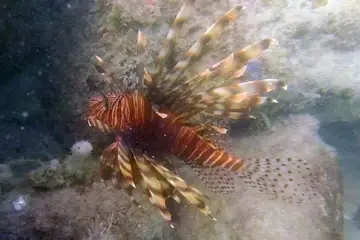
Venomous spines. “The dorsal- and anal-fin spines of the lionfish contain a potent venom that can administer a painful sting (Steinitz 1959).” USGS Nonindigenous Aquatic Species
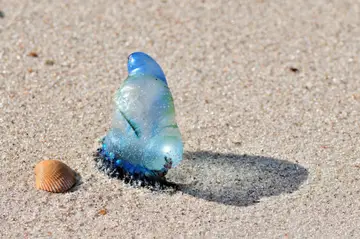
Venomous sting. “While the man o’ war’s sting is rarely deadly to people, it packs a painful punch and causes welts on exposed skin.” NOAA National Ocean Service
Adults grow to about 18 inches (NOAA); USGS lists 47 cm. Juveniles can be 1 inch or less.
How to recognize it
Fleshy tentacles above the eyes and below the mouth, fan-like pectoral fins and long, separated dorsal spines.
13 dorsal spines and 3 anal spines.
Slow-moving and conspicuous.
Where in Alabama
The red lionfish first showed up off the coast of Alabama in 2009. Outdoor Alabama
What the sources say
Venom: “The dorsal- and anal-fin spines of the lionfish contain a potent venom that can administer a painful sting (Steinitz 1959).” (USGS Nonindigenous Aquatic Species)
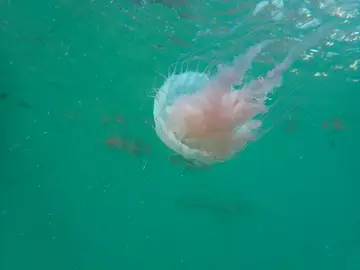
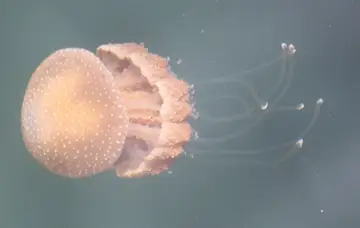
Venom: “Moon jellyfish are said to produce a milder stingthan other jellyfish. … It is this toxin that produces the severe burning sensation when people come in contact with jellyfish.” (Alabama Cooperative Extension System)
“While the man o’ war’s sting is rarely deadly to people, it packs a painful punch and causes welts on exposed skin.” NOAA National Ocean Service
Size
Float rises up to 6 in above the water and is up to 10 in long. Tentacles average about 30 ft and may reach about 100 ft; South Carolina DNR cites up to 165 ft.
How to recognize it
Gas-filled, balloon-like float on the water's surface
Long tentacles hanging below the float
A colony, not a single animal, drifting with wind and currents
What the sources say
Venom: “The tentacles contain stinging nematocysts, microscopic capsules loaded with coiled, barbed tubes that deliver venom capable of paralyzing and killing small fish and crustaceans. While the man o’ war’s sting is rarely deadly to people, it packs a painful punch and causes welts on exposed skin.” (NOAA National Ocean Service)
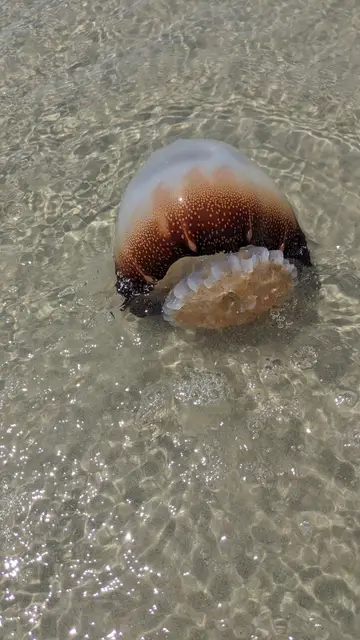
Venom: “The most common stinging jellyfish in our area is the sea nettle … It is this toxin that produces the severe burning sensation when people come in contact with jellyfish.” (Alabama Cooperative Extension System)
No confirmed photo of Atlantic Sharpnose Shark
Atlantic Sharpnose Shark
Not stated
Venom
No official source we use states whether this animal is venomous. That does not mean it is harmless: do not handle it.
No official source we use states whether this animal is venomous. That does not mean it is harmless: do not handle it.
Danger to people
“Danger to humans: Very few attacks on people have been attributed to this species, and it is likely that without a food stimulus or other special circumstances that this species is of little hazard …” Outdoor Alabama
No confirmed photo of Bull Shark
Bull Shark
Not stated
Venom
No official source we use states whether this animal is venomous. That does not mean it is harmless: do not handle it.
Danger to people
“Danger to humans: Probably the most dangerous shark species of tropical and subtropical waters. Bull sharks are one of the three most dangerous species, beside the white shark and tiger shark.” Outdoor Alabama
Photos show typical adults; individuals vary. Never get close to compare.
When sharks, rays and other marine animals are active in Alabama
Records of sharks, rays and other marine animals in Alabama peak in May and July to December. They show when people record sharks, rays and other marine animals, not how many there are (about month bars).
JanFebMarAprMayJunJulAugSepOctNovDec
1,126 records of sharks, rays and other marine animals in Alabama by month (GBIF, CC0 and CC BY records).
If you are bitten or stung
Call 911 or Poison Help at 1-800-222-1222 right away. Poison Help connects you to your local poison center, any time of day.
How to report
Nuisance wildlife: permitted Nuisance Wildlife Control Operators or the WFF district office; Wildlife Section 334-242-3469. Sea turtle strandings 1-866-732-8878. Dolphin and whale strandings 877-942-5343. Manatee sightings 866-493-5803. Invasive carp [email protected] or (256)-353-2634. Outdoor Alabama
What official sources say
Are there sharks in Alabama?
Yes. The agency publishes an ID guide to common shark species in Alabama coastal waters. Outdoor Alabama
“Common Shark Species Occurring in Alabama's Coastal Waters Identification and Information Guide”
About this list
The species list comes from Shark ID: Common Shark Species Occurring in Alabama's Coastal Waters (Alabama Department of Conservation and Natural Resources (Outdoor Alabama), undated page; as of retrieval 2026-11-03). 18 more entries come from other official sources named on each card.
Venom labels come only from official sources and link to them; "Not stated" never means harmless. How labels work.
Watchable Wildlife. Alabama Department of Conservation and Natural Resources (Outdoor Alabama). undated page; checked November 3, 2026.
Shark ID. Alabama Department of Conservation and Natural Resources (Outdoor Alabama). undated page; checked November 3, 2026.Quoted passages (1)
“Common Shark Species Occurring in Alabama's Coastal Waters Identification and Information Guide”
Atlantic Sharpnose Shark. Alabama Department of Conservation and Natural Resources (Outdoor Alabama). undated page; checked November 3, 2026.
Blacktip Shark. Alabama Department of Conservation and Natural Resources (Outdoor Alabama). undated page; checked November 3, 2026.Quoted passages (1)
“Danger to humans: Very few attacks on people have been attributed to this species, and it is likely that without a food stimulus or other special circumstances that this species is of little hazard to people.”
Bull Shark. Alabama Department of Conservation and Natural Resources (Outdoor Alabama). undated page; checked November 3, 2026.Quoted passages (1)
“Danger to humans: Probably the most dangerous shark species of tropical and subtropical waters. Bull sharks are one of the three most dangerous species, beside the white shark and tiger shark.”
Finetooth Shark. Alabama Department of Conservation and Natural Resources (Outdoor Alabama). undated page; checked November 3, 2026.
Sand Tiger. Alabama Department of Conservation and Natural Resources (Outdoor Alabama). undated page; checked November 3, 2026.
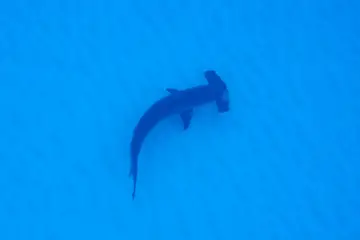
Scalloped Hammerhead. Alabama Department of Conservation and Natural Resources (Outdoor Alabama). undated page; checked November 3, 2026.Quoted passages (1)
“Danger to humans: Potentially dangerous.”
Spinner Shark. Alabama Department of Conservation and Natural Resources (Outdoor Alabama). undated page; checked November 3, 2026.
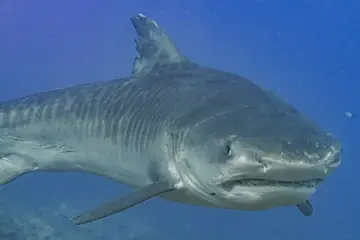
Tiger Shark. Alabama Department of Conservation and Natural Resources (Outdoor Alabama). undated page; checked November 3, 2026.Quoted passages (1)
“Danger to humans: Highly dangerous!”
Jellyfish in Alabama. Alabama Cooperative Extension System. published 2018-12-06; checked November 3, 2026.Quoted passages (4)
“The most common stinging jellyfish in our area is the sea nettle … It is this toxin that produces the severe burning sensation when people come in contact with jellyfish.”
“The most common stinging jellyfish in our area is the sea nettle”
“Moon jellyfish are said to produce a milder stingthan other jellyfish. … It is this toxin that produces the severe burning sensation when people come in contact with jellyfish.”
“Moon jellyfish are said to produce a milder stingthan other jellyfish.”
What is a Portuguese man o' war? NOAA National Ocean Service. updated September 23, 2026; checked November 3, 2026.Quoted passages (2)
“The tentacles contain stinging nematocysts, microscopic capsules loaded with coiled, barbed tubes that deliver venom capable of paralyzing and killing small fish and crustaceans. While the man o’ war’s sting is rarely deadly to people, it packs a painful punch and causes welts on exposed skin.”
“While the man o’ war’s sting is rarely deadly to people, it packs a painful punch and causes welts on exposed skin.”
Spearfishers Cash in on Lionfish Money. Alabama Department of Conservation and Natural Resources (Outdoor Alabama). undated page; checked November 3, 2026.
“The dorsal- and anal-fin spines of the lionfish contain a potent venom that can administer a painful sting (Steinitz 1959).”
“Two visually identical species have been introduced into the north-west Atlantic Ocean, Caribbean Sea and the Gulf of America. … At this time, positive identification can only be achieved through genetic analysis.”