States Wildlife

Minnesota Bugs and Insects That Sting or Bite

Last checked November 3, 2026 against official sources.

On this page
  1. Which insects can hurt you
  2. Ticks (arachnids, not insects)
  3. All 14 insects
  4. Lookalikes
  5. When they are active
  6. If you are bitten or stung
  7. How to report
  8. About this list
  9. Sources

This page lists 14 insects. 6 are venomous by official accounts. 6 are nonnative.

Not every species: no complete official list of Minnesota insects exists, so this page covers the ones state and Extension sources name. How lists are built.

Which insects can hurt you

Official sources single out these insects in Minnesota, in their own words:

  • Yellowjackets

    Stings. “They are a potential health problem because of their ability to sting.” Jeff Hahn

  • Baldfaced hornet

    Stings. “They are a potential health problem because of their ability to sting.” Jeff Hahn

  • Paper wasps

    Stings. “They are a potential health problem because of their ability to sting.” Jeff Hahn

  • Honey bee

    Stings. “…they are a potential health problem because they sting.” Jeff Hahn

  • Bumble bees

    Stings. “…bumble bees are a potential health problem because they sting.” Jeff Hahn

  • Cicada killers

    Stings. “Females can sting but rarely do; males are aggressive but cannot sting.” Jeff Hahn

  • Mosquitoes

    Disease. “WNV was found in Minnesota in 2002 and will remain a public health concern in the foreseeable future.” Minnesota Department of Health

Ticks (arachnids, not insects)

Official sources single out these ticks in Minnesota, in their own words:

  • Blacklegged tick (deer tick), American dog tick (wood tick), lone star tick

    Disease. “The blacklegged tick causes by far the most tickborne disease in Minnesota.” Minnesota Department of Health

All 14 insects

Venomous species first, then A to Z. Do not handle them.

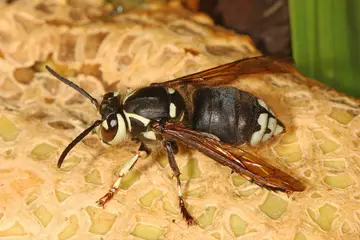
Baldfaced hornet
Photo: Judy Gallagher · CC BY 2.0 · Wikimedia Commons

Baldfaced hornet

Dolichovespula maculata

Venomous per Jeff Hahn

Size
Missouri: workers 1/2 to 3/4 inch, queens 3/4 inch. University of Maryland: workers 5/8 to 3/4 inch, queens just over an inch. Penn State gives 13 to 20 mm for the queen and her offspring.
How to recognize it
  • Not yellow, unlike typical yellowjackets; larger, black and ivory
  • Large, rounded, gray paper nest hanging in trees or shrubs, sometimes on buildings
  • Nest entrance is the lowest opening of the cone- or egg-shaped nest
102 records by month.
What the sources say

Venom: “They are a potential health problem because of their ability to sting.” (Jeff Hahn)

Full Baldfaced hornet guide

No confirmed photo of Bumble bees

Bumble bees

Venomous per Jeff Hahn

What the sources say

Venom: “…bumble bees are a potential health problem because they sting.” (Jeff Hahn)

No confirmed photo of Cicada killers

Cicada killers

Sphecius speciousus

Venomous per Jeff Hahn

What the sources say

Venom: “Females can sting but rarely do; males are aggressive but cannot sting.” (Jeff Hahn)

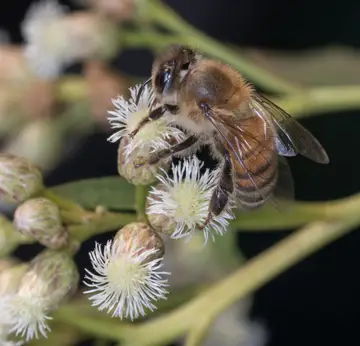
Honey bee
Photo: Jesse Rorabaugh · CC0 1.0 · iNaturalist

Honey bee

Apis mellifera

Venomous per Jeff Hahn

Size
About 10 percent smaller than a European honey bee, a difference too subtle to see without measurement or lab tests.
How to recognize it
  • Cannot be identified by eye: only DNA testing or microscopic measurements can tell it from a European honey bee.
  • Clue is behavior and nest site: very defensive, and may nest in small cavities such as water meter boxes, old tires, house eaves or the ground.
303 records by month.
What the sources say

Venom: “…they are a potential health problem because they sting.” (Jeff Hahn)

Full Honey bee guide

No confirmed photo of Paper wasps

Paper wasps

Venomous per Jeff Hahn

What the sources say

Venom: “They are a potential health problem because of their ability to sting.” (Jeff Hahn)

No confirmed photo of Yellowjackets

Yellowjackets

Venomous per Jeff Hahn

What the sources say

Venom: “They are a potential health problem because of their ability to sting.” (Jeff Hahn)

No confirmed photo of Asian long-horned beetle (early detection species)

Asian long-horned beetle (early detection species)

Not stated Invasive

Venom
No official source we use states whether this animal is venomous. That does not mean it is harmless: do not handle it.
No confirmed photo of Brown marmorated stink bug (early detection species)

Brown marmorated stink bug (early detection species)

Not stated Invasive

Venom
No official source we use states whether this animal is venomous. That does not mean it is harmless: do not handle it.
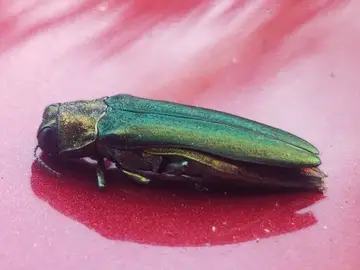
Emerald ash borer
Photo: Brandon McCracken · CC BY 4.0 · iNaturalist

Emerald ash borer

Not stated Invasive

Venom
No official source we use states whether this animal is venomous. That does not mean it is harmless: do not handle it.
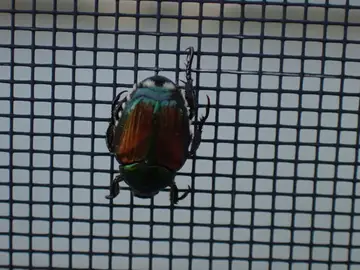
Japanese beetle
Photo: Cole Shoemaker · CC BY 4.0 · iNaturalist

Japanese beetle

Not stated Invasive

Venom
No official source we use states whether this animal is venomous. That does not mean it is harmless: do not handle it.
No confirmed photo of Masked hunter

Masked hunter

Not stated

Venom
No official source we use states whether this animal is venomous. That does not mean it is harmless: do not handle it.
No confirmed photo of Mosquitoes

Mosquitoes

Not stated

Venom
No official source we use states whether this animal is venomous. That does not mean it is harmless: do not handle it.
Danger to people
“WNV was found in Minnesota in 2002 and will remain a public health concern in the foreseeable future.” Minnesota Department of Health
No confirmed photo of Spongy moth (formerly gypsy moth)

Spongy moth (formerly gypsy moth)

Not stated Invasive

Venom
No official source we use states whether this animal is venomous. That does not mean it is harmless: do not handle it.
No confirmed photo of Spotted lanternfly (early detection species)

Spotted lanternfly (early detection species)

Not stated Invasive

Venom
No official source we use states whether this animal is venomous. That does not mean it is harmless: do not handle it.

Insects and Bugs people confuse

Africanized Honey Bee or European honey bee?

Africanized Honey Bee
Photo: Jesse Rorabaugh · CC0 1.0 · iNaturalist

Africanized Honey Bee Venomous

European honey bee
Photo: Jesse Rorabaugh · CC0 1.0 · iNaturalist

European honey bee Venomous

Not by sight: same species and same appearance. Differences are behavior and nest choice, and a confirmed ID needs testing.

Photos show typical adults; individuals vary. Never get close to compare.

When insects are active in Minnesota

Records of insects in Minnesota peak in June to August. They show when people record insects, not how many there are (about month bars).

81,251 records of insects in Minnesota by month (GBIF, CC0 and CC BY records).

If you are bitten or stung

Call 911 or Poison Help at 1-800-222-1222 right away. Poison Help connects you to your local poison center, any time of day.

Official advice from Minnesota Poison Control System, Minnesota Department of Natural Resources and Minnesota Department of Health:

How to report

Invasive insects (emerald ash borer, spongy moth, Asian long-horned beetle, brown marmorated stink bug): Minnesota Department of Agriculture "Report a Pest" line 1-888-545-6684. Invasive vertebrates (mute swans, Eurasian swine/wild pigs): the DNR Invasive Species Program and your local conservation officer or wildlife office. Aquatic invasives: your local DNR invasive species specialist. Cougar sightings: the nearest DNR area wildlife office or conservation officer. General DNR line: 888-646-6367. Minnesota Department of Natural Resources

About this list

Venom labels come only from official sources and link to them; "Not stated" never means harmless. How labels work.

"Nonnative" and "Invasive" follow the wording of the source list. See invasive species in Minnesota.

Sources

  1. Reptiles / Amphibians of Minnesota. Minnesota Department of Natural Resources. archived copy, captured October 12, 2026; checked November 3, 2026.
  2. What insect is this? yellowjackets. University of Minnesota Extension (Jeff Hahn). undated page; checked November 3, 2026.
    Quoted passages (1)
    “They are a potential health problem because of their ability to sting.”
  3. What insect is this? bald-faced-hornet. University of Minnesota Extension (Jeff Hahn). undated page; checked November 3, 2026.
    Quoted passages (1)
    “They are a potential health problem because of their ability to sting.”
  4. What insect is this? paper-wasps. University of Minnesota Extension (Jeff Hahn). undated page; checked November 3, 2026.
    Quoted passages (1)
    “They are a potential health problem because of their ability to sting.”
  5. What insect is this? honey-bee. University of Minnesota Extension (Jeff Hahn). undated page; checked November 3, 2026.
    Quoted passages (1)
    “…they are a potential health problem because they sting.”
  6. What insect is this? bumble-bees. University of Minnesota Extension (Jeff Hahn). undated page; checked November 3, 2026.
    Quoted passages (1)
    “…bumble bees are a potential health problem because they sting.”
  7. What insect is this? cicadakiller. University of Minnesota Extension (Jeff Hahn). undated page; checked November 3, 2026.
    Quoted passages (1)
    “Females can sting but rarely do; males are aggressive but cannot sting.”
  8. What insect is this? maskedhunter. University of Minnesota Extension (Jeff Hahn). undated page; checked November 3, 2026.
  9. Invasive terrestrial animals. Minnesota Department of Natural Resources. archived copy, captured April 29, 2026; checked November 3, 2026.
  10. West Nile Virus (Diseases Transmitted by Mosquitoes). Minnesota Department of Health. updated December 23, 2022; checked November 3, 2026.
    Quoted passages (1)
    “WNV was found in Minnesota in 2002 and will remain a public health concern in the foreseeable future.”
  11. Ticks (Tickborne Diseases). Minnesota Department of Health. updated June 30, 2025; checked November 3, 2026.
    Quoted passages (3)
    “The blacklegged tick causes by far the most tickborne disease in Minnesota.”
    “Try to stay on the mowed trail while walking through here in order to reduce your risk of tick bites.”
    “In Minnesota, adult ticks will usually emerge right after the snow melts and reach peak spring-time activity during the month of May.”
  12. Bites, Stings, and Other Things. Minnesota Poison Control System (Hennepin Healthcare; certified Regional Poison Center). undated page; checked November 3, 2026.
    Quoted passages (1)
    “IN A POISONING EMERGENCY, CALL 24 HOURS A DAY, 7 DAYS A WEEK: 1‐800‐222‐1222”
  13. Living with bears. Minnesota Department of Natural Resources. archived copy, captured October 10, 2026; checked November 3, 2026.
    Quoted passages (1)
    “The best way to avoid problems with bears is to not attract them in the first place.”
  14. Living with Wildlife: Snakes. Minnesota Department of Natural Resources. archived copy, captured October 25, 2026; checked November 3, 2026.
    Quoted passages (1)
    “Turtles often come around in June when they are looking for a nesting site.”
  15. How do I report an invasive terrestrial animal? Minnesota Department of Natural Resources. archived copy, captured April 14, 2026; checked November 3, 2026.
    Quoted passages (1)
    “Report new locations to Minnesota Department of Agriculture or call the ‘Report a Pest’ phone number: 1-888-545-6684.”
  16. GBIF.org occurrence records, human observations licensed CC0 1.0 or CC BY 4.0 only, accessed November 3, 2026. The datasets behind these counts are listed on our Sources page.