Minnesota wildlife: what lives here and what is dangerous
Last checked November 3, 2026 against official sources.
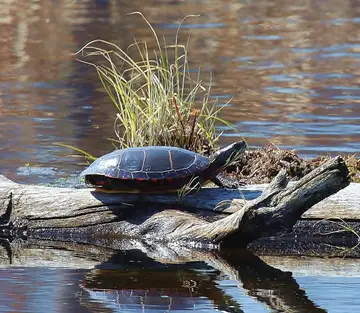
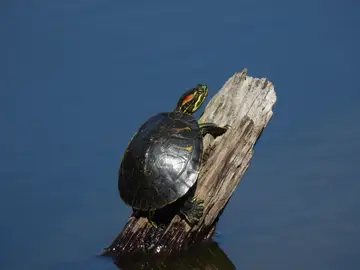
Photo: U. S. Fish and Wildlife Service - Northeast Region · Public domain · Wikimedia Commons
Minnesota has 2 venomous snakes named by official sources: Massasauga and Timber Rattlesnake, as labelled by Minnesota Department of Natural Resources, Nongame Wildlife Program. This guide covers 8 animal groups from Minnesota Department of Natural Resources (DNR) lists and other official sources, with photos, venomous status and when each group is active.
Identification help has limits: a photo cannot confirm that an animal is safe. Watch from a distance and never handle a wild animal.
These are the animals official sources describe as venomous or as a risk to people in Minnesota, across 6 groups. The reason is given in the source's own terms.
Large, powerful and fast: “Black bears, by nature, are wary of people and not normally aggressive. They are, however, large, powerful and surprisingly fast-moving animals.”
Official sources say the brown recluse is not native to Minnesota or not found there. It is not counted among the dangerous animals above; each entry quotes the source.
Darker cells are the months with more open-licence observation records of each group in Minnesota (GBIF). They show when people see and record these animals, not how many there are. The current month, this month, is highlighted.
Adult blacklegged ticks are active right after snowmelt, peak in May, and are active again from late September through October; nymphs peak from late May through June. Minnesota Department of Health
Report: Invasive insects (emerald ash borer, spongy moth, Asian long-horned beetle, brown marmorated stink bug): Minnesota Department of Agriculture "Report a Pest" line 1-888-545-6684. Invasive vertebrates (mute swans, Eurasian swine/wild pigs): the DNR Invasive Species Program and your local conservation officer or wildlife office. Aquatic invasives: your local DNR invasive species specialist. Cougar sightings: the nearest DNR area wildlife office or conservation officer. General DNR line: 888-646-6367. Minnesota Department of Natural Resources
Do not try to capture or kill a rattlesnake or unidentified snake; most bites happen when people approach, handle or try to kill one. Minnesota Department of Natural Resources
For any bite or sting emergency, call 911 or Poison Help at 1-800-222-1222 (Minnesota Poison Control System, 24 hours a day). Minnesota Poison Control System
Yes. Two of Minnesota's 17 snake species are venomous, both rattlesnakes: the timber rattlesnake and the massasauga. Both are found only in the southeastern counties and are rarely encountered. Minnesota Department of Natural Resources
Are there rattlesnakes in Minnesota?
Yes, but rare. Timber rattlesnakes live only in the blufflands of southeastern Minnesota (state threatened). The massasauga (state endangered) has not been documented since before 1960. Minnesota Department of Natural Resources
Are there copperheads or cottonmouths (water moccasins) in Minnesota?
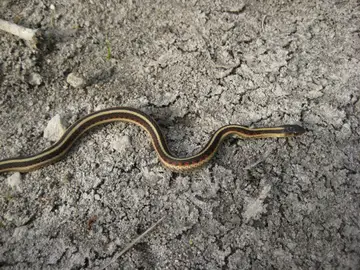
The DNR booklet calls the common gartersnake the most commonly encountered snake in Minnesota; the DNR Living with Wildlife page says it is the snake most often seen in homes and yards and is harmless. Minnesota Department of Natural Resources, Nongame Wildlife Program
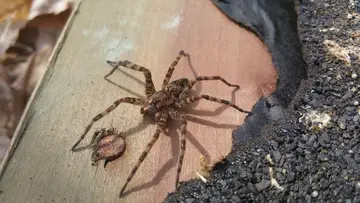
Rarely. UMN Extension (reviewed 2019) says black widow spiders are not native to the upper Midwest and are rarely encountered; its 1979 fact sheet says the northern widow, a close relative of the black widow, is occasionally found in Minnesota. University of Minnesota Agricultural Extension Service · More
Are there brown recluse spiders in Minnesota?
Rarely. UMN Extension says neither black widows nor brown recluses are native to the upper Midwest and they are rarely encountered. The 1979 UMN fact sheet said the brown recluse had not been found in Minnesota. University of Minnesota Extension
Are there wolves in Minnesota?
Yes. Gray (timber) wolves live in Minnesota. The DNR wolf page (archived 2026-10-05) says they became a federally protected threatened species again on Feb. 10, 2022, and may only be taken in defense of human life. Minnesota Department of Natural Resources
Are there mountain lions (cougars) in Minnesota?
Rarely. Cougars are rarely seen but occasionally appear, mostly transient males from the western Dakotas. In March 2026 a female with three kittens was recorded in St. Louis County, the first confirmed breeding in more than 100 years. Minnesota Department of Natural Resources
Yes. Minnesota's moose population appears to have stabilized at around 3,700 animals after a steep decline from about 8,000 in 2009. Minnesota DNR · More
Are there feral hogs (wild pigs) in Minnesota?
No. No populations of European wild boar are currently known to be in Minnesota. It is a prohibited invasive species, and any pig outside a fence should be reported. Minnesota Department of Natural Resources
Are there ticks in Minnesota?
Yes. About a dozen types; people mostly meet the blacklegged (deer) tick, American dog (wood) tick and the rarely found lone star tick. The blacklegged tick causes by far the most tickborne disease. Minnesota Department of Health
Sources
Reptiles / Amphibians of Minnesota. Minnesota Department of Natural Resources. archived copy, captured October 12, 2026; checked November 3, 2026.
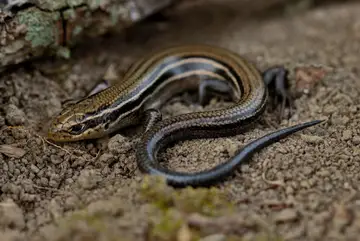
“Minnesota has seventeen snake species, two of which are rattle‑ snakes, and three lizard species”
“…since we only have three lizard species”
“Water moccasins (cottonmouths) and copperheads do not occur in Minnesota”
“This species has not been documented in the state since before 1960 Sightings have been reported, but none have been confirmed as being a massasauga”
“Most commonly encountered snake in Minnesota”
“If you do not recognize a snake that you encounter, be safe Leave the snake alone, slowly back away, and if you need to pass the snake, stay at least 6 feet away”
“If you have a dog with you, it is important to get your dog on a leash or under your control until you are well past the snake”
“…they are typically only active in Minnesota from April through late October”
“May is the peak time for spring movements and September for fall movements, making them the peak months for most snake‑human encounters However, the peak encounter time for timber rattlesnakes in Minnesota is July through August”
Frogs and Toads. Minnesota Department of Natural Resources. archived copy, captured May 12, 2026; checked November 3, 2026.Quoted passages (1)
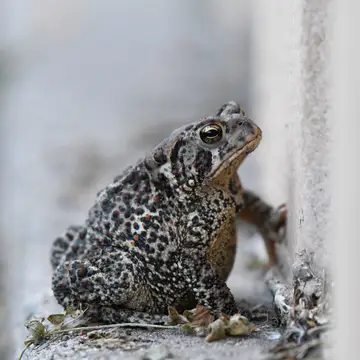
“The 14 species of toads and frogs found in Minnesota are grouped into three families: toads, treefrogs, and true frogs.”
“WNV was found in Minnesota in 2002 and will remain a public health concern in the foreseeable future.”
Living with bears. Minnesota Department of Natural Resources. archived copy, captured October 10, 2026; checked November 3, 2026.Quoted passages (1)
“Black bears, by nature, are wary of people and not normally aggressive. They are, however, large, powerful and surprisingly fast-moving animals.”
Cougars in Minnesota. Minnesota Department of Natural Resources. archived copy, captured October 24, 2026; checked November 3, 2026.Quoted passages (3)
“Human encounters with cougars are extremely rare.”
“Today, they are rarely seen but occasionally do appear.”
“Face the cougar directly, raise your arms to make yourself appear larger and speak loudly and firmly.”
Animals of Concern for Rabies. Minnesota Department of Health. updated October 20, 2022; checked November 3, 2026.Quoted passages (1)
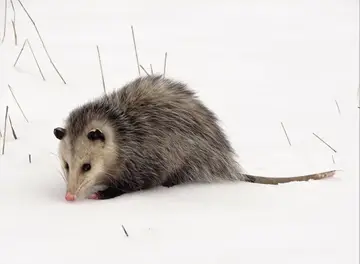
“Species of concern for rabies:”
Spiders. University of Minnesota Extension (Jeffrey Hahn et al.). archived copy, captured August 14, 2026; checked November 3, 2026.Quoted passages (1)
“Neither black widow spiders or brown recluse are native to the upper Midwest and are rarely encountered.”
“Red-eared sliders (Trachemys scripta elegans) are a regulated invasive species in Minnesota”
European wild boar / Eurasian swine. Minnesota Department of Natural Resources. archived copy, captured July 15, 2026; checked November 3, 2026.Quoted passages (1)
“No populations of European wild boar are currently known to be in Minnesota.”
Invasive terrestrial animals. Minnesota Department of Natural Resources. archived copy, captured April 29, 2026; checked November 3, 2026.Quoted passages (3)
“Report new locations to Minnesota Department of Agriculture or call the ‘Report a Pest’ phone number: 1-888-545-6684.”
Living with Wildlife: Snakes. Minnesota Department of Natural Resources. archived copy, captured October 25, 2026; checked November 3, 2026.Quoted passages (3)
“Of the 17 snake species in the state, only two are venomous -- the Timber Rattlesnake and the Eastern Massasauga. Both are found only in the southeastern counties and are rarely encountered.”
“All snakes are considered protected wild animals in Minnesota.”
“Turtles often come around in June when they are looking for a nesting site.”
“Timber rattlesnakes live in the blufflands of southeastern Minnesota. They are not found anywhere else in the state.”
“If you encounter a rattlesnake, or a snake you cannot identify, please do not try to capture or kill it.”
“If you have a timber rattlesnake in your yard that is causing concern, you may contact your local law enforcement center for assistance.”
Wolves in Minnesota (DNR wolf page). Minnesota Department of Natural Resources. archived copy, captured October 5, 2026; checked November 3, 2026.Quoted passages (1)
“Effective Feb. 10, 2022, Minnesota’s gray wolf once again became a federally protected threatened species.”
Black bear. Minnesota Department of Natural Resources. archived copy, captured October 20, 2026; checked November 3, 2026.Quoted passages (1)
“The black bear is the only species of bear in the state.”
Moose. Minnesota DNR. archived copy, captured October 25, 2026; checked November 3, 2026.Quoted passages (1)
“After a steep decline from a population estimate of approximately 8,000 in 2009, Minnesota’s moose population appears to have stabilized and fluctuates around 3,700 animals.”
Bites, Stings, and Other Things. Minnesota Poison Control System (Hennepin Healthcare; certified Regional Poison Center). undated page; checked November 3, 2026.Quoted passages (1)
“IN A POISONING EMERGENCY, CALL 24 HOURS A DAY, 7 DAYS A WEEK: 1‐800‐222‐1222”