States Wildlife

Are there moose in Minnesota?

Last checked November 3, 2026 against official sources.

On this page
  1. The answer
  2. More official answers
  3. Which ones
  4. Where in the US
  5. Sources

Yes.

Minnesota's moose population appears to have stabilized at around 3,700 animals after a steep decline from about 8,000 in 2009.

Minnesota DNR: “After a steep decline from a population estimate of approximately 8,000 in 2009, Minnesota’s moose population appears to have stabilized and fluctuates around 3,700 animals.” Source

How we answer questions

  • Are there mountain lions (cougars) in Minnesota?

    Rarely. Cougars are rarely seen but occasionally appear, mostly transient males from the western Dakotas. In March 2026 a female with three kittens was recorded in St. Louis County, the first confirmed breeding in more than 100 years. Minnesota Department of Natural Resources

  • Are there bears in Minnesota?

    Yes. The black bear is the only bear species in the state, found mainly in the northern third of Minnesota. Minnesota Department of Natural Resources

On Minnesota's official list

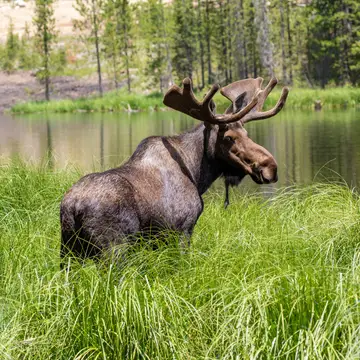
Moose
Photo: Dan Vickers · CC BY 4.0 · iNaturalist

Moose

Alces americanus

Conservation
Minnesota special concern species

All mammals in the state: Minnesota mammals.

Where the moose lives in the US

Wisconsin: on the state's official listOregon: on an official sourceNew York: on an official sourceMontana: on the state's official listMinnesota: on an official sourceIowa: on the state's official listNebraska: on the state's official listWashington: on the state's official listSouth Dakota: on the state's official listColorado: on an official sourceUtah: on the state's official listWyoming: on the state's official listNevada: on the state's official listNorth Dakota: on the state's official listMaine: on an official sourceRhode Island: on the state's official listConnecticut: on the state's official listMichigan: on an official sourceAlaska: on an official sourceNew Mexico: on the state's official listVermont: on the state's official listNew Hampshire: on the state's official list
Official presence. 22 states where a state list or official source names it. Gray means no official record in our data, not that it is absent.
  • Native or listed
  • Nonnative or not established
  • No official record in our data
New York: 6 recordsIdaho: 95 recordsMontana: 85 recordsMinnesota: 145 recordsOhio: 1 recordNebraska: 28 recordsWashington: 50 recordsColorado: 432 recordsUtah: 102 recordsWyoming: 343 recordsMassachusetts: 15 recordsNorth Dakota: 9 recordsMaine: 87 recordsMichigan: 89 recordsAlaska: 1,372 recordsVermont: 1,652 recordsNew Hampshire: 244 records
Observation records. Open-licence records on GBIF in 17 states. Records are sightings people shared, not confirmation that a population lives there.
  • 1–9
  • 10–99
  • 100–999
  • 1,000+

Moose: identification, range and danger

When mammals are seen in Minnesota

4,936 records (GBIF, CC0 and CC BY).

Other questions about Minnesota

Sources

  1. Moose. Minnesota DNR. archived copy, captured October 25, 2026; checked November 3, 2026.
    Quoted passages (1)
    “After a steep decline from a population estimate of approximately 8,000 in 2009, Minnesota’s moose population appears to have stabilized and fluctuates around 3,700 animals.”
  2. Mammals in Minnesota (complete list linked from the DNR Mammals page). Minnesota Department of Natural Resources. undated page; checked November 3, 2026.
  3. Cougars in Minnesota. Minnesota Department of Natural Resources. archived copy, captured October 24, 2026; checked November 3, 2026.
    Quoted passages (1)
    “Today, they are rarely seen but occasionally do appear.”
  4. Black bear. Minnesota Department of Natural Resources. archived copy, captured October 20, 2026; checked November 3, 2026.
    Quoted passages (1)
    “The black bear is the only species of bear in the state.”
  5. GBIF.org occurrence records, human observations licensed CC0 1.0 or CC BY 4.0 only, accessed November 3, 2026. The datasets behind these counts are listed on our Sources page.