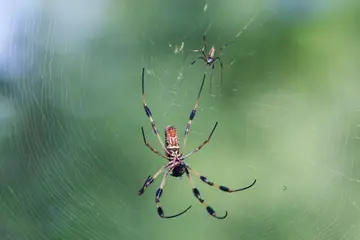
Banana spider
Trichonephila clavipes
Hairy "bottlebrush" tufts on some leg segments, which tell it apart from other big yellow orb weavers, including the Joro spider.
Choose what you saw. The list narrows to the spiders in our species guides that match, venomous ones first. It suggests possibilities only: a description cannot confirm what an animal is or that it is safe.
Trichonephila clavipes
Hairy "bottlebrush" tufts on some leg segments, which tell it apart from other big yellow orb weavers, including the Joro spider.
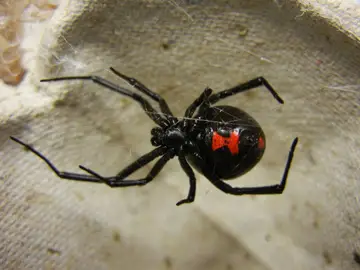
Latrodectus (US black widows: Latrodectus mactans, L. variolus, L. hesperus)
Large round abdomen; messy cobweb where it hangs upside down
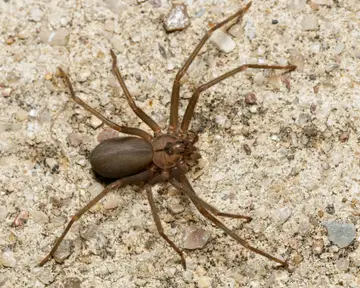
Loxosceles reclusa
Six equal-sized eyes in three pairs. UC IPM calls this the most definitive feature, since most spiders have eight eyes.
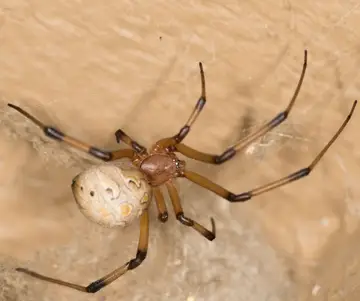
Latrodectus geometricus
Spiky egg sac (covered in silk points, like a pollen grain or sandspur; about 10 mm per LSU AgCenter, 1/2 in per Clemson 2003) is diagnostic even without the spider
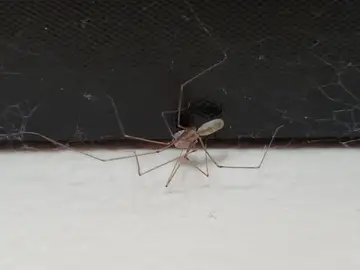
Pholcidae (cellar spiders); most common US species Pholcus phalangioides (longbodied cellar spider)
Extremely long, thin legs
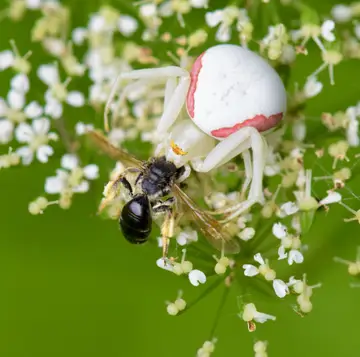
Thomisidae
Legs held out to the sides like a crab; walks sideways
Steatoda (US false widows: Steatoda grossa, S. nobilis, S. borealis; also S. triangulosa)
Same round-abdomen body form and messy cobweb as widow spiders; same family (Theridiidae)
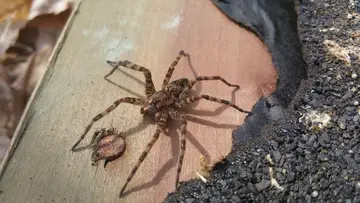
Dolomedes
Does not build a web to catch prey; often rests head-down or vertically on tree trunks, wood or stone
Trichonephila clavipes
Hairy "bottlebrush" tufts on some leg segments, which tell it apart from other big yellow orb weavers, including the Joro spider.
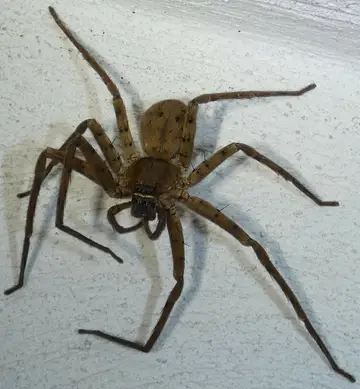
Sparassidae
Large brown spider with a flattened body and very little pattern on the back.
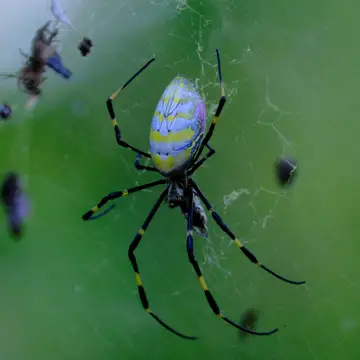
Trichonephila clavata
Golden-yellow silk in very large webs, often high up between the tops of large trees; also on power lines (N.C. Extension, Henderson County)
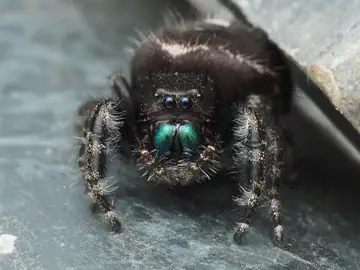
Salticidae
Two very large forward-facing front eyes (all jumping spiders)
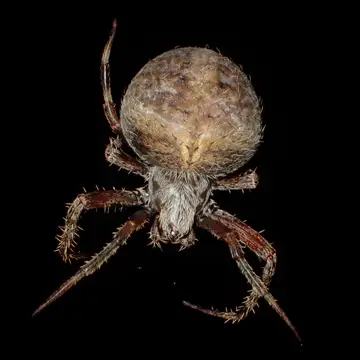
Araneidae
Usually a large, bulbous abdomen.
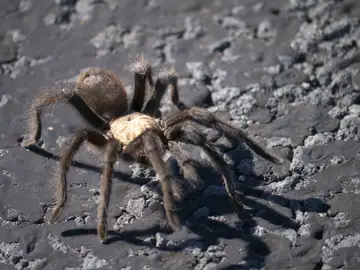
Theraphosidae
Stocky and hairy; Missouri's largest spider.
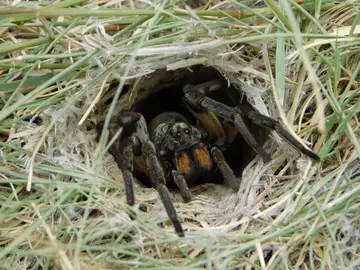
Lycosidae
Eight eyes: a front row of 4 small eyes, a middle pair of larger eyes, and a widely spaced rear pair on top of the head
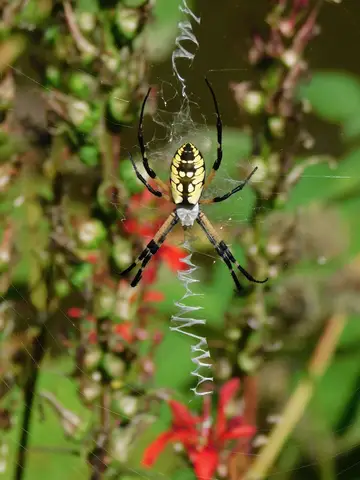
Argiope aurantia
Round web about 2 feet across, built only by females; the spider rests head-down at the center, where a zigzag silk band (stabilimentum) runs vertically.
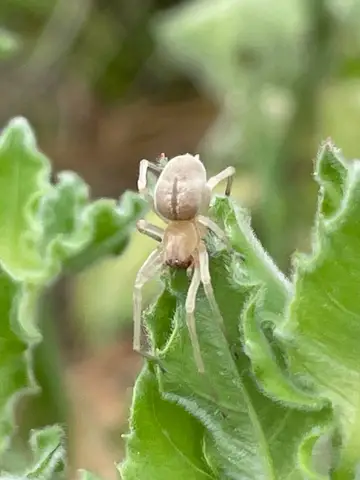
Cheiracanthium (mainly C. mildei and C. inclusum)
8 eyes in two rows
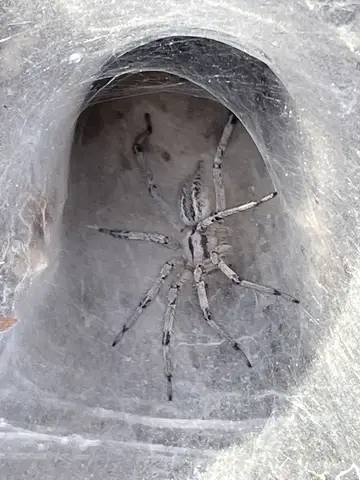
Agelenopsis
Very long hind spinnerets, easy to see from above.
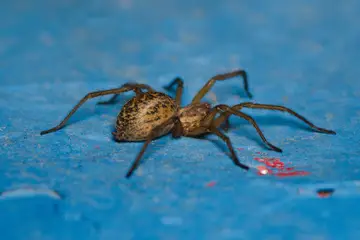
Eratigena agrestis
No dark bands on the legs
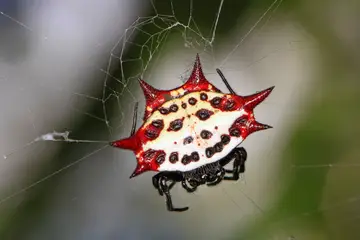
Gasteracantha cancriformis
Female has six pointed spines on a hard, flattened, crab-like shell, which makes it easy to tell from other spiders
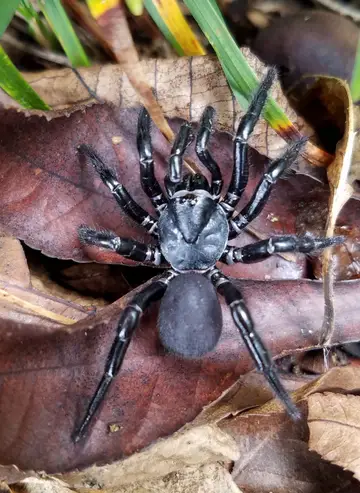
Mygalomorph trapdoor spiders: mainly Halonoproctidae (Ummidia, Bothriocyrtum), Euctenizidae (Myrmekiaphila, Aptostichus, Eucteniza), Antrodiaetidae (Antrodiaetus); in Hawaii, Barychelidae (Nihoa)
Fangs point downward and strike in a stabbing motion, like a tarantula's (same suborder).
No spider in our guides matches all of these choices. Try fewer filters. If you are unsure what you saw, treat it as potentially dangerous and keep away.


