Grass spiders
Agelenopsis · also called Funnel weaver and Funnel-web spider (North American usage; not the Australian funnel-web) · Last checked November 3, 2026.
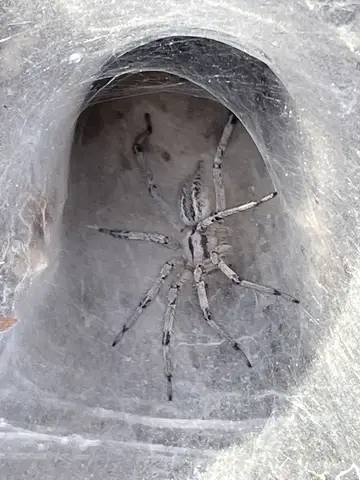
Grass spiders (Agelenopsis) are fast, brownish spiders with two dark stripes on the head area and long spinnerets at the rear. They build flat, non-sticky sheet webs with a funnel at one side, often seen in lawns, shrubs and ground covers, especially when covered in dew. Penn State Extension says they are shy and very few people are bitten. Reported bites caused pain, swelling, redness and itching lasting one to ten days, without serious consequences. State agencies and extension services report them from Pennsylvania, New York, Ohio and Missouri to California and New Mexico. Penn State Extension
This page covers a genus (Agelenopsis), not a single species.
On this page
Are grass spiders dangerous?
Penn State Extension: very few people are bitten; reported bites caused pain, swelling, redness and itching for 1-10 days without serious consequences. Penn State Extension
“Their bites have been reported to cause pain, swelling, redness, and itching, with the duration of symptoms ranging from one to ten days but without serious consequences.”
Bites and stings: Rare: Penn State Extension says grass spiders are extremely fast and shy, so very few people are bitten. Reported bites caused pain, swelling, redness and itching for one to ten days, without serious consequences.
No official source we use states whether this animal is venomous. That does not mean it is harmless: do not handle it.
If someone is bitten or stung, call 911 or Poison Help at 1-800-222-1222.
How to identify grass spiders
A photo or description can narrow it down, but cannot confirm what an animal is or that it is safe. Look from a distance and do not handle wild animals.
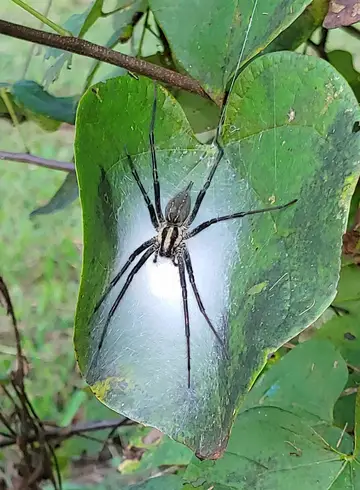
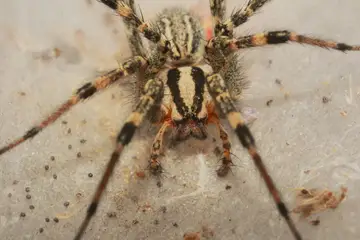

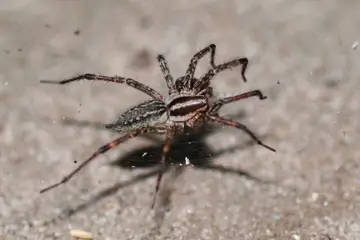

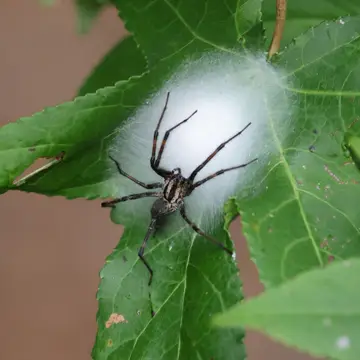
Size: Females 10-20 mm (about 3/8-3/4 inch), males 9-18 mm (Penn State). MDC: females about 1/2-3/4 inch, males slightly smaller.
Colors: yellow-brown, brown and cream. Pattern: two dark stripes on head area; light band down abdomen; banded legs.
Key features
- Very long hind spinnerets, easy to see from above.
- Web: a flat, non-sticky sheet with a funnel or tunnel at one side, on grass, ground covers, shrubs or against buildings. Penn State Extension
- Funnel weavers have 6 or 8 eyes, all about the same size, in two rows (UC IPM). University of California Statewide IPM Program
- Abdomen brown with a broad reddish-brown zigzag stripe edged in cream (MDC). Missouri Department of Conservation
Young
Spiderlings hatch in spring and build small versions of the web, which grows through the summer.
Animals mistaken for grass spiders
Grass spiders or Brown recluse?
Grass spiders
Brown recluse Loxosceles reclusa
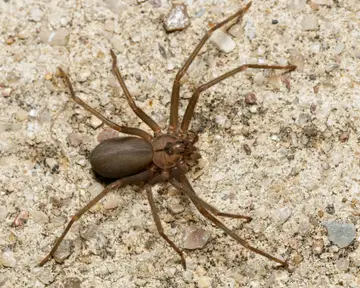
Brown recluses never have stripes or bands on the legs, or spots or multiple stripes on the abdomen (Virginia Cooperative Extension). A recluse has six eyes in pairs, uniformly colored legs and a body no longer than 3/8 inch (UC IPM). Grass spiders have striped bodies, often banded legs and long spinnerets. UC IPM adds that a spider must have all five of these recluse features to be identified as a recluse.
Venomous (CDC/NIOSH).
Grass spiders or Wolf spiders?
Grass spiders
Wolf spiders Lycosidae
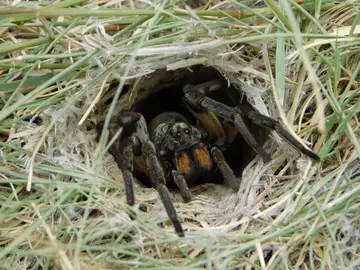

MDC: grass spiders live in flattened sheet webs with a funnel hole, and their spinnerets are long and easily seen from above. Wolf spiders do not build capture webs.
See wolf-spider page.
Grass spiders or Hobo spider and other funnel weavers?
Grass spiders
Hobo spider and other funnel weavers Eratigena agrestis
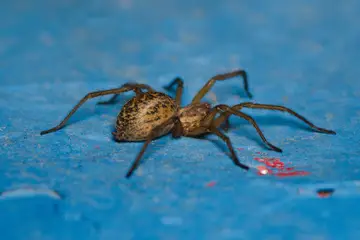

UC IPM: dozens of similar-looking spider species in California build funnel webs, including Agelenopsis, and common related spiders are often misidentified as hobo spiders. Range: UC IPM says the hobo spider lives in the Pacific Northwest, from British Columbia east to Montana, Wyoming and Colorado and south through Oregon and northern Utah; Virginia Cooperative Extension says it does not occur in other parts of the United States.
Virginia Cooperative Extension: no strong scientific evidence that the hobo spider is of medical importance. UC IPM: the bite is not considered of medical importance.
Where grass spiders live
- Native or listed
- Nonnative or not established
- No official record in our data
- 1–9
- 10–99
- 100–999
- 1,000+
State boundaries: U.S. Census Bureau, cartographic boundary file cb_2024_us_state_20m.
When it is active
Adults appear in late summer and fall (Ohio: mid-August to October). They often come indoors in autumn, but adults do not survive the winter; egg sacs do.
US open-licence records for all grass spiders (genus Agelenopsis) peak in July to September.
Habitat and habits
Habitat: Grass, weeds and ground covers (ivy, pachysandra, periwinkle), fencerows, bushes, brush piles, window wells and crevices against buildings; common in lawns.
Behavior: Waits in the funnel, dashes out to grab prey on the sheet, and runs back into the funnel when frightened. The web is not sticky; threads above the sheet knock flying insects down onto it.
Diet: Insects that fall onto the sheet web, such as beetles, moths and small butterflies, plus harvestmen (MDC).
Young: Female lays a lens-shaped white egg sac in late summer to fall; eggs hatch in spring and young mature by late summer.
Legal status and reporting
Federal: No Agelenopsis species appears in the USFWS ECOS species database (query 2026-11-03 returned 0 rows). ECOS
Questions about grass spiders
Grass spider
Grass spiders (Agelenopsis) are brown, fast-running funnel-weaver spiders with long spinnerets. They build flat, non-sticky sheet webs with a funnel at one side in lawns, shrubs and ground covers. Penn State Extension says very few people are bitten. Reported bites caused pain, swelling, redness and itching for one to ten days, without serious consequences.
Brown recluse vs grass spider
Virginia Cooperative Extension says funnel weavers are often mistaken for brown recluses, but recluses never have stripes or bands on their legs or several stripes on the abdomen. UC IPM: a recluse has six eyes in pairs, uniformly colored legs and a body no more than 3/8 inch long. Grass spiders have dark stripes on the head area, often banded legs and long spinnerets. CDC/NIOSH lists the brown recluse as venomous; if bitten and unwell, call 911 or Poison Help at 1-800-222-1222.
Sources
- Grass Spiders. Penn State Extension. updated September 8, 2025; checked November 3, 2026.
Quoted passages (3)
“Their bites have been reported to cause pain, swelling, redness, and itching, with the duration of symptoms ranging from one to ten days but without serious consequences.”
“The webs, which are large, somewhat concave, mostly horizontal, and sheetlike with a funnel or tunnel located off to one side, are often observed more frequently than the spiders themselves.”
“The female deposits a lens-shaped, white egg sac in the late summer to fall. The eggs hatch in the spring, and after a series of molts, the immatures become adults in late summer.”
- Field Guide: Grass Spiders. Missouri Department of Conservation. undated page; checked November 3, 2026.
Quoted passages (2)
“The abdomen is oblong, brown, with a broad, reddish-brown, zigzag stripe with a cream-colored border on both sides.”
“Beetles, harvestmen, moths, and small butterflies are frequent food items.”
- Common Spiders of Ohio Field Guide (Publication 5140). Ohio Department of Natural Resources, Division of Wildlife (text by Richard A. Bradley, Ph.D.). PUBLICATION 5140; checked November 3, 2026.
Quoted passages (1)
“Juvenile spiders emerge from the egg case in spring and begin constructing miniature versions of the typical web.”
- Pest Notes: Spiders (UC ANR Publication 7442). University of California Statewide IPM Program (UC ANR, Cooperative Extension). 2020-10; checked November 3, 2026.
Quoted passages (1)
“Funnel weavers have 6 or 8 eyes, all about the same size, arranged in 2 rows.”
- USFWS ECOS species report export (JSON), scientific-name queries: Agelenopsis. U.S. Fish and Wildlife Service (ECOS). live query 2026-11-03; checked November 3, 2026.
- Spiders of Medical Concern in Virginia (ENTO-73NP / ENTO-346NP). Virginia Cooperative Extension, Virginia Tech (T.A. Dellinger, E. Day). Publication Date August 1, 2025; checked November 3, 2026.
- Pest Notes: Brown Recluse and Other Recluse Spiders (UC ANR Publication 7468). University of California Statewide IPM Program (UC ANR, Cooperative Extension). 2018-11; checked November 3, 2026.
- Venomous Spiders at Work. CDC/NIOSH. archived copy, captured October 6, 2026; checked November 3, 2026.
- GBIF.org occurrence records, human observations licensed CC0 1.0 or CC BY 4.0 only, accessed November 3, 2026. The datasets behind these counts are listed on our Sources page.
- State boundaries: U.S. Census Bureau, cartographic boundary file cb_2024_us_state_20m.